Table of Contents
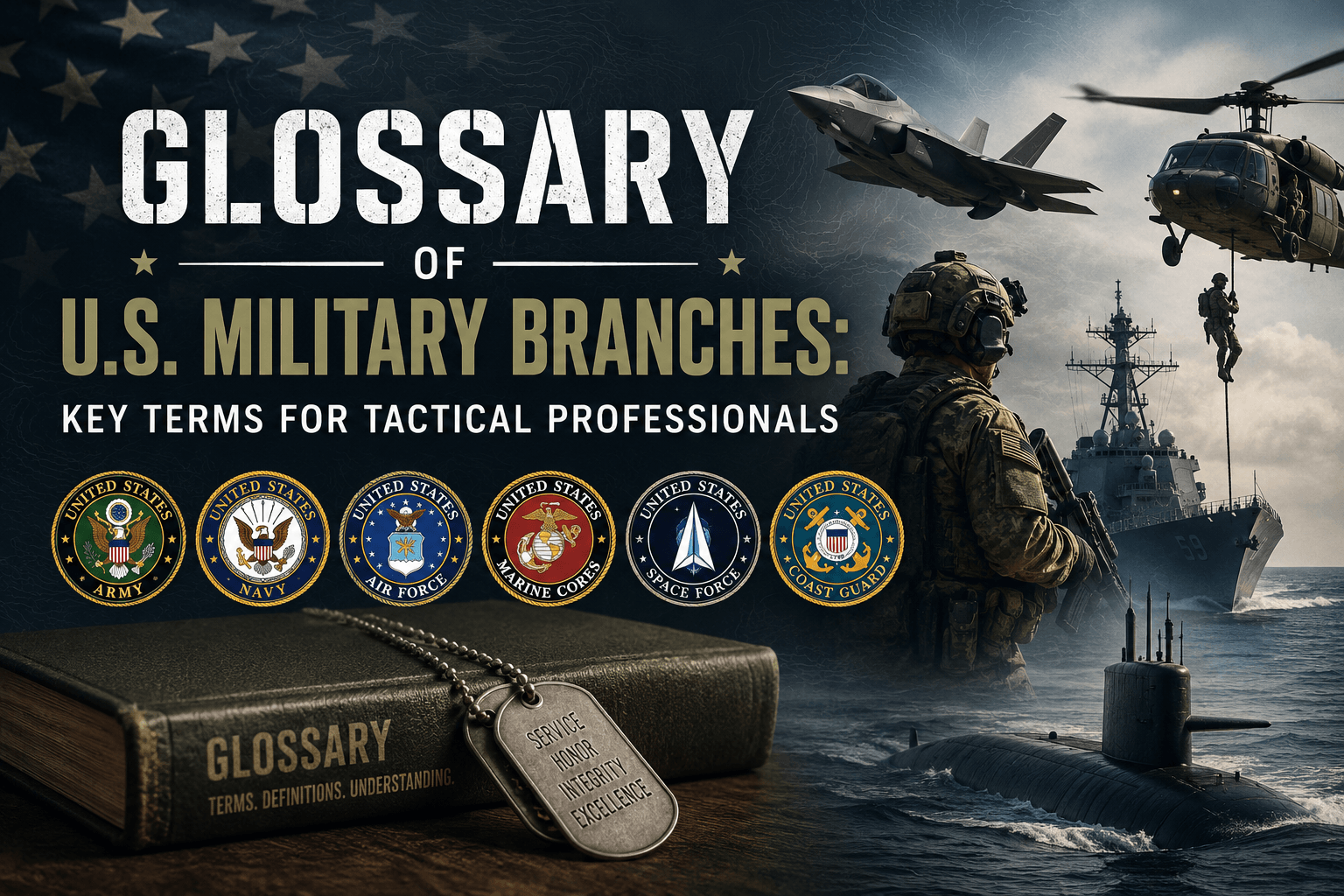
Whether you're a veteran transitioning to civilian life, a tactical professional sourcing branch-compliant gear, or someone navigating the joint force environment for the first time, understanding how the U.S. military branches is structured — and what each branch actually does — is foundational. This glossary breaks down all six service branches, their key roles, personnel strengths, and the equipment standards that define how they operate.
United States Armed Forces
The United States Armed Forces is the unified military structure of the U.S. federal government, composed of all six service branches: the Army, Navy, Marine Corps, Air Force, Coast Guard, and Space Force. As of late 2025, approximately 1.34 million active-duty service members serve across these branches, supported by a substantial reserve and National Guard component. Each branch operates within a defined mission domain — from ground combat and maritime operations to cyberspace and orbital environments. Understanding how these services interrelate is foundational context for any tactical professional.
Department of Defense (DoD)
The Department of Defense is the executive department responsible for coordinating and supervising all agencies and functions of the federal government relating directly to national security. The DoD manages the Army, Navy, Marine Corps, Air Force, and Space Force from its headquarters at the Pentagon in Arlington, Virginia, overseeing approximately 1.34 million active-duty service members across those branches. The Coast Guard, while a recognized military service, falls under the Department of Homeland Security during peacetime — a distinction covered in full below.
Air Force (USAF)
The branch of the U.S. Armed Forces responsible for aerial warfare, global strike capability, and — historically — space operations (now largely transitioned to the U.S. Space Force).
With approximately 319,000 active personnel, the USAF maintains a force structure built around rapid global reach and air superiority.
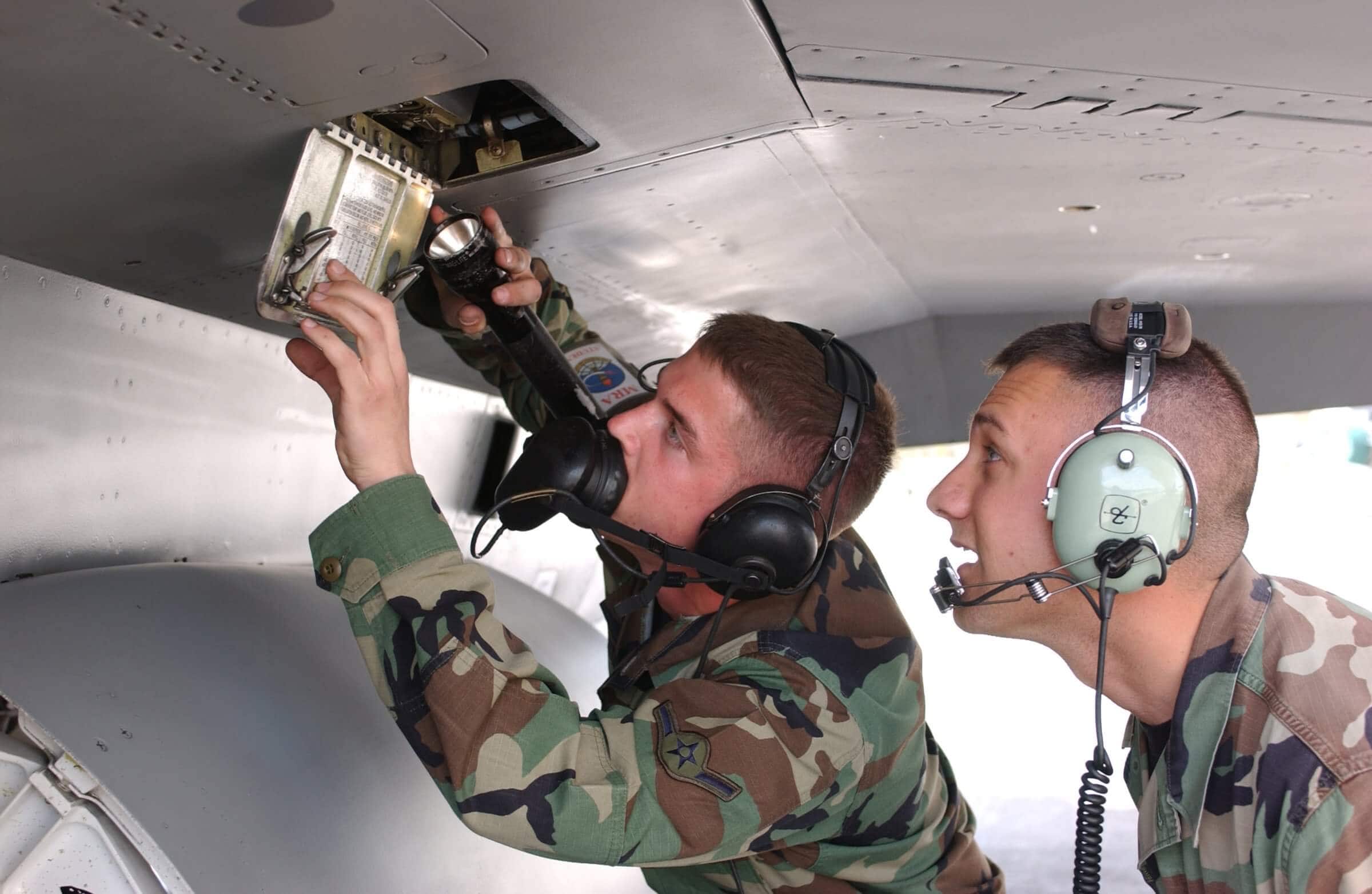
⚙ Gear Note — DAFI 36-2903: The USAF's dress and appearance standard permits side-zipper boots for personnel in maintenance and flight line roles, where speed of donning directly impacts mission tempo. That regulatory nuance matters when selecting compliant duty footwear. Browse LAPG's full range of tactical boots, including side-zip options.
Each branch carries its own uniform regulations, and the Army's are among the strictest — which is exactly where we'll go next.
Army (USA)
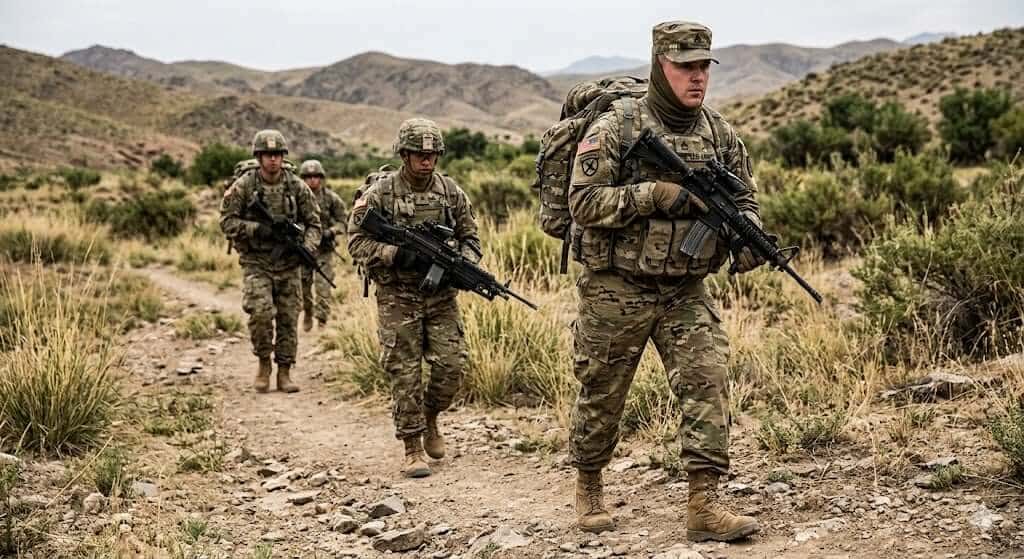
The U.S. Army is the primary land-based combat force, responsible for territorial defense, sustained ground operations, and force projection across all operational environments.
Among all service components, the USA stands as the largest — with roughly 451,900 active personnel.
⚙ Gear Note — AR 670-1: Army Regulation 670-1 mandates 8-to-10-inch coyote brown boots constructed from cattle hide leather, with no side zippers permitted. Compliance is non-negotiable — field commanders enforce it directly. Shop LAPG's full selection of AR 670-1 compliant military boots.
That same doctrinal discipline extends across every branch. The Coast Guard operates under an entirely different authority structure — one worth understanding for any tactical professional working in joint or maritime environments.
Coast Guard (USCG)
The U.S. Coast Guard is the nation's primary maritime law enforcement, search and rescue, and port security force — and one of the six recognized U.S. military branches, though it occupies a distinctly different administrative lane than the others.
- Unique Status: Unlike the Army or Air Force, the USCG operates under the Department of Homeland Security during peacetime, transferring to the Department of the Navy only in wartime or by presidential direction.
- Primary Mission: Maritime safety, security, and stewardship — covering search and rescue operations, drug interdiction, port security, and environmental protection.
- Personnel Strength: Approximately 41,800 active-duty members, making it the smallest of the armed services by active headcount.
The official USCG website notes the service is currently executing a historic $24.6B investment under Force Design 2028, aimed at building a more agile, capable, and responsive fighting force.
Marine Corps (USMC)
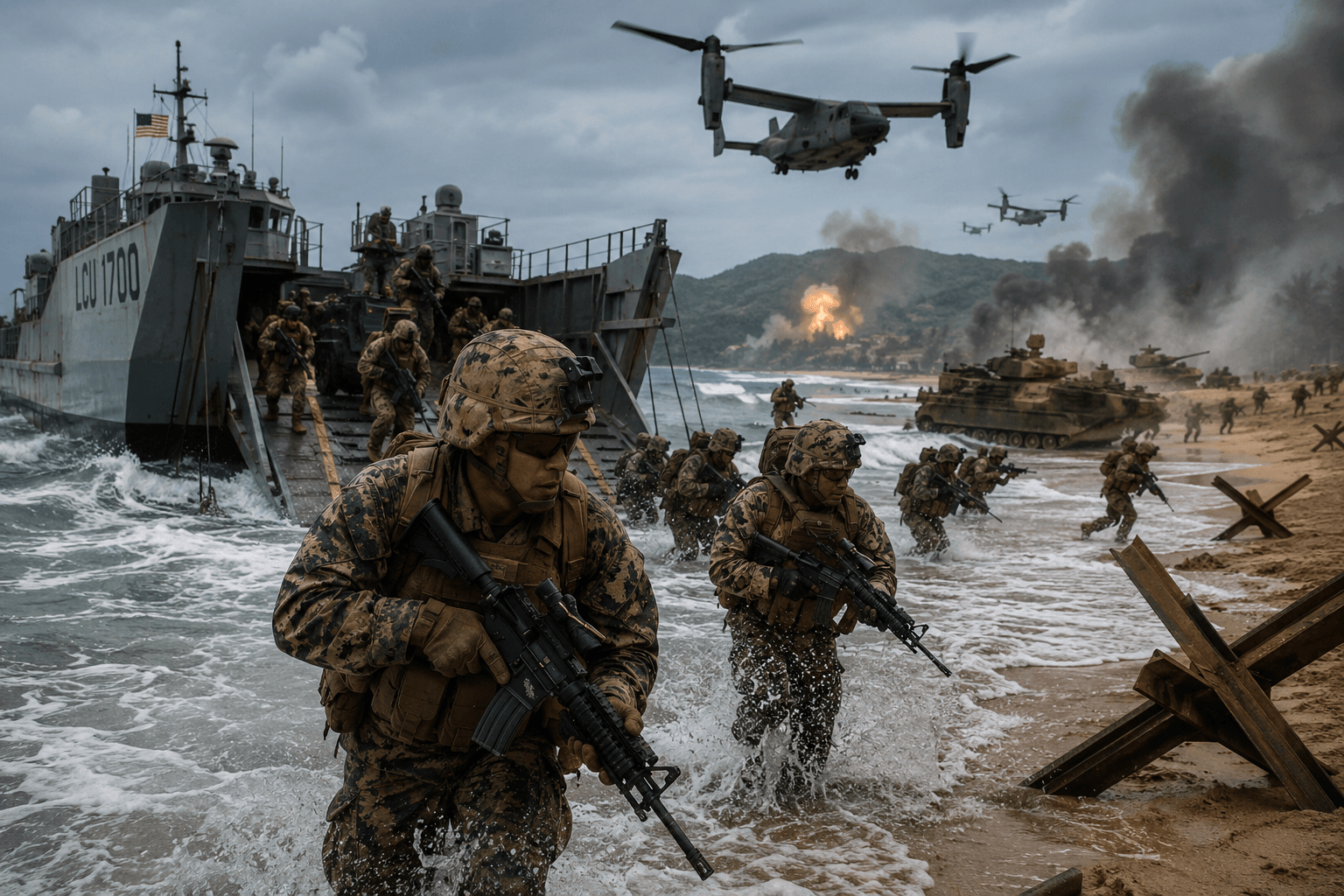
A branch of the U.S. Armed Forces specialized in expeditionary and amphibious operations — meaning rapid deployment from sea to land in contested environments.
- Personnel: Approximately 172,000 active-duty Marines
- Primary Mission: Seize and hold beachheads, conduct forcible entry, and support naval campaigns in littoral zones.
- Culture: The "Every Marine a Rifleman" ethos is institutional doctrine, not a recruiting slogan. As Commandant General Eric M. Smith states in his 39th Commandant's Planning Guidance: "Like all Marines who came before us, we are all, first and foremost, riflemen. That fact will never change."
That dual identity — specialized warfighter and versatile ground combatant — shapes how the USMC integrates with both naval and joint task force structures.
Navy (USN)
The branch of the U.S. Armed Forces responsible for sea power — the ability to project military force across and from the world's oceans — including naval aviation and amphibious sealift.
With approximately 344,000 active personnel, the USN operates across three core mission areas:
- Sea control — maintaining freedom of navigation and denying adversaries use of maritime domains
- Naval aviation — carrier-based strike operations and maritime patrol
- Amphibious sealift — projecting Marine Corps forces ashore, a capability closely tied to the USMC role above
⚙ Gear Note: Shipboard environments demand flame-resistant (FR) apparel — clothing engineered to self-extinguish rather than melt — a hard requirement driven by fire risk aboard vessels. This shapes USN uniform and PPE specifications distinctly from land-based branches.
National Guard
A reserve component — a part-time military force organized at the state level but subject to federal mobilization — that serves a dual mission: domestic emergency response and overseas combat support. As USAGov notes, the National Guard responds to community emergencies while also supporting missions abroad.
The National Guard comprises two distinct elements:
- Army National Guard — Provides ground combat and support capabilities to both state and federal missions.
- Air National Guard — Delivers air power assets, including fighter wings and airlift squadrons, under the same dual-authority structure.
Command authority shifts depending on the mission. Governors direct Guard units during state activations — natural disasters, civil unrest, or infrastructure emergencies. The President assumes command authority upon federal activation, deploying Guard personnel alongside active-duty forces.
Reserve Components
The reserve components — part-time military forces that provide trained units and qualified personnel available for active duty during war or national emergency — serve as a critical force multiplier for every active branch. As Today's Military notes, reserves supply additional manpower and specialized skills when active forces are deployed. The standard commitment is "one weekend a month, two weeks a year," though mobilization can extend that significantly.
Every active branch except Space Force maintains a corresponding reserve component:
- Army Reserve / Army National Guard
- Navy Reserve
- Marine Corps Reserve
- Air Force Reserve / Air National Guard
- Coast Guard Reserve
Understanding which component a service member belongs to directly affects deployment eligibility, equipment authorization, and benefits structure. The addition of the U.S. Space Force reshapes this established pattern — it currently operates without a reserve component, a distinction covered next.
Space Force (USSF)
The United States Space Force — established on December 20, 2019 — is the sixth and newest branch of the U.S. Armed Forces. Its official mission, as stated on spaceforce.mil: "Secure our Nation's interests in, from, and to space."
- Missions: Satellite communications, missile warning, and space situational awareness
- Personnel: Roughly 10,200 active members — the smallest branch by a significant margin
- No Reserve Component: Unlike every other branch, the USSF currently operates without a reserve component — a structural distinction that sets it apart from the established pattern.
Despite its size, the USSF operates infrastructure that every other branch depends on — from GPS to ISR (Intelligence, Surveillance, and Reconnaissance). As the Space Force puts it: "From GPS to military operations and satellite protection, we defend the ultimate high ground."
Joint Chiefs of Staff
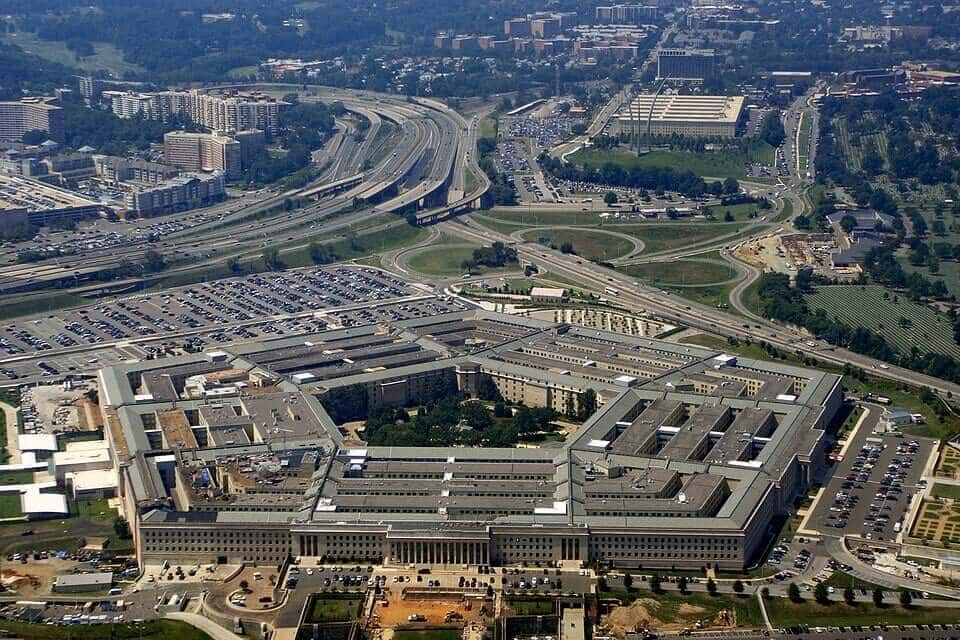 Aerial view of the Pentagon
The principal military advisory body to the President, the Secretary of Defense, and the Homeland Security Council, composed of the senior uniformed leaders from each of the service branches. Per Title 10, U.S. Code § 151, the body includes the Chairman, Vice Chairman, and the service chiefs of the Army, Navy, Marine Corps, Air Force, Space Force, and National Guard.
A critical distinction: the Joint Chiefs hold no operational command authority over U.S. forces — their role is strictly advisory. As the JCS institutional history makes clear, operational command runs through the Combatant Commanders, not through this body.
Selection & Training Standards
Physical and mental demand varies significantly across branches, but most assessments across the U.S. military point to the Marine Corps as the benchmark for entry-level attrition — its 13-week boot camp is the longest of any service branch.
Physical demand drives equipment decisions as much as doctrine. Marines and Special Operations personnel carry substantial loads, making purpose-built, load-bearing tactical gear — MOLLE-compatible platforms, plate carriers, and weight-distributed rigs — operationally essential.
Tier 1 units — such as MARSOC, Army Special Forces, and Naval Special Warfare — reframe the standard entirely. Across every branch, elite selection pipelines set the true ceiling for physical and technical readiness.
Warrant Officer
A Warrant Officer — a technical specialist who provides leadership and expertise in a specific discipline — occupies a distinct tier in the military hierarchy: above senior enlisted ranks but below commissioned officers at the O-1 grade. As USAGov explains, warrant officers function as the force's subject-matter authorities rather than generalist commanders.
- Branches that utilize warrant officers: Army, Navy, Marine Corps, and Coast Guard
- Branches that do not: The Air Force and Space Force eliminated the grade and do not currently fill it
When sourcing branch-specific gear, understanding whether a unit's technical leadership runs through warrant officers directly shapes procurement channels and equipment authorization pathways.
Tactical Gear
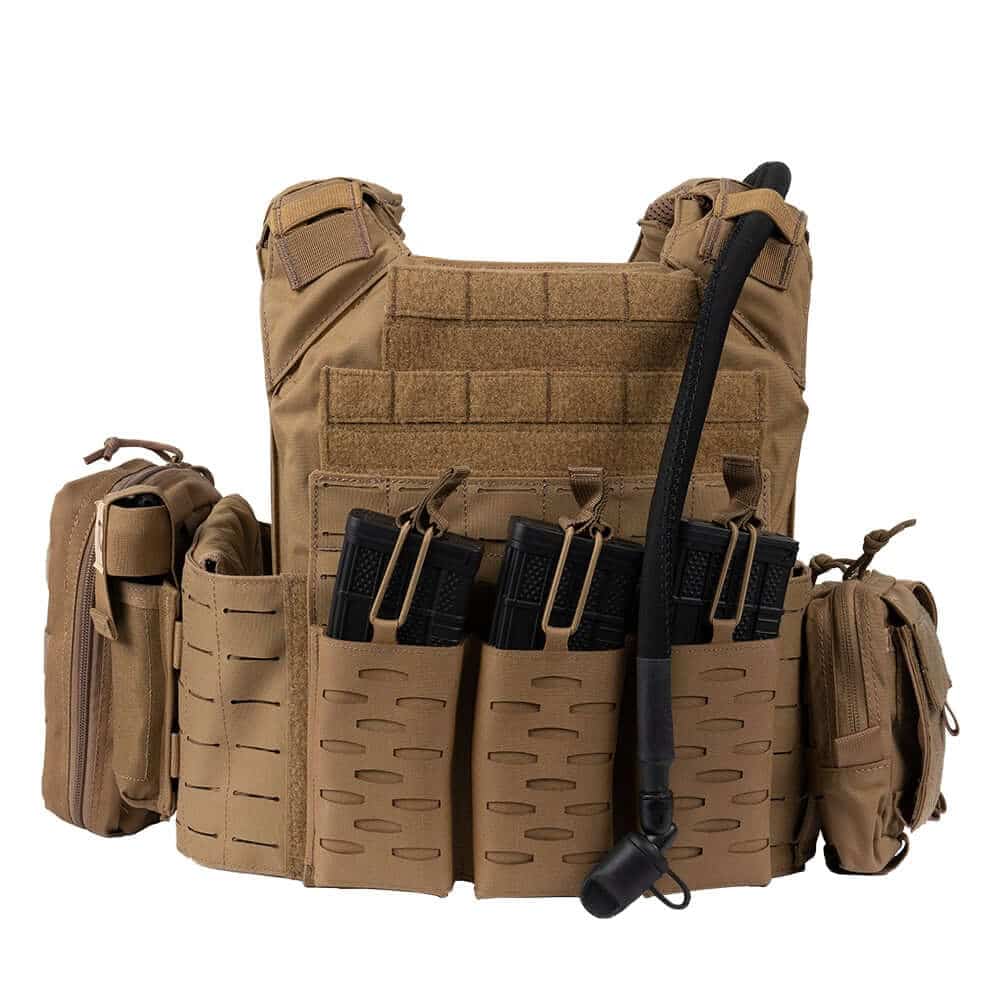
Tactical gear refers to purpose-built equipment engineered for high-stress operational environments — spanning everything from load-bearing platforms and ballistic protection to communications systems and individual first aid kits (IFAKs).
Where standard-issue equipment establishes a baseline, tactical gear addresses mission-specific demands: durability under sustained use, protection against defined threat levels, and load-bearing efficiency that keeps operators effective across extended engagements.
According to market research firm MarketsandMarkets, the global military tactical gear market is projected to reach $11.2 billion by 2033, growing at a 7.2% CAGR — a figure that reflects just how operationally central purpose-built equipment has become across all six branches.
Conclusion: Equipping the Mission
Each branch of the U.S. Armed Forces operates under distinct doctrine, uniform regulations, and equipment standards — and closing that knowledge gap is where professionalism begins. From a Marine's plate carrier setup to an Army Warrant Officer's technical load-out, the right gear is not interchangeable.
As General John "Black Jack" Pershing famously observed: "The deadliest weapon in the world is a Marine and his rifle." That standard — purpose-built, mission-specific, uncompromising — is the benchmark every branch applies to its personnel and its equipment.
That operational specificity is exactly what informs how LAPG builds its branch-specific collections — not guesswork, but real regulatory and mission-driven distinctions. Browse duty belts, IFAKs, patrol boots, and MOLLE-compatible systems selected for the branch, mission, and standard you actually serve under.
FAQs
What are the six branches of the U.S. military and what makes each one unique?
The six branches of the U.S. military are the Army, Navy, Marine Corps, Air Force, Space Force, and Coast Guard. Each operates under a distinct mission domain: the Army handles land warfare, the Navy controls sea and amphibious operations, the Marine Corps specializes in rapid expeditionary assault, the Air Force commands air and aerospace superiority, the Space Force manages satellite and space assets, and the Coast Guard enforces maritime law and coastal defense. Understanding these distinctions helps tactical professionals choose branch-appropriate gear — for example, maritime operators need different load-outs than ground infantry.
What is the difference between MOS, AFSC, NEC, and MOSID — and why do these codes matter for tactical gear selection?
MOS (Military Occupational Specialty), AFSC (Air Force Specialty Code), NEC (Navy Enlisted Classification), and MOSID (Marine Corps) are branch-specific codes that classify a service member's trained role and duties. Each branch uses its own coding system: the Army and Marines use MOS/MOSID, the Air Force uses AFSC, and the Navy uses NEC. These codes directly influence gear requirements — a combat medic (68W MOS) needs a different kit than an infantryman (11B). When shopping for tactical gear, knowing your specialty code helps narrow the right equipment for your specific mission profile.
What does "joint operation" mean in military terminology?
A joint operation is any military mission that involves two or more branches of the U.S. Armed Forces operating under a unified command structure. Joint operations are coordinated efforts requiring inter-branch cooperation under shared command authority. The term is central to modern military doctrine, as most large-scale operations — from overseas deployments to domestic disaster response — involve Army, Navy, Air Force, and Marine assets working together. Tactical professionals working in joint environments often need gear compatible across branches, making interoperability a key factor in equipment selection. Ctsofficialtraining
What is the chain of command in the U.S. military, and what key terms describe it?
The U.S. military chain of command is the formal hierarchy through which orders flow from the President (Commander-in-Chief) down through the Secretary of Defense, Combatant Commanders, and ultimately to individual service members. Key terms include: POTUS (President of the United States), SECDEF (Secretary of Defense), COCOM (Combatant Command), CINC (Commander in Chief — now largely replaced by "Combatant Commander"), and NCO (Non-Commissioned Officer). The U.S. Department of Defense Dictionary of Military Terms provides official, standardized definitions for these command roles across all branches. Understanding the chain of command is essential for both operational context and proper wear of rank insignia on tactical uniforms. Defense News
What are the most important tactical acronyms every professional should know?
The most essential tactical acronyms span communication, terrain, and operations. EDC (Everyday Carry), CCW (Concealed Carry Weapon), OPSEC (Operational Security), AOR (Area of Responsibility), and FOB (Forward Operating Base) are among the most commonly used terms across both military and civilian tactical spaces. Additional critical terms include ROE (Rules of Engagement), CAS (Close Air Support), MEDEVAC (Medical Evacuation), and AAR (After Action Review). For gear professionals, knowing whether a client operates in an AOR versus a FOB environment shapes everything from pack selection to communication equipment needs. Tactical Distributors
What is the difference between active duty, reserve, and National Guard service?
Active duty service members serve full-time under federal orders and are the primary deployable force. Reserve component soldiers (Army Reserve, Navy Reserve, etc.) maintain civilian careers while training part-time and deploying when federally activated. The National Guard serves a dual state-federal mission — answering to state governors for domestic emergencies and to the federal government when mobilized for overseas operations. These distinctions affect uniform standards, gear allowances, and even which duty boots or uniforms are authorized under each component's regulations.
What does "tactical" mean in a military context versus everyday use?
In military doctrine, "tactical" refers to the level of operations concerned with direct combat actions — positioning troops, executing engagements, and achieving immediate objectives in the field, as distinct from "operational" (theater-level planning) or "strategic" (national-level goals). In civilian and gear contexts, "tactical" broadly describes equipment designed for durability, utility, and mission-readiness. The Air Force defines tactical objectives as those pursued in direct support of strategic or operational goals. For gear buyers, understanding this distinction clarifies why a "tactical backpack" is built to different standards than a recreational hiking pack. DoD
What is OPSEC and why is it critical for tactical professionals?
OPSEC (Operational Security) is the process of identifying and protecting sensitive information that could be exploited by adversaries to gain a tactical advantage. It originated as a formal U.S. military doctrine after the Vietnam War and has since been adopted by law enforcement, government agencies, and private security professionals. OPSEC applies not just to classified data but to everyday behaviors — social media posts, gear loadout photos, and location sharing can all compromise mission security. Professionals operating in sensitive environments should choose low-profile gear that minimizes visual signature as part of an OPSEC-conscious kit.
How does rank insignia differ across U.S. military branches?
Each U.S. military branch uses a distinct insignia system to denote rank. The Army, Air Force, Marine Corps, and Space Force use similar enlisted chevron structures with officer rank denoted by bars, leaves, eagles, and stars — but the designs and titles differ by branch. The Navy uses a rate/rating system with chevrons, specialty marks, and collar devices. The Coast Guard mirrors the Navy's structure. Key terms include E-1 through E-9 (enlisted grades), O-1 through O-10 (officer grades), Warrant Officer, and Flag Officer (generals and admirals). Proper insignia placement on tactical uniforms is governed by each branch's uniform regulation.
What is the difference between Army Special Forces (Green Berets), Navy SEALs, Marine Raiders, and Air Force PJs?
These are four of the U.S. military's elite special operations forces (SOF), each under a different branch and mission focus. Army Special Forces (Green Berets) specialize in unconventional warfare and foreign internal defense. Navy SEALs (Sea, Air, and Land teams) conduct maritime special operations and direct action raids. Marine Raiders (MARSOC) handle special reconnaissance and direct action. Air Force Pararescuemen (PJs) specialize in combat search and rescue (CSAR) and personnel recovery. All fall under USSOCOM (U.S. Special Operations Command). Each SOF community uses branch-specific and mission-specific gear — exploring special operations equipment requires knowing which unit's requirements you're sourcing for.
What is the DoD Dictionary of Military Terms and who uses it?
The U.S. Department of Defense Dictionary of Military Terms is the official compilation of standardized military words and phrases, developed to create uniform language across all branches — including the Army, Navy, Air Force, Marine Corps, and Coast Guard. It is regularly updated to reflect advances in technology, tactics, and joint operations doctrine. The dictionary is accessible to military personnel, government officials, and the general public through official channels. For tactical professionals, consultants, and gear specialists writing training materials or product descriptions, referencing the DoD Dictionary ensures terminology accuracy and credibility. Defense NewsDefense News
What does "Force Multiplier" mean in military terminology, and how does it apply to tactical gear?
A force multiplier is any factor — technology, training, tactics, or equipment — that enables a unit to achieve greater combat effectiveness than its size alone would suggest. The DoD defines a force multiplier as a factor or combination of factors that give personnel or a weapons system the ability to accomplish greater effectiveness than without it. In the context of tactical gear, force multipliers include night vision devices, body armor, communication systems, and purpose-built load-bearing equipment. Investing in the right tactical equipment — rather than generic alternatives — is how professionals maximize operational effectiveness with any given force size. Defense News