Listen to this article
Table of Contents
- What You Need Before You Measure
- Quick Tactical Pants Measurement Chart
- Step 1: Identify Where You Wear Your Tactical Pants
- Step 2: Measure Your Waist
- Step 3: Measure Your Hips and Seat
- Step 4: Measure Your Thigh and Rise
- Step 5: Measure Your Inseam
- Step 6: Compare the Size Chart and Perform a Movement Test
- How Should Tactical Pants Fit?
- Common Tactical Pants Measuring Mistakes
- Final Tactical Pants Sizing Checklist
- FAQs
To measure yourself for tactical pants, record your waist at the point where the waistband will sit, the fullest part of your hips and seat, your thigh, rise, and inseam. Then compare those measurements with the size chart for the exact pant you plan to buy. The process takes about 10 minutes and helps prevent a waistband that shifts under gear, a crotch that binds when you squat, or a hem that drags over your boots.
Tactical pants are not sized exactly the same across every brand or product line. A labeled 34-inch waist may fit differently depending on the rise, stretch, seat allowance, and cut. That is why body measurements and the product-specific chart matter more than the number printed on a pair you already own.
For a general overview of clothing measurements, this step-by-step pants measurement guide covers the same core waist, and inseam measurements used below. This guide adds the tactical fit checks needed for duty belts, boots, cargo pockets, reinforced knees, and active movement.
What You Need Before You Measure
- A flexible cloth or tailor's measuring tape
- A mirror or a second person to help keep the tape level
- Thin clothing or the base layer you normally wear under tactical pants
- A pair of well-fitting pants for comparison
- The footwear and belt setup you expect to use
Stand naturally, breathe normally, and keep the tape snug without compressing your body. Take each measurement twice. If the two readings differ, repeat the measurement and record the most consistent result.
Quick Tactical Pants Measurement Chart
| Measurement | Where to Measure | Why It Matters |
|---|---|---|
| Waist | Around the point where the pant waistband will sit | Controls waistband stability and belt comfort |
| Hips/Seat | Around the fullest part of the hips and buttocks | Provides room for sitting, squatting, and pocket access |
| Thigh | Around the fullest part of the upper thigh | Helps identify athletic, straight, or relaxed-fit needs |
| Rise | From the front waistband, through the crotch, to the back waistband | Affects crotch comfort, coverage, and knee placement |
| Inseam | From the crotch to the desired hem position | Determines leg length and boot clearance |
Step 1: Identify Where You Wear Your Tactical Pants
Start by finding the height where the waistband will actually sit. This may be at your natural waist, at the top of your hip bones, or slightly lower depending on the pant's rise and your preference.
Do not assume that every tactical pant is intended to sit at the narrowest point of your torso. Product photos, fit descriptions, and the manufacturer's size chart can help you determine whether the style is low-, mid-, or high-rise. Measuring at the wrong height can change the waist result by several inches.
Wrap the tape around the intended waistband position. Keep it level with the floor and note that location so you can repeat the measurement consistently.
Tactical fit note: A duty belt normally sits over the pants and an inner belt, so you generally should not add an inch to your body measurement just because you wear a duty belt. If you carry equipment inside the waistband, check the holster or equipment manufacturer's fit guidance and evaluate that setup separately.
Step 2: Measure Your Waist
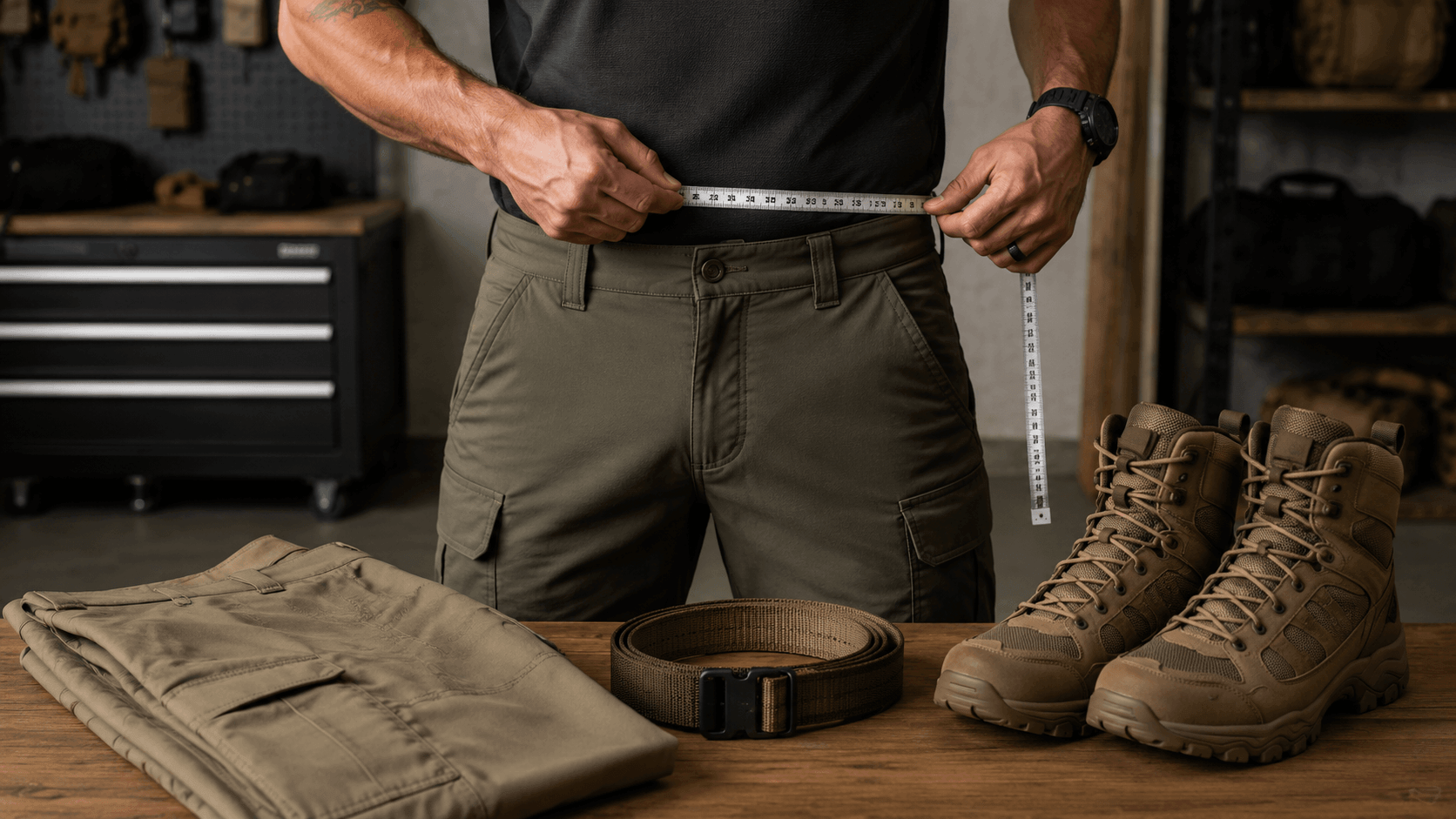
With the tape at the waistband position you identified, measure around your body while standing in a relaxed posture. Exhale normally, but do not suck in your stomach or push it out. The tape should touch your body without digging in.
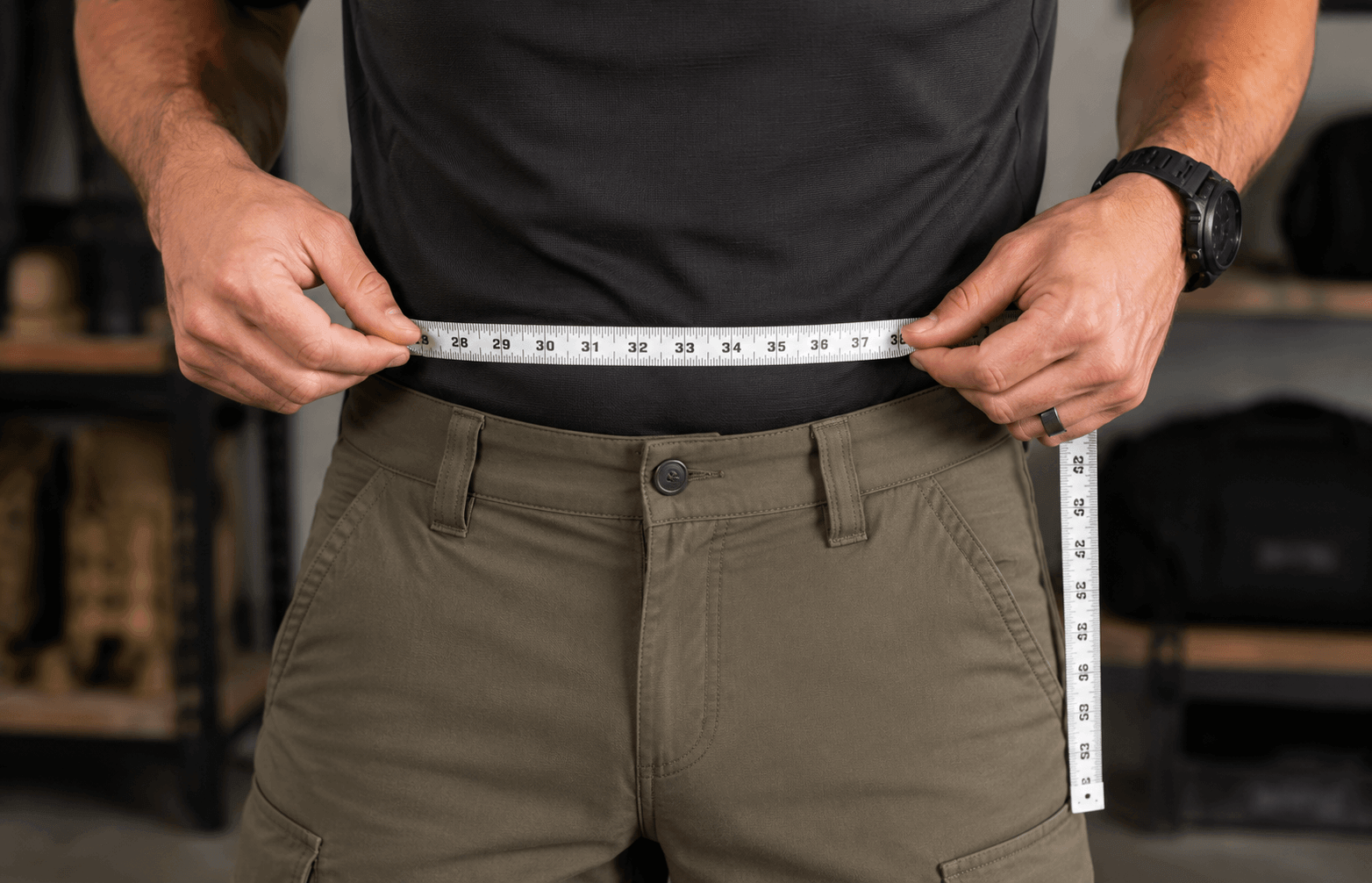
- Keep the tape parallel to the floor.
- Place one finger under the tape to prevent overtightening.
- Read the measurement where the tape overlaps.
- Repeat the measurement and record it in inches.
For men's pants labeled with two numbers, the first number usually represents the waist and the second represents the inseam. For example, 34x32 typically indicates a 34-inch waist and a 32-inch inseam. However, the finished garment measurement may not match the label exactly, so always use the specific size chart.
Step 3: Measure Your Hips and Seat
Stand with your feet close together and wrap the tape around the fullest part of your hips and buttocks. Check the tape in a mirror to confirm that it stays level all the way around.
This measurement is especially important when the pant has a tailored seat, a slimmer thigh, or limited stretch. It is also a key reference for women's tactical pants, because waist and hip measurements may point to different labeled sizes.
If your waist matches one size and your hip measurement matches a larger size, use the manufacturer's guidance and usually prioritize the measurement that needs more room. A waistband can often be adjusted with a belt, but insufficient seat or hip room can restrict movement and pull cargo pockets out of position.
Step 4: Measure Your Thigh and Rise
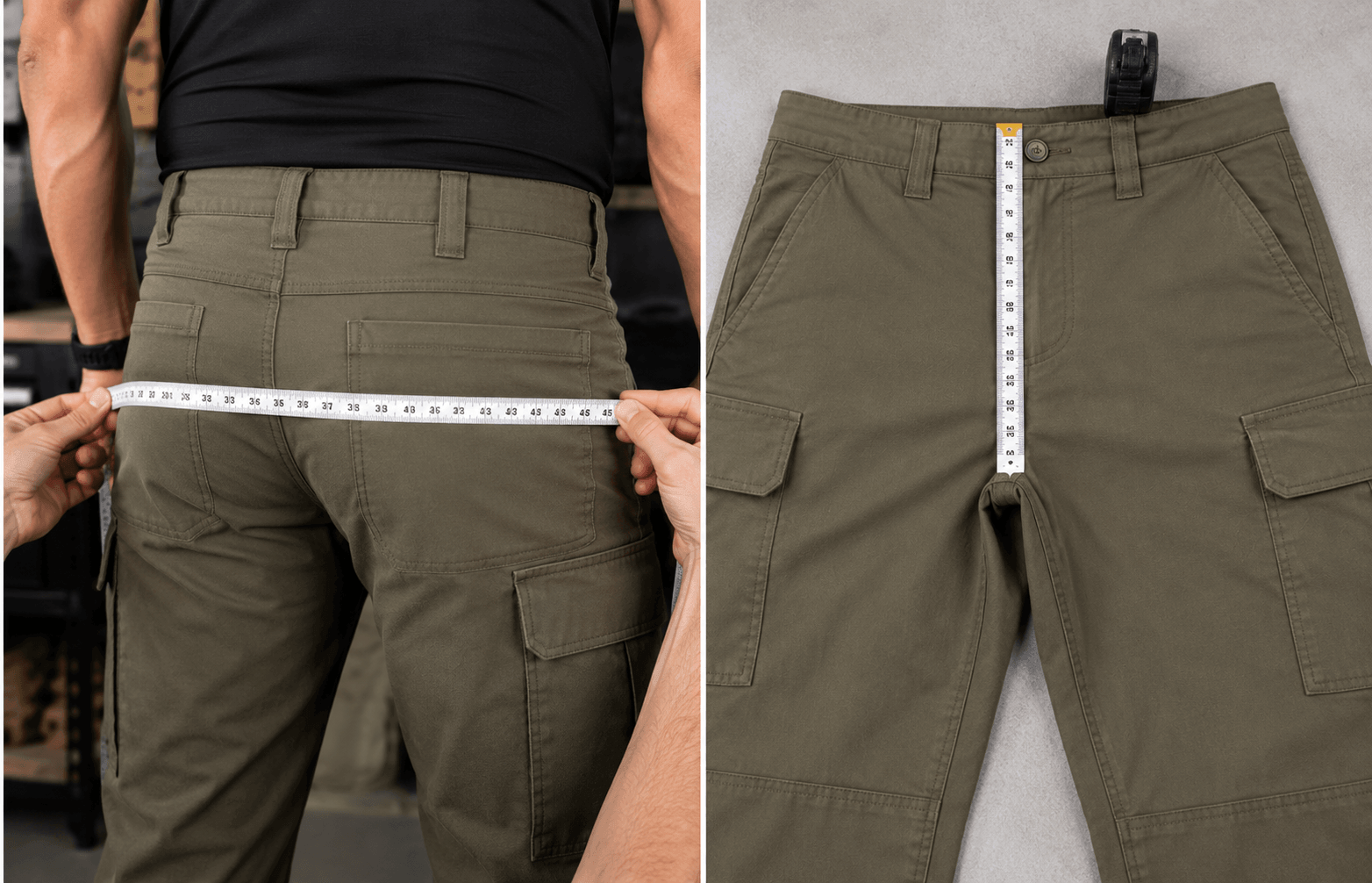
How to Measure Your Thigh
Wrap the tape around the fullest part of one upper thigh, usually just below the crotch. Keep your leg relaxed and the tape snug. This measurement helps when choosing between slim, athletic, straight, and relaxed cuts.
A larger thigh measurement does not automatically mean you need a larger waist. It may mean that a different cut is a better match. Stretch fabric can help, but the pant should still have enough room to kneel, climb, and sit without constant tension across the thigh.
How to Check Rise
Rise is the distance from the front waistband, through the crotch, to the back waistband. It influences where the waistband sits, how much coverage you have when bending, and whether the crotch binds during movement.
The easiest way to estimate your preferred rise is to measure a similar pair of pants that fits well. Button and zip the pants, lay them flat, and measure from the crotch seam to the top of the front waistband for the front rise. Measure from the crotch seam to the top of the back waistband for the back rise.
Waist, inseam, and rise are among the most useful numbers when comparing pants online, but their relationship changes by cut and brand. This overview of how rise and inseam affect pant fit explains why the same labeled size can feel different from one style to another.
Step 5: Measure Your Inseam
The inseam runs from the crotch seam down the inside of the leg to the hem. You can measure your body with help from another person, but measuring a well-fitting pair of similar pants is often easier and more repeatable.
Method A: Measure Your Body
- Stand upright in the footwear you expect to wear.
- Have another person measure from the crotch down the inside of your leg.
- Stop where you want the hem to sit over your boot or shoe.
Method B: Measure Pants That Already Fit
- Lay the pants flat with the legs straight.
- Smooth the fabric without stretching it.
- Measure from the crotch seam along the inner leg to the bottom of the hem.
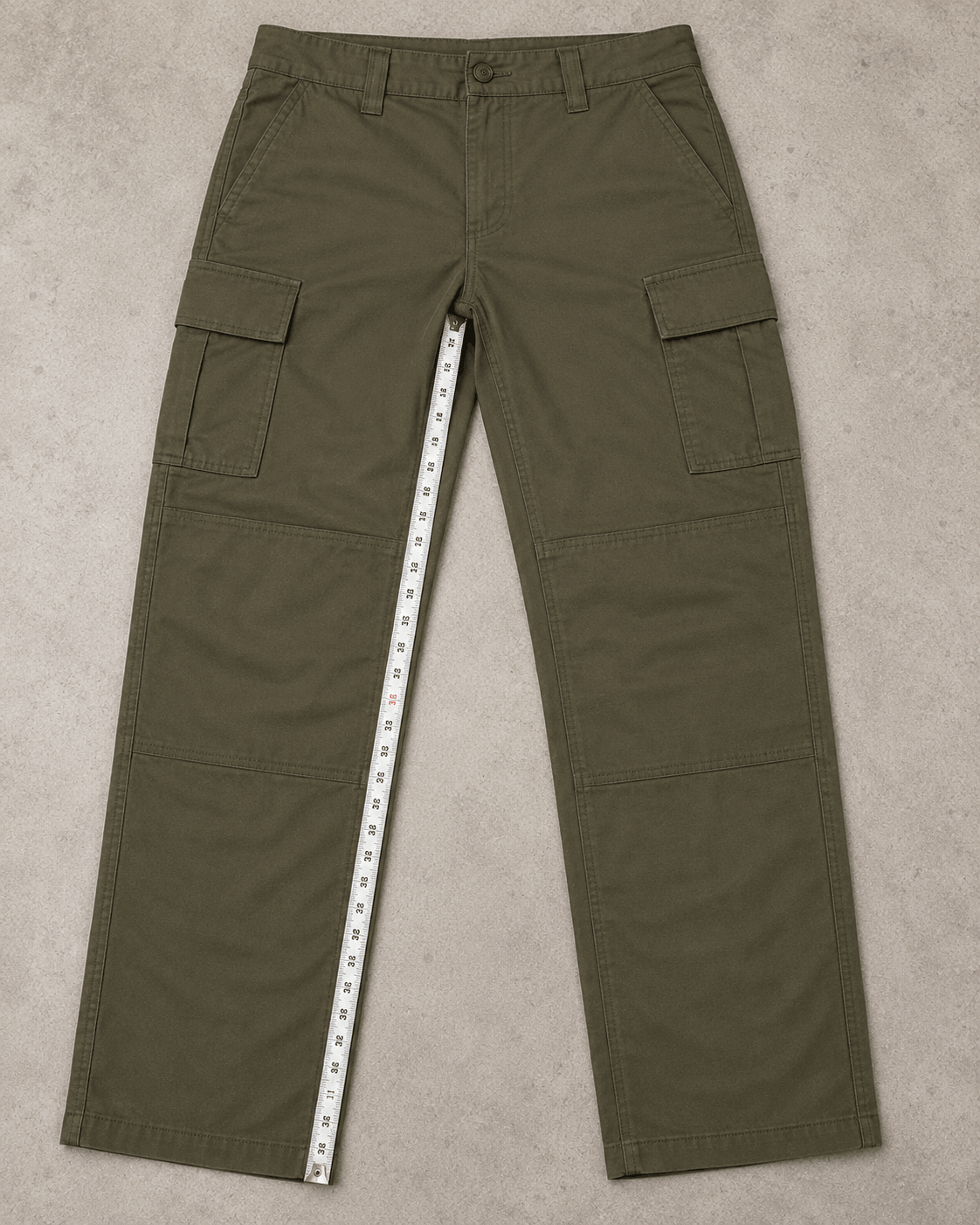
Do not automatically round every inseam up or down. Choose the available length that produces the break and boot clearance you prefer. A slightly longer inseam may work with tall boots, while too much fabric can bunch behind the knee or drag under the heel.
Short, regular, tall, and unhemmed options are not standardized across all brands. Use your actual inseam instead of relying on height alone. Shoppers who need extended waist or inseam options can also review big and tall tactical pants.
Step 6: Compare the Size Chart and Perform a Movement Test
Use your measurements on the size chart for the exact product, not a general chart from another brand. If two measurements fall into different sizes, prioritize the area where the pant cannot comfortably stretch or be adjusted.
Once the pants arrive, test them with the base layers, boots, and belt system you normally use:
- Waist: The waistband should stay in place without pinching or requiring the belt to hold up excessively loose pants.
- Seat and thighs: Sit, squat, lunge, step onto a chair-height surface, and kneel. The fabric should not bind across the crotch, seat, or thighs.
- Knees: Articulated panels or knee-pad pockets should center over your knees when standing and remain usable when kneeling.
- Pockets: Cargo and hand pockets should remain accessible without pulling open or twisting around the leg.
- Hem: The hem should clear the floor and heel while giving you the amount of break you prefer over your footwear.
- Belt compatibility: Confirm that the belt loops fit your inner, duty, or range belt. Browse duty belts separately because belt width and loop capacity vary by pant.
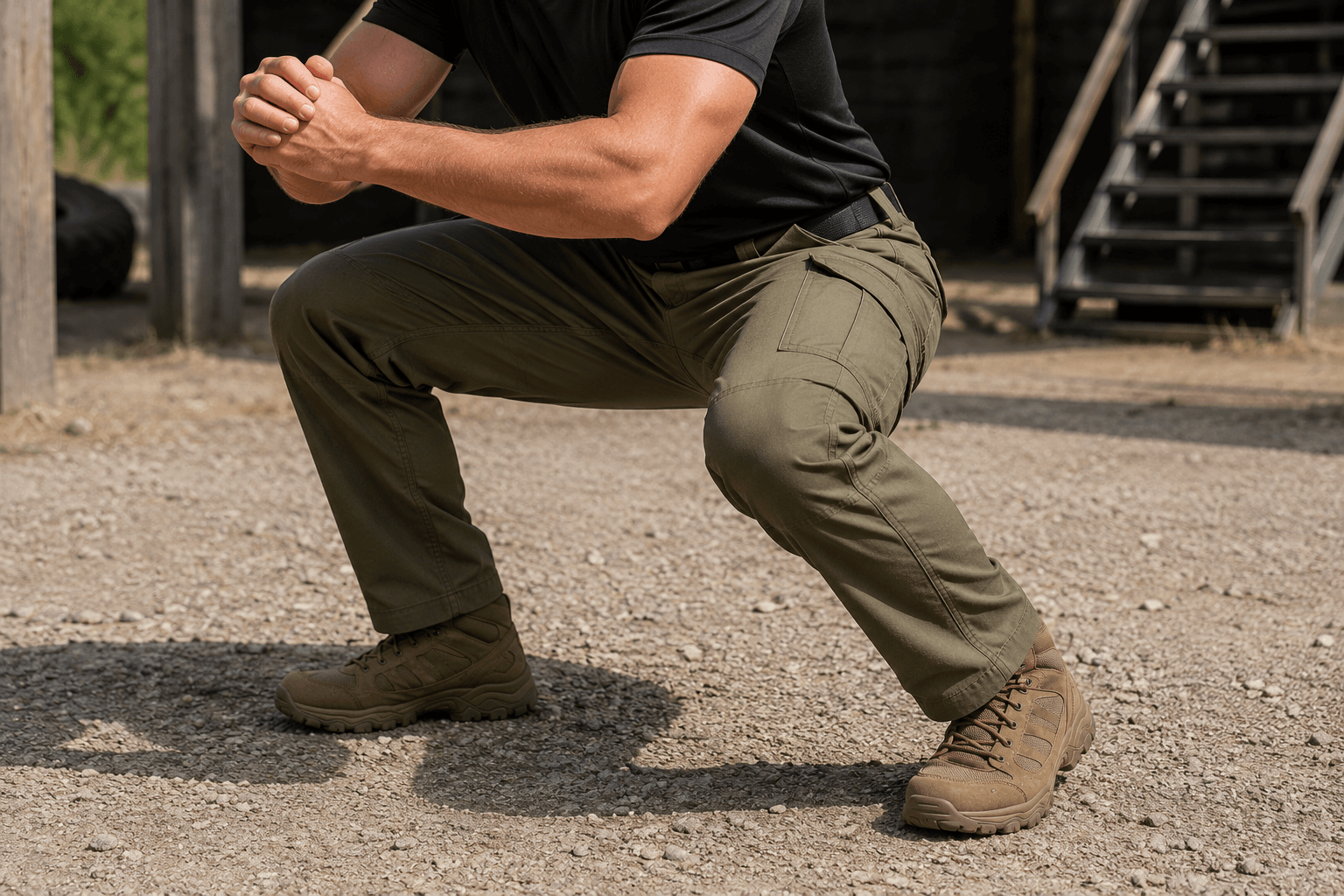
If the waist is correct but the seat, rise, or thighs consistently bind, changing cuts may solve the problem better than simply sizing up. Trouser tailoring guidance also explains why the thigh-to-waist area, rise, and break have a major effect on overall fit.
How Should Tactical Pants Fit?
Tactical pants should fit securely at the waist while allowing unrestricted movement through the seat, crotch, thighs, and knees. They should be roomy enough for the tasks and equipment you use, but not so loose that pockets swing, knee panels shift, or excess fabric catches on obstacles.
The best fit depends on the assignment:
- Patrol and duty: Stable waistband, compatible belt loops, clean appearance, and room to sit in a vehicle.
- Range and training: Unrestricted squat and lunge movement with easy pocket access.
- Outdoor use: Comfortable rise, boot-friendly inseam, and enough thigh room for climbing.
- Low-profile or everyday wear: A cleaner taper with tactical pocket placement that does not create unnecessary bulk.
For more help choosing materials, pocket layouts, and fit profiles, read our guide on best tactical pants buying guide.
Common Tactical Pants Measuring Mistakes
- Using the size of old jeans as your only reference: Labels and cuts vary, and worn fabric can stretch.
- Measuring only the natural waist: Measure where the selected pant is designed to sit.
- Skipping the hip or thigh measurement: Waist and inseam alone do not describe the entire fit.
- Assuming all tall sizes are the same: Inseam, rise, and knee placement vary by product.
- Adding arbitrary clearance: Do not automatically add an inch for a duty belt or round every measurement in the same direction.
- Testing without normal gear: Boots, base layers, and belt systems can change how the pants feel and move.
Final Tactical Pants Sizing Checklist
- Measure at the intended waistband position.
- Record waist, hips/seat, thigh, rise, and inseam.
- Take every measurement twice.
- Use the size chart for the exact pant.
- Choose the cut that fits your build, not just the labeled waist.
- Test squatting, kneeling, sitting, stepping, and belt compatibility.
With those measurements recorded, you can compare products with much more confidence. Browse tactical pants, men's tactical pants, or stretch tactical pants, then check the size chart on each product page before ordering.