Listen to this article
Table of Contents
- The Best Tactical Pants of 2026 at a Glance
- How We Chose These Tactical Pants
- Best Overall Tactical Pants: LA Police Gear Atlas Pant
- Best Low-Profile Tactical Pants: First Tactical A2 Tactical Pant
- Best Lightweight Tactical Pants: Propper Lightweight Tactical Pant
- Best Tactical Combat Pants: LAPG Atlas Combat Pant
- Best EMS Tactical Pants: LAPG Stretch EMS Pant
- Best Women’s Lightweight Tactical Pants: Propper Women’s Lightweight Tactical Pant
- How to Choose Tactical Pants
- Match the Pants to Your Primary Use
- Overt vs. Low-Profile Tactical Pants
- Tactical-Pant Fabrics Explained
- Choose Useful Pockets, Not Just More Pockets
- Closures, Belt Loops and Hardware
- How Tactical Pants Should Fit
- Reinforcement and Knee Protection
- Tactical Pants vs. Cargo Pants
- Final Tactical-Pants Buying Checklist
- FAQs
Tactical pants are no longer limited to stiff, oversized cargo pants. Today’s best options combine durability, stretch, organized storage, and a fit that works with belts, boots, holsters, and the rest of your loadout.
The best tactical pants for you still depend on the job. A patrol officer may prioritize reinforced construction and duty-belt compatibility. Someone carrying concealed may want a low-profile design with discreet storage. An EMT needs purpose-built organization, while a shooter or outdoor user may care more about mobility, breathability, and knee protection.
This guide identifies the strongest current options by use case and explains how to choose tactical pants that fit the way you actually work, train, or carry.
The Best Tactical Pants of 2026 at a Glance
| Best for | Recommended tactical pants | Why they stand out | Main tradeoff |
|---|---|---|---|
| Best overall | LA Police Gear Atlas Pant | Balanced storage, stretch, reinforced construction, broad sizing, and two fit options | More visibly tactical than a covert pant |
| Best low-profile option | First Tactical A2 Tactical Pant | Streamlined cargo storage, stretch, and a clean professional appearance | Higher price than basic duty pants |
| Best lightweight option | Propper Lightweight Tactical Pant | Lightweight ripstop, practical pocket layout, and reinforced knees | Relaxed fit may feel roomy to some wearers |
| Best combat pant | LAPG Atlas Combat Pant | Integrated D3O knee protection, hard-use materials, and extensive storage | More specialized and overt than an everyday pant |
| Best for EMS | LAPG Stretch EMS Pant | Purpose-built storage for medical and first-response equipment | Too much storage for general everyday use |
| Best women’s lightweight option | Propper Women’s Lightweight Tactical Pant | Women-specific fit, lightweight ripstop, and broad utility | Less stretch-focused than some newer designs |
These categories are intended to help you match a pant to a job rather than imply that one model is best for every wearer.
How We Chose These Tactical Pants
We evaluated current options using criteria that matter during actual wear:
- Mobility: Stretch, gusseting, articulated knees, and freedom of movement.
- Durability: Fabric construction, reinforcement, and stitching at high-stress areas.
- Storage: Pocket usefulness, placement, and accessibility rather than pocket count alone.
- Fit: Waist and inseam availability, cut, rise, and compatibility with belts or equipment.
- Use-case fit: Whether the design is appropriate for patrol, range use, EMS, concealed carry, outdoor work, or combat applications.
- Value: Whether the materials and features justify the product’s position in the market.
- Current availability: Products were checked against the current LAPG catalog.
Because comfort and durability depend on body type, environment, and frequency of use, this guide does not claim that every recommendation has been subjected to identical long-term wear testing.
Best Overall Tactical Pants: LA Police Gear Atlas Pant
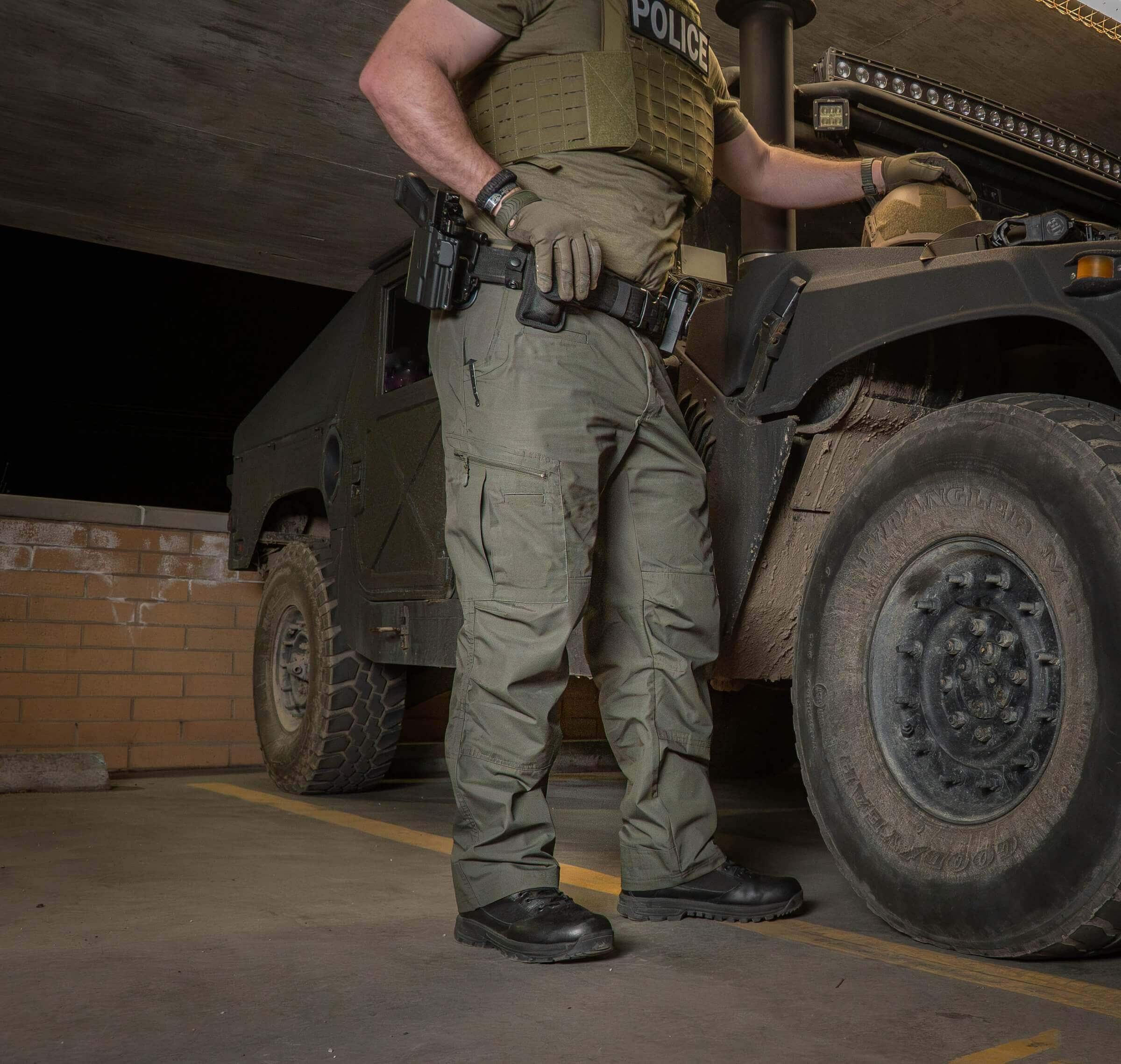
The LA Police Gear Atlas Men’s STS Stretch 10 Pocket Tactical Cargo Pant is the strongest all-around option for buyers who need one pant that can move between work, training, range days, travel, and general outdoor use.
The Atlas combines a poly-cotton ripstop body with stretch panels in areas where mobility matters. Its construction includes articulated and reinforced knees, a gusseted crotch, knee-pad pockets, reinforced belt loops, and ten pockets. It is also currently offered in regular and slim fits, multiple inseams, and a broad waist range.
What it does well
- Provides enough stretch for kneeling, climbing, and getting in and out of vehicles.
- Offers substantial storage without moving into full combat-pant territory.
- Works with EDC belts, range belts, and many professional loadouts.
- Gives buyers a choice between regular and slim fits.
- Delivers a strong mix of technical features and overall value.
Where it may not fit
The Atlas has an identifiable tactical appearance. Someone working in plain clothes or trying to blend into a casual office, travel, or urban environment may prefer a cleaner design.
Best for: Patrol, security, range training, outdoor use, work, travel, and buyers seeking one versatile tactical pant.
Best Low-Profile Tactical Pants: First Tactical A2 Tactical Pant
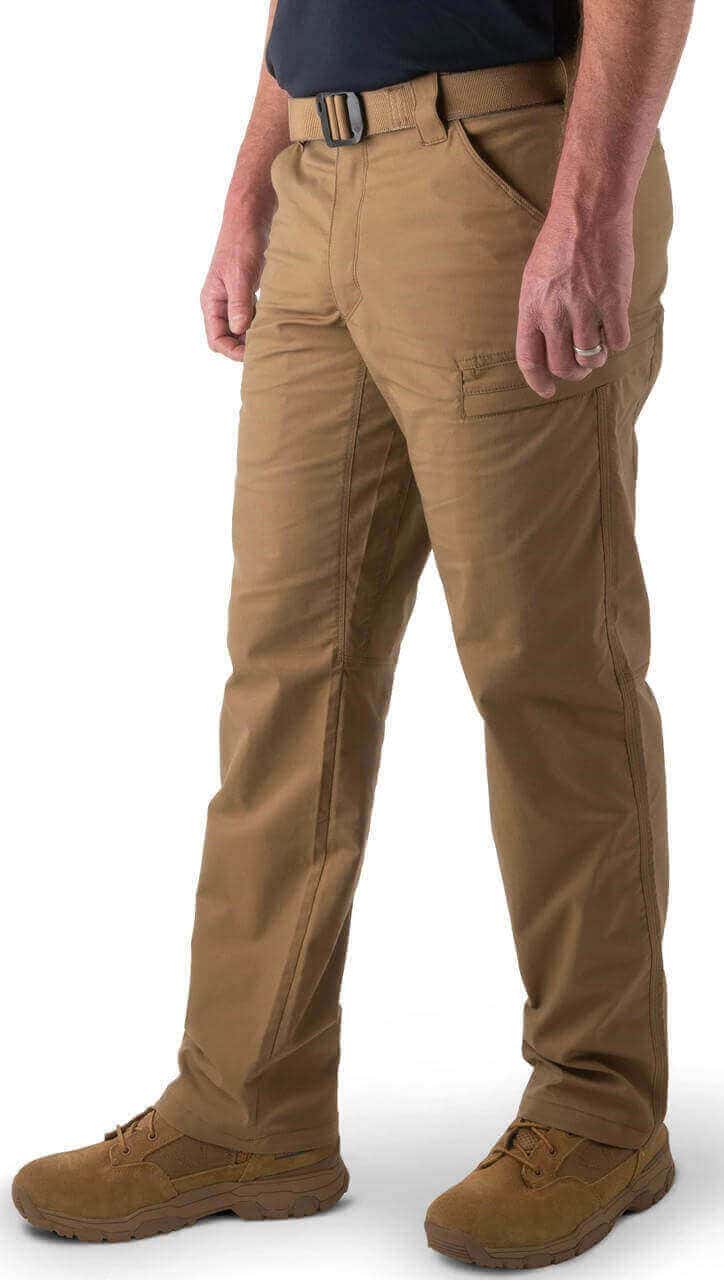
The First Tactical A2 Tactical Pant is a strong option for professionals who need useful storage and mobility without oversized external cargo pockets.
Its published specifications include a 6.4-ounce polyester-cotton fabric with mechanical stretch, a water-repellent treatment, discreet zippered cargo pockets, utility storage, a running gusset, and reinforced belt-loop construction.
The A2 does not look like a conventional pair of chinos, but its streamlined pocket design is less conspicuous than a traditional military or BDU-style pant.
What it does well
- Keeps thigh storage flatter and more discreet.
- Provides useful stretch for active movement.
- Offers secure zippered storage.
- Presents a clean enough appearance for many security, administrative, and plainclothes roles.
- Works well for travel and everyday carry when pocket security matters.
Where it may not fit
The price is substantially higher than entry-level tactical pants. Buyers who do not need discreet pockets or a refined fit may get more value from a straightforward ripstop duty pant.
Best for: Plainclothes professionals, security, travel, discreet EDC, and buyers who want tactical storage without a heavily overt design.
Best Lightweight Tactical Pants: Propper Lightweight Tactical Pant
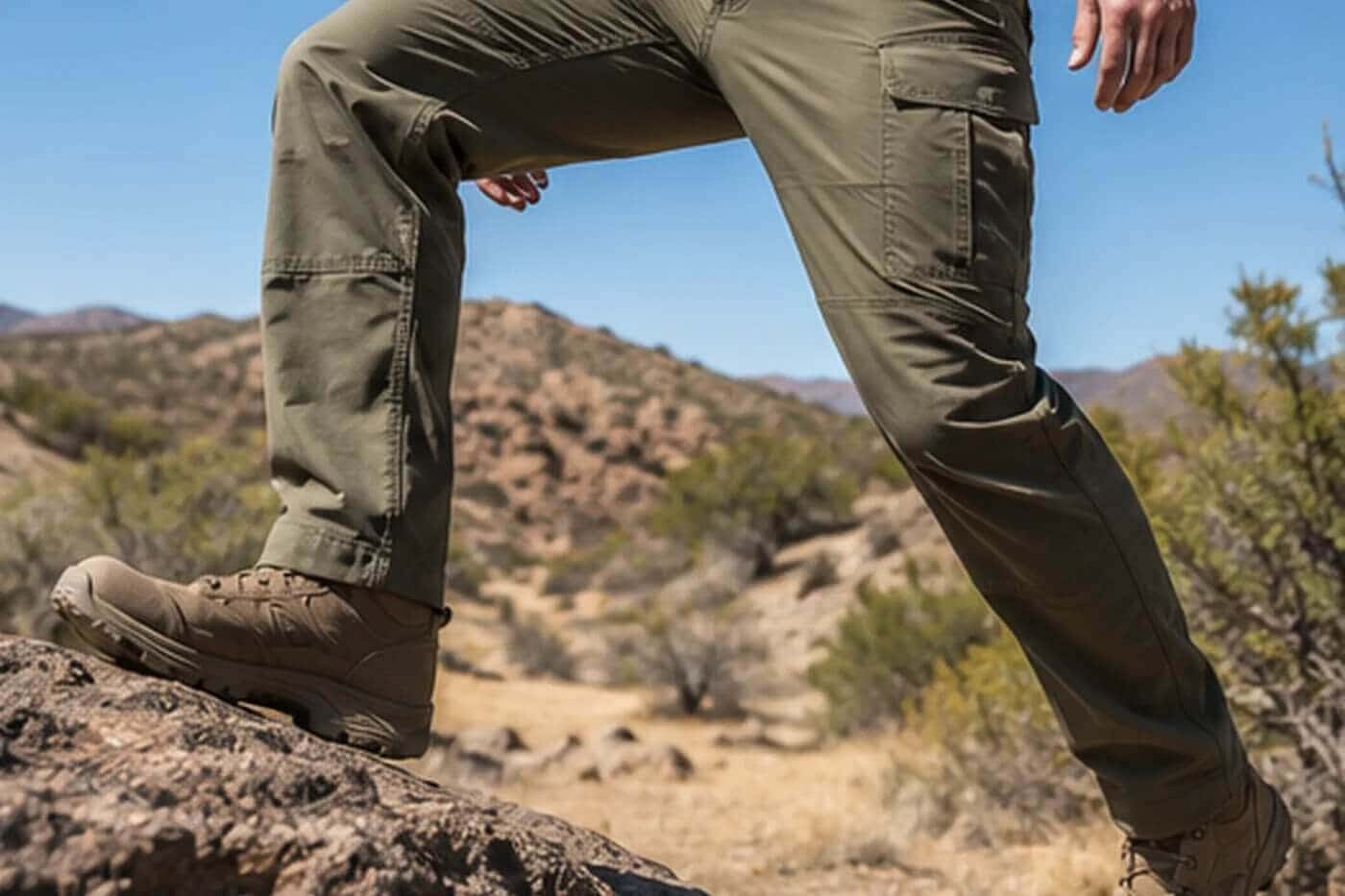
The Propper Men’s Lightweight Tactical Pant is a dependable choice for warm climates, long shifts, and users who prefer a traditional relaxed tactical fit.
Propper lists a 6.4-ounce poly-cotton ripstop fabric, a water- and stain-resistant treatment, an elasticized waistband, reinforced knees with an internal opening for knee pads, and nine pockets in its current product specifications.
The design is more traditional than many stretch-heavy modern pants, but that simplicity may be an advantage for buyers who want lightweight utility without a complex pocket system.
What it does well
- Uses a relatively lightweight ripstop fabric.
- Provides a relaxed cut for airflow and unrestricted wear.
- Includes reinforced knees and knee-pad compatibility.
- Offers broad sizing and inseam availability.
- Works well as a conventional uniform, training, or outdoor pant.
Where it may not fit
The relaxed fit may feel loose to buyers accustomed to modern athletic or slim tactical pants. It also relies more on garment construction than extensive stretch panels for mobility.
Best for: Hot weather, training, uniform use, outdoor work, and buyers who prefer a roomy traditional tactical cut.
Best Tactical Combat Pants: LAPG Atlas Combat Pant
The LAPG Men’s ACP Cordura Stretch Atlas Combat Pant with D3O Knee Pads is the specialized choice for users who regularly train, kneel, crawl, or move across rough surfaces.
Unlike a standard tactical pant with reinforced knees, the Atlas Combat Pant uses an integrated D3O knee-protection system. Its current specifications also include Cordura NYCO Extreme ripstop stretch fabric, articulated construction, and an extensive 14-pocket layout.
This level of protection and storage is unnecessary for most everyday wear, but it makes sense for tactical training and field applications where knee impacts and abrasion are routine.
What it does well
- Includes purpose-built D3O knee protection.
- Uses hard-wearing materials intended for demanding movement.
- Provides extensive storage and adjustment.
- Reduces the need for separate strap-on knee pads.
- Is better suited to ground work than an ordinary reinforced-knee pant.
Where it may not fit
It is overt, specialized, and less suitable for casual or low-profile use. Integrated knee systems can also add bulk compared with standard duty pants.
Best for: Tactical training, military use, SWAT applications, field exercises, and users who spend significant time kneeling or working close to the ground.
Best EMS Tactical Pants: LAPG Stretch EMS Pant
EMS pants should not simply be ordinary tactical pants with extra cargo pockets. Medical professionals need storage positioned for gloves, shears, and frequently accessed equipment while standing, kneeling, or working inside a vehicle.
The LAPG Men’s Stretch EMS 19 Pocket Duty Cargo Pant is currently offered specifically for this role and is designed around a high-capacity medical and first-response pocket layout.
What it does well
- Provides specialized organization for EMS equipment.
- Uses stretch construction for kneeling and patient care.
- Keeps small tools separated instead of collecting them in one large cargo pocket.
- Offers duty-appropriate black and navy options.
- Supports long shifts where accessibility matters more than a low-profile appearance.
Where it may not fit
The extensive pocket system creates unnecessary bulk for range, travel, or everyday use. Buyers who do not carry medical equipment will probably be better served by a simpler design.
Best for: EMTs, paramedics, emergency-response personnel, and medical-support roles.
Best Women’s Lightweight Tactical Pants: Propper Women’s Lightweight Tactical Pant
A women’s tactical pant should not simply be a smaller men’s pattern. Rise, hip shape, thigh room, waistband construction, and pocket placement all affect comfort and access.
The Propper Women’s Lightweight Tactical Pant combines a women-specific relaxed fit with lightweight poly-cotton ripstop, reinforced knees, knee-pad access, and a nine-pocket layout. Propper provides the full construction details in its current product listing.
It is a practical choice for buyers seeking a recognizable uniform-style tactical pant in a broad range of professional colors and inseam options.
What it does well
- Uses a women-specific pattern rather than a unisex cut.
- Offers short, regular, long, and unhemmed inseam options in the current LAPG catalog.
- Provides lightweight ripstop construction.
- Includes reinforced knees and practical cargo storage.
- Works well for uniform, range, and outdoor use.
Where it may not fit
Buyers who prioritize a close athletic fit or extensive mechanical stretch may prefer a newer stretch-focused women’s design.
Best for: Women seeking a lightweight traditional tactical pant for uniform, range, training, or outdoor use.
How to Choose Tactical Pants
The best tactical pants are not necessarily the pair with the highest pocket count or the heaviest fabric. Start by deciding where the pants will be worn and what they need to carry.
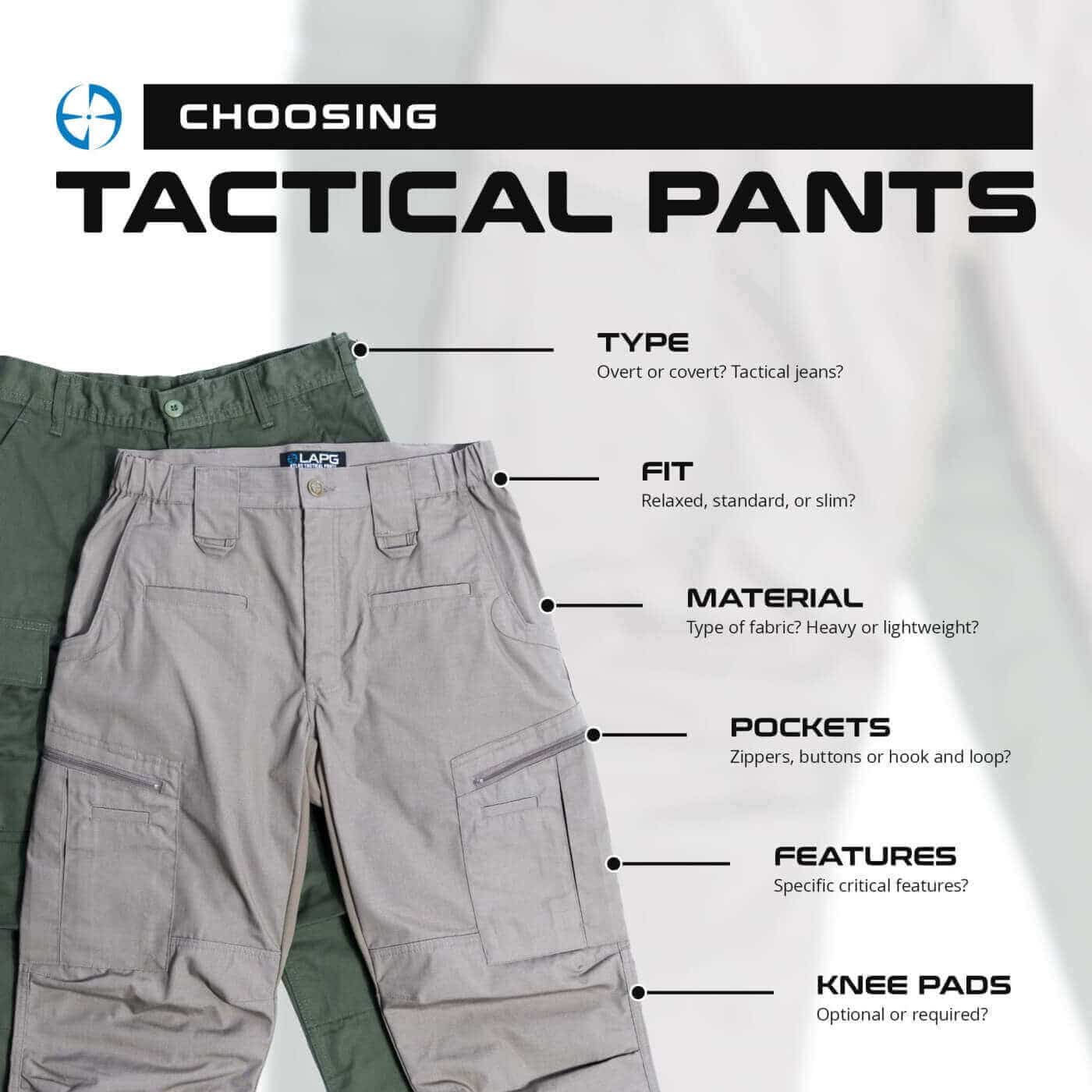
Match the Pants to Your Primary Use
Patrol and security
Look for durable belt loops, reinforced pocket edges, secure cargo storage, and a cut that remains comfortable when seated in a vehicle. The waistband and rise should work with your duty belt rather than placing the belt loops directly under pressure points.
Range and training
Mobility becomes especially important when moving between standing, kneeling, prone, and barricade positions. A gusseted crotch, articulated knees, and stretch panels can reduce binding. Reinforced knees are usually sufficient for occasional range use; dedicated knee-pad pockets are more useful for repeated ground work.
For range use, look beyond pocket count. The pants should allow unrestricted kneeling, squatting, and movement between shooting positions without pulling across the seat or thighs. A gusseted crotch, articulated knees, and strategically placed stretch usually matter more than simply adding more cargo storage.
Also consider where magazines, a phone, multitool, and other equipment sit while kneeling or wearing a range belt. Poorly positioned thigh pockets can become uncomfortable or difficult to access once other equipment is added.
Plainclothes and concealed carry
A low-profile pant should look natural in the environment where you wear it. Flat cargo pockets, hidden utility storage, and restrained branding help reduce the tactical appearance.
Do not assume that a larger waistband alone will create a proper concealed-carry fit. Try the pants with the belt, holster, and normal equipment you intend to wear. Clothing should not interfere with safe access to or retention of carried equipment.
EMS and first response
Prioritize dedicated tool organization, easy-to-clean materials, mobility, and pockets that remain accessible while kneeling. General-purpose cargo pants often provide plenty of capacity but poor organization for medical tools.
Outdoor and hot-weather use
Favor breathable, quicker-drying materials and enough room for air circulation. Lightweight fabric is more comfortable in heat, but extremely light fabric may sacrifice some abrasion resistance.
Tactical and combat applications
Look for articulated construction, durable textiles, secure adjustment, and a knee-protection system that remains positioned during movement. Combat pants are highly capable but often unnecessary for routine work or casual wear.
Overt vs. Low-Profile Tactical Pants
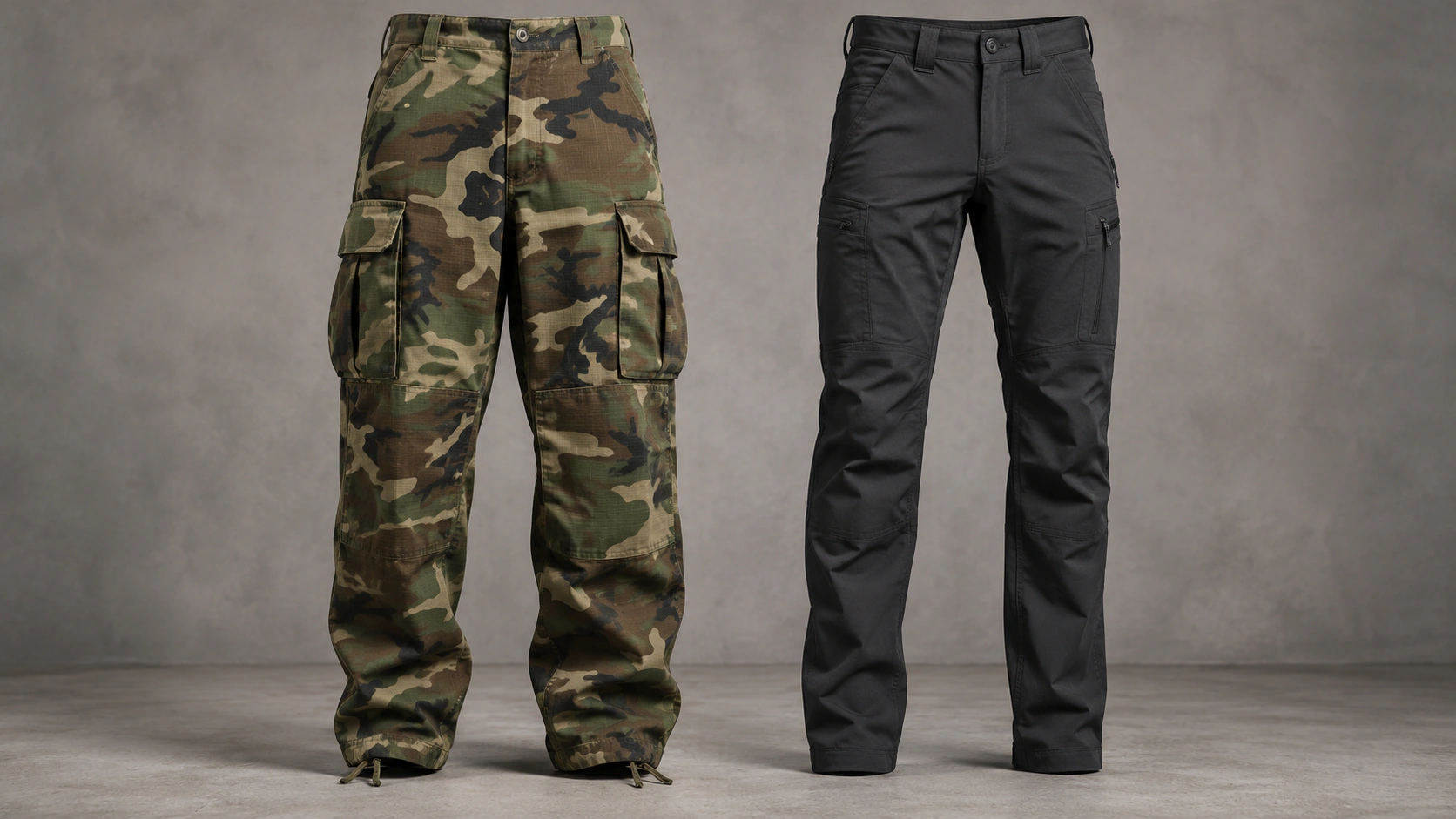
Overt tactical pants use visible cargo pockets, reinforcements, knee-pad systems, and military-inspired styling. They make sense when equipment access and durability matter more than appearance.
Low-profile tactical pants use flatter pockets and cleaner lines. They are better suited to plainclothes work, travel, concealed carry, administrative security roles, and everyday wear.
A low-profile or covert tactical pant should provide useful storage and mobility without advertising that it is tactical apparel. Look for flat or zippered cargo pockets, restrained branding, conventional colors, and a silhouette that works in the environment where you will actually wear it. For plainclothes work, travel, or discreet everyday carry, pocket placement and appearance may matter more than maximum pocket capacity.
There is no performance advantage to looking more tactical than the situation requires. Select the design that supports the job and environment.
Tactical-Pant Fabrics Explained
Ripstop
Ripstop is a woven grid designed to help limit the spread of small tears. It is common in tactical pants because it can provide useful durability without requiring an extremely heavy fabric.
Ripstop does not mean a garment cannot tear. Fabric weight, fiber content, seam construction, and the type of abrasion still affect durability.
Poly-cotton blends
Polyester-cotton blends try to balance the comfort of cotton with faster drying and better dimensional stability. The exact feel can vary significantly depending on the blend ratio and fabric weight.
Nylon blends
Nylon-based fabrics are often used where abrasion resistance, low weight, and faster drying are priorities. They may feel more technical and less like conventional workwear.
Stretch fabric
Stretch may come from elastane content, mechanical stretch in the weave, or separate stretch panels. Even limited stretch can improve comfort while squatting, climbing, and entering vehicles.
More stretch is not automatically better. Highly flexible fabrics still need enough structure to support pocket loads and resist sagging.
Water-repellent treatments
Durable water-repellent treatments help light moisture bead on the surface. They do not make ordinary tactical pants waterproof, and their performance may diminish through wear and washing.
Choose Useful Pockets, Not Just More Pockets
A high pocket count looks impressive in a specification list, but placement determines whether those pockets are useful.
Consider:
- Can you reach the pocket while seated?
- Does the opening remain accessible while wearing a belt or holster?
- Will a phone, flashlight, or tool strike your knee while walking?
- Does the pocket hold equipment tightly enough to prevent bouncing?
- Will its closure be manageable with gloves?
- Does loaded gear create a visible bulge when discretion matters?
Reinforced front-pocket edges are useful for clipped knives, flashlights, and tools. Internal dividers can keep small items upright. Zippers provide security, while hook-and-loop and flap closures may offer faster access depending on the design.
Closures, Belt Loops and Hardware
Small construction details can make a noticeable difference once tactical pants are loaded with equipment.
Pocket closures
Different closures solve different problems. Zippers provide secure storage and are useful for items you do not want falling out while running, climbing, or getting in and out of vehicles. Hook-and-loop closures allow fast access but can be noisy and may collect dirt and debris over time. Snaps and buttons are simple and dependable, although they may be slower to operate with gloves.
There is no universally best closure. Consider whether the pocket needs fast access, maximum retention, or a low-profile appearance.
Belt loops
If you wear an EDC, range, or duty belt, belt-loop construction deserves more attention than it usually receives.
Check the maximum belt width, loop placement relative to holsters and pouches, reinforcement around the waistband, and whether loaded equipment causes the waistband or loops to fold or sag. A pant that fits well without equipment may feel completely different after adding a loaded belt.
Zippers and other hardware
Quality hardware matters most in frequently used areas such as the fly, cargo pockets, and adjustment points. Look at the entire construction rather than treating a recognizable zipper brand or metal component as proof that the whole pant is durable.
How Tactical Pants Should Fit
Tactical pants should allow a full squat, high step, and kneeling position without pulling sharply across the seat or thighs.
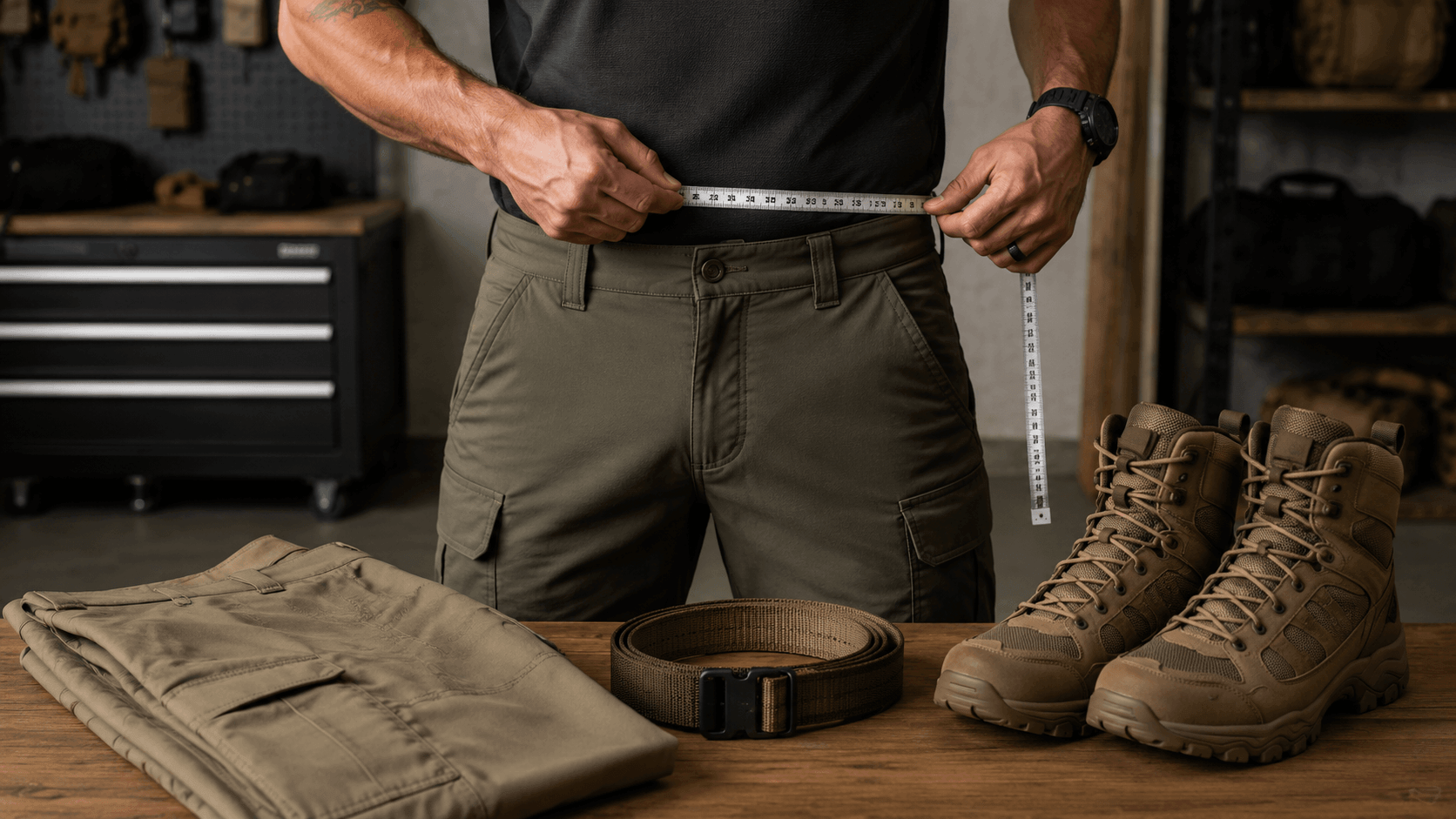
The waistband should remain secure without requiring a belt to correct excessive looseness. At the same time, it should not become restrictive when the wearer sits, bends, or adds an equipment belt.
Check four areas:
- Waist: Test the pants with your normal belt and equipment.
- Rise: Confirm the waistband sits in the correct position without binding.
- Seat and thighs: There should be enough room to move without excessive loose fabric.
- Inseam and opening: The hem should work with your normal boots without dragging or riding excessively high.
Sizing varies by brand and model. Use the product-specific size chart instead of assuming the same labeled waist will fit identically across manufacturers.
Reinforcement and Knee Protection
Reinforced knees add another layer or more durable material in a high-wear area. They improve garment life but do not necessarily provide impact protection.
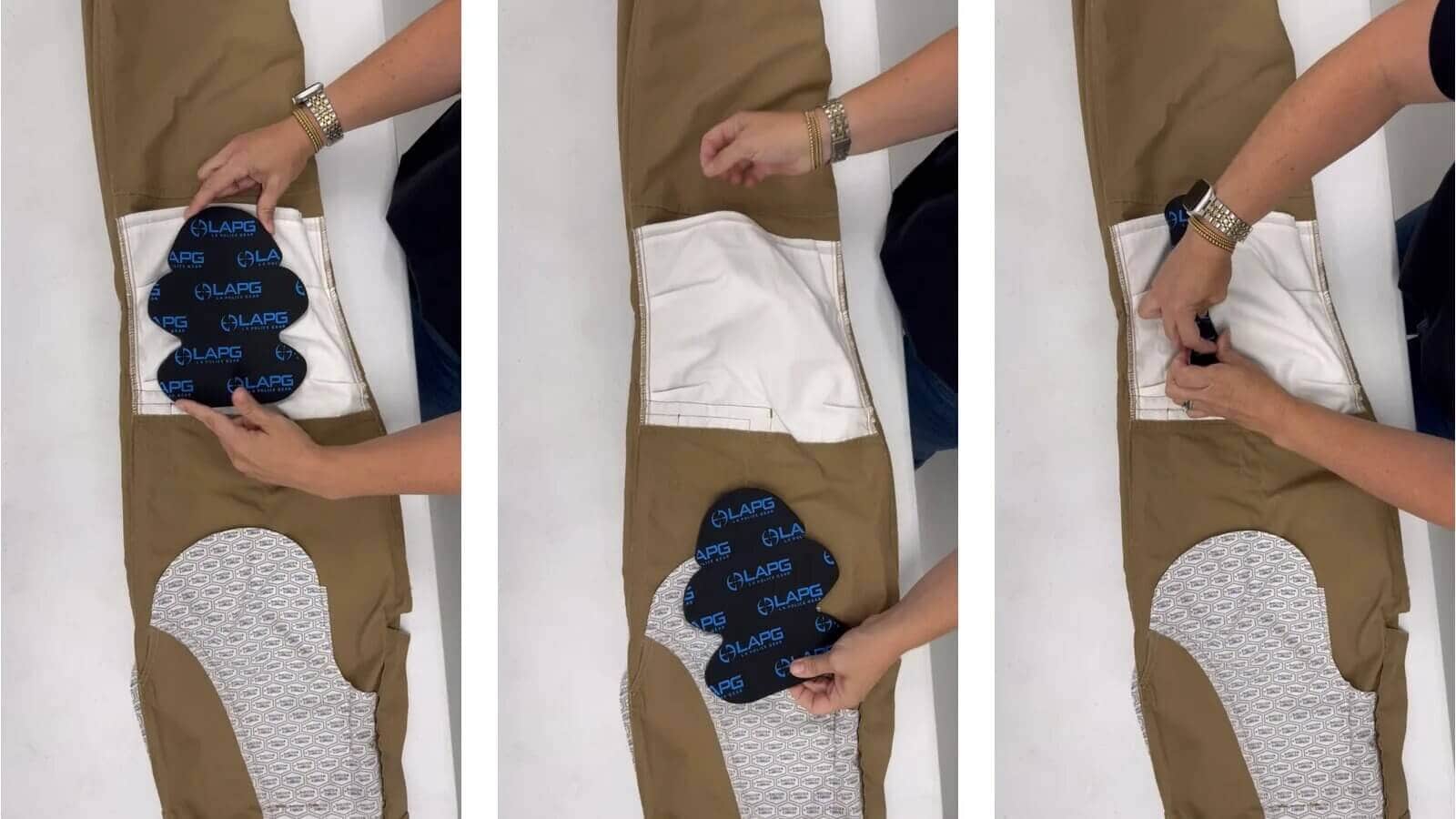
Knee-pad pockets allow separate inserts to be added. Integrated combat-pant systems provide greater coverage and more secure positioning but add cost and bulk.
For occasional kneeling, reinforced fabric may be sufficient. For repeated range work, tactical training, construction around rough surfaces, or field use, actual knee protection is worth considering.
Tactical Pants vs. Cargo Pants
Cargo pants primarily add storage. Tactical pants typically combine storage with mobility features, reinforced construction, equipment-oriented pocket placement, and compatibility with belts or knee protection.
That does not mean tactical pants are automatically more durable than every work or cargo pant. The quality of the fabric, seams, hardware, and pattern still matters.
Buy tactical pants when their specialized features solve a real problem. For casual wear where you only need two cargo pockets, a simpler cargo or work pant may be the better value.
Final Tactical-Pants Buying Checklist
Before choosing a pair, confirm:
- The fabric weight fits your climate.
- The waist and rise work with your normal belt.
- The pant allows a full squat and high step.
- The pockets match the items you actually carry.
- The design is appropriate for your work environment.
- The knees provide the level of reinforcement or protection you need.
- The inseam works with your normal footwear.
- The closure system is secure but easy to operate.
- The product-specific size chart has been reviewed.
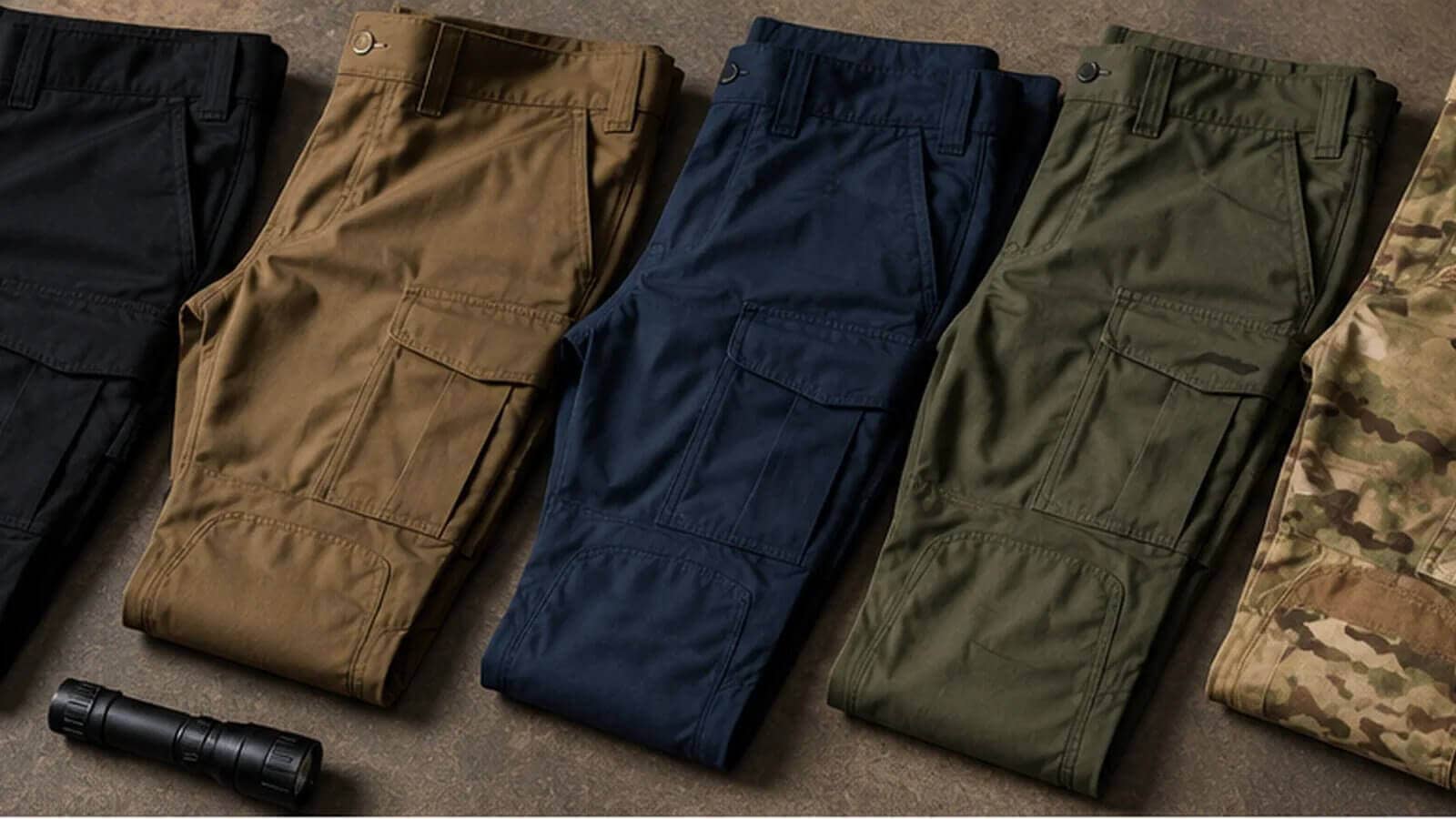
- The pant is available in an appropriate uniform or workplace color.
The LA Police Gear Atlas Pant is the most versatile starting point for buyers who are not sure which direction to take. Choose a specialized alternative when low-profile styling, extreme heat, medical organization, women-specific fit, or integrated knee protection matters more than all-around versatility.
FAQs
What are the best tactical pants overall?
The LA Police Gear Atlas Pant is the best all-around option for most buyers because it combines stretch, reinforced construction, ten pockets, knee-pad compatibility, broad sizing, and regular or slim fit options. A specialized pant may be better when low-profile styling, EMS organization, hot-weather comfort, or integrated knee protection is the priority.
How should tactical pants fit?
Tactical pants should allow you to squat, kneel, and take a high step without binding across the seat, thighs, or knees. The waistband should remain comfortable while seated and should work with your normal belt, holster, or equipment. Always check the model-specific size chart because fit varies by brand.
What is the difference between tactical pants and cargo pants?
Cargo pants primarily provide extra storage. Tactical pants commonly add reinforced construction, mobility features, equipment-oriented pockets, stronger belt loops, and options for knee protection. The quality and usefulness of these features vary by model.
Are tactical pants good for everyday wear?
Yes, especially when the fabric is comfortable and the pocket layout matches what you carry. Low-profile tactical pants are usually better for everyday wear because they provide useful storage without the overt appearance of military or combat pants.
What fabric is best for tactical pants?
There is no single best fabric. Lightweight poly-cotton ripstop works well for warm weather and general duty, stretch blends improve mobility, and nylon-based technical fabrics can provide low weight and abrasion resistance. The best choice depends on climate and use.
Are knee-pad pockets necessary?
They are useful for people who frequently kneel during tactical training, field work, vehicle work, or range exercises. Reinforced knees are usually sufficient for occasional kneeling. Integrated knee systems provide more protection but add bulk and cost.
What are the best tactical pants for hot weather?
Look for lightweight ripstop, a comfortable cut, and fabric that dries relatively quickly. The Propper Lightweight Tactical Pant is a practical current option for buyers who prefer a traditional relaxed tactical fit in warm conditions.
Should tactical pants fit loose or slim?
They should be roomy enough for unrestricted movement but not so loose that loaded pockets swing or snag. A slim tactical fit can still provide mobility when it uses proper patterning and stretch. The choice ultimately depends on body type, equipment, and workplace appearance requirements.