Listen to this article
Table of Contents
- Best Plate Carriers of 2026 at a Glance
- Best Overall: LAPG Atlas MOLLE Plate Carrier
- Best Low-Profile Plate Carrier: LAPG Low Vis MOLLE Plate Carrier
- Best Lightweight and Value Option: LAPG JTE Lightweight MOLLE Plate Carrier
- Best Minimalist Duty Plate Carrier: High Speed Gear Core Plate Carrier
- Best Full-Featured Plate Carrier: Shellback Tactical Banshee Elite 3.0
- Best U.S.-Made Modular Option: LAPG U.S. Made Rigid Cummerbund Plate Carrier
- How We Selected These Plate Carriers
- Plate Carrier vs. Body Armor: An Important Difference
- How Should a Plate Carrier Fit?
- Low-Profile vs. Full-Featured Plate Carriers
- Don't Choose a Carrier Before Choosing the Plates
- What About Side Plates?
- MOLLE vs. Placard Systems
- Common Plate Carrier Buying Mistakes
- Which Plate Carrier Should You Choose?
- FAQs
There is no single best plate carrier for every situation. The right carrier depends on how much equipment you need to support, how low-profile the setup must remain, what plates you intend to use, and how much weight and bulk you are willing to carry.
For most people looking for a versatile setup, the LA Police Gear Atlas MOLLE Plate Carrier is the strongest all-around starting point. If you need a slimmer setup, the LAPG Low Vis Plate Carrier makes more sense, while the JTE Lightweight MOLLE Plate Carrier is a better fit when low weight, simplicity, and value matter most.
This guide compares current plate carriers available from LA Police Gear by use case rather than pretending one model is ideal for everyone.
Best Plate Carriers of 2026 at a Glance
| Best for | Plate carrier | Why it stands out | Main tradeoff |
|---|---|---|---|
| Best overall | LAPG Atlas MOLLE Plate Carrier | Broad utility, MOLLE, side-plate capability, and adjustable padded construction | More bulk than minimalist carriers |
| Best low-profile | LAPG Low Vis MOLLE Plate Carrier | Slim profile, low weight, and useful modular storage | Less suited to very heavy loadouts |
| Best lightweight/value | LAPG JTE Lightweight MOLLE Plate Carrier | Approximately 1 lb, simple design, and essential features | Limited built-in load carriage |
| Best minimalist duty option | High Speed Gear Core Plate Carrier | Lightweight, sized plate bags, spacer mesh, and laser-cut MOLLE | Minimalist side-strap design |
| Best full-featured option | Shellback Tactical Banshee Elite 3.0 | Extensive MOLLE, quick-release cummerbund, padding, and load carriage | More weight, bulk, and complexity |
| Best U.S.-made modular option | LAPG U.S. Made Rigid Cummerbund Plate Carrier | Placard-compatible, rigid cummerbund, side-plate pouches, and U.S. construction | More specialized than an entry-level carrier |
These recommendations are based on current published specifications, current LAPG catalog availability, and intended use cases. They are not presented as results of identical hands-on durability or ballistic testing by LA Police Gear.
Best Overall: LAPG Atlas MOLLE Plate Carrier
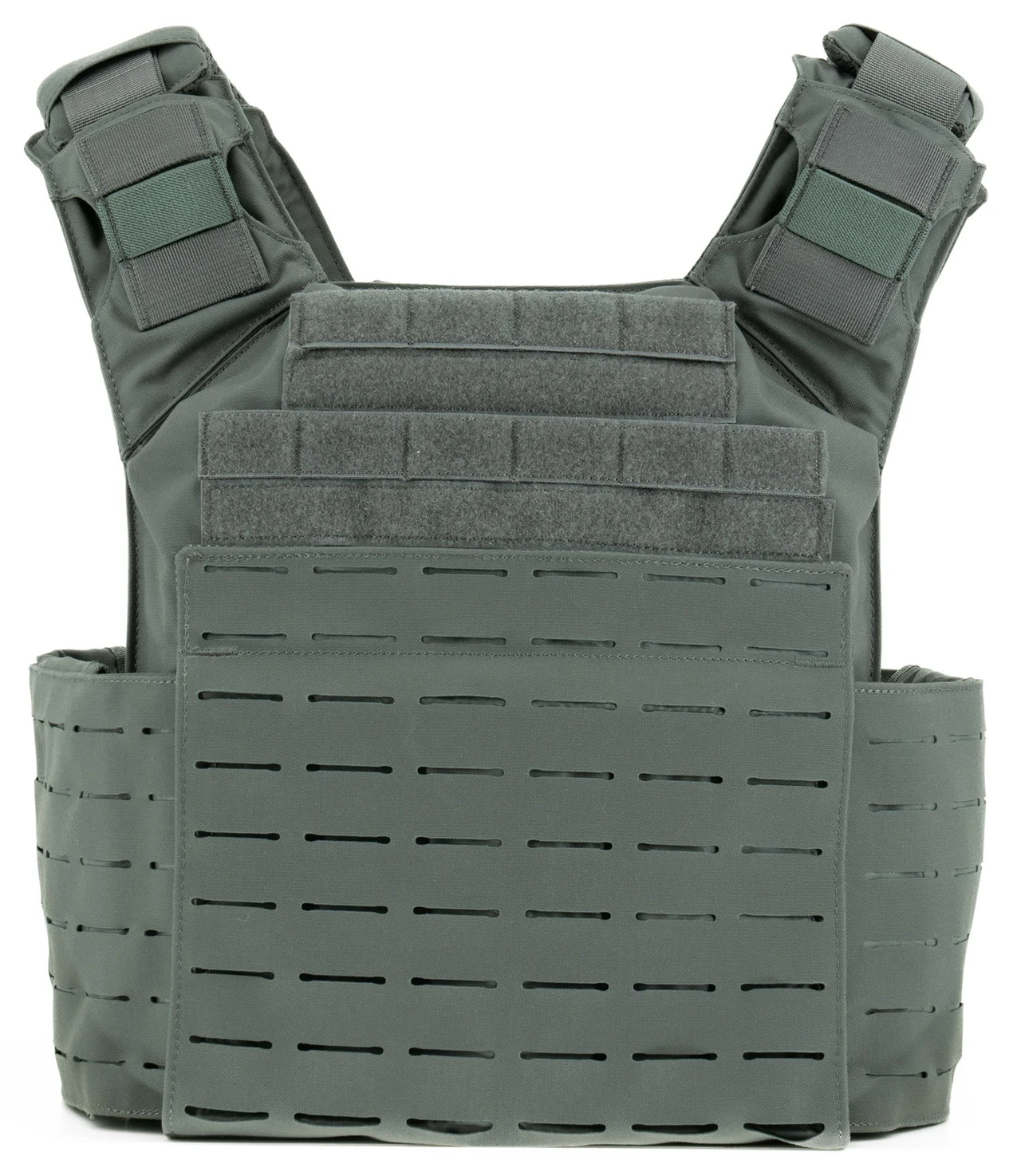
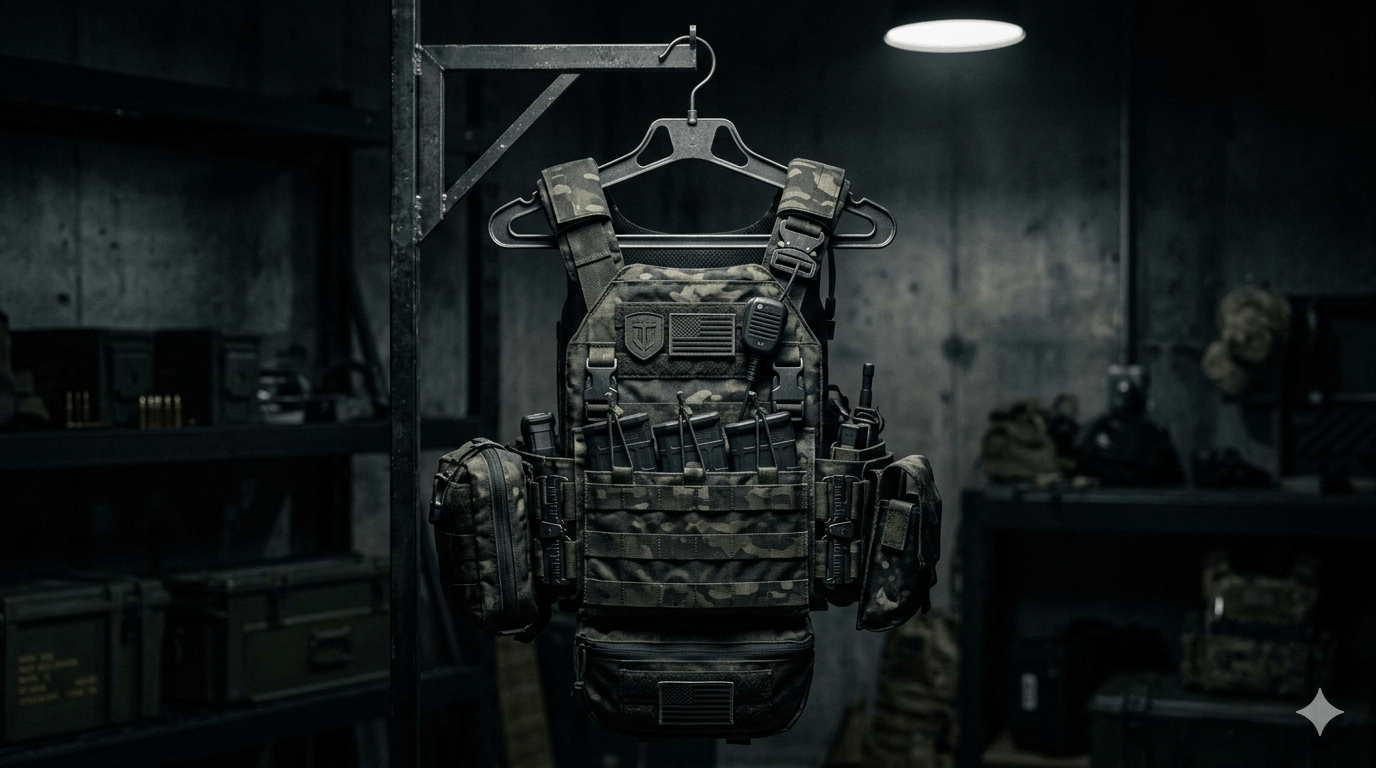
The LA Police Gear Atlas MOLLE Plate Carrier is our starting point for anyone who wants one carrier that can cover training, security, range use, and a variety of professional configurations.
Its current construction uses 500D material with adjustable padded shoulders, a removable cummerbund, MOLLE attachment space, and compatibility with 10 x 12 front and rear plates. It can also accommodate 6 x 6 side plates. The Atlas uses quick-release shoulder buckles and includes a drag handle.
Where the Atlas makes sense
The Atlas sits between minimalist and heavily built-out carriers. It provides enough structure and attachment space to build a useful loadout without automatically moving into the size and complexity of a more specialized full-duty carrier.
That makes it particularly useful when your requirements may change over time.
What to consider
The Atlas is not a low-visibility carrier. If you need to keep the profile under outer clothing or want the least possible material around the torso, the LAPG Low Vis or JTE may be a better fit.
Best for: General tactical use, security, range training, and anyone looking for a versatile MOLLE carrier.
Best Low-Profile Plate Carrier: LAPG Low Vis MOLLE Plate Carrier
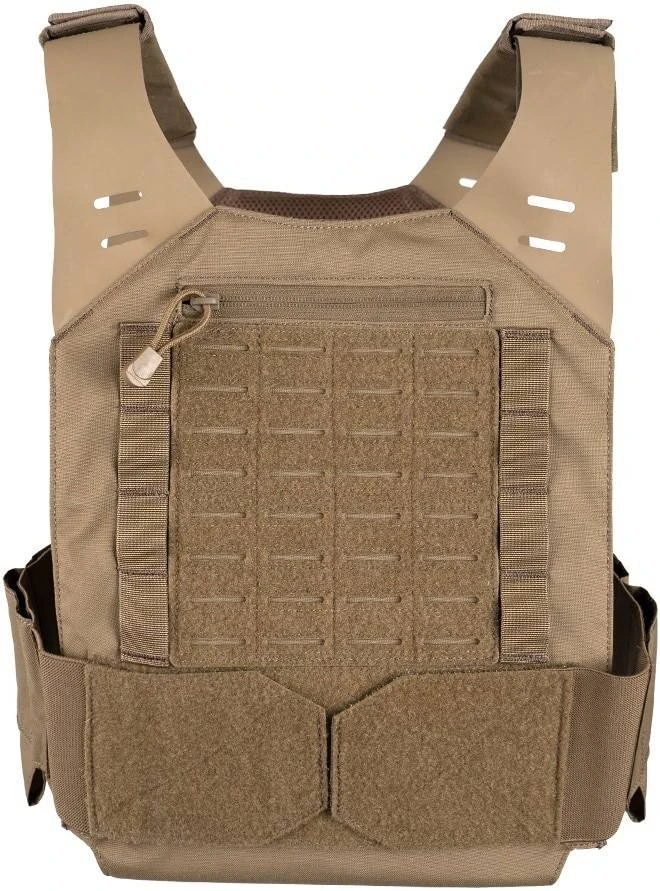
The LAPG Low Vis MOLLE Plate Carrier is designed for situations where you need armor carriage without the footprint of a large conventional MOLLE carrier.
The current model accepts 10 x 12 plates, uses 500D nylon, and combines an adjustable low-profile design with laser-cut MOLLE, an integrated admin pocket, cummerbund storage, and a breathable mesh interior.
For a deeper look at the model itself, see our LAPG Low Vis Plate Carrier review.
Where it performs best
The Low Vis is particularly useful when the equipment carried on the vest is limited. A lower-profile carrier can make sense for plainclothes assignments, vehicle-based use, or any application where mobility and reduced bulk matter more than maximum pouch capacity.
Once multiple large pouches, side armor, and other equipment are added, some of the advantage of starting with a low-profile carrier disappears.
What to consider
"Low-profile" does not automatically mean fully concealable in every clothing setup. Plate thickness, body shape, carrier configuration, and outer garments all affect how visible a carrier becomes.
Best for: Plainclothes work, lower-profile duty configurations, and setups where mobility matters more than maximum load carriage.
Best Lightweight and Value Option: LAPG JTE Lightweight MOLLE Plate Carrier
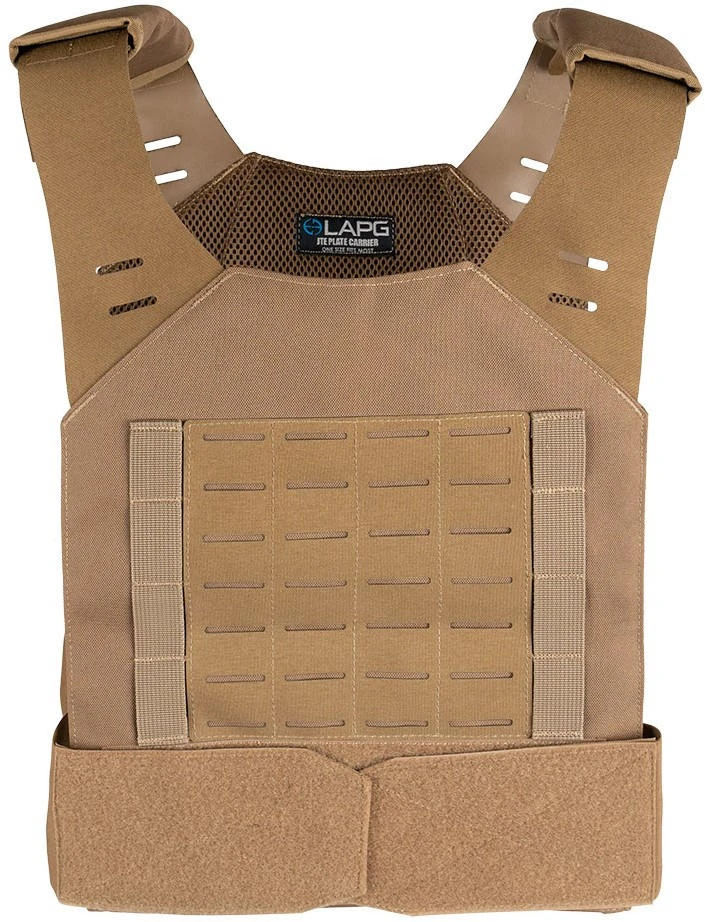
The LAPG JTE Lightweight MOLLE Plate Carrier strips the design down to the essentials.
The current model weighs approximately one pound, uses 500D nylon, and accepts 10 x 12 plates. It includes adjustable shoulders with removable pads, a mesh-lined interior, a simple MOLLE panel, identification areas, and an adjustable cummerbund.
If you do not need a carrier covered in attachment points, that simplicity can be an advantage rather than a limitation.
Where the JTE makes sense
- Training
- Backup or staged equipment
- Lightweight setups
- Setups where most equipment is carried somewhere other than the carrier
- Anyone trying to keep carrier weight low before plates are added
What to consider
A minimalist carrier provides less built-in support for large equipment loads. If your setup requires multiple magazines, communications equipment, medical gear, and additional armor, a more structured carrier may distribute that equipment better.
Best for: Lightweight setups and anyone who wants a simple carrier without paying for features they will not use.
Best Minimalist Duty Plate Carrier: High Speed Gear Core Plate Carrier
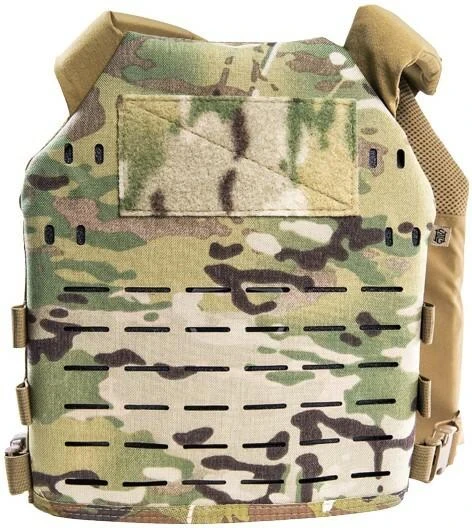
The High Speed Gear Core Plate Carrier combines a minimalist footprint with features intended for law-enforcement, training, and active-response configurations.
It weighs just under one pound and uses a heavy-duty nylon laminate with 1000D outward-facing material. The current carrier includes laser-cut MOLLE, padded adjustable shoulder straps, spacer-mesh interior padding, identification panels, and attachment points for cables or body-camera mounting.
Unlike one-size plate carriers, the Core is available in different plate-bag sizes. Its large version accepts large SAPI and commercial 10 x 12 plates.
Why sizing matters
A plate carrier should be selected primarily around the armor it must hold rather than the wearer's shirt size. Excess movement inside a plate bag or trying to force an incompatible plate into a carrier can undermine fit and comfort.
What to consider
The Core uses a minimalist side-strap arrangement rather than the more substantial cummerbund found on heavier carriers. That keeps weight and bulk down but may be less desirable when carrying a larger amount of equipment.
Best for: Law enforcement, training, and anyone who wants a lightweight carrier with a more structured plate-sizing system.
Best Full-Featured Plate Carrier: Shellback Tactical Banshee Elite 3.0
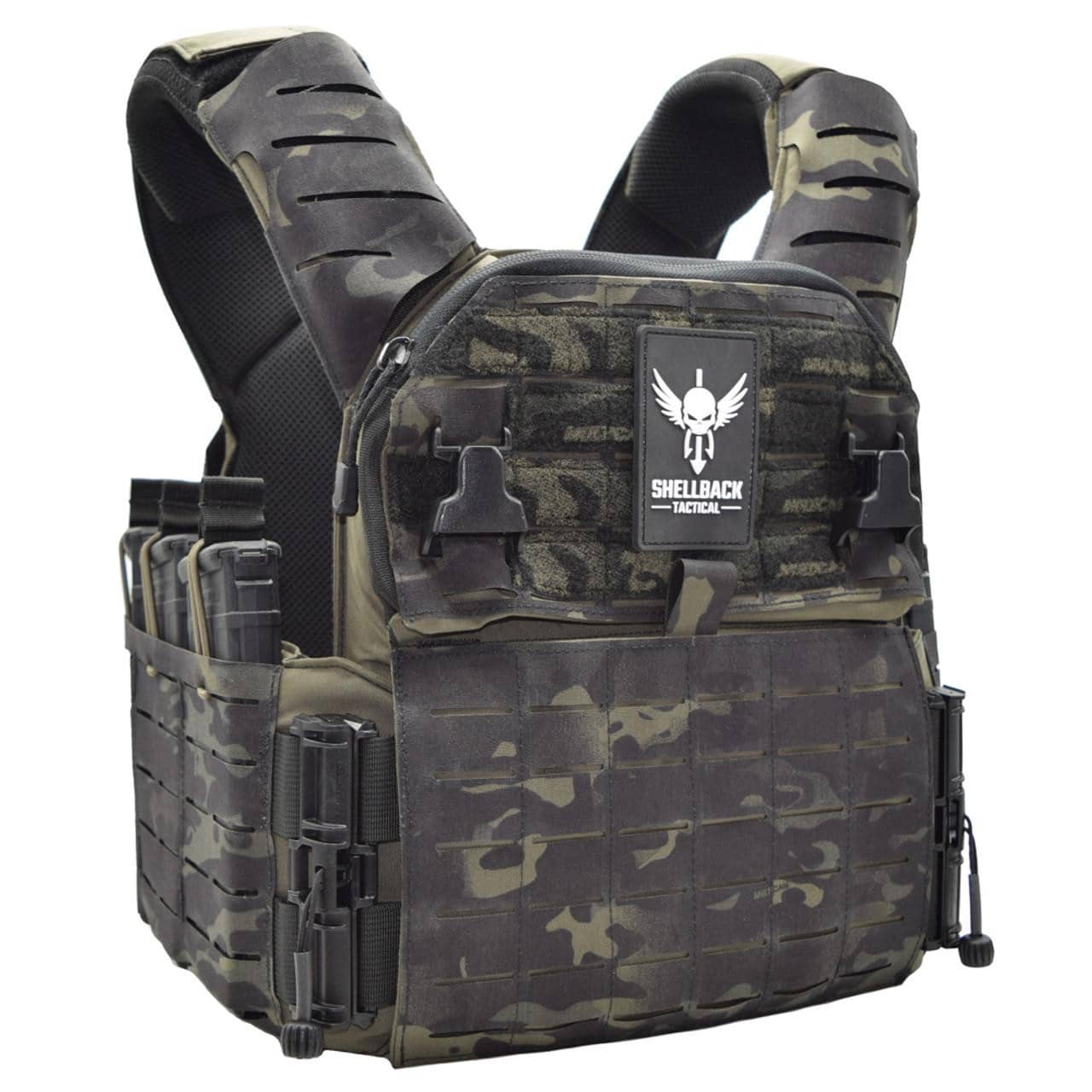
The Shellback Tactical Banshee Elite 3.0 moves in the opposite direction from the JTE and Core. It is intended for setups that need a highly configurable carrier with greater built-in load-management capability.
The current Banshee Elite 3.0 includes front, rear, and cummerbund laser-cut MOLLE; quick-release cummerbund buckles; padded spacer mesh; an extendable drag handle; integrated cummerbund storage; a front admin pocket; hydration storage; and placard or chest-rig attachment capability. Its plate pockets accept up to 10 x 12 shooter or SAPI-cut plates according to the current product specifications.
Who benefits from the extra structure?
The Banshee's additional material and features make more sense when the carrier needs to support more than plates alone. If your configuration includes multiple pouches, communications equipment, hydration, and other equipment, a larger platform provides more options for distributing that load.
What to consider
Those features add bulk and complexity. A carrier optimized for a larger equipment load is unlikely to feel as unobtrusive as a minimalist platform.
Best for: Full-featured duty, training, and equipment-heavy configurations.
Best U.S.-Made Modular Option: LAPG U.S. Made Rigid Cummerbund Plate Carrier
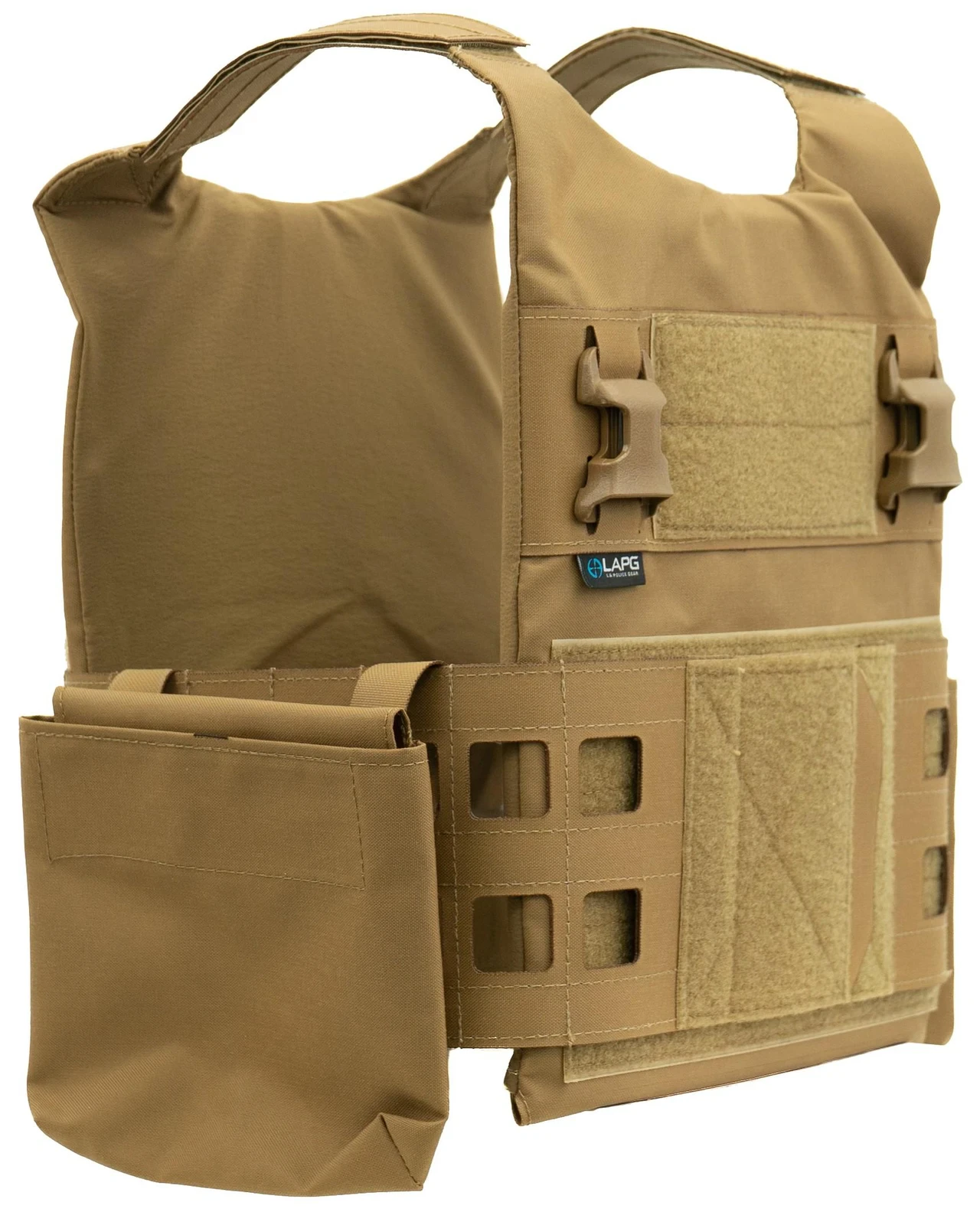
The LAPG U.S. Made Plate Carrier with Rigid Grid Cummerbund is the most modular LAPG option in this group.
It uses 500D Cordura and laminated materials, supports placards using compatible attachment hardware, accepts SAPI Medium or 10 x 12 plates, and includes two 6 x 6 side-plate pouches. The rigid cummerbund provides a more structured attachment platform than a basic elastic side strap. The carrier is sewn and made in the United States.
Where it fits
This model makes the most sense if you want to start relatively slick but still have a clear path toward a more structured placard- and side-armor-based setup.
LAPG also currently offers a U.S.-made version with an elastic cummerbund for anyone who prefers a simpler and more flexible side system.
What to consider
The rigid-cummerbund model has more capability than many setups actually require. There is little reason to choose a more complex configuration if you plan to keep the carrier minimal.
Best for: U.S.-made setups, placard compatibility, and anyone who wants a structured modular platform.
How We Selected These Plate Carriers
We evaluated current carriers available through LA Police Gear using factors that affect how useful the carrier is in practice. These recommendations are specification- and use-case-based, not the result of identical hands-on testing of every model.
Plate compatibility
The carrier must correctly fit the armor you intend to use. Plate dimensions, cut, and thickness can vary. "10 x 12 compatible" should not be treated as proof that every nominally 10 x 12 plate will fit every plate bag identically.
Carrier weight
Carrier weight matters because it is only one part of the total system. Once armor, pouches, hydration, and other equipment are added, seemingly small weight differences can become more noticeable.
Load-bearing capacity
A slick carrier carrying plates and a few small items has very different requirements from a carrier supporting a large number of pouches. Choose enough structure for the load you actually intend to carry.
Mobility
Extra coverage and attachment space often come with additional bulk. For vehicle use, movement-intensive training, or lower-profile applications, reducing unnecessary material may be more useful than maximizing MOLLE real estate.
Cummerbund design
Cummerbunds affect fit, support, and available attachment space. Elastic designs prioritize flexibility and a close fit. More rigid or structured designs can provide greater support for equipment and side armor.
Modularity
MOLLE, placard interfaces, identification fields, and accessory compatibility can allow a carrier to evolve with your needs. More modularity is useful only if you expect to use it.
Plate Carrier vs. Body Armor: An Important Difference
A carrier is not the component that determines the ballistic threat rating. The ballistic armor installed in the carrier provides the rated protection.
The National Institute of Justice's current ballistic-resistant body-armor standard is NIJ Standard 0101.07. NIJ also uses newer HG and RF threat-level nomenclature rather than relying only on the older Level II, IIIA, III, and IV terminology.
Armor certified under the previous NIJ 0101.06 standard is still encountered during the transition. NIJ states that it expects to maintain the 0101.06 Compliant Products List through at least the end of 2029. Verify the exact standard and rating attached to the specific armor model rather than relying on generic product terminology.
NIJ maintains a Compliant Products List for armor models that have met the applicable program requirements. The carrier itself should not be described as "NIJ rated" merely because it is capable of holding an NIJ-compliant plate.
How Should a Plate Carrier Fit?
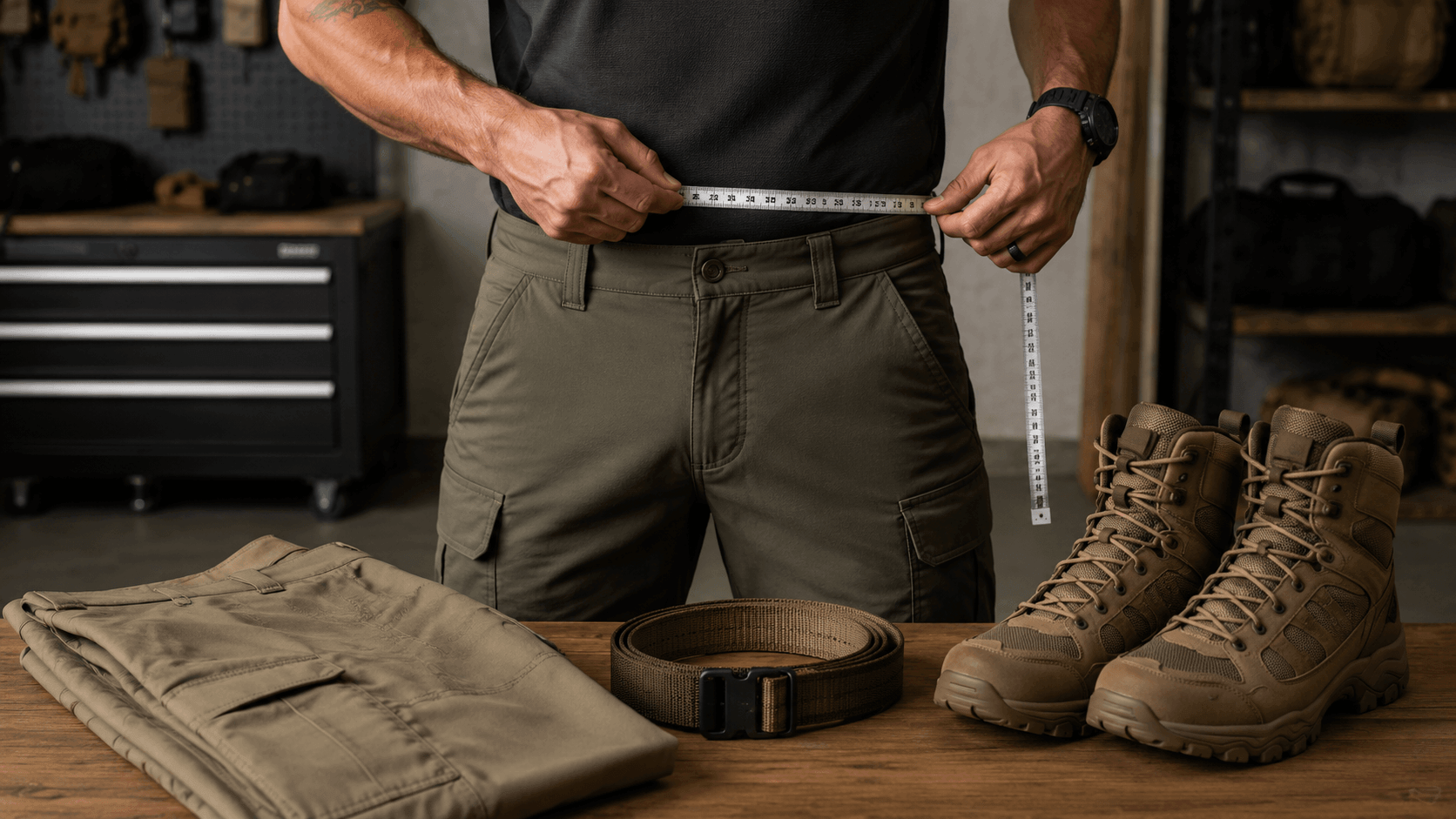
The plate should remain positioned over the area it is intended to cover without excessive movement. Do not choose a plate simply because it fills the largest possible carrier. Armor size and placement should be selected around the wearer and the manufacturer's fit guidance.
Shoulder and cummerbund adjustment should keep the carrier stable while still allowing normal movement and breathing.
For a deeper fit discussion, see How Should a Plate Carrier Fit?
Low-Profile vs. Full-Featured Plate Carriers
A useful way to narrow the field is to decide which direction your setup needs to go.
Choose a low-profile carrier when:
- Mobility matters more than attachment space.
- Only a small amount of equipment will be carried.
- Reduced bulk is important.
- The carrier may be worn in vehicles or under outer clothing.
- Most equipment is carried on a belt or elsewhere.
Choose a fuller carrier when:
- More equipment must be carried on the torso.
- Side armor is required.
- Hydration or communications equipment must be integrated.
- A more supportive cummerbund is useful.
- MOLLE or placard capacity is a major requirement.
Neither approach is universally better.
Don't Choose a Carrier Before Choosing the Plates
One of the easiest purchasing mistakes is choosing a plate carrier first and then trying to find armor that fits it.
- Determine the appropriate armor for the intended use.
- Verify its dimensions, thickness, and cut.
- Choose a carrier with compatible plate bags.
- Select the carrier size and adjustability around both the armor and wearer.
- Add only the equipment the setup actually requires.
This reduces the chance of ending up with a carrier and armor combination that does not fit correctly.
What About Side Plates?
Side armor can increase coverage but also adds weight and bulk. Do not choose a carrier simply because it can accept side plates. Decide whether your use case actually calls for them.
If side armor is part of your requirement, confirm the exact dimensions supported by the cummerbund or side-plate pouches rather than assuming all side plates are interchangeable.
MOLLE vs. Placard Systems
Traditional MOLLE allows individual pouches to be woven directly onto the carrier. Placard-compatible carriers allow a front panel to be attached or swapped as a unit.
A placard system can make sense when one carrier needs to move between different equipment configurations. Traditional MOLLE remains useful when a setup rarely changes and secure individual pouch placement is more important. Many modern carriers combine both approaches.
Common Plate Carrier Buying Mistakes
Buying by carrier size instead of plate size
The armor should drive plate-bag sizing.
Adding too much equipment
Every available MOLLE slot does not need to be filled. Additional pouches add weight, width, and snag points. Carry what the use case actually requires.
Confusing carrier specifications with armor performance
A carrier's material, stitching, and attachment system do not establish ballistic protection. Verify the armor separately.
Choosing maximum capability when minimum capability would work
A larger full-featured carrier can be excellent equipment and still be the wrong choice when a light, streamlined setup would accomplish the job.
Ignoring the complete system weight
A carrier that feels light when empty can become significantly heavier once armor and equipment are installed. See How Much Do Plate Carriers Weigh? for a deeper look at total system weight.
Which Plate Carrier Should You Choose?
For a flexible all-around option, start with the LAPG Atlas MOLLE Plate Carrier.
Choose the LAPG Low Vis when reducing bulk matters more than maximum attachment capacity. Choose the LAPG JTE when you want the simplest and lightest practical setup.
Consider the HSGI Core when you want a minimalist design with dedicated plate-bag sizing and law-enforcement-oriented features. Move to the Shellback Banshee Elite 3.0 when the carrier must support a much larger equipment load. Consider the LAPG U.S. Made Rigid Cummerbund Carrier when U.S. manufacture, placard compatibility, and a structured modular platform are priorities.
The correct carrier is the one that securely fits your armor and provides enough capability for your actual load without adding features, weight, and bulk you will never use.