Listen to this article
Table of Contents
- Why a Tourniquet Is Non-Negotiable in Any Tactical or Medical Kit
- Rules for Tourniquet Use: When and How to Apply
- All Major Tourniquet Types Explained
- CAT Tourniquet (Combat Application Tourniquet) — The Military Standard
- CAT Tourniquet Gen 7 vs Gen 8: What Changed?
- SOFTT-W Tourniquet — Ideal for Large Limb Circumferences
- SWAT-T Tourniquet — Stretch, Wrap, and Tuck Design
- RAT Tourniquet — Ultra-Compact Backup Carrier Option
- Ratchet Tourniquet — Mechanical Advantage for One-Handed Application
- TX3 Tourniquet and Other Emerging Options
- Tourniquet Types Compared: Side-by-Side Breakdown
- How to Use a Tourniquet Strap: Step-by-Step
- Choosing the Right Tourniquet for Your Mission or Role
- What's Next?
- Where to Buy a Tourniquet — What to Avoid and Where to Shop
- FAQs
Severe external bleeding, often stemming from traumatic injuries, poses an immediate and life-threatening risk. In these critical moments, before professional medical help can arrive, the ability to rapidly and effectively control blood loss can mean the difference between life and death. This is where emergency tourniquets become indispensable tools in First Aid and bleeding control. This comprehensive guide will demystify the various types of tourniquets available, explain how they function, and most importantly, provide you with the knowledge to choose the right device for your specific needs and potential scenarios. Whether you're a seasoned first responder, an outdoor adventurer, a concerned civilian preparing your First Aid kit, or someone looking to enhance your preparedness, understanding tourniquet technology is paramount. By the end of this article, you'll be equipped to make an informed decision about which tourniquet to carry, ensuring you're ready to act decisively when seconds count.
Why a Tourniquet Is Non-Negotiable in Any Tactical or Medical Kit
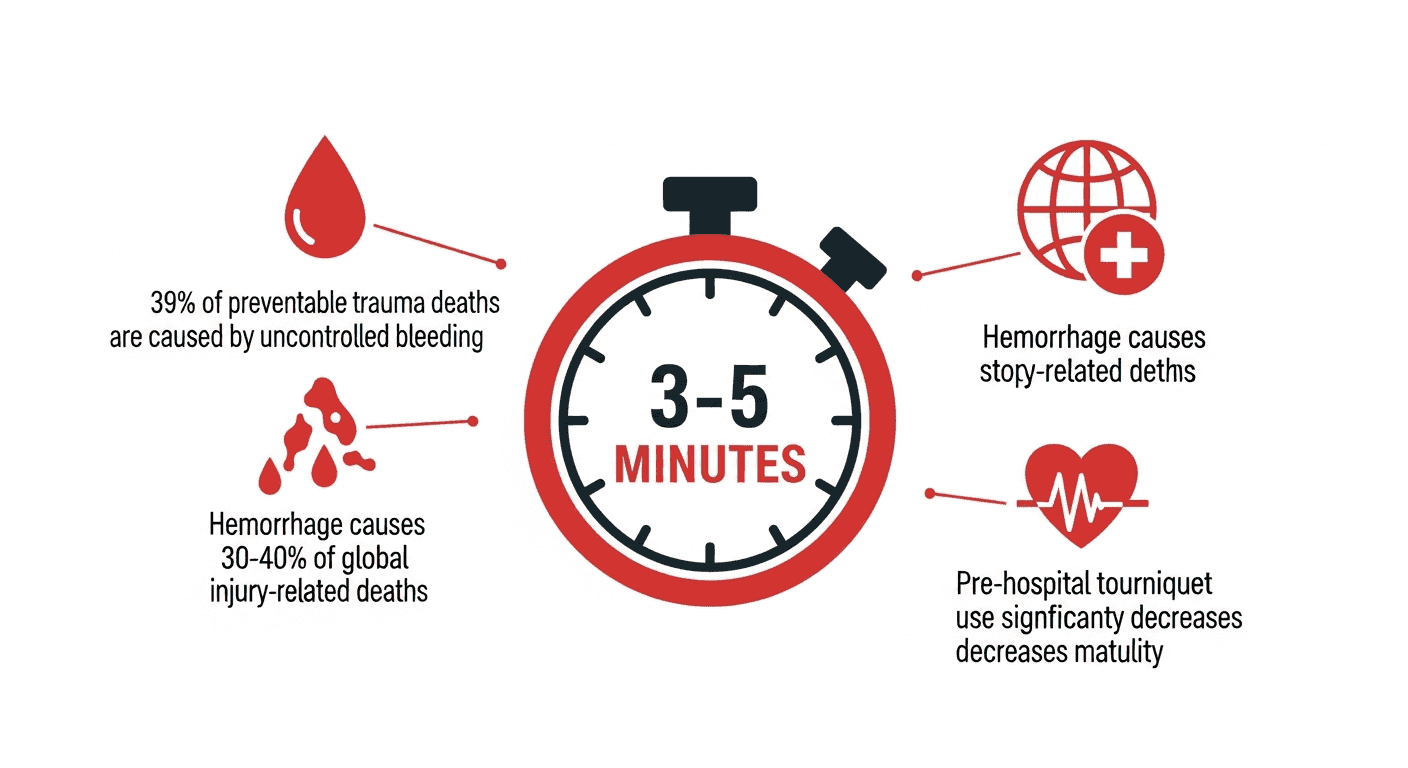
Uncontrolled hemorrhage is a leading cause of preventable death in trauma situations, often occurring in less than five minutes.
The urgency to carry a tourniquet stems from a critical understanding of trauma physiology and battlefield realities. In the unfortunate event of severe limb trauma, catastrophic blood loss can occur rapidly. Data consistently shows that uncontrolled hemorrhage is a leading cause of preventable death, particularly in trauma situations. For instance, hemorrhage accounts for 30-40% of global injury-related deaths and is the leading physiological cause of death in preventable cases, responsible for 39% of preventable deaths in a 2023 trauma review [PMC, 2025]. This statistic underscores the vital importance of effective bleeding control measures.
In combat zones, the widespread adoption of tourniquets has demonstrably saved lives. Previously, extremity hemorrhage was a primary cause of battlefield fatalities. However, with improved training and the ubiquitous availability of tourniquets, this has significantly shifted. Similarly, in civilian emergency trauma, the delay in emergency medical services reaching a patient can be critical. A person can exsanguinate in as little as three to five minutes, a timeframe often shorter than the arrival of professional help. This is where a tourniquet becomes a crucial tool for immediate intervention, bridging the gap until advanced care can be provided. Furthermore, pre-hospital tourniquet use significantly decreases the mortality rate in civilian patients with extremity trauma [World Journal of Emergency Surgery, 2024]. The existence of programs like "Stop the Bleed®" highlights the public health imperative to equip ordinary citizens with the skills to manage severe bleeding, further cementing the tourniquet's role as an essential piece of medical supplies.
What Is a Tourniquet and How Does It Work?
At its core, a tourniquet is a life-saving medical device engineered to completely stop or drastically reduce blood flow to a limb distal to its application point. It achieves this critical function by applying circumferential pressure around an arm or leg. This pressure constricts the underlying tissues, including vital blood vessels such as arteries and veins. By occluding the flow of blood, the tourniquet prevents significant blood loss, thereby averting potentially fatal conditions like hypovolemic shock. This immediate control of hemorrhage allows invaluable time for medical professionals to arrive and manage the wound with definitive care.
Modern emergency tourniquets are typically constructed from durable materials and feature several key components, each designed for efficacy and speed of application. The principle is simple but powerful: to create enough pressure to occlude all significant blood flow within the limb. For arterial bleeding, which is characterized by rapid, pulsatile expulsion of bright red blood, a tourniquet is often the most effective means of immediate control when direct pressure is insufficient. The ultimate goal is to achieve pulse cessation below the application site, indicating that blood flow has been effectively stopped. This is a stark contrast to methods like simple manual pressure or topical hemostatic agents, which are generally suited for less severe bleeding.
Tourniquet Use in Trauma: What the Data Says
The efficacy and necessity of tourniquets in managing severe bleeding are no longer theoretical discussions; they are firmly established by extensive data, predominantly from military operations and increasingly validated by civilian trauma research. For decades, studies on combat casualties consistently highlighted uncontrolled hemorrhage from extremity wounds as a leading cause of preventable death. However, the strategic integration of tourniquets, alongside improved medical training and other bleeding control adjuncts, has dramatically shifted these outcomes.
Data from conflicts in Iraq and Afghanistan, for instance, revealed that timely tourniquet application was one of the most significant interventions for saving lives from severe extremity trauma. This evidence directly supports the expanded use of tourniquets in civilian emergency trauma settings. Organizations like the American College of Surgeons have recognized this impact, noting that more than 5 million people have been trained by the American College of Surgeons' Stop the Bleed program to control severe bleeding and save a life [American College of Surgeons, 2025]. This widespread training initiative reflects the growing understanding that empowering bystanders and first responders with effective tools and knowledge is critical for improving survival rates in mass casualty events and individual emergencies alike. The evidence is clear: in situations of severe, life-threatening limb bleeding, tourniquets are an indispensable tool.
Rules for Tourniquet Use: When and How to Apply
The decision to apply a tourniquet is a critical one, reserved for specific circumstances where the immediate threat to life from blood loss outweighs potential risks. Proper application technique is equally vital to ensure effectiveness and minimize complications. Adherence to established protocols, often reinforced through First Aid training and first aid classes, is paramount.
When to Use a Tourniquet vs. Direct Pressure
The primary determinant for selecting a tourniquet over other bleeding control methods, such as direct pressure, lies in the severity and nature of the bleeding.
- Direct Pressure: This is the universally recommended first-line intervention for most types of bleeding. It involves applying firm, sustained pressure directly onto the wound using a clean cloth, gauze pad, or even a bare hand if no other materials are available. Direct pressure is effective for superficial lacerations, abrasions, and most venous bleeding where the blood flow is less forceful and more easily contained. It is crucial to maintain this pressure until bleeding is controlled and professional medical assistance can take over or the wound can be properly dressed.
- Tourniquet:A tourniquet is indicated for severe, life-threatening hemorrhage originating from a limb that cannot be controlled by direct pressure alone. This typically includes situations characterized by:
- Pulsatile bleeding: Bright red blood spurting with each heartbeat, indicative of arterial bleeding.
- Uncontrolled venous bleeding: Significant, rapid loss of dark red blood from a vein, which can also be life-threatening if severe enough.
- Obvious catastrophic injury: Such as an amputation or a deep, gaping wound where bleeding is profuse and immediate.
Essentially, if direct pressure is not stopping or significantly slowing the bleeding within a few minutes, and the bleeding poses an immediate threat to life, a tourniquet becomes a necessary intervention.
Common Mistakes to Avoid When Applying a Tourniquet
Even with the best intentions and readily available equipment, several common errors can render a tourniquet ineffective or, in rare cases, increase the risk of complications. Awareness and practice are key to avoiding these pitfalls:
- Loose Application: This is arguably the most critical mistake. A tourniquet that is not tightened sufficiently will fail to occlude blood flow completely. It might slow bleeding, providing a false sense of security, while the patient continues to lose vital blood. The goal is complete cessation of bleeding from the injured limb. If bleeding persists after initial tightening, the tourniquet must be tightened further. This is where the mechanical advantage system of devices like windlass tourniquets is crucial for achieving adequate pressure.
- Incorrect Placement: Tourniquets should always be applied proximal to the wound (closer to the torso), on solid muscle mass, and never directly over a joint (elbow, knee, ankle, wrist). Applying over a joint can allow the blood vessels to continue to bleed around the occluded area. The ideal placement is typically on the upper third of the arm or thigh. For injuries in areas like the groin or armpit where a limb tourniquet cannot be applied, specialized junctional tourniquets or packing techniques are necessary.
- Failure to Time-Stamp: It is vital to record the exact time the tourniquet was applied. This information is critical for medical professionals to assess the potential for complications and plan for limb salvage or amputation. Without a time stamp, it becomes difficult to manage the patient effectively, as prolonged application can lead to permanent nerve and tissue damage.
- Over-Reliance on Improvised Tourniquets: While improvised tourniquets (using belts, scarves, etc.) may be necessary in extreme circumstances where no commercial device is available, they are notoriously less effective and carry a higher risk of failure. Commercial windlass tourniquets are engineered for consistent and sufficient pressure. If forced to improvise, use a wide band of material to distribute pressure and a rigid object for twisting to create tension, but understand the inherent risks.
- Removing the Tourniquet Prematurely: A tourniquet should only be removed by trained medical professionals. Removing it prematurely can lead to a sudden surge of toxins released from damaged tissues, potentially causing shock or other systemic problems, and may reinitiate life-threatening blood loss.
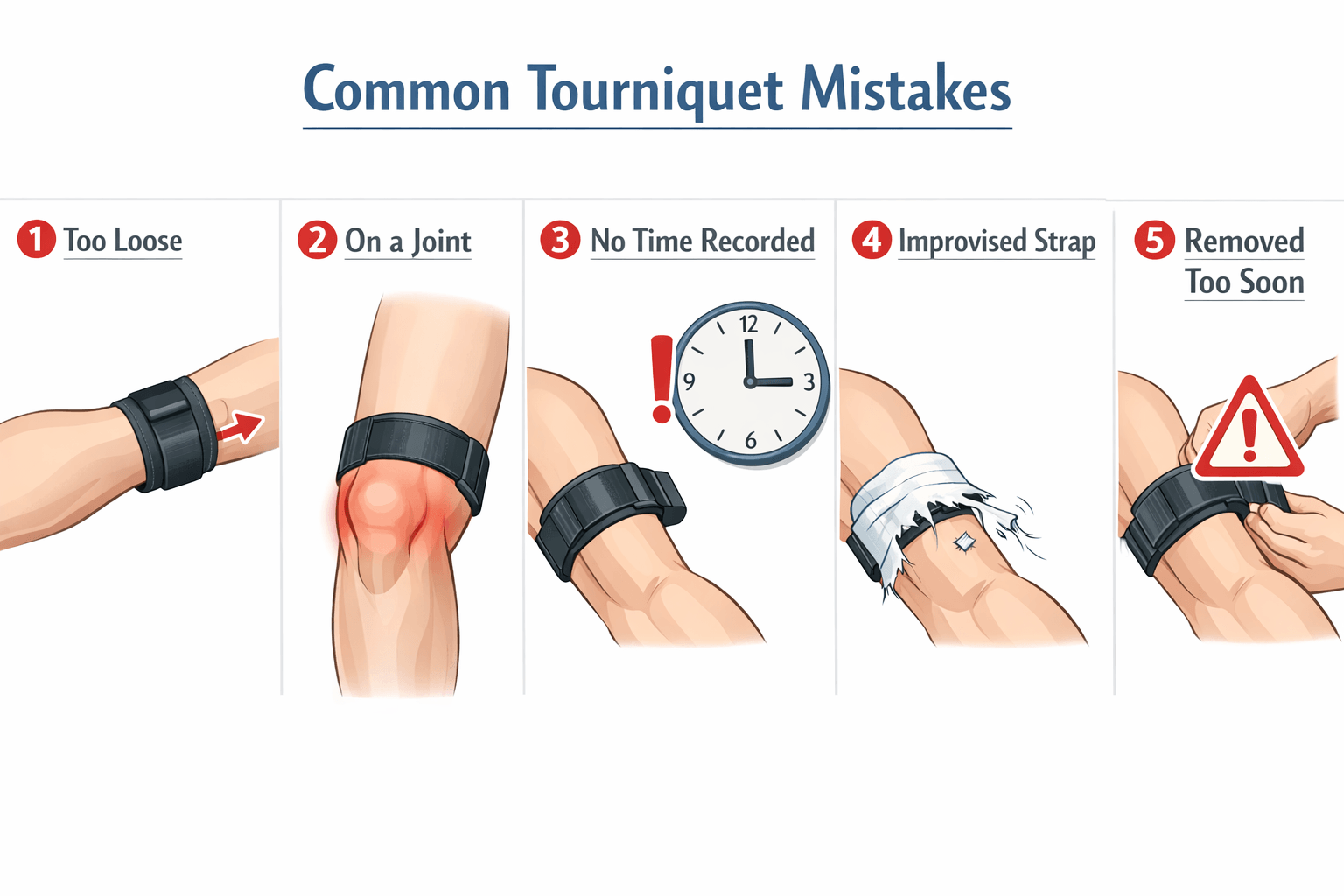 Common mistakes when using a tourniquet
All Major Tourniquet Types Explained
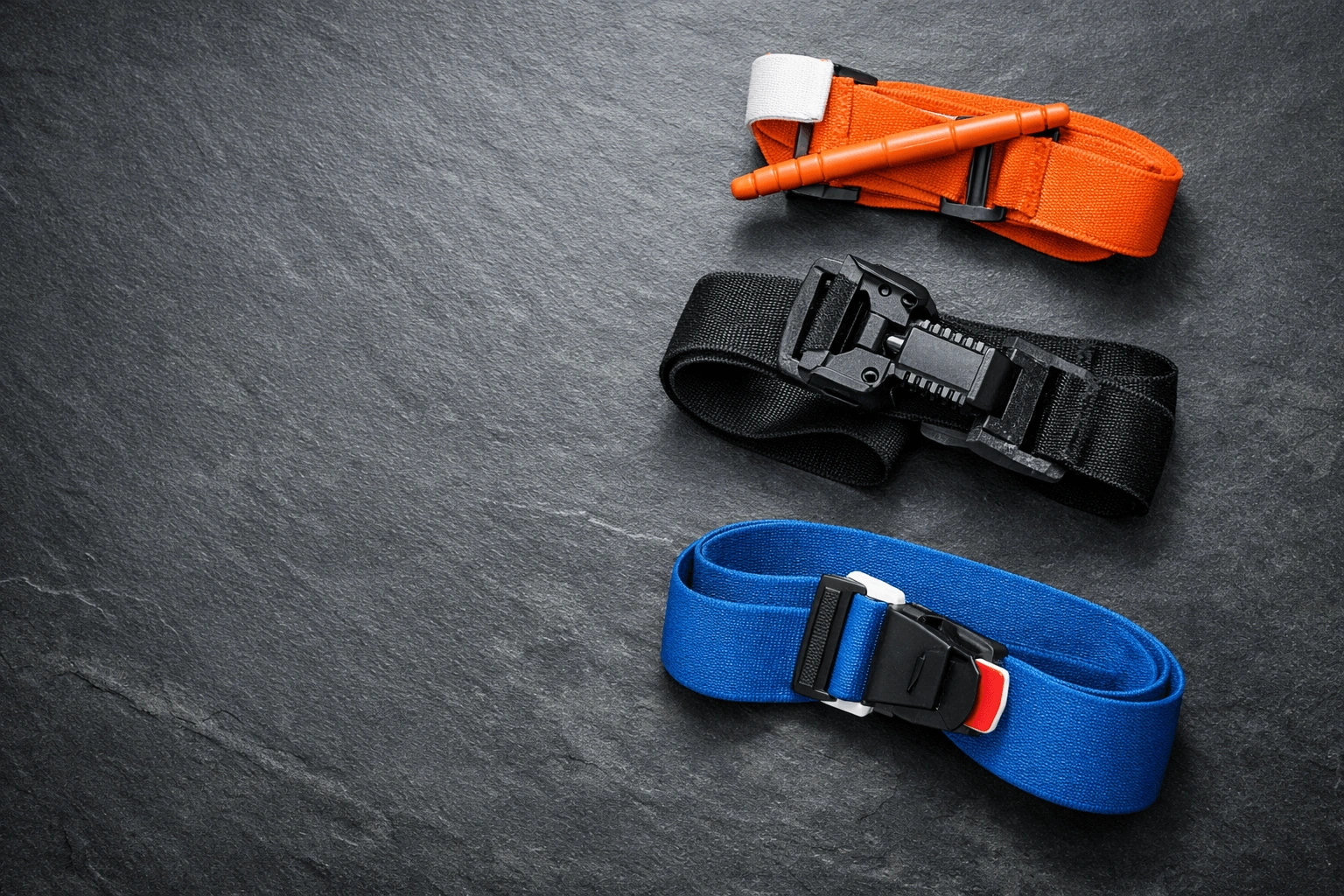
The market offers a variety of tourniquets, each with distinct designs, mechanisms, and intended applications. Understanding these differences is crucial for making an informed choice. While numerous variations exist, they generally fall into categories based on their tightening mechanisms and form factor. This section will introduce the primary categories and popular examples within them, covering both windlass tourniquets and other mechanical tourniquets.
CAT Tourniquet (Combat Application Tourniquet) — The Military Standard
The Combat Application Tourniquet (CAT) is arguably the most ubiquitous and widely recognized emergency tourniquet in the world. Developed by the U.S. military, it is approved by the Committee on Tactical Combat Casualty Care (CoTCCC) and has been the standard issue for American military forces for many years. Its widespread adoption is a testament to its proven effectiveness, reliability, and relative ease of use, particularly in self-application scenarios.
The CAT is a windlass tourniquet. Its design features a durable nylon strap that encircles the limb, a single Windlass Rod Tourniquet made of high-strength polymer or metal, a buckle system to secure the strap's circumference, and a clip to lock the windlass in place. A velcro strap allows for quick initial application and then provides a secure secondary attachment point. The windlass is then twisted, creating tension to occlude blood flow, and then locked to maintain that pressure. Its design prioritizes rapid, one-handed application, making it exceptionally well-suited for individuals who may be injured and need to treat themselves. The CAT is a cornerstone of tactical bleeding control and a reliable option for any comprehensive First Aid kit.
CAT Tourniquet Gen 7 vs Gen 8: What Changed?
North American Rescue (NAR), the manufacturer of the CAT tourniquet, periodically updates its designs to improve performance, durability, and user experience. The differences between the Gen 7 and Gen 8 CAT are subtle but represent refinements based on extensive field feedback and technological advancements.
The Gen 7 CAT was a robust and highly reliable iteration, building on years of field experience. The Gen 8 CAT introduces enhancements primarily focused on the windlass and the buckle system. The Gen 8 features a strengthened windlass, often made from a more durable composite material or reinforced polymer, designed to resist breaking under extreme stress and ensure consistent torque. The buckle system may also see minor design tweaks for enhanced grip and security. While both generations are highly effective, the Gen 8 represents NAR's continued commitment to producing the most reliable and user-friendly windlass tourniquet available, ensuring optimal bleeding control in critical emergency trauma situations.
SOFTT-W Tourniquet — Ideal for Large Limb Circumferences
The SOFTT-W (Special Operations Forces Tactical Tourniquet - Wide) is another highly respected and CoTCCC-approved tourniquet that has seen widespread adoption by special operations units, law enforcement, and EMS. Developed by TacMed Solutions, the SOFTT-W distinguishes itself through its design, which is particularly advantageous for individuals with larger limb circumferences or when applied over bulky clothing.
The SOFTT-W is also a windlass-style tourniquet, but it features a dual windlass system and a broader application band compared to many other models. Key to its design is its wider strap, which distributes pressure more evenly over a larger surface area. This is beneficial for achieving occlusion on thicker limbs and can also reduce the intensity of pain compared to narrower straps. The robust construction and reliable locking mechanism make it a top choice for demanding environments where traumatic bleeding control is paramount. Its dual windlass design offers redundancy and enhanced leverage, contributing to its effectiveness.
SWAT-T Tourniquet — Stretch, Wrap, and Tuck Design
The SWAT-T (Stretch, Wrap, And Tuck Tourniquet) offers a different approach to hemorrhage control, moving away from the traditional windlass mechanism. Developed by Summit Medical, the SWAT-T is a versatile, latex-free elastic band designed for rapid application, making it a practical addition to any First Aid kit.
Mechanism and Application: The SWAT-T operates on a stretch, wrap, and tuck principle. The user wraps the elastic band around the limb, stretches it to apply pressure, and then secures it by tucking the end of the band into a specially designed retainer or by using an integrated velcro strip, depending on the specific iteration of the product. The elasticity of the band provides the constrictive force needed for bleeding control. While it may not achieve the same absolute occlusion pressure as a well-applied windlass tourniquet, it is remarkably effective and can be used on limbs and junctional areas, making it a versatile tool for managing severe external bleeding. Its simplicity and compact nature make it a popular choice for civilians and as a backup emergency medical tourniquet.
RAT Tourniquet — Ultra-Compact Backup Carrier Option
The RAT (Rapid Application Tourniquet) System is designed to be exceptionally small and lightweight, making it an ideal option for an "Everyday Carry" (EDC) kit or as a compact backup tourniquet that can be easily carried in a pocket, small pouch, or even attached to a keyring.
Mechanism: The RAT tourniquet typically employs a strap and buckle system combined with a windlass-like rod or a rigid component that acts as a windlass. The user wraps the strap around the limb, threads it through a buckle, and then uses the integrated rod to twist and tighten the strap, applying pressure to occlude blood flow. Its primary advantage is its minimal size and weight, fitting easily into small compartments or glove boxes without adding bulk. While not typically CoTCCC-approved for high-threat environments, it serves as an excellent supplementary device for situations where a primary tourniquet might not be readily accessible. Its application rápida is a key feature, enabling quick deployment in an emergency.
Ratchet Tourniquet — Mechanical Advantage for One-Handed Application
Ratchet tourniquets represent a distinct category of mechanical tourniquets that utilize a clicking, locking mechanism for tightening. These devices offer a different approach to achieving the necessary pressure without the continuous rotational action of a traditional windlass. The "sistema de ajuste" (adjustment system) allows for precise tensioning.
Mechanism: A ratchet tourniquet typically involves a strap that is pulled through a locking buckle. As the strap is pulled, the ratchet mechanism engages, preventing it from loosening and providing a secure sistema de bloqueo (locking system). Some ratchet designs may also incorporate a secondary tightening element, akin to a mini-windlass, to further increase pressure. The primary advantage is the audible and tactile feedback of the "clicking" mechanism, which helps confirm tightening, and its ability to "lock" at a specific tension without requiring a separate clip. This mechanical advantage system facilitates effective one-handed application, making it a valuable tool for traumatic bleeding control. The RATCHETING MEDICAL TOURNIQUET offers a compelling alternative to windlass designs.
TX3 Tourniquet and Other Emerging Options
The field of emergency tourniquets is continuously evolving, with manufacturers striving to improve speed, compactness, ease of use, and effectiveness. The TX3 tourniquet is an example of a newer design aiming to combine several desirable features, often incorporating a unique tightening mechanism.
The TX3 is a modern tourniquet that often features a cam-lock system or a hybrid approach combining elements of compression and mechanical tightening. Its design intent is often to offer a balance of rapid application, secure closure, and a relatively compact form factor. Some TX3 models may boast features like a single-hand application capability and a reinforced strap system, aiming for enhanced reliability in bleeding control. As with any newer product, field validation and long-term reliability data are crucial for widespread adoption by professionals. These emerging options reflect a drive towards innovation in essential medical supplies for emergency medical situations.
Tourniquet Types Compared: Side-by-Side Breakdown
Choosing the right tourniquet involves weighing several factors, from its physical characteristics to its performance under stress. This comparison aims to highlight the key differentiators between the major types discussed, enabling a more informed decision for various roles and environments.
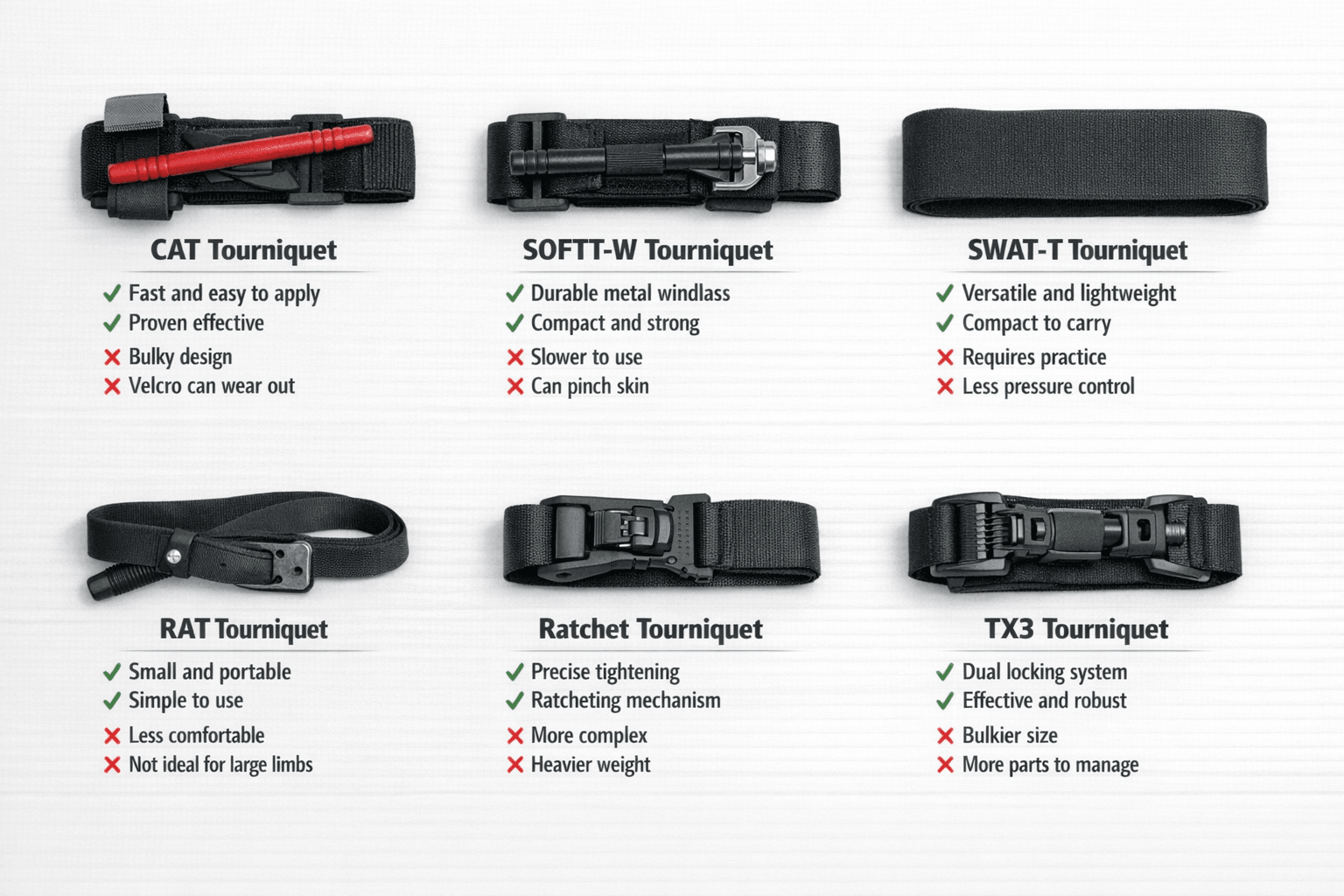 Tourniquet types and there pros and cons.
Weight, Size, and Packability
The physical dimensions and weight of a tourniquet are critical considerations, especially for users who need to carry multiple items or prioritize minimal bulk.
- CAT Tourniquet: Generally considered moderate in size and weight. It's robust enough to be reliable but can be bulkier than some alternatives. It typically comes in a pouch or can be strapped to gear.
- SOFTT-W Tourniquet: Due to its wider band and robust construction, the SOFTT-W can be slightly bulkier and heavier than the CAT, though still very manageable. Its width is an advantage for application but might take up a bit more space in a kit.
- SWAT-T Tourniquet: Highly packable. Its flexible, non-rigid design allows it to be compressed into a very small package, making it excellent for EDC or as a backup. It's significantly lighter and smaller than windlass-style tourniquets.
- RAT Tourniquet: Ultra-compact and lightweight, making it the top choice for minimal carry. Its size is its most significant advantage.
- RATCHETING MEDICAL TOURNIQUET / Newer Mechanical Designs: These vary, but many aim for a balance between the robustness of windlass types and the compactness of simpler designs. Specific models will have different profiles.
Ease of One-Handed Application
The ability to apply a tourniquet effectively to oneself with one hand is paramount, as an injured individual is often the first responder.
- CAT Tourniquet: Specifically designed for one-handed application. The windlass mechanism can be manipulated and secured using a single hand, although practice is essential to master this under stress. It is widely considered excellent for self-application.
- SOFTT-W Tourniquet: Also designed for one-handed use. The dual windlass system and secure locking mechanism are engineered for effective self-application. Users may find the wider band slightly more challenging to manipulate initially but ultimately effective.
- SWAT-T Tourniquet: Can be applied one-handed, but achieving sufficient and consistent tension can be more difficult for some users compared to windlass-style devices, especially under duress.
- RAT Tourniquet: Designed for rapid, one-handed application due to its compact nature and integrated components.
- RATCHETING MEDICAL TOURNIQUET / Newer Mechanical Designs: Many of these are specifically engineered for ease of one-handed use, leveraging their locking mechanisms for secure tightening without complex manipulation.
TCCC and CoTCCC Approval Status
The Committee on Tactical Combat Casualty Care (CoTCCC) evaluates and approves medical equipment for use by U.S. special operations forces and, by extension, has become a de facto standard for many military and law enforcement agencies worldwide. Approval indicates a device has met stringent performance and reliability standards.
- CoTCCC Approved: CAT Tourniquet, SOFTT-W Tourniquet. These are the most trusted devices for tactical and combat environments, representing proven reliability in high-threat scenarios.
- Not Typically CoTCCC Approved: SWAT-T, RAT, and many other civilian-market or emerging tourniquets. While they may be effective in certain scenarios and for civilian First Aid, they have not undergone the same rigorous testing and approval process for military use.
For professionals operating in high-risk environments, CoTCCC approval is a critical indicator of a tourniquet's proven effectiveness and durability in extreme conditions.
Best Use Cases by Environment
The ideal tourniquet often depends on the specific context and environment where it will be used, impacting factors like durability, ease of access, and required performance under stress.
- Combat/Military/High-Risk Law Enforcement: CAT or SOFTT-W. CoTCCC approval, proven battlefield reliability, and excellent one-handed application make these the top choices for managing arterial bleeding and traumatic bleeding control in these demanding settings.
- Patrol Officer (LEO): CAT or SOFTT-W. Easy access on a duty belt, quick application, and departmental compliance often dictate these choices for immediate response to violent incidents and emergency medical situations.
- EMS Paramedics, and First Responders: CAT, SOFTT-W, or SAM-XT. Reliability, durability, and proven performance are key. Versatility for various patient types and environments, from roadside accidents to mass casualty events, is essential. These professionals rely on robust medical supplies.
- Wilderness/Backcountry/Hiking: CAT, SOFTT-W, or even a compact SWAT-T/RAT as a backup. Reliability is paramount in remote areas. Packability can also be a factor, making a combination of a reliable primary and a compact backup a wise choice. Having tourniquet kits readily accessible is crucial.
- Everyday Carry (EDC) for Civilians: SWAT-T, RAT, or a compact CAT. Focus is on small size and ease of use for unexpected emergencies at home, in the car, or in public. These fit well in a personal First Aid kit.
How to Use a Tourniquet Strap: Step-by-Step
Applying a tourniquet correctly is a skill that requires practice. These steps outline the standard procedure for using a windlass-style tourniquet, which is the most common type. Always refer to the manufacturer's specific instructions for your chosen device. This técnica de aplicación is vital for effective control de hemorragia.
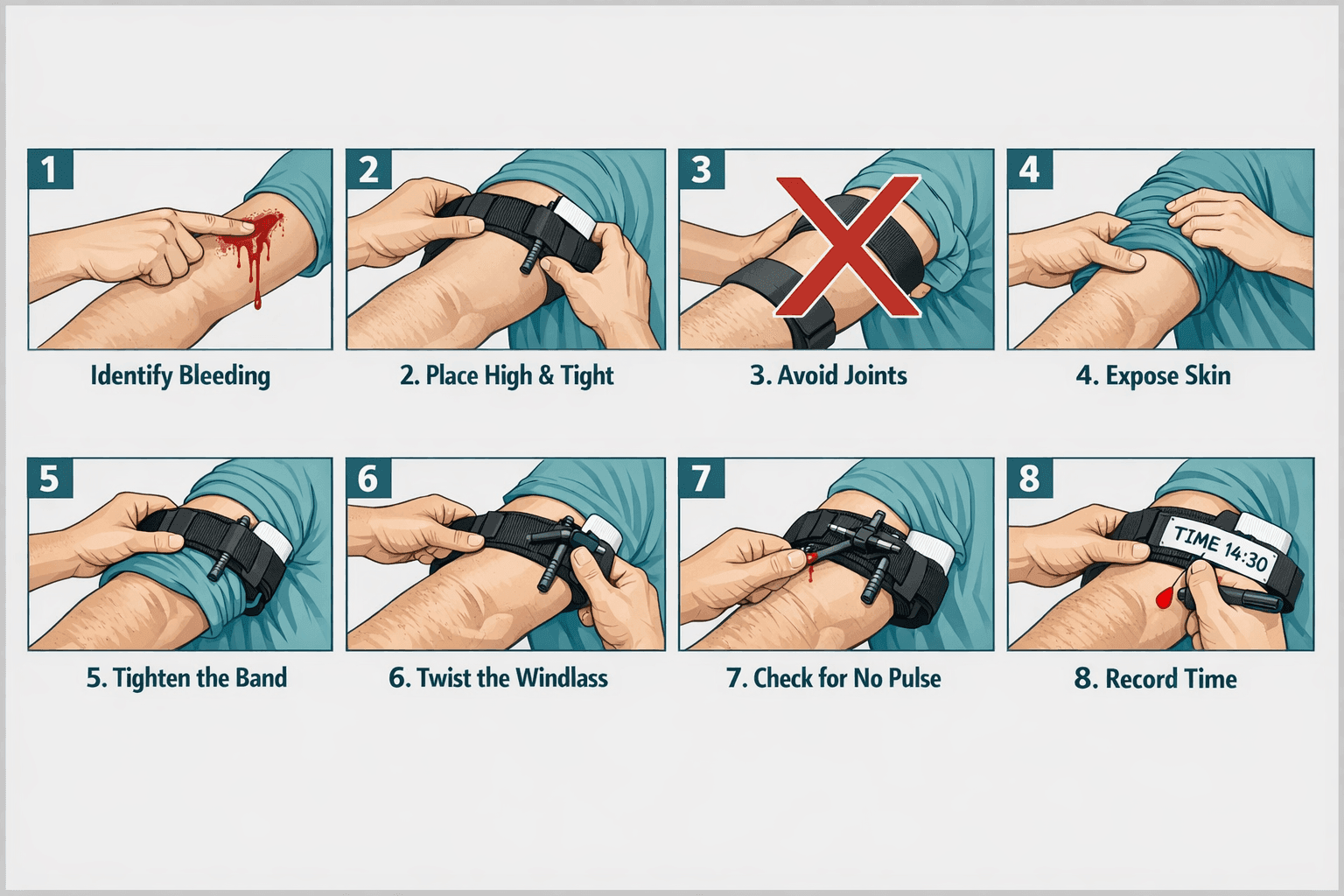 How to apply a tourniquet
Tourniquet Placement on the Limb
Proper placement is paramount for tourniquet effectiveness and minimizing potential complications.
- Identify the Bleeding Source: Determine the location of the severe, life-threatening bleeding on the limb.
- Apply High and Tight: For limb injuries, the tourniquet should be applied proximal to the wound (closer to the body's core). Aim for the highest possible position on the limb, typically the junction of the upper third and middle third of the arm or thigh.
- Avoid Joints: Do not place the tourniquet directly over a joint (elbow, knee, shoulder, hip). If the wound is on or very near a joint, apply the tourniquet just above it, on the solid part of the bone.
- Clear the Application Area: Ensure the limb is free of bulky clothing that could prevent the tourniquet from lying directly against the skin or underlying blood vessels. If clothing is present, cut it away to ensure proper contact.
Tightening, Windlass, and Time-Stamping
Once the band is in place, the critical steps of tightening, securing, and documenting must be performed to ensure sangrado severo is managed.
- Secure the Band: Thread the strap through the buckle and pull it taut, securing the tourniquet around the limb at the chosen high-and-tight position. You want it snug enough that it won't easily slip, but this is not the final tightening for occlusion.
- Engage the Windlass: Insert the Windlass Rod Tourniquet into its designated clip or slot and begin rotating it. Continue to twist the windlass firmly. The goal is to tighten the band until all bleeding from the limb stops. This will likely be painful for the casualty.
- Achieve Occlusion: Keep twisting until bright red, arterial bleeding ceases completely. If dark, venous bleeding continues, continue twisting. If spurting arterial bleeding continues, tighten further. Once bleeding stops, secure the windlass in its clip.
- Time-Stamp: Immediately mark the tourniquet or the patient’s forehead with the time of application using a permanent marker. This is critical information for medical professionals. For example, write "TK 14:30" (Tourniquet at 2:30 PM).
Tourniquet Band for Holster: Carrying on Your Kit
The accessibility of your tourniquet is as crucial as your ability to apply it. It must be readily available, especially in a dynamic situation. Proper carrying methods ensure fast deployment and are essential for any tourniquet kits or comprehensive bleeding control supplies.
- Duty Belt: Many LEOs carry their tourniquet in a dedicated pouch on their duty belt. These pouches are designed for quick access, often allowing a one-handed draw. Some are designed to hold the tourniquet folded in a way that facilitates rapid unfolding and application, ensuring swift control de sangrado.
- Plate Carrier/Tactical Vest:In military and tactical law enforcement, tourniquets are commonly attached to plate carriers or tactical vests. Popular methods include:
- External Pouches: Velcro-closure pouches or dedicated tourniquet holders that attach via MOLLE webbing. These offer secure storage while allowing for rapid retrieval.
- Strap Systems: Some vests have integrated straps or bungee systems designed to hold a tourniquet securely but allow for quick release.
Choosing the Right Carry Style
The optimal carry style depends heavily on your role, environment, and personal preference, ensuring the tourniquet is readily accessible for emergency medical situations.
- Holster Compatibility: Many tourniquets are designed to fit snugly into dedicated holsters or pouches, which can be affixed to belts, tactical vests, or backpacks. Choose a holster that keeps the tourniquet secure yet easily accessible.
- Placement: Consider the location where you carry your tourniquet. Whether it’s on your hip, chest rig, or backpack strap, ensure it can be reached with either hand. Practice accessing and deploying it from these locations under various conditions to determine what works best for you. This is crucial for effective control de hemorragia under stress.
- Visibility: Opt for a carry method that allows the tourniquet to be easily visible and recognizable to others. In a crisis, a fellow responder or passerby may need to access and apply the device quickly. This is particularly important in mass casualty events.
Choosing the Right Tourniquet for Your Mission or Role
When selecting the right tourniquet, it is essential to match the type to your specific needs and activities. Different scenarios demand different features, from compactness to ease of use in high-stress situations. Here's a guide to help you determine which tourniquet may best suit your mission or role, considering factors relevant to First Aid, emergency trauma, and bleeding control.
1. Military and Tactical Use
- Recommended Type: Combat Application Tourniquet (CAT) or Special Operations Forces Tactical Tourniquet (SOFTT-W).
- Key Features: These tourniquets are robust, reliable, and designed for rapid, one-handed application. They undergo rigorous testing to ensure they meet military standards, including CoTCCC approval, signifying their proven effectiveness in harsh environments. Their durable construction and mechanical advantage system make them ideal for managing severe external bleeding under extreme stress and for situations requiring high battle casualty survival rates.
2. Law Enforcement and First Responders
- Recommended Type: CAT or Tactical Medical Solutions’ SOFTT-W.
- Key Features: These are lightweight yet durable, perfect for patrol officers or first responders who need to carry multiple pieces of equipment. The ease of use and proven effectiveness make these tourniquets suitable for varied emergencies, including high-stake public safety scenarios and mass casualty events. Their design facilitates quick deployment from duty belts or vests, aiding in rapid bleeding control.
3. Everyday Carry (EDC) for Civilians
- Recommended Type: SWAT-T, RAT Tourniquet, or a compact CAT.
- Key Features: For civilians, the emphasis is often on First Aid kit portability and ease of use for non-professional responders. Compactness and simplicity are key. The SWAT-T's stretch-and-wrap design or the RAT's ultra-compact form factor make them excellent choices for car kits, go-bags, or personal First Aid pouches. They offer a reliable means of bleeding control for unexpected injuries, complementing other medical supplies like bandages and gloves.
4. EMS Paramedics, and First Responders
- Recommended Type: CAT, SOFTT-W, or SAM-XT.
- Key Features: EMS professionals require dependable and versatile equipment. These tourniquets offer a balance of ruggedness, proven effectiveness, and relative ease of application in diverse scenarios, from single-patient emergency trauma to large-scale incidents. Their robust materiales robustos ensure reliability, and their design allows for efficient control de hemorragia in dynamic prehospital care environments. They are integral to their tourniquet kits and overall medical supplies.
What's Next?
You now have a comprehensive understanding of tourniquet types, their mechanisms, and how to select the right one for your specific needs. We've explored how devices like windlass tourniquets, mechanical tourniquets, and even simpler designs like the SWAT-T function to occlude blood flow and manage severe blood loss. You've learned about the critical importance of factors like ease of one-handed application, CoTCCC approval for tactical roles, and packability for EDC.
The next crucial step is First aid training. While this guide provides vital knowledge, hands-on practice with a tourniquet under the guidance of certified instructors is indispensable. Organizations like the American Red Cross offer extensive first aid classes and resources, including the American Red Cross First Aid App, to enhance your preparedness. Consider assembling a comprehensive tourniquet kit or a broader bleeding control kit that includes essential companion items such as Nitrile Responder Gloves, Emergency Trauma Dressing, Compressed Wound Packing Gauze, and a Hemostatic dressing. Remember, preparedness is not just about owning the right gear; it's about knowing how and when to use it effectively. Your commitment to learning and training can empower you to make a life-saving difference.
Where to Buy a Tourniquet — What to Avoid and Where to Shop
When purchasing a tourniquet, it's crucial to choose reputable sources to ensure you're getting high-quality and reliable products. Here's what to consider:
Reputable Retailers
- Specialized Medical Supply Stores: These are often your best bet for genuine and CoTCCC-approved tourniquets. They typically stock tried-and-tested brands like CAT, SOFTT-W, and SAM-XT, ensuring quality and reliability. Look up Cat Tourniquet near me to find some local stores.
- Online Marketplaces: Websites such as LA Police Gear offer a selection of approved and highly rated tourniquets with detailed product descriptions and customer reviews.
- Outdoor and Tactical Gear Retailers: Shops that cater to military, law enforcement, or outdoor sports might carry professional-grade tourniquets. Always verify that the products sold here are genuine and, if possible, seek guidance or recommendations from staff who have expertise in first aid gear.
What to Avoid
- Low-Cost Imitations: Be wary of deeply discounted tourniquets, as these are often poor-quality imitations. These replicas may look similar to tested brands but could fail under the stress of an actual emergency and should not be used in place of certified products.
- Non-Specialized Retailers: It is advisable to avoid buying tourniquets from retailers or shops that do not specialize in medical or emergency equipment. Buying a tourniquet at Walmart, Walgreens, or similar stores may not be the best choice when your life is on the line.
FAQs
Why is a Tourniquet Is Non-Negotiable in Any Tactical or Medical Kit?
 Uncontrolled hemorrhage is a leading cause of preventable death in trauma situations, often occurring in less than five minutes.
What are the Common Mistakes to Avoid When Applying a Tourniquet
- Loose Application: This is arguably the most critical mistake. A tourniquet that is not tightened sufficiently will fail to occlude blood flow completely. It might slow bleeding, providing a false sense of security, while the patient continues to lose vital blood. The goal is complete cessation of bleeding from the injured limb. If bleeding persists after initial tightening, the tourniquet must be tightened further. This is where the mechanical advantage system of devices like windlass tourniquets is crucial for achieving adequate pressure.
- Incorrect Placement: Tourniquets should always be applied proximal to the wound (closer to the torso), on solid muscle mass, and never directly over a joint (elbow, knee, ankle, wrist). Applying over a joint can allow the blood vessels to continue to bleed around the occluded area. The ideal placement is typically on the upper third of the arm or thigh. For injuries in areas like the groin or armpit where a limb tourniquet cannot be applied, specialized junctional tourniquets or packing techniques are necessary.
- Failure to Time-Stamp: It is vital to record the exact time the tourniquet was applied. This information is critical for medical professionals to assess the potential for complications and plan for limb salvage or amputation. Without a time stamp, it becomes difficult to manage the patient effectively, as prolonged application can lead to permanent nerve and tissue damage.
- Over-Reliance on Improvised Tourniquets: While improvised tourniquets (using belts, scarves, etc.) may be necessary in extreme circumstances where no commercial device is available, they are notoriously less effective and carry a higher risk of failure. Commercial windlass tourniquets are engineered for consistent and sufficient pressure. If forced to improvise, use a wide band of material to distribute pressure and a rigid object for twisting to create tension, but understand the inherent risks.
- Removing the Tourniquet Prematurely: A tourniquet should only be removed by trained medical professionals. Removing it prematurely can lead to a sudden surge of toxins released from damaged tissues, potentially causing shock or other systemic problems, and may reinitiate life-threatening blood loss.
What is the best tourniquet for one handed use?
- CAT Tourniquet: Specifically designed for one-handed application. The windlass mechanism can be manipulated and secured using a single hand, although practice is essential to master this under stress. It is widely considered excellent for self-application.
Which tourniquets are TCCC and CoTCCC approved?
- CoTCCC Approved: CAT Tourniquet, SOFTT-W Tourniquet. These are the most trusted devices for tactical and combat environments, representing proven reliability in high-threat scenarios.
How do you use a tourniquet?
- Identify the Bleeding Source: Determine the location of the severe, life-threatening bleeding on the limb.
- Apply High and Tight: For limb injuries, the tourniquet should be applied proximal to the wound (closer to the body's core). Aim for the highest possible position on the limb, typically the junction of the upper third and middle third of the arm or thigh.
- Avoid Joints: Do not place the tourniquet directly over a joint (elbow, knee, shoulder, hip). If the wound is on or very near a joint, apply the tourniquet just above it, on the solid part of the bone.
- Clear the Application Area: Ensure the limb is free of bulky clothing that could prevent the tourniquet from lying directly against the skin or underlying blood vessels. If clothing is present, cut it away to ensure proper contact.
Tightening, Windlass, and Time-Stamping
Once the band is in place, the critical steps of tightening, securing, and documenting must be performed to ensure sangrado severo is managed.
- Secure the Band: Thread the strap through the buckle and pull it taut, securing the tourniquet around the limb at the chosen high-and-tight position. You want it snug enough that it won't easily slip, but this is not the final tightening for occlusion.
- Engage the Windlass: Insert the Windlass Rod Tourniquet into its designated clip or slot and begin rotating it. Continue to twist the windlass firmly. The goal is to tighten the band until all bleeding from the limb stops. This will likely be painful for the casualty.
- Achieve Occlusion: Keep twisting until bright red, arterial bleeding ceases completely. If dark, venous bleeding continues, continue twisting. If spurting arterial bleeding continues, tighten further. Once bleeding stops, secure the windlass in its clip.
- Time-Stamp: Immediately mark the tourniquet or the patient’s forehead with the time of application using a permanent marker. This is critical information for medical professionals. For example, write "TK 14:30" (Tourniquet at 2:30 PM).
What is a tourniquet and when should you use one?
A tourniquet is a constricting device applied to a limb to stop severe, life-threatening bleeding by compressing blood vessels until medical care is available. You should use one when direct pressure fails to control hemorrhage from an extremity wound — particularly in situations involving traumatic injury from accidents, gunshots, or blast injuries. According to the Committee on Tactical Combat Casualty Care (TCCC), extremity hemorrhage is one of the leading preventable causes of death in trauma. Having a tourniquet ready before you need it is essential for any first-aid kit.
What are the main types of tourniquets available?
The three main tourniquet types used in civilian and military settings are windlass tourniquets (such as the CAT and SOFTT-W), elastic tourniquets (such as the RATS), and pneumatic (or cuff) tourniquets used primarily in clinical environments. Windlass designs are the most widely recommended for field use because they allow single-handed application and generate consistent, adjustable pressure. The CoTCCC has approved several windlass models for military use, and these same designs are widely adopted by law enforcement and civilians.
What is the difference between a CAT tourniquet and a SOFTT-W?
The CAT (Combat Application Tourniquet) uses a single routing buckle and a rigid windlass rod, making it the easiest to apply one-handed — which is critical for self-application. The SOFTT-W (Special Operations Forces Tactical Tourniquet Wide) features a wider 1.5-inch band that distributes pressure over a larger surface area, reducing tissue damage on longer transports. Both are CoTCCC-approved and proven in combat. The CAT is generally preferred for everyday carry due to its compact profile, while the SOFTT-W is favored by operators who anticipate prolonged field care.
What is the difference between a RATS tourniquet and a CAT tourniquet?
The RATS (Rapid Application Tourniquet System) is a thin, elastic rubber band-style tourniquet designed for fast application, but it has a significantly narrower contact surface than the CAT, which can increase the risk of tissue necrosis in extended use. The CAT is CoTCCC-approved with extensive peer-reviewed evidence supporting its effectiveness in hemorrhage control; the RATS lacks the same level of independent clinical validation. Most trauma and tactical medicine instructors recommend CoTCCC-approved windlass tourniquets like the CAT for primary carry. The RATS may serve as a secondary or backup option, particularly for pets or pediatric limbs where its smaller form factor is advantageous.
Which tourniquet should a civilian carry for everyday preparedness?
Civilians should carry a CoTCCC-approved windlass tourniquet — the CAT Generation 7 or the SOFTT-W are the top recommendations. Both have been validated in military and law enforcement settings and are proven to stop arterial bleeding when applied correctly. Avoid novelty or uncertified tourniquets sold at low price points, as they may fail under pressure. A tourniquet is only effective if it's accessible, so carry it in an individual first aid kit (IFAK) on your person or in a vehicle kit rather than buried in a bag. Training with your specific model is equally important — consider a Stop the Bleed course to build muscle memory.
Can you leave a tourniquet on too long — is there a time limit?
Modern trauma guidelines recommend keeping tourniquet application time under 2 hours to minimize the risk of permanent nerve and muscle damage, though survival always takes priority over tissue preservation. Research published in The Journal of Trauma and Acute Care Surgery found that limb loss risk rises substantially after 6 hours of continuous application. In the field, the goal is to transfer care to a medical facility as quickly as possible. Never remove a tourniquet in the field once it has been applied — conversion to pressure dressings should only be done by trained medical personnel. Note the application time clearly on the patient.
Are there tourniquets designed for use on children or small limbs?
Standard adult windlass tourniquets (CAT, SOFTT-W) are typically too wide for infant or toddler limbs. The RATS tourniquet is sometimes cited for pediatric use due to its smaller circumference, though it lacks the clinical validation of windlass models. For small-limb hemorrhage control in children, improvised pressure dressings or pediatric-specific hemostatic products may be more effective. In 2023, the National Association of EMS Physicians (NAEMSP) updated guidance to acknowledge the lack of pediatric-specific TQ data and recommended training-based improvisation when dedicated tools are unavailable.
How should you store and maintain a tourniquet to keep it ready?
Store your tourniquet in a consistent, accessible location — an outer IFAK pouch, a vehicle medical kit, or a dedicated pocket in your EDC bag. Keep it out of direct sunlight and extreme heat, which degrade the nylon webbing and windlass components over time. Inspect the strap, buckle, windlass, and velcro monthly for wear or brittleness, and replace any TQ that has been deployed or shows visible damage. Most manufacturers recommend replacing tourniquets every 3–5 years regardless of visible condition.