Listen to this article
Table of Contents
- Introduction: The Art of the Crisp Uniform
- What to Expect in This Guide
- Why Proper Uniform Presentation Matters
- What Exactly Are Boot Blousers?
- A Deep Dive into Types of Boot Blousers
- Step-by-Step Guide: How to Properly Blouse Your Boots
- Mastering the Blouse: Advanced Tips and Troubleshooting
- Blousing Standards Across Military Branches and Training Environments
- What's Next?
- FAQs
Boot blousers are elastic bands, straps, or hook-and-loop closures that secure trouser cuffs above tactical boots. Put them around your lower leg, tuck the hem underneath, and adjust evenly to create a clean military appearance while keeping debris out securely.
Introduction: The Art of the Crisp Uniform
The military uniform is more than just clothing; it's a symbol of discipline, professionalism, and belonging. Every aspect, from the crease in your trousers to the shine on your boots, contributes to a cohesive and impressive presentation. Among the often-overlooked details that enhance this presentation is the proper use of boot blousers. These seemingly simple accessories play a crucial role in maintaining a sharp appearance, ensuring operational safety, and reflecting a deep-seated attention to detail – a cornerstone of military bearing. This comprehensive guide will demystify boot blousers, explaining what they are, why they matter, the different types available, and most importantly, how to use them effectively. Whether you're a cadet in ROTC, a recruit navigating Boot Camp, a seasoned soldier in the army, or a member of the Marines, mastering the art of the properly bloused boot will elevate your uniform and your readiness.
What to Expect in This Guide
This guide is designed to provide a complete understanding of boot blousing, moving beyond a superficial "how-to" to explore the underlying principles and practical applications. We will begin by defining boot blousers and their fundamental purpose, delving into their historical context and the core benefits they offer. Subsequently, we will conduct an in-depth examination of the various types of boot blousers available, from traditional elastic bands to modern tactical solutions. The heart of this guide will be a step-by-step instructional section, detailing how to achieve a perfect blouse with different methods, alongside common pitfalls to avoid. We will then explore advanced tips, troubleshooting, and maintenance strategies. We will explain blousing standards in different military branches and training settings. We will focus on specific rules for the army, Marines, ROTC programs, and academies like St. Johns Northwestern Military Academy. By the end of this guide, you will possess the knowledge and confidence to properly blouse your boots, significantly enhancing your uniform presentation and operational effectiveness.
Why Proper Uniform Presentation Matters
The meticulous presentation of a military uniform is a tangible manifestation of a service member's commitment to their role and their organization. It extends far beyond mere aesthetics, serving as a critical component of military discipline and professionalism. In environments where precision and order are paramount, such as Boot Camp, initial drill, or training exercises at facilities like the rifle range, even minor deviations from uniform standards can have significant implications. The expected level of neatness underscores the importance of attention to detail, a trait that is rigorously instilled by Drill Instructors and is vital for effective unit cohesion and individual performance.
Upholding Military Standards and Discipline
The military thrives on order, and adherence to uniform regulations is a visible demonstration of that order. When a service member consistently presents a sharp, well-maintained uniform, it signifies respect for the institution, pride in their service, and an understanding of the importance of standards. This is particularly evident during the demanding phases of Boot Camp and initial drill, where every aspect of a recruit's bearing is scrutinized. A Drill Instructor will often use uniform infractions, including improper blousing, as teaching moments to instill the discipline required for effective military service. This is not about vanity; it's about reinforcing the mindset that every detail matters, from the grand strategy of a mission to the smallest element of personal presentation. For cadets in ROTC programs or students at institutions like St. Johns Northwestern Military Academy, upholding these standards is a fundamental part of their training and development, preparing them for future leadership roles. The collective adherence to such standards creates an environment of mutual respect and operational readiness.
Operational Safety: Preventing Hazards and Enhancing Readiness
Proper uniform presentation, including correctly bloused boots, helps keep soldiers safe. It also shows professionalism. Loose pant legs can snag on equipment, vegetation, or other obstacles, posing a tripping hazard or potentially leading to equipment malfunction. This risk is amplified during activities like navigating rough terrain, operating at a rifle range, or participating in tactical movements. A 2022 NATO field study, for instance, showed that high boots had a 40% lower incidence of foot and leg injuries among soldiers in rough terrain compared to mid-rise tactical boots [Milforce Equipment, 2025]. While this statistic directly relates to boot height, the principle of securing the lower leg remains crucial. Properly bloused trousers, tucked securely into boots, minimize these risks, allowing service members to move with greater freedom and confidence. This enhanced readiness means being prepared for the demands of the job, whether it's a foot patrol, a training exercise, or any scenario where mobility and the absence of impediments are critical.
The Psychological Impact: A Reflection of Attention to Detail (Relevant for Boot Camp, initial drill, and overall military bearing)
The psychological impact of a well-presented uniform cannot be overstated. For the individual, the act of meticulously preparing their gear, including properly blousing their boots, can foster a sense of pride and accomplishment. This attention to detail reinforces a positive self-image and enhances confidence, which is particularly important during the challenging phases of military training. For recruits in Boot Camp, the meticulous process of blousing their cammies under the stern gaze of a Drill Instructor is part of a broader psychological conditioning. It teaches them to focus on the minutiae, to strive for perfection in every task, and to understand that their appearance is a reflection of their mental state and commitment. This heightened sense of military bearing and attention to detail translates directly into how they approach their duties. A sharp appearance can instill a sense of readiness and psychological preparedness, contributing to overall morale and unit cohesion. In essence, a crisp uniform, right down to the bloused boot, signals that the individual is alert, disciplined, and prepared.
What Exactly Are Boot Blousers?
At their core, boot blousers are specialized accessories designed to secure the bottom edges of trousers (often military utility pants, commonly referred to as cammies in the army context) around the top of a service member's boots. This simple function serves multiple purposes, contributing significantly to both the aesthetic appeal and the practical utility of military attire. While their appearance might seem minor, their role in maintaining a neat uniform and preventing common issues is substantial.
Defining Boot Blousers: Purpose and Function
The primary purpose of a boot blouser is to create a clean, unbroken line from the boot cuff up the pant leg, preventing the bottom of the trousers from bunching, flapping, or becoming untidy. This is achieved by securely holding the fabric in place. Functionally, this neatness contributes to a more professional and disciplined appearance. Beyond aesthetics, blousing serves practical purposes: it can help prevent debris, insects, and ticks from entering the top of the boot, a significant concern in field environments. It also reduces the likelihood of pant legs snagging on equipment or terrain, thus enhancing safety and freedom of movement. For those wearing specialized footwear, such as 5.11 Tactical Boots, proper blousing ensures that the full design and protective features of the boots are visible and unhindered.
The Evolution of Uniform Neatness: A Brief History
The concept of tidying military pant legs has evolved alongside military fashion and practicality. Historically, soldiers often wore gaiters or puttees – wraps of cloth or leather – that served a similar purpose: to protect the lower leg, secure the trouser bottom, and provide ankle support. In the 20th century, military uniforms became more standardized. This was especially true with utility and combat uniforms like the army's cammies. Because of this, soldiers needed a simple and effective way to manage the bottoms of their pant legs. Early forms of what we now recognize as boot blousers likely emerged organically, with soldiers improvising to keep their trousers neat. Elasticated bands and Velcro closures became common over time. This made boot blousing a standard part of military uniforms in many branches, including the Marines and the army. It is also expected in ROTC programs and military academies.
Core Benefits: Aesthetics, Safety, and Professionalism
The benefits of using boot blousers can be broadly categorized into three interconnected areas: aesthetics, safety, and professionalism. Aesthetically, properly bloused trousers create a sharp, clean silhouette. This visual neatness is a hallmark of a well-turned-out service member, reflecting pride and adherence to standards, which is a key component of military bearing. From a safety perspective, blousing helps prevent snags and trips, especially in challenging environments. This is crucial for operational readiness and can significantly reduce the incidence of injuries. In fact, a 2022 NATO field study indicated that high boots contributed to a 40% lower incidence of foot and leg injuries in rough terrain [Milforce Equipment, 2025], and securing pant legs enhances this protective effect. Finally, the act of blousing reinforces discipline and attention to detail. It’s a small but consistent practice that signals a member's commitment to upholding the standards of their service, whether they are undergoing Boot Camp, training at the rifle range, or preparing for formal inspections. This attention to detail is what Drill Instructors look for and what differentiates a fully prepared service member.
A Deep Dive into Types of Boot Blousers
The landscape of boot blousing has evolved, offering various solutions to meet different needs and preferences. Understanding these types is key to selecting the most appropriate method for your specific circumstances, whether you're in combat boots, everyday cammies, or specialized footwear.
Blousers Built into Pants
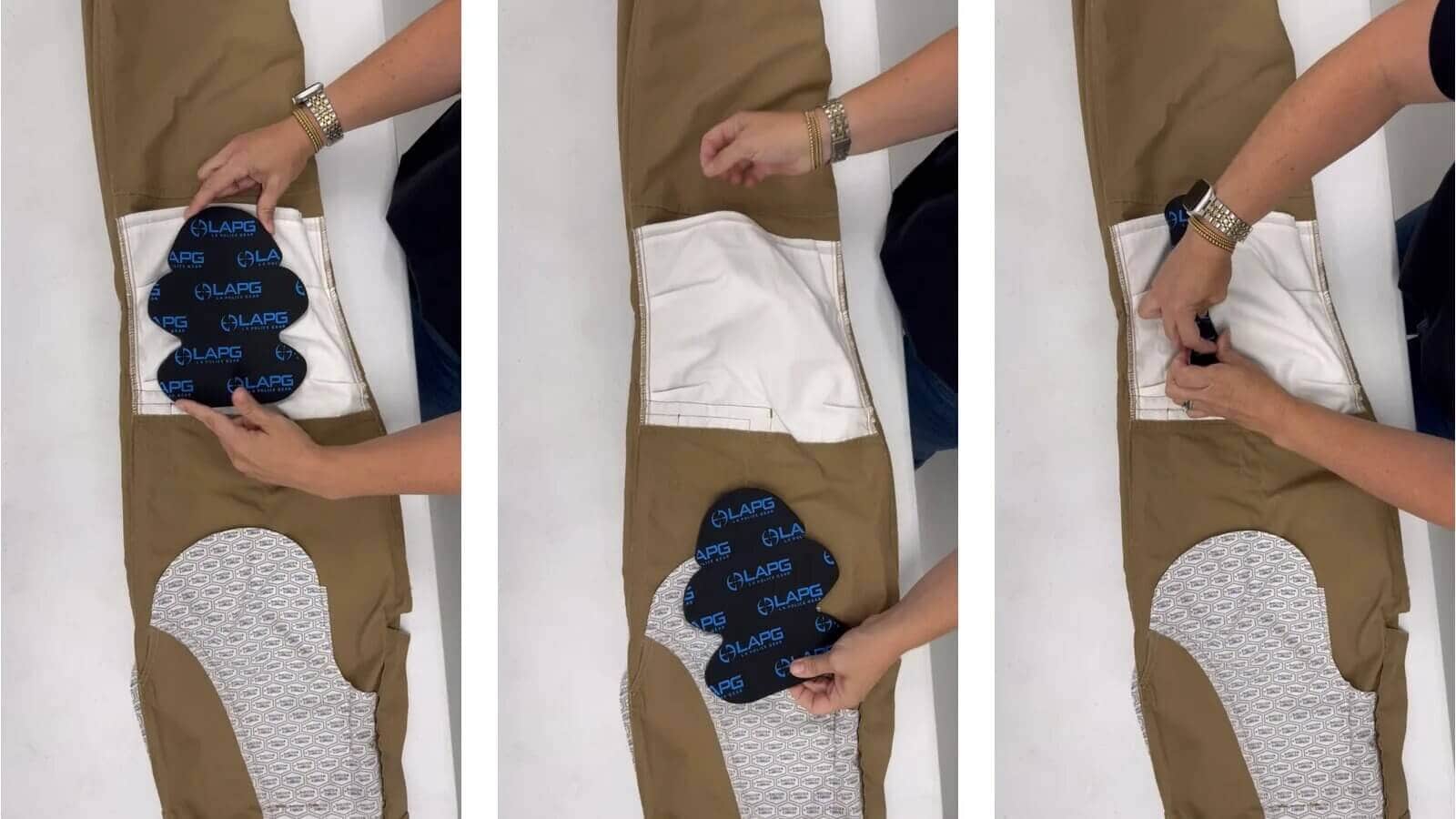
Some modern military and tactical trousers are designed with integrated blousing capabilities like the LA Police Gear Basic Operator Pant. These trousers often feature elasticated cuffs or built-in cinching mechanisms at the ankle. The advantage here is convenience; there's no need for separate accessories. The pant leg is simply pulled down and secured around the boot. However, the effectiveness can vary greatly depending on the quality of the integration. While convenient, they may not offer the same level of adjustability or secure fit as dedicated blousing straps, especially with bulkier boots or in extreme conditions.
Traditional Elastic Boot Bands
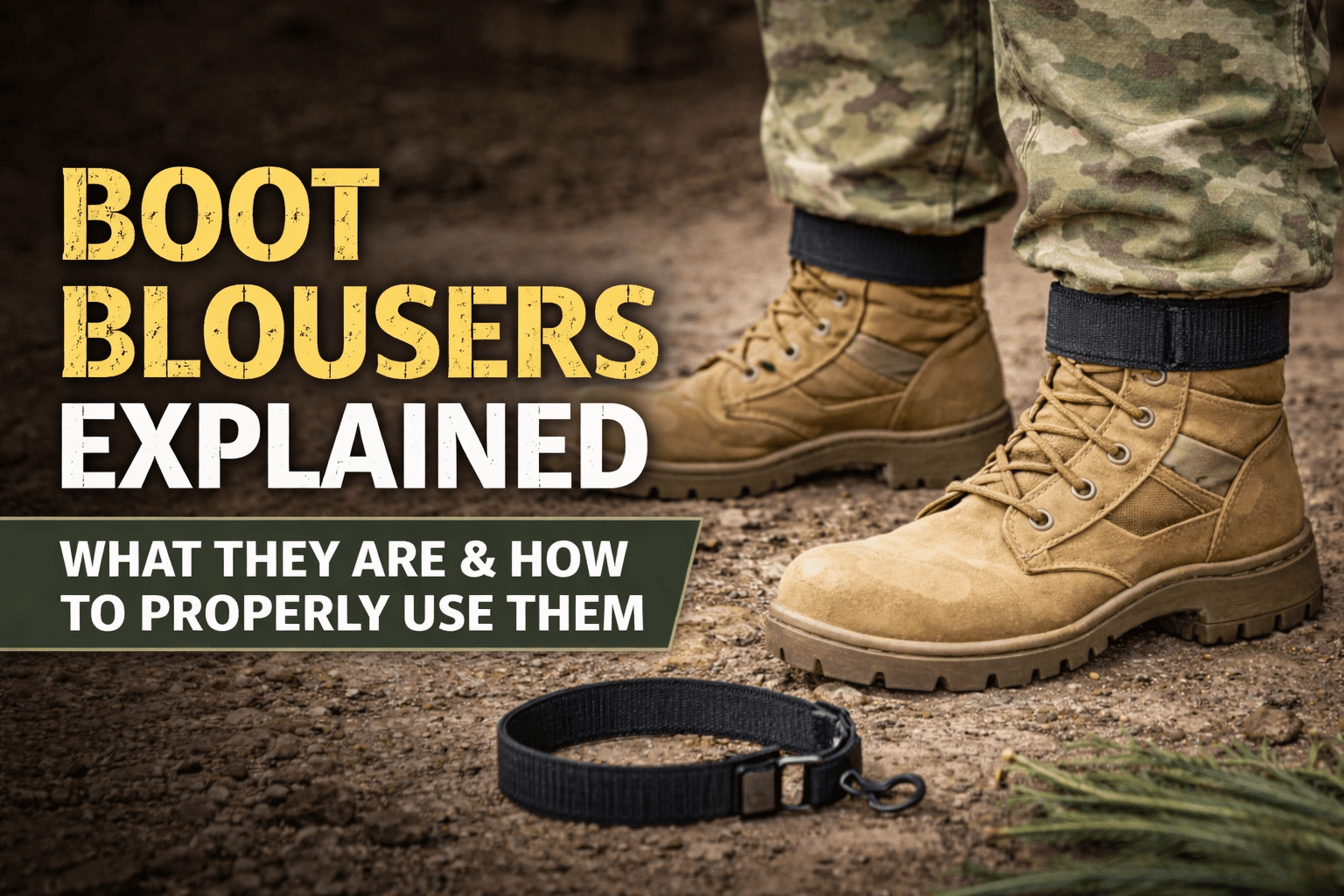
The most common and widely recognized type of boot blouser is the traditional elastic boot band, often referred to simply as boot bands. These are typically made of durable elastic material, often a few inches wide, and feature a hook-and-loop (Velcro) closure system. They are designed to be wrapped around the pant leg just above the boot cuff and secured snugly. These are widely used across military branches and are a staple for anyone wearing cammies or similar utility trousers. They offer a good balance of affordability, ease of use, and effectiveness. The elastic nature allows for some flexibility in fit, accommodating different leg and boot sizes.
Durable Metal Boot Bands
For enhanced durability and a more robust hold, metal boot bands, often made of steel or other strong alloys, are available. These are less common than their elastic counterparts but are favored in environments where extreme durability is paramount. They function similarly, wrapping around the pant leg to secure it. Metal bands can offer a more rigid and consistent hold, which might be advantageous in preventing any movement of the trouser fabric. However, they can also be heavier, less comfortable if not properly fitted, and may pose a minor risk of scratching boots or gear if not handled with care. Their increased rigidity might also be less forgiving with certain fabric types.
Glow Straps: The Modern, Tactical Blousing Solution
Emerging as a significant advancement in blousing technology are glow straps. These are typically constructed from high-strength, yet flexible, synthetic materials, often incorporating advanced polymers or reinforced webbing. The "glow" aspect refers to their ability to reflect light or, in some tactical applications, possess low-light visibility features for enhanced safety and identification in tactical scenarios. Glow straps often utilize robust buckle systems or advanced hook-and-loop closures for a secure and adjustable fit. They are designed for high-performance use, offering superior durability, resistance to the elements, and a secure hold that minimizes slippage or bunching, even during strenuous activity. For individuals wearing specialized tactical footwear like tactical six Oakley boots, glow straps provide a modern, reliable solution that complements the performance characteristics of the boot and the demands of tactical operations. These are increasingly favored by those who require maximum reliability and performance from their gear.
Step-by-Step Guide: How to Properly Blouse Your Boots
Achieving a perfectly bloused boot is a skill that can be learned and perfected with practice. The method employed will depend on the type of blouser you are using and the specific uniform regulations you are adhering to. Here, we outline the general process and specific techniques.
Essential Preparation: The Right Trousers and Boots
Before you begin blousing, ensure you have the correct equipment. This involves wearing appropriate trousers, such as the army's standard cammies or equivalent utility pants, and suitable footwear, like sturdy combat or tactical six Oakley boots. The trousers should be of a material that can be neatly folded and held in place. Ensure your boots are laced securely, as a loose boot can compromise the entire bloused effect and affect comfort. For those in training, the specific uniform requirements will dictate whether blousing is permissible or mandatory. For instance, during certain phases of Boot Camp, recruits may not be authorized to blouse their boots until specifically instructed by their Drill Instructor.
Blousing with Elastic or Metal Bands: The Standard Method
This method applies to traditional boot bands (elastic) and metal boot bands.
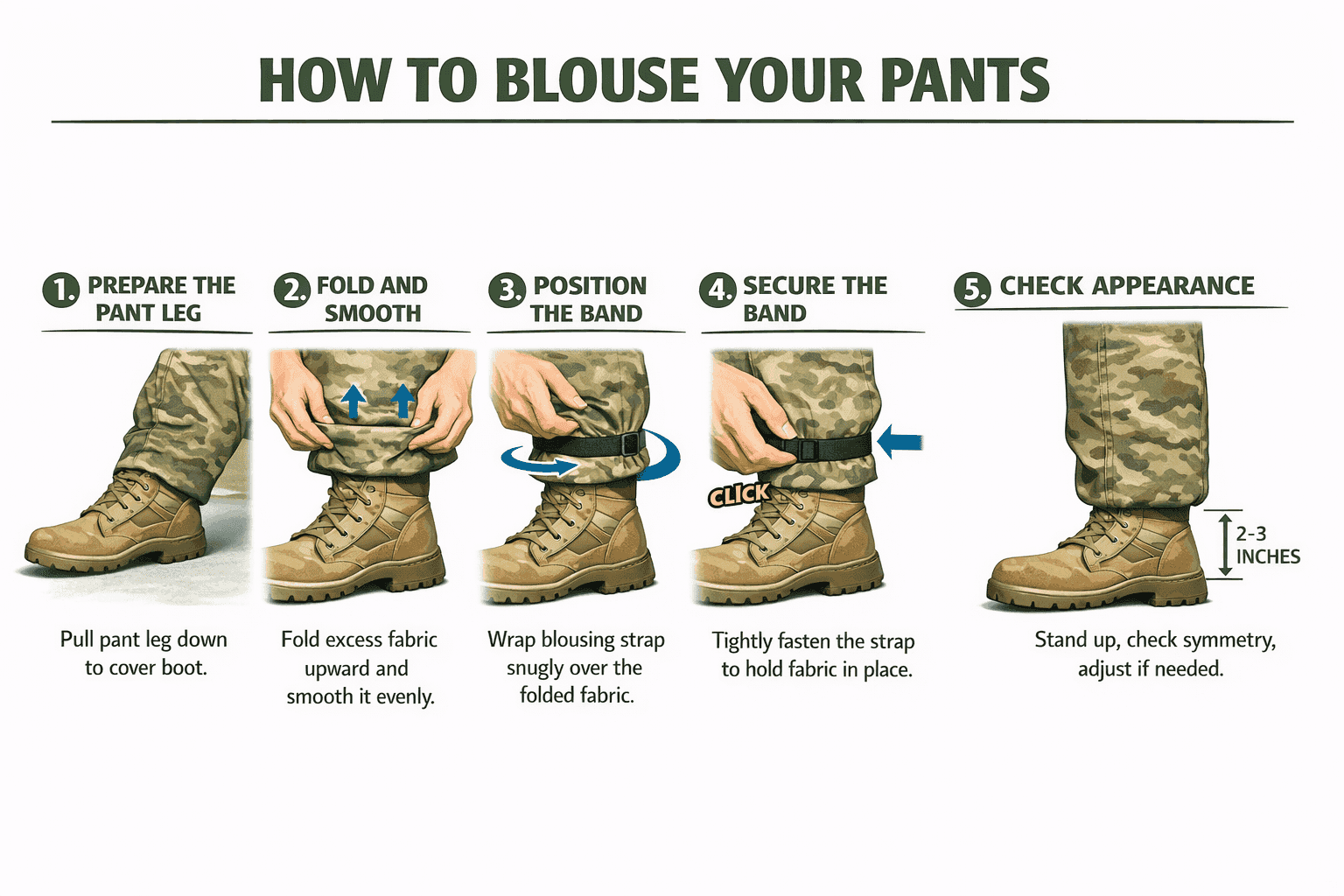
- Prepare the Pant Leg: Sit down or stand with one leg extended. Pull the bottom of your trouser leg down to cover the top of your boot.
- Fold and Smooth: Carefully fold the excess fabric of the pant leg upwards, creating a neat cuff around the top of the boot. Smooth out any wrinkles or bunching to create a clean, vertical line. Aim for an even fold that sits just above the boot's ankle support.
- Position the Band: Take your elastic or metal boot band and wrap it around the folded pant leg, ensuring it sits snugly against the fabric. The band should be positioned so that it is entirely covered by the pant leg fabric, creating an uninterrupted look.
- Secure the Band: Fasten the hook-and-loop closure (for elastic bands) or ensure the metal band is securely linked. The band should be tight enough to hold the fabric firmly in place without causing discomfort or restricting circulation.
- Check the Appearance: Stand up and check the bloused effect from all angles. Ensure the pant leg hangs straight down without excessive bunching or looseness. Make any necessary adjustments to the fold or the tightness of the band. A common technique is to ensure the fold is about two to three inches from the sole of the boot.
Blousing with Glow Straps: Specific Techniques
Glow straps and similar tactical blousing solutions often offer more advanced securing mechanisms and materials.
- Prepare Pant Leg and Boots: Similar to the above, ensure your trousers (cammies, for example) and boots (such as tactical six Oakley boots) are properly prepared and laced.
- Fold and Smooth: Fold the excess pant leg fabric upwards in a neat cuff, just as you would with traditional boot bands. Ensure the fabric is smooth and wrinkle-free.
- Apply the Glow Strap: Wrap the glow strap around the folded pant leg, positioning it to cover the folded edge. These straps are often wider and made of materials that offer a more substantial grip.
- Secure the Strap: Fasten the glow strap according to its specific design. This might involve a robust buckle, a specialized Velcro system, or other proprietary closures. Ensure it is secured tightly enough to prevent slippage, but not so tight as to cause discomfort or impede circulation.
- Final Inspection: Stand and visually inspect the bloused area. The goal is a clean, smooth line with no visible gaps or bunching. Glow straps are designed for superior hold, so ensure the fabric is tautly secured. The added benefit of some glow straps is their visibility in low-light conditions, enhancing safety during night operations or patrols.
Common Mistakes to Avoid for a Flawless Blouse
Even with clear instructions, some common mistakes can undermine the effectiveness and appearance of bloused boots.
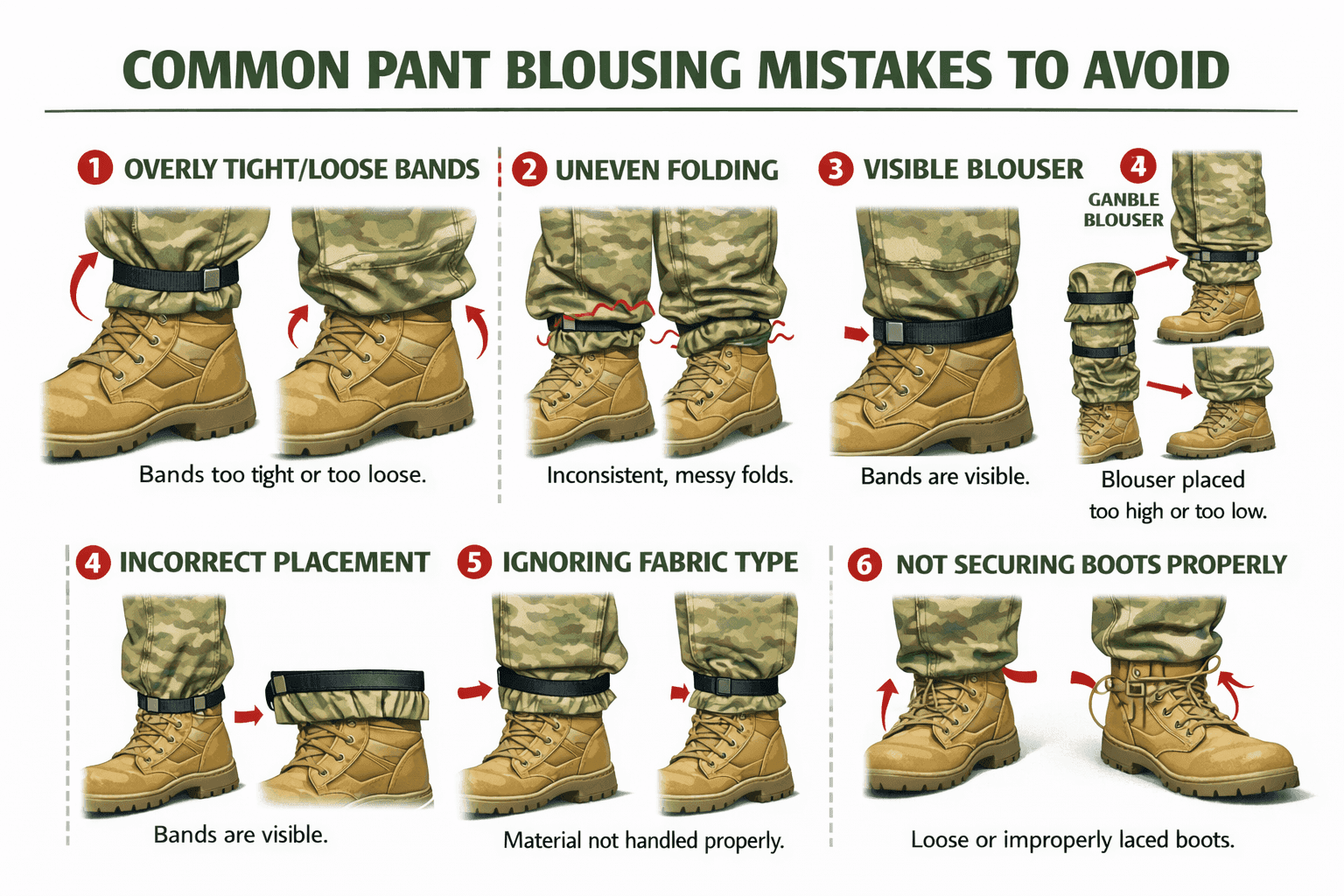
- Overly Tight/Loose Bands: A band that is too tight can restrict circulation, cause discomfort, and create an unsightly bulge. Conversely, a band that is too loose will not hold the fabric, leading to bunching and a sloppy appearance.
- Uneven Folding: Inconsistent or messy folds in the pant leg will result in an uneven and unprofessional look. Ensure the fabric is smoothed out before applying the blouser.
- Visible Blouser: The goal is for the bloused fabric to completely conceal the blouser itself, creating a seamless line. If the band is visible, it detracts from the neatness of the uniform.
- Incorrect Placement: Placing the blouser too high or too low on the leg can distort the natural drape of the trousers and look awkward. The ideal placement is typically at the widest part of the calf, just above the boot.
- Ignoring Fabric Type: Different fabrics behave differently. Heavier materials might require a more robust blouser, while lighter fabrics can sometimes be too flimsy and prone to bunching if not managed carefully.
- Not Securing Boots Properly: If your boots are not laced correctly, the pant leg may not sit as it should, affecting the overall bloused appearance.
Mastering the Blouse: Advanced Tips and Troubleshooting
Achieving a consistently neat and comfortable blouse throughout the day requires more than just the basic technique. Attention to detail, understanding material properties, and knowing how to troubleshoot common issues are key to mastering this aspect of uniform presentation.
Preventing Slippage and Bunching Throughout the Day
Slippage and bunching are common frustrations. To combat this, ensure the blouser is applied to clean, dry fabric. Moisture can reduce friction. If using elastic boot bands, stretching them out fully before applying can help maintain tension. For more stubborn fabrics or extended wear, consider using blousing garters or suspenders that attach higher up the leg, providing an extra anchor point. Army soldiers, especially during hard physical training or long field missions with cammies, should use better boot bands or tactical glow straps. These improve how well boots stay bloused and reduce the need to fix them often. The effectiveness of any blousing method is also dependent on the fit of the trousers; overly baggy pants will always be more prone to bunching.
Ensuring Comfort Without Sacrificing Appearance
Comfort is paramount, especially during long duty days or arduous training. If your bloused boots are causing discomfort, check the tightness of the band. It should be snug enough to hold, but not constricting. Try adjusting the position slightly higher or lower on your calf. The thickness of the folded fabric also plays a role; too much fabric can create bulk and pressure points. Experiment with different folding techniques to find what distributes pressure most evenly. For those wearing tactical six Oakley boots or similar rugged footwear, ensuring the blousing doesn't interfere with ankle flex or gait is crucial. Some service members find that a slightly looser fit on the boots combined with a firm blouse offers the best compromise between comfort and appearance.
Dealing with Different Fabric Types (From heavy combat trousers to lighter uniform pants)
The material of your trousers significantly impacts how well they blouse. Heavy combat trousers, like many army cammies, are typically made of durable cotton or poly-cotton blends that hold folds well. These generally respond best to standard elastic or metal boot bands. Lighter weight uniform pants, often made of synthetic blends or lighter cottons, can be more prone to creasing and may not hold a fold as crisply. For these, a wider blouser like a glow strap or a blousing garter that provides more surface area contact might be more effective. If the fabric is particularly slippery, you might need to create a slightly larger or firmer fold to give the blouser something substantial to grip.
Care and Maintenance for Your Boot Blousers (Extending the life of all types)
Proper care ensures the longevity and effectiveness of your blousing accessories.
- Elastic Boot Bands: After use, especially in wet or dirty conditions, rinse them with clean water and allow them to air dry completely before storing. Avoid prolonged exposure to direct sunlight, which can degrade the elastic over time. When not in use, store them flat or loosely rolled, not stretched.
- Metal Boot Bands: Clean with a damp cloth to remove dirt and debris. If rust appears, it can often be gently removed with a fine steel wool or appropriate metal cleaner. Ensure they are completely dry before storing to prevent corrosion.
- Glow Straps: Follow the manufacturer's specific cleaning instructions, as materials can vary. Generally, a damp cloth and mild soap should suffice for most cleaning needs. Ensure any buckles or closure mechanisms are free of grit. Store them carefully to avoid snagging or damaging the material or reflective elements.
Blousing Standards Across Military Branches and Training Environments
The main idea of boot blousing stays the same. However, rules and expectations can differ a lot between military branches, training schools, and missions. Understanding these nuances is crucial for maintaining compliance and achieving the desired military bearing.
General Uniform Regulations and Expectations (The overarching "uniform" standard)
Across all branches of the military, the uniform is expected to be worn neat, clean, and properly maintained. Boot blousing falls under the umbrella of general appearance standards. The overarching expectation is that the bottom of the trousers should be secured in a manner that presents a tidy appearance and does not create a safety hazard. This often means that pant legs should not be excessively baggy or loose, and any method used to secure them must create a clean line. The exact definition of "properly bloused" can be subject to interpretation by commanding officers, but the intent is always to maintain a professional and disciplined appearance.
Army Specifics: Adherence to AR 670-1 (The "army" standard)
In the army, the wear and appearance of the uniform are governed by AR 670-1 (Army Regulation 670-1). This regulation provides detailed guidance on all aspects of the uniform, including the wear of cammies (Army Combat Uniform, or ACU). AR 670-1 typically mandates that the bottom of the trousers be secured to prevent bagging and ensure a neat appearance. This is commonly achieved through the use of internal blousing straps if the uniform is equipped with them, or by using elastic or Velcro boot blousers. The regulation emphasizes that blousing should not be overly tight, nor should it cause excessive bunching. Soldiers are expected to blouse their boots when wearing the ACU in the field or when otherwise directed, ensuring a consistent and professional look that reflects discipline.
Marines Corps Expectations
The Marines are renowned for their exacting standards of uniform presentation, and this extends to the proper blousing of boots. While specific regulations mirror those of the army in many respects, the cultural emphasis within the Marines on sharp military bearing means that the execution of blousing is often held to an even higher degree of precision. Loose or improperly bloused trousers are rarely tolerated, as they detract from the iconic sharp appearance the Marines are known for. Recruits undergoing Boot Camp and initial drill will have this skill rigorously taught and inspected by their Drill Instructors. The expectation is a clean, taut line that perfectly complements their boots, reinforcing the commitment to excellence that defines the Marine Corps ethos.
ROTC and Military Academy Standards (e.g., St. Johns Northwestern Military Academy)
For cadets in ROTC programs and students at military academies like St. Johns Northwestern Military Academy, blousing their boots is an integral part of their training. These institutions often maintain standards that are as stringent, if not more so, than active duty components, especially during Boot Camp or initial training phases. Drill Instructors and academy staff use uniform inspections, including the bloused boot, as a critical tool for instilling discipline, attention to detail, and respect for regulations. Cadets are expected to master the technique for their specific uniform variations, whether it's the standard army ACU or a unique academy uniform. The emphasis is on developing good habits early, preparing them for the higher standards they will encounter upon entering active service. The context of ROTC also means cadets are often preparing for various events, including parades and drill competitions, where a flawless uniform is essential.
What's Next?
This guide has comprehensively explored the world of boot blousers, moving from their fundamental definition and purpose to advanced usage and contextual standards. You have learned that boot blousing is more than just a stylistic choice; it is a critical element of military bearing, discipline, and operational safety, deeply ingrained in the culture of organizations like the army and the Marines. We've detailed the various types of blousers available, including traditional boot bands, metal boot bands, and the modern glow straps, and provided step-by-step instructions for achieving a perfect blouse, along with common mistakes to avoid. Furthermore, you've gained insight into how blousing standards are applied in diverse training environments, from the rigorous demands of Boot Camp and initial drill under a Drill Instructor, to the specific expectations of ROTC programs and institutions like St. Johns Northwestern Military Academy.
Your Next Steps:
- Practice Consistently: Rehearse the blousing techniques outlined in this guide until they become second nature. Pay close attention to detail, ensuring a smooth and secure fit.
- Select the Right Tool: Based on your specific uniform, boot type (e.g., LA Police Gear Sector Boots), and environmental needs, choose the most appropriate type of boot blouser. For demanding scenarios, consider durable options like glow straps.
- Understand Your Regulations: Familiarize yourself with the specific uniform regulations applicable to your branch, unit, or institution. If you are part of ROTC, attending St. Johns Northwestern Military Academy, or in Boot Camp, pay close attention to your Drill Instructor's guidance regarding initial drill and cammies.
- Prioritize Comfort and Safety: While appearance is important, ensure your blousing does not cause discomfort or impede your movement, especially during strenuous activities or extended wear.
- Maintain Your Gear: Properly care for your boot blousers to ensure their longevity and continued effectiveness.
By mastering boot blousing, you are not just tidying your uniform; you are demonstrating a commitment to the standards, discipline, and readiness that define effective service members.
FAQs
What exactly are boot blousers?
Boot blousers are elastic bands or fabric straps designed to secure your pant legs above your boots. They create a clean, tapered look while keeping fabric out of the way during movement. Military personnel, hikers, and outdoor workers use them for both function and appearance.
Why do people blouse their boots in the first place?
The main reasons are mobility, cleanliness, and safety. Blousing keeps your pant legs from dragging, snagging, or catching debris. It also helps maintain a sharp, uniform appearance, which is why it’s standard in many military branches.
Are boot blousers better than just tucking my pants into my boots?
Yes—blousers give you a cleaner, more secure fit without bunching fabric inside your boot. Tucking pants directly into the boot can cause discomfort, hotspots, and reduced airflow. Blousers keep everything in place while letting your boots fit the way they’re meant to.
How do I properly use boot blousers?
Wrap the blouser around your ankle or the bottom of your pant leg, then fold the fabric over it to create a smooth taper. The goal is to hide the blouser while keeping the pant leg neatly secured above the boot collar. It should feel snug but not restrictive.
Should the blouser go on my leg or on the pant cuff?
Both methods work, but placing the blouser on the pant cuff gives you more control over the final look. Wrapping it around your ankle is faster and more comfortable for long wear. Many people switch depending on the activity.
Do boot blousers work with any type of pants?
They work best with straight‑leg or slightly tapered pants made from flexible fabric. Very loose or heavy-duty pants (like winter-weight cargo trousers) may require wider or stronger blousers to stay in place.
Are there different types of boot blousers?
Yes—elastic bands, hook-and-loop straps, and fabric loops are the most common. Elastic bands are the simplest and most affordable, while hook-and-loop versions offer more adjustability and durability for heavy use.
Will blousing my boots make them uncomfortable?
Not if done correctly. The blouser should sit above the boot collar, not inside it. If you feel pressure points or rubbing, adjust the height or loosen the tension slightly.
Can I use paracord or rubber bands instead of real boot blousers?
You can, but it’s not ideal. Rubber bands can break or cut into your skin, and paracord doesn’t stretch, which can restrict circulation. Purpose‑built blousers are inexpensive and far more comfortable.
Are boot blousers allowed in all military branches?
Most branches allow or require blousing in certain uniforms, but the exact rules vary. Some specify how high the blouse should sit or what type of blouser is permitted. Always check your branch’s uniform regulations.
How do I keep my bloused boots looking neat all day?
Start with a snug but comfortable fit, and make sure the pant fabric is evenly folded over the blouser. Lightweight pants tend to hold the shape better. If you’re moving a lot, hook-and-loop blousers stay secure longer than basic elastic bands.
How do I clean or maintain boot blousers?
Elastic blousers can be hand-washed with mild soap and air-dried. Hook-and-loop versions should be kept free of lint so they maintain grip. Replace them when the elastic loses tension or the fabric starts to fray.