Table of Contents
- Introduction: Unraveling the Complex World of Hunting Regulation
- The Importance of Understanding Hunting Laws
- What This Guide Will Cover
- The Foundation: Why Hunting Regulations Exist
- The Primary Regulators: State Wildlife Agencies
- Federal Oversight: When National Laws Impact Local Hunting
- Beyond State and Federal: Other Influential Bodies in Hunting Regulation
- The Nuance of Land Ownership and Hunting Access
- The Hunter's Toolkit: Navigating Regulations & Ensuring Compliance
- Final Thoughts on Hunting Regulations by State
- FAQs
Introduction: Unraveling the Complex World of Hunting Regulation
Navigating the intricate world of hunting requires more than just skill and knowledge of the outdoors; it demands a thorough understanding of the regulations that govern every aspect of the pursuit. From the ethics of fair chase to the practicalities of obtaining a hunting license, a complex web of laws and oversight bodies shapes the hunting experience. This guide aims to demystify that landscape, serving as an authoritative resource for hunters, policymakers, and anyone interested in the stewardship of our nation's wildlife. We will explore the foundational reasons for hunting regulations, the key agencies responsible for their creation and enforcement, and the practical steps hunters must take to ensure compliance. By delving into the roles of state wildlife agencies, federal bodies, and even the influence of land ownership, this comprehensive guide will equip you with the knowledge to hunt responsibly and ethically.
The Importance of Understanding Hunting Laws
Hunting regulations are not arbitrary restrictions; they are the bedrock of sustainable wildlife management, conservation, and public safety. For the estimated 14.4 million people aged 16 or older who hunted in the U.S. in 2022, adherence to these laws is paramount. Understanding these rules ensures that the practice of hunting can continue for future generations while respecting the natural world and the rights of others. Failure to comply can result in significant penalties, including hefty fines, license revocation, and even jail time. Beyond legal repercussions, a deep understanding of hunting laws fosters a culture of ethical hunting, emphasizing principles like fair chase and respect for the quarry. This knowledge also empowers hunters to engage more effectively in conservation efforts and advocate for responsible wildlife management practices.
What This Guide Will Cover
This guide will provide a comprehensive overview of who regulates hunting in the United States. We will start by exploring the core motivations for hunting regulations, emphasizing the sustainability of wildlife populations, the promotion of ethical hunting practices, and the protection of public safety. Subsequently, we will delve into the primary regulatory bodies, with a detailed look at state wildlife agencies and their critical roles, followed by an exploration of federal oversight and the influence of other governmental entities. The guide will also address the significant impact of land ownership—public versus private—on hunting access and rules. Ultimately, we will provide hunters with a practical toolkit to navigate and comply with regulations. This includes guidance on locating and understanding state-specific laws, recognizing important regulatory categories, and valuing the principle of fair chase.
The Foundation: Why Hunting Regulations Exist
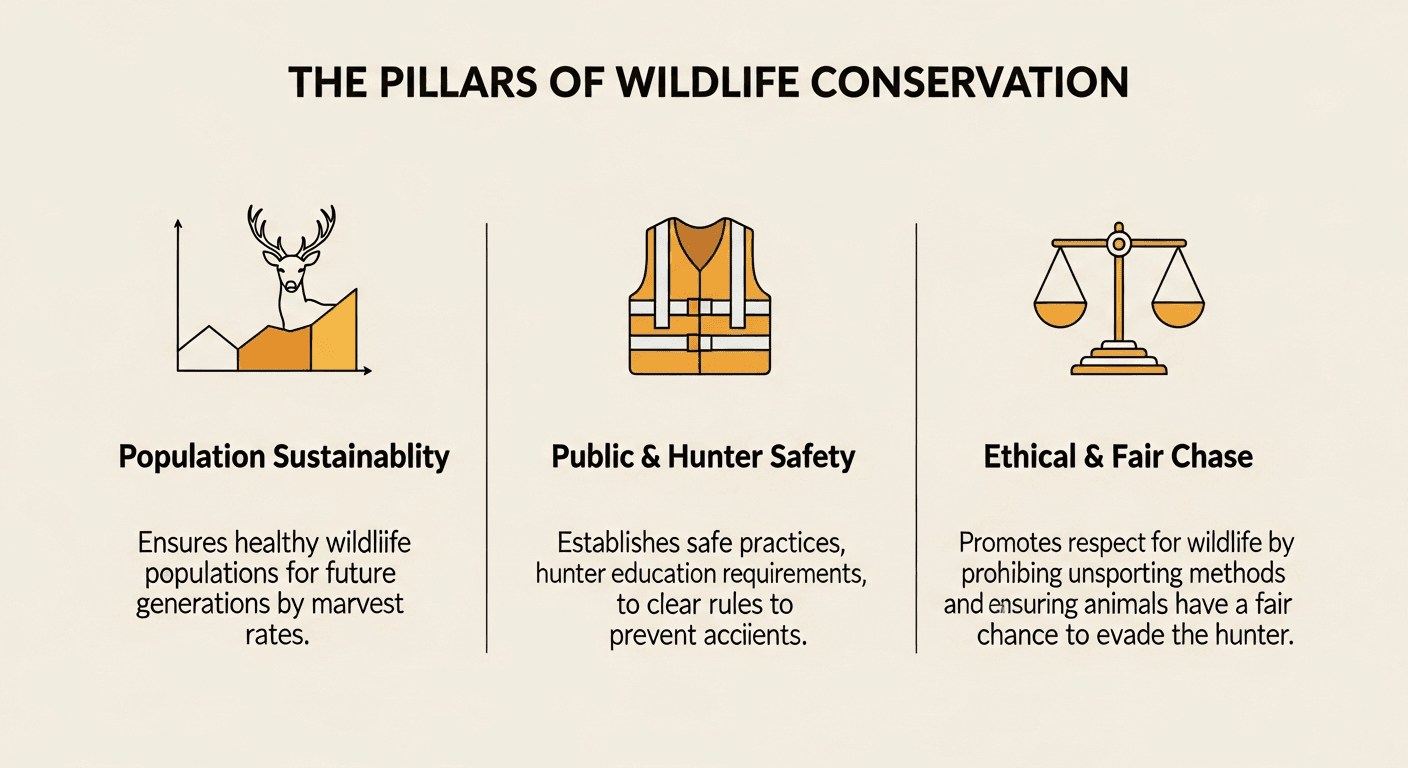
Hunting regulations are built on three core principles: sustainability, safety, and ethics.
The existence of hunting regulations is deeply rooted in the necessity of managing wildlife resources for the long-term benefit of both the animals and society. Without a structured framework, unregulated hunting could lead to the depletion of species, ecological imbalances, and significant safety risks. These regulations are not merely administrative hurdles; they are essential tools for conservation and responsible land use.
Ensuring Sustainable Wildlife Populations
Hunting regulations aim to maintain wildlife health and sustainability. By controlling hunting times, locations, and limits, agencies prevent overharvesting, protecting reproductive cycles and population balance. Using scientific data, they set seasons and bag limits and may restrict hunting during critical periods. The goal is to ensure wildlife conservation, allowing them to fulfill ecological roles and be available for future generations. This approach ensures hunting is a tool for conservation, not a threat to species survival.
Promoting Fair Chase and Ethical Practices
The concept of fair chase is central to ethical hunting. It embodies the principle that a fair opportunity should be given to the hunted animal, emphasizing the skill and effort required of the hunter. Hunting regulations encompass elements of fair chase by outlining permissible hunting techniques, banning the use of certain equipment (such as specific electronic calls or baiting in designated zones), and forbidding hunting during times of low visibility. These measures aim to minimize the risk of injuring an animal without having a clear shot.Regulations also aim to prevent unsportsmanlike conduct, such as pursuing animals with vehicles or using artificial lights at night to disorient game. By upholding these principles, hunting regulations foster respect for wildlife and promote a more profound connection between the hunter and the natural world.
Protecting Public Safety and Resources
Beyond wildlife management, hunting laws are crucial for public safety. Regulations concerning firearm handling, hunting zones near populated areas, and hunter education requirements help to minimize the risk of hunting-related accidents. For example, Hunting Laws often stipulate minimum distances from occupied dwellings or public roads for discharging firearms. Furthermore, regulations protect private property rights and natural resources. Laws against trespassing and poaching prevent damage to agricultural lands, private property, and sensitive ecosystems. Ensuring hunters possess the correct hunting license and hunting permits also helps track who is participating in the activity, aiding in enforcement and accountability.
The Role of Wildlife Management Agencies
At the forefront of developing and implementing these regulations are wildlife management agencies, primarily at the state level. These bodies are tasked with the scientific research, data collection, and policy development necessary to manage diverse wildlife species and their habitats. They are responsible for setting hunting seasons, bag limits, designating specific hunting areas, and enforcing hunting laws. Their work is critical for balancing human interests in hunting with the ecological needs of wildlife populations and the broader public’s interest in natural resource conservation.
The Primary Regulators: State Wildlife Agencies
In the United States, the primary authority for regulating hunting rests with individual state governments. Each state has established its own wildlife agencies, often called Departments of Fish and Wildlife, Natural Resources, or Game Commissions, which are responsible for managing and conserving the state's wildlife and their habitats. These agencies are the frontline regulators, developing and enforcing the hunting regulations that hunters must follow within their respective states.
Defining the State's Authority
The authority of states to regulate wildlife management, including hunting, stems from the Tenth Amendment of the U.S. Constitution, which reserves powers not delegated to the federal government to the states. This means states have inherent jurisdiction over the wildlife within their borders. State legislatures authorize wildlife agencies via statutes, enabling them to conduct research, define management goals, and implement specific hunting regulations. This includes setting hunting seasons, determining bag limits, and establishing the prerequisites for obtaining hunting licenses and permits. This decentralized approach allows regulations to be tailored to the specific ecological conditions, wildlife populations, and societal values of each state.
Structure and Function of State Wildlife Agencies
State wildlife agencies typically operate under a commission or board structure, often appointed by the governor or elected officials, which sets broad policy. The routine activities and intricate regulation development are typically managed by a skilled team comprising biologists, law enforcement personnel (such as game wardens or conservation officers), educators, and administrators. Their core functions include:
- Research and Monitoring: Conducting scientific studies to understand wildlife populations, habitat conditions, and ecological trends.
- Management Planning: Developing long-term strategies for wildlife conservation and population management.
- Regulation Development: Proposing and enacting specific hunting regulations, often through public comment periods and commission approval.
- Law Enforcement: Ensuring compliance with Hunting Laws through patrols, investigations, and issuing citations.
- Habitat Management: Protecting and restoring habitats essential for wildlife survival.
- Public Outreach and Education: Engaging with hunters and the general public on conservation issues and hunting ethics.
Crucially, for most states, hunting and fishing license sales and federal grants (Pittman-Robertson and Dingell-Johnson Acts) comprise more than two-thirds of their wildlife agency revenues source text. This highlights the direct financial reliance of these agencies on activities tied to hunting and fishing. In fact, at least 60%, and up to 100%, of funding for state wildlife agencies originates from activities tied to hunting and fishing, including license sales and federal excise taxes source text.
A Closer Look: Colorado Parks and Wildlife (CPW) as an Example
Colorado Parks and Wildlife (CPW) serves as a prime example of a state wildlife management agency. Governed by a commission and led by an executive director, CPW is responsible for managing the state's diverse wildlife resources and its state parks. Their regulatory process for hunting, particularly for large game like elk and deer, is robust. CPW establishes complex hunting seasons, drawing units, and license quotas through extensive public input and scientific analysis. For instance, they manage limited licenses for big game species, where hunters apply for a chance to purchase a tag, ensuring that harvest numbers align with population management goals. CPW also plays a significant role in promoting fair chase principles and hunter education, aiming to ensure ethical practices and the safety of all involved. Their website and published hunting regulations digest are indispensable resources for anyone intending to hunt in Colorado.
Federal Oversight: When National Laws Impact Local Hunting
This creates a layered regulatory environment that hunters must understand.Although states primarily govern hunting regulations, federal laws and agencies significantly influence specific areas, such as migratory birds, endangered species, and activities on federal lands.
The U.S. Fish and Wildlife Service (USFWS)
The U.S. Fish and Wildlife Service (USFWS) is the primary federal agency involved in wildlife conservation and regulation. Its responsibilities impacting hunters are multifaceted:
- Migratory Birds: The USFWS is responsible for managing and regulating the hunting of migratory birds, including ducks, geese, doves, and woodcock. This authority is derived from international treaties and federal laws like the Migratory Bird Treaty Act. The USFWS sets the frameworks for hunting seasons, shooting hours, and bag limits for these species, which individual states then adopt and administer. The Federal Migratory Bird Hunting and Conservation Stamp, commonly known as the Duck Stamp, sells for $25 and raises approximately $40 million in sales each year, directly funding wetland habitat conservation for migratory birds source text. Hunters of migratory waterfowl must possess this stamp in addition to their state hunting license.
- National Wildlife Refuges: The USFWS manages the National Wildlife Refuge System, a network of lands and waters managed for the conservation of fish, wildlife, and their habitats. Many refuges offer hunting opportunities, but these are subject to specific regulations set by the USFWS, often in conjunction with state agencies. Hunters must adhere to both federal and state rules when pursuing game on these protected lands.
- Endangered Species: The USFWS enforces the Endangered Species Act, which can impact hunting by protecting threatened or endangered species and their critical habitats. This may lead to restrictions on hunting in certain areas or for certain species if they are found to be endangered.
Other Federal Entities with Regulatory Influence
Several other federal agencies also have regulatory influence over hunting, primarily through their management of federal lands:
- U.S. Forest Service (USFS): Manages over 193 million acres of National Forests and Grasslands. Hunting is permitted on many of these lands, but subject to USFS regulations regarding access, camping, fire restrictions, and other land-use rules, in addition to state hunting laws.
- Bureau of Land Management (BLM): Manages vast tracts of public land, primarily in the western United States. Similar to the USFS, the BLM sets rules for activities on its lands, including hunting, which must be coordinated with state wildlife agencies.
- National Park Service (NPS): Generally prohibits hunting within National Parks to preserve natural resources and wildlife. However, there are some exceptions, often managed in conjunction with state agencies, where limited hunting may be allowed to control overabundant populations or for specific research purposes.
Key Federal Legislation Affecting Hunters
Several cornerstone federal laws shape the regulatory landscape for hunters:
- The Lacey Act: This act is the cornerstone of U.S. efforts to combat illegal wildlife trafficking. It makes it a federal offense to poach or trade in protected wildlife across state or international borders. The Lacey Act ensures that Hunting Laws are enforced not only within a state but also across jurisdictional boundaries, preventing the interstate commerce of illegally obtained game.
- Migratory Bird Treaty Act (MBTA): As mentioned, this act protects most migratory bird species and is the basis for federal regulation of their hunting.
- Endangered Species Act (ESA): This legislation provides a framework for the conservation of threatened and endangered species and their habitats. Its provisions can directly affect hunting by restricting activities in sensitive areas or requiring management plans that consider species recovery.
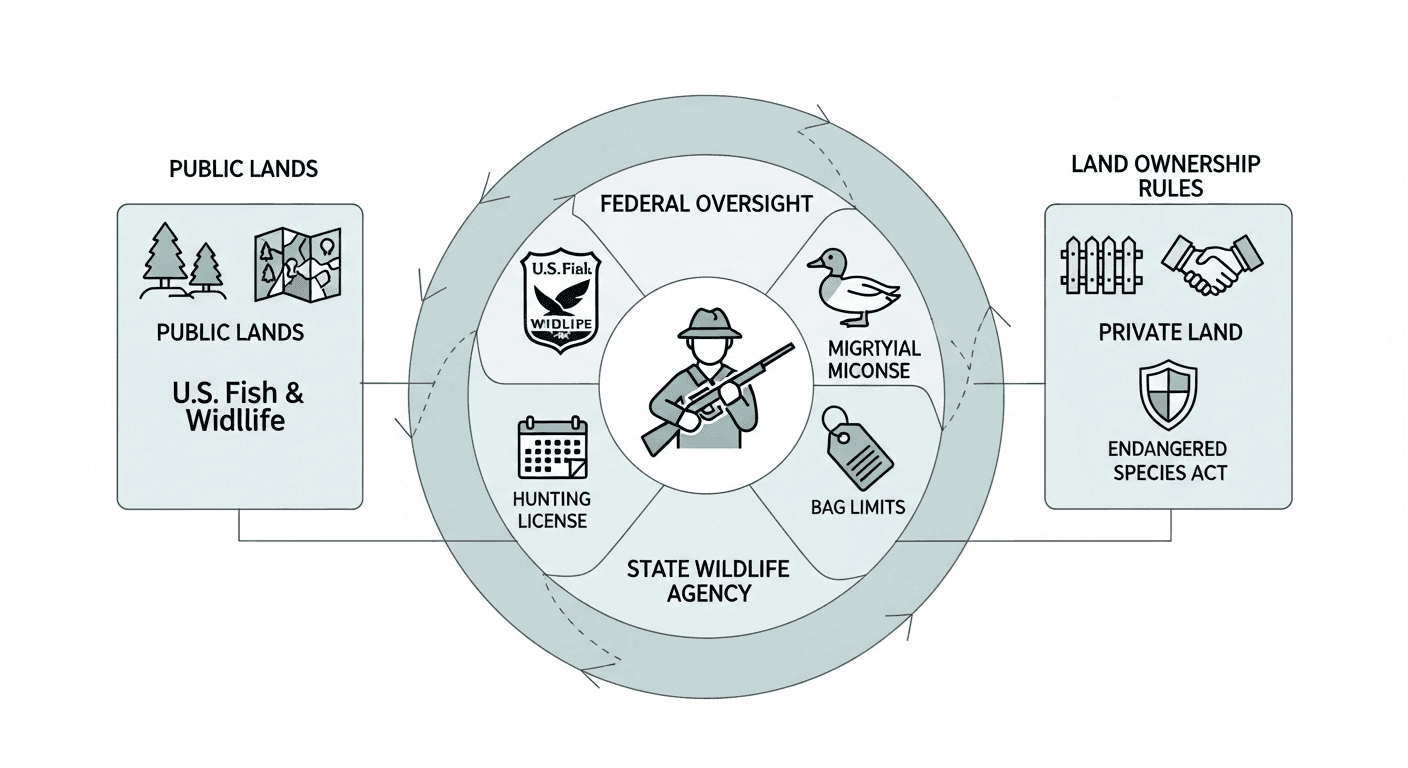 Hunting regulations are a multi-layered system involving state, federal, and land-specific rules.
Beyond State and Federal: Other Influential Bodies in Hunting Regulation
In addition to state and federal agencies, numerous other organizations play a vital role in shaping the intricate framework of hunting regulation, impacting policy, enforcement, and conservation efforts.
State Legislatures: The Lawmaking Foundation
State legislatures are foundational to the regulatory process. They enact the statutes that grant authority to wildlife management agencies, define the scope of their powers, and establish the overarching legal framework for hunting. Legislatures often define broad principles regarding wildlife conservation, the necessity of hunting licenses, and penalties for violations of Hunting Laws. They may also create specific laws concerning firearm ownership and use that indirectly affect hunting. Proposed changes to hunting regulations by agencies often require legislative approval or are subject to legislative review, ensuring that public policy reflects broader societal values.
Wildlife Commissions and Advisory Boards: Shaping Policy and Regulations
Many state wildlife agencies are overseen by a commission or board, often composed of individuals appointed for their expertise, interest in conservation, or representation of various stakeholder groups. These bodies typically hold public meetings to approve hunting regulations, set management policies, and deliberate on major conservation initiatives. They serve as a critical link between agency scientists, enforcement personnel, and the public. Advisory boards, often comprising hunters, landowners, and conservationists, play a crucial role in offering input and feedback on proposed regulations. Their involvement ensures that the rules are practical and consider the needs and concerns of those directly influenced by wildlife management decisions.
Tribal Governments: Sovereign Rights and Hunting on Tribal Lands
Federally recognized Native American tribes possess sovereign rights, which include the authority to manage wildlife and regulate hunting within their tribal territories. Hunting on tribal lands is governed by tribal laws and regulations, which may differ significantly from state and federal rules. Hunters who wish to pursue game on tribal lands must obtain the necessary tribal permits and adhere to tribal Hunting Laws. While tribes often work cooperatively with state and federal agencies on broader conservation efforts, their inherent right to self-governance means their regulatory authority is distinct. This adds another layer of complexity to understanding hunting regulations, especially in areas with significant tribal land holdings.
The Role of Hunting Organizations in Conservation and Policy
These organizations often: Organizations like the Boone and Crockett Club, Safari Club International (SCI), the NRA's Institute for Legislative Action (NRA-ILA), and various state-level hunting and conservation groups are crucial in influencing hunting regulations and conservation policy.
- Advocate for Hunters' Rights: Lobby state and federal legislatures to protect and promote hunting opportunities.
- Fund Conservation Efforts: Contribute significantly to wildlife research, habitat restoration, and land acquisition through donations and dedicated funds.
- Promote Hunter Education and Ethics: Develop and support programs that educate new hunters and emphasize fair chase principles.
- Provide Expert Input: Offer scientific and practical insights to wildlife agencies during the regulation-setting process, often representing the collective voice of their membership.
Their active participation ensures that the perspectives of hunters are considered in policy decisions, contributing to a more balanced and effective approach to wildlife management.
The Nuance of Land Ownership and Hunting Access
Where hunting takes place—whether on public land or private land—fundamentally alters the regulatory landscape and access requirements. Understanding these distinctions is critical for any hunter.
Public Land vs. Private Land: Differentiating Regulations
Public land in the United States is managed by federal agencies (like the USFS, BLM, USFWS) or state agencies (like state parks or wildlife management areas). Hunting on these lands is generally permitted, but subject to a specific set of rules:
- Federal Lands: Regulations are set by the managing federal agency (e.g., USFS, BLM) in coordination with state wildlife agencies. This can include specific access rules, campsite regulations, firearm restrictions, and additional hunting permits beyond the state license. National wildlife refuges often have specialized regulations to protect sensitive habitats and species.
- State Lands: Hunting on state land, such as State Parks or Wildlife Management Areas (WMAs), is regulated by the state wildlife agency. While state Hunting Laws apply, these areas may have additional stipulations regarding entry, designated hunting zones, or specific hunting methods permitted. Access to some state lands might require special permits or adherence to specific access dates.
It is crucial to understand that while obtaining a state hunting license is typically a requirement for most hunters, there are often additional regulations and permits that are specific to the federal or state lands where one intends to hunt. These extra stipulations can vary widely depending on the area and can include restrictions or guidelines that hunters must follow to legally access these lands. Therefore, it is important for hunters to thoroughly research and verify the specific rules and requirements that apply to the particular public land area they are planning to hunt in to ensure compliance with all applicable laws and regulations.
Navigating Private Land Hunting
Hunting on private land typically requires explicit permission from the landowner. State Hunting Laws and seasons still apply, but private landowners have the right to impose their own restrictions, which can be more stringent than state regulations. These might include:
- Permission Requirements: Requiring written permission, limiting the number of hunters, or specifying hunting hours.
- Species Restrictions: Prohibiting the take of certain species or sex/age classes.
- Weapon Restrictions: Limiting the types of firearms or archery equipment allowed.
- Area Restrictions: Designating specific zones on the property where hunting is permitted.
Private landowners play a crucial role in wildlife habitat and management on their properties. Building a good relationship with landowners, understanding their rules, and always obtaining clear permission—preferably in writing—is essential for legal and ethical private land hunting. This is where the roles of landowner and hunter intersect, governed by both state statutes and private agreement.
The Hunter's Toolkit: Navigating Regulations & Ensuring Compliance
Successfully and ethically participating in hunting hinges on a hunter's ability to understand and comply with a complex set of regulations. This involves knowing where to find information and mastering the key categories of rules.
Finding and Interpreting Your State's Hunting Regulations
The single most important resource for any hunter is their state's official hunting regulations guide, often published annually by the state wildlife agency. These comprehensive documents are typically available for free download from agency websites or in print at license vendors, sporting goods stores, and agency offices.
To effectively interpret these regulations:
- Identify Your Target Species and Location: Regulations are often species-specific and can vary by geographic unit within a state.
- Locate Relevant Sections: Navigate to the sections pertaining to your desired species, weapon type, and land ownership type (public/private).
- Pay Close Attention to Dates and Times: Hunting seasons, opening and closing dates, and daily shooting hours are critical.
- Understand Bag and Possession Limits: Know the maximum number of animals you can legally harvest per day and possess.
- Clarify Legal Methods and Equipment: Ensure your firearm, archery equipment, and any baiting or calling devices are legal for the season and species you are pursuing.
- Note Land Access Rules: If hunting on public land, verify any additional permits or restrictions. If hunting on private land, ensure you have clear permission from the landowner.
- Read Definitions: Regulations often include a glossary of terms; understanding these definitions is key to correct interpretation.
When in doubt, it is always best to contact the state wildlife agency directly for clarification.
Core Categories of Hunting Regulations to Master
Hunters must be familiar with several core categories of hunting regulations:
- Licensing and Permits: This includes the basic hunting license required for most activities, as well as specialized tags, stamps, or hunting permits for specific species (e.g., deer tags, turkey permits, federal duck stamps), hunter education certifications, and landowner permits.
- Seasons and Dates: Regulations define precise opening and closing dates for hunting seasons for different species and sometimes for different weapon types within a season (e.g., archery season, muzzleloader season, rifle season).
- Bag Limits and Possession Limits: These rules dictate the maximum number of a specific species a hunter may legally harvest per day (bag limit) and the total number that can be in possession at any given time (possession limit).
- Species-Specific Rules: Regulations may vary significantly based on the species being hunted, including protected status, specific harvest requirements (e.g., must be an antlered buck), or hunting method restrictions.
- Hunting Methods and Equipment: This covers the legality of various weapons (rifles, shotguns, bows, muzzleloaders), ammunition types, baiting rules (generally prohibited in most areas), the use of electronic calls, and requirements for dogs.
- Hunting Hours: Most states restrict hunting to specific hours, typically from 30 minutes before sunrise to 30 minutes after sunset, to minimize accidents and ensure fair chase.
- Land Access Rules: Requirements for accessing public land (e.g., specific entry points, designated hunting areas) and the necessity of landowner permission for private land.
- Transportation and Tagging: Rules for reporting harvested game, attaching tags, and possessing evidence of sex or gender (e.g., a "tag" or "badge") for identification.
- Safety Zones and Shooting Restrictions: Regulations prohibiting the discharge of firearms within a certain distance of occupied buildings or roads.
The Principle of Fair Chase: Ethics Integrated into Law
The principle of fair chase is more than just an ethical guideline; it is often implicitly or explicitly woven into Hunting Laws. It signifies a commitment to hunting in a manner that gives game animals a fair chance to escape and tests the hunter's skill, preparation, and ethical conduct. Regulations supporting fair chase include restrictions on:
- Hunting from vehicles.
- Using artificial lights to locate or shoot game.
- Hunting during times of day that severely impair visibility.
- Using certain types of bait or lures to attract game within shooting range.
- Hunting animals that are held captive or otherwise prevented from escape.
By adhering to these regulations, hunters demonstrate their commitment to a time-honored tradition that respects the quarry and the spirit of the hunt.
Interstate Hunting: Navigating Different State Laws
Hunters who cross state lines to pursue game must navigate a complex interplay of different state regulations. Each state has its own licensing requirements, hunting seasons, bag limits, and hunting methods. Hunters must obtain the appropriate hunting license and any necessary hunting permits for the state in which they are hunting. They must also be aware of and comply with the specific Hunting Laws of that state, which may differ significantly from their home state. Cross-jurisdictional violations can lead to severe penalties. Furthermore, laws like the Lacey Act ensure that illegally harvested game cannot be transported across state lines, reinforcing the need for strict adherence to each state's regulations.
Final Thoughts on Hunting Regulations by State
The regulation of hunting is a complex, multi-layered system designed to ensure the sustainability of wildlife, promote ethical practices, and maintain public safety. At its core, this system relies on state wildlife agencies as the primary arbiters, developing and enforcing Hunting Laws tailored to their unique environments and populations. Nonetheless, federal oversight, legislative initiatives, tribal sovereignty, and the impact of hunting organizations all play significant roles in shaping the complex framework of regulations. For the modern hunter, understanding this landscape is not merely a legal obligation but an ethical imperative.
The distinction between public land and private land hunting further highlights the need for diligence, as access and rules differ significantly. Whether obtaining a hunting license for a specific hunting season, understanding legal hunting methods, or respecting the principle of fair chase, compliance is paramount. The economic impact of hunting, estimated at billions of dollars annually source text, source text, source text, underscores its importance, and responsible regulation ensures its continuation. The funding model for state wildlife agencies, heavily reliant on license sales and federal excise taxes like the Pittman-Robertson Act source text, further emphasizes the crucial role hunters play in conservation funding.
To stay compliant and ethical, hunters must commit to regularly consulting their state's official hunting regulations guides, understanding the requirements for the specific species and locations they intend to hunt, and always seeking clarity when in doubt. By embracing this responsibility, hunters not only avoid legal pitfalls but also contribute to the vital conservation efforts that sustain wildlife populations and preserve the heritage of hunting for generations to come.
FAQs
What sort of License and Permit do you need to hunt?
This includes the basic hunting license required for most activities, as well as specialized tags, stamps, or hunting permits for specific species (e.g., deer tags, turkey permits, federal duck stamps), hunter education certifications, and landowner permits.
What are bag limits and possession limits?
These rules dictate the maximum number of a specific species a hunter may legally harvest per day (bag limit) and the total number that can be in possession at any given time (possession limit).
Are there rules for what you can hunt?
Regulations may vary significantly based on the species being hunted, including protected status, specific harvest requirements (e.g., must be an antlered buck), or hunting method restrictions.
Can you hunt at any time of day?
Most states restrict hunting to specific hours, typically from 30 minutes before sunrise to 30 minutes after sunset, to minimize accidents and ensure fair chase.
Where can you hunt?
Requirements for accessing public land (e.g., specific entry points, designated hunting areas) and the necessity of landowner permission for private land.