Listen to this article

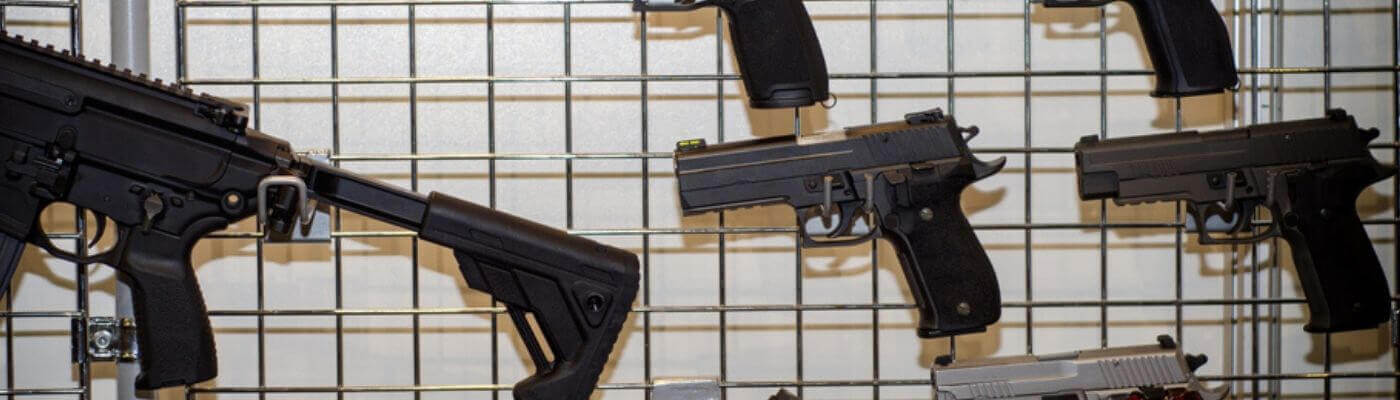
For a country united centuries ago under a constitution founded on the right to bear arms, many American states could not have a more different approach to the subject of gun laws and rights. States enact the majority of gun laws, and they stand alone, independent from federal weapons laws. Each state government feels differently about concealed carry laws, sales of guns, self-defense, and permits.
Some states follow the Constitution's Second Amendment closely, while others begin to trample along the gray area between violating citizens' constitutional rights and upholding them. No matter how relaxed state gun laws are, federal laws still apply.
Typically, state and local law enforcement have the discretion of whether or not they charge miscreants with state or federal weapons violations. Per Printz v. the United States, local law enforcement officials aren't obligated to enforce those federal laws. They can simply charge people under the state firearms codes.
Gun Purchases and Sales
Some states require permits to buy a firearm, and these permits vary. They can apply only to handguns or both long guns and handguns. There are also restrictions on purchasing ammunition in some states as well.
Certain states allow you to use your concealed carry permit to purchase firearms, while others like Illinois require a FOID card. Background checks are necessary for all people who buy a gun from a federally licensed dealer.
The FBI maintains a computer database called the National Instant Criminal Background Check System (NICS) to facilitate background checks run by federal firearms licensees (FFLs). This database returns records instantly to determine if prospective buyers are eligible to purchase a gun.
To date, dealers have run over 230 million checks through the system that have led to over 1.3-million gun purchase denials. FFLs can check records electronically or by contacting a 1-800 telephone number.
There is a loophole to this system because most private sales don't fall under the federal background check regulations. However, some states have enacted laws that regulate the process for background checks on private sales. Many of these states require the logging of private sales through local law enforcement or a licensed dealer. We'll look at this more in depth when we discuss individual state laws governing firearms.

Open Carry and Concealed Firearm Laws
People carry firearms out in the open or concealed in the U.S. It's up to each state to require a permit for carrying handguns and/or long guns. Some states make the process so complicated that citizens give up on obtaining the necessary licenses and, therefore, legally can't carry a firearm.
Open Carry
Open carry laws are laxer for the most part. Many states don't regulate the open carrying of firearms, while others restrict it in certain instances. Some differentiate between open carrying shotguns and rifles versus handguns.
Concealed Carry
Here is where firearms laws get tricky. There is considerable variation in how each state handles carrying concealed firearms. Many states simply require a permit to carry concealed handguns, and some don't require a permit but make one available for people traveling out of the area to other states who offer reciprocity. The term reciprocity refers to states that recognize each other's concealed weapons permits.
The reason for any restrictions at all is the perceived public danger that carrying a concealed weapon indicates. States seek to find a balance between protecting the public and upholding the citizens' rights to have and carry firearms. Those states with more restrictions on carrying concealed weapons often see gun laws as the solution to solving gun violence and public safety.
Essentially, five categories cover how states handle issuing concealed carry permits. These regulations apply to law-abiding citizens whose right to carry a firearm haven't been restricted for other reasons, such as being a convicted felon. For many states, it comes down to discretion and just two little words: "shall issue" or "may issue."
-
No Permit: These states allow people to carry concealed firearms without a permit as long as the person isn't restricted from carrying a gun for other reasons.
-
Shall Issue: Many state laws say that the government shall issue a concealed weapons permit upon the completion of the state's specific requirements (i.e., safety courses, background checks).
-
Discretionary or Reasonable Issue: These state laws give the government some discretion over whether they issue a permit or not. Mostly, these states grant permits to everyone who is law-abiding with no other firearm restrictions.
-
Rights Restricted or Extremely Limited Issue: In these states, the government has complete discretion over whether or not they issue a carry permit to someone. This discretion is often used to deny weapons permits. "May issue" states are slowly being forced to change to "shall issue" by the court system because it views the state's discretion as infringing on people's right to bear arms.
-
Non-Issue or Rights Infringed Upon: States with this theory on regulating firearms prohibit carrying them for protection outside of your place of business or home.
It's important to note when carrying a concealed weapon, whether on your person or in a vehicle, that it is vital to ensure that the gun storage you use follows all firearms regulations. These requirements depend on whether or not you can legally conceal a firearm and how accessible the weapon is that you're carrying. Safe gun holsters for carrying your firearm are also recommended.
Gun Licensing and Registration
Like every other aspect of firearms laws, each state differs in its approach to the licensing and registration of firearms. Many people see licensing and registration as a form of gun control meant to protect the public. Yet, most criminals gain access to weapons illegally, and these attempts at control are rendered useless by the weapons' black market.
Federal law prohibits the creation of a national gun registry, and eight states ban registries at the state level. Hawaii is the only state to require all firearms to be registered. Massachusetts, New Jersey, and Illinois require the licensing of all guns in their jurisdictions. New York only requires handguns to be licensed.
A Supreme Court ruling decided that it was unconstitutional to require people prohibited from owning a firearm to register all of their guns because it violated their right against self-incrimination. Essentially, if a felon or other prohibited person were to be forced to register their weapons, they would be openly admitting that they had violated certain firearms laws.
There are also specific states that collect data on gun sales. Those states are Washington, Michigan, and New Jersey.
Castle Doctrine or Stand Your Ground Laws
These laws refer to the rights of a homeowner to defend their property and family against intruders that gain access to their home. The Castle Doctrine and Stand Your Ground laws vary, from state to state, and allow for the use of different levels of force, including deadly force.
There are three categories for self-defense laws. They are:
-
Castle Doctrine: The homeowner has no duty to retreat before they use deadly force if they are on their property or in their home.
-
Stand Your Ground: You have no duty to retreat from an attacker before they use deadly force, and there is no limit on location, such as home or work, with this self-defense law.
-
Duty to Retreat: States with this take on self-defense require threatened people to retreat to safety if possible. However, there is no duty to retreat from a burglar inside your house.
Stand Your Ground states include Alaska, Alabama, Florida, Arizona, Idaho, Georgia, Kansas, Indiana, Louisiana, Kentucky, Mississippi, Michigan, Montana, Missouri, New Hampshire, Nevada, Oklahoma, North Dakota, South Carolina, Pennsylvania, Tennessee, South Dakota, Utah, Texas, and West Virginia.
In 2011, Pennsylvania amended the law to say that deadly force isn't justified in your vehicle or outside of your residence unless you believe injury or death is imminent, you can't retreat, or the assailant has a deadly weapon such as a gun.
Idaho expanded the justifiable deadly force definition to include defending an occupied automobile or workplace.
Several states provide civil immunity in certain self-defense incidents, including Arkansas, Arizona, Florida, Colorado, Idaho, Illinois, Georgia, Maryland, Kentucky, Louisiana, Montana, Michigan, North Carolina, New Hampshire, Oklahoma, North Dakota, Pennsylvania, Ohio, South Carolina, West Virginia, Tennessee, and Wisconsin.
Hawaii, Nebraska, Missouri, North Dakota, New Jersey, and Tennessee declare that civil penalties and rewards aren't affected by the criminal elements of the state's self-defense laws.
Here is a look at each state's requirements for open carrying and carrying concealed firearms, as well as permit, licensing, and registration information.
Alabama

Alaska

Alaska does not require a permit for citizens to carry concealed handguns, but you can obtain one for states that offer reciprocity or recognition.
Arizona

*AZ respects the rights of all United States citizens to carry a concealed gun without or with a permit. Open carry is legal in this state as well. AZ residents can obtain a permit to carry concealed in other states that offer reciprocity or recognition.
Arkansas

California

*Beginning January 1, 2015, California requires a firearms certificate of safety to obtain or purchase a firearm. If you have a valid safety certificate for handguns, you can still use it to acquire or buy a handgun until its expiration.
** The Department of Justice records all purchases from licensed dealers. If you're a new California resident, you must register your firearms within 60 days of moving there.
*** A federal district judge obstructed California from enforcing their new ban on the possession of high-capacity magazines that hold more than ten rounds on June 29, 2017. It was scheduled to become effective on July 1, 2019 but it was delayed because of the court's injunction. See more information on this subject here: https://www.nraila.org/articles/20170630/california-court-block-s-enforcement-of-recently-enacted-magazine-ban
Colorado

*Only need permit to carry concealed.
Connecticut

*After April 1, 2014, you must obtain an eligibility certificate for all long guns.
** Assault Weapons
Delaware

District of Columbia

Florida

Georgia

Hawaii

Idaho

*It's not required, but a permit to carry a handgun is available for open carry or concealed.
Illinois

*Illinois requires a state Firearm Owner's Identification card.
Indiana

Iowa

Kansas

Kentucky

Louisiana

Maine

*No permit is required to open carry or carry concealed if the person is between 18 and 21 years old and an active member of the U.S. Armed Forces or National Guard, is honorably discharged veteran of the U.S. Armed Forces, or is 21 years or older and not restricted from carrying a firearm for any other reason (i.e., a felony conviction).
Maryland

Massachusetts

*Law enforcement must record all transfers of firearms.
Michigan

*You must have a permit to purchase a handgun in a private sale. It's not required when buying from a Federal Firearms Dealer.
Minnesota

*Open carry and concealed.
Mississippi

*No permit is required for open carry or concealed, but one is available.
Missouri

*No permit is required to carry concealed if the person is 18 years old or more and a member of the U.S. Military or is honorably discharged from the U.S. Armed Forces and not restricted from carrying a firearm for any other reason (i.e., a felony conviction).
Montana

*A permit for concealed carry is not required outside of city or town limits.
Nebraska

Nevada

New Hampshire

*You don't need a permit to carry open or concealed, but one is available to obtain.
New Jersey

*Law enforcement must record all transfers.
New Mexico

New York

*Except in New York City.
North Carolina

*Sheriff retains a list of people with permits and makes them available to other law enforcement agencies.
North Dakota

Ohio

Oklahoma

Oregon

*Law enforcement records are made when you purchase from a dealer.
Pennsylvania

Rhode Island

*There is a 7-day waiting period and an application is required.
** Application and safety course required, and there is a 7-day waiting period.
South Carolina

South Dakota

Tennessee

Texas

Utah

*You must have a permit to carry concealed.
Vermont

*No permit is required to carry concealed and Vermont doesn't offer any.
Virginia

Washington

West Virginia

*As long as you are 21 years of age or older, no permit is required to carry concealed or open carry. A permit is available, however.
Wisconsin

Wyoming

*There are permits available for Wyoming residents who want to carry concealed in other states that offer reciprocity or recognition.
The Future of Gun Control
Whether we like it or not, 2019 will likely see more politicians pushing for stricter gun laws. Many state representatives seek to ban assault weapons and raise the minimum age for purchasing a firearm. Other bills, such as those that limit gun rights for people convicted of domestic assaults or suicidal and homicidal people, have support from either side of the political spectrum.
Both sides of the debate understand that our world is clearly different from the one that George Washington and the other creators of the Constitution lived in. However, citizens still have the right to bear arms. Knowing your state's gun laws and those of reciprocating states will save you from any legal or criminal dilemmas.