Listen to this article
Table of Contents
- The Hidden Cost of the 30-Pound Uniform
- Patrol Gear vs. Tactical Gear: Knowing the Difference
- The Essential Patrol Gear Checklist
- Optimizing the Patrol Bag for Rapid Response
- The Biomechanics of Mobility: Why Weight Distribution Matters
- From the Screen to the Street: Cop Culture and Reality
- Key Takeaways
- FAQs
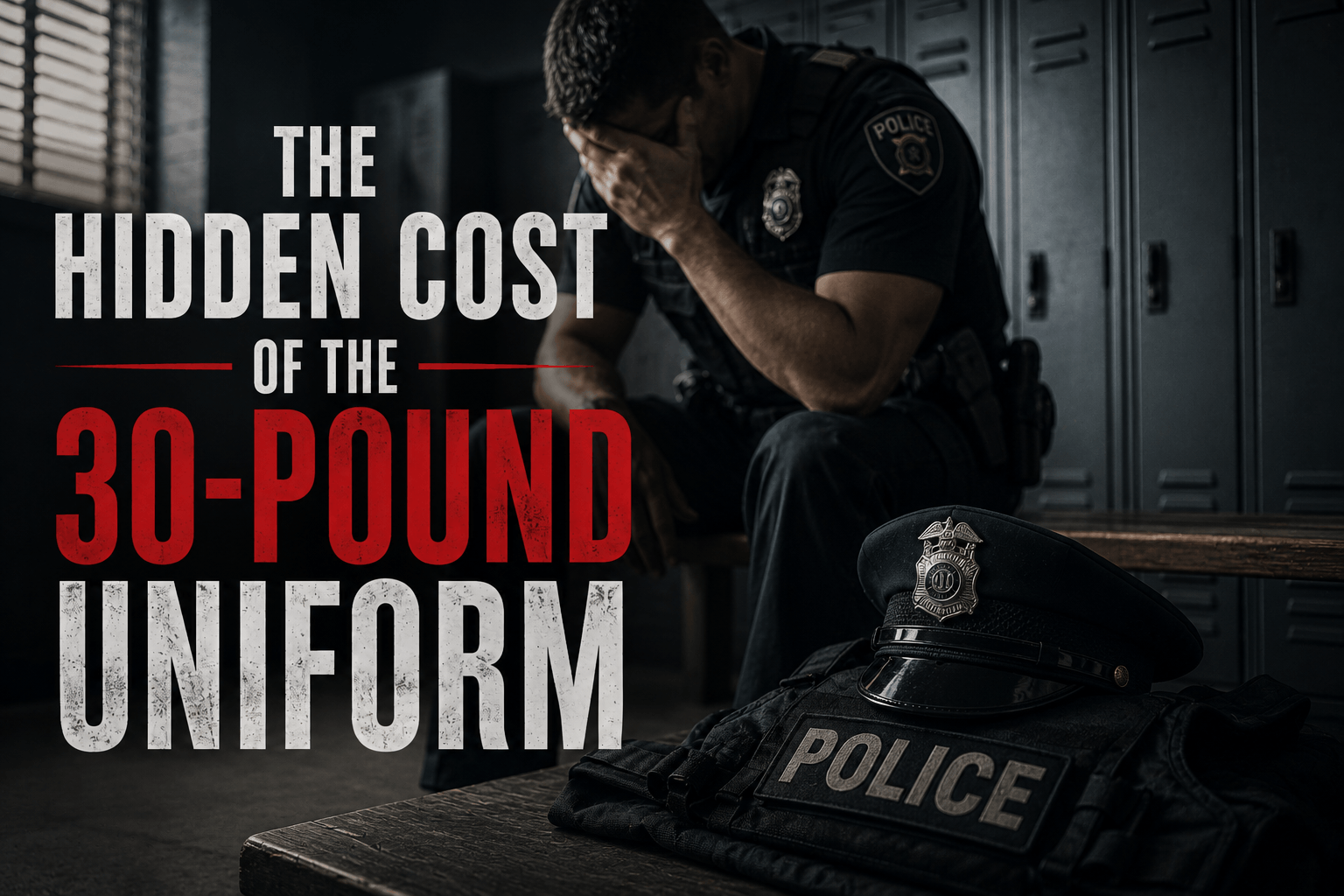
The Hidden Cost of the 30-Pound Uniform
Every shift starts the same way: gear up, strap in, and carry the weight. That weight is not metaphorical. Modern duty belts alone average between 15 and 20 pounds, and when you factor in the vest, boots, uniform, and every piece of patrol gear attached to your body, the total load regularly exceeds 30 pounds — worn for 8 to 12 hours straight.
The cumulative physical toll of that load is not a minor inconvenience — it is a documented occupational hazard.
Up to 60% of law enforcement officers develop clinically significant lower back pain over the course of their careers. That is not a fringe statistic. It represents the majority of the profession.
The patrol gear ecosystem extends well beyond the duty belt. It encompasses your plate carrier, patrol boots, holster, mag pouches, load distribution systems, and every ancillary piece of equipment your department mandates or your assignment demands. Each component either contributes to sustainable performance or quietly works against it.
The thesis here is straightforward: gear must support the officer, not hinder them. Understanding where that line falls — and why it matters operationally — starts with recognizing the critical difference between patrol-specific and tactical configurations.
Patrol Gear vs. Tactical Gear: Knowing the Difference
Not all duty equipment is built for the same mission. Conflating patrol gear with tactical gear is a common mistake — and one that can quietly undermine officer performance across a 12-hour shift.
Factor | Patrol Gear | Tactical Gear |
|---|---|---|
Primary Focus | Comfort, accessibility, professional appearance | Maximum utility, modularity, mission-specific loadout |
Duration | Sustained 8–12 hour shifts | Short-duration, high-intensity operations |
Design Priority | Ease of movement, reduced fatigue | Rapid reconfiguration, expanded carry capacity |
Typical Use Case | Daily patrol, community interaction | SWAT, entry operations, specialized response |
Apparel Example | Ripstop tactical pants, performance shirts | Full plate carrier setups, MOLLE-heavy rigs |
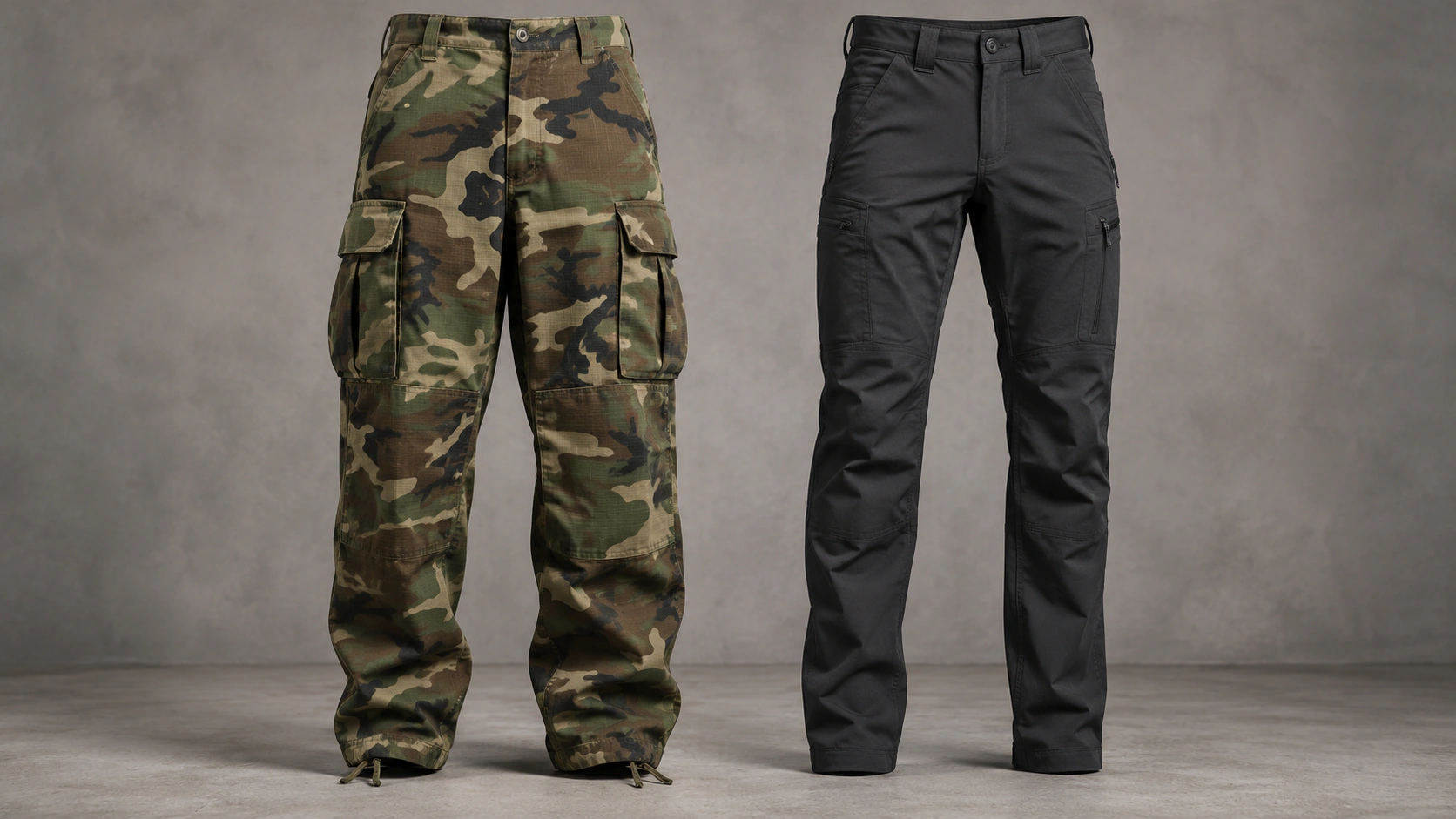
Patrol gear is engineered around a simple truth: officers who are uncomfortable become less effective. Comfort, accessibility, and professional appearance are not concessions to softness — they're operational requirements. Tactical pants exemplify this balance, delivering functionality and durability without sacrificing the range of motion a patrol officer demands across hundreds of daily interactions. Gear built for sustained duty use is what separates an officer who finishes the shift sharp from one who's running on empty by hour eight.
Tactical gear, on the other hand, is purpose-built for maximum modularity and short-burst utility. Running a full tactical loadout on routine patrol means carrying unnecessary weight, creating visual friction with the community, and accelerating fatigue without any mission benefit. The two categories complement each other — they don't substitute for one another.
Building a smart patrol gear checklist starts with understanding exactly which components belong in each category, and that's where the specifics matter most.
The Essential Patrol Gear Checklist
Knowing the distinction between patrol and tactical gear matters little if your loadout has critical gaps. What follows is a structured breakdown of the components that belong on every officer's body and in every patrol vehicle — organized for operational clarity, not convenience.
On-Body Gear
Duty belt components form the foundation of your on-body loadout. Every item mounted to that belt must earn its place through function, not habit.
Retention holsters — Level II or Level III retention is non-negotiable for patrol. The holster must match your sidearm model precisely; universal fit is not an operational standard.
Cuff cases — Rigid, reinforced cuff cases prevent fumbling during restraint situations. Position them for your dominant hand's natural draw path.
N95 respirators — Crowd control, biohazard calls, and post-incident environments demand respiratory protection. Compact N95 units fit in a cargo pocket without adding meaningful weight to your belt load.
IFAK components — A tourniquet and pressure bandage, accessible within seconds, are not optional. Mount them where your non-dominant hand can reach them independently.
Performance shirts and ripstop tactical pants — Apparel is part of your safety system, not an afterthought. Material selection directly affects durability, weather resistance, breathability, and freedom of movement. Ripstop fabric resists tearing under stress; moisture-wicking performance shirts regulate core temperature during extended shifts.
Properly configured on-body gear is the difference between a controlled response and a reactive one.
In-Vehicle Gear
The patrol gearbox concept treats your vehicle as a forward operating base — not a storage locker. Everything in the vehicle should be organized by deployment priority.
Long gun and less-lethal options — Secured, accessible, and properly staged by threat level.
Extra uniform components — A spare performance shirt and tactical pants stored in a dedicated bag accelerate return-to-duty after contamination or injury.
Riot gear and crowd-control tools — Staged for rapid deployment, not buried under administrative supplies.
First aid expansion kit — Vehicle-mounted kits should exceed what's on your body, covering tourniquet application, airway management, and wound packing.
How that vehicle kit is organized — and what bag carries it — is what the next section addresses directly.
Optimizing the Patrol Bag for Rapid Response
The patrol bag is not an afterthought — it is a mobile command post. Officers carry riot gear, backup uniforms, medical supplies, and shift essentials in a single bag that gets thrown in a trunk, dragged across pavement, and accessed under pressure. Reliable police gear for duty safety extends beyond the duty belt; it includes the bag that keeps everything organized and deployable when seconds count.
Standard duffels fail in this role. They lack structure, offer no internal organization, and compress under load — turning a well-planned kit into a scrambled pile of gear at exactly the wrong moment. Durable packs designed specifically for riot gear and uniform organization ensure rapid deployment, which is the operational standard every patrol officer should hold their bag to.
Patrol-ready bags are built to a different standard than generic alternatives.
GSA-Approved Construction GSA approval signals that a bag meets federal procurement standards — a baseline of durability and material integrity that generic options simply do not guarantee.
Water-Resistant Exteriors Patrol bags face rain, wet trunks, and unpredictable environments. Water-resistant materials protect uniforms, documents, and electronics stored inside.
Internal Dividers and Dedicated Compartments Structured organization means riot gear, uniforms, and medical supplies each have a designated space — no digging, no delay.
A bag that fails under field conditions creates a downstream problem that extends well beyond inconvenience. How gear is carried and distributed across the body has broader operational consequences — and that consideration does not stop at the patrol bag.
The Biomechanics of Mobility: Why Weight Distribution Matters
Gear that slows you down is gear that can get you killed. Research published in the Journal of Functional Morphology and Kinesiology confirms that wearing a standard duty belt produces significant decreases in both velocity and acceleration during short sprints — the exact scenario that determines outcomes in foot pursuits and active threat responses.
Poor weight distribution does not just affect comfort — it directly degrades use-of-force effectiveness when seconds matter most.
The duty belt has long been the default platform for carrying a sidearm, spare magazines, handcuffs, a radio, and a range of other essentials. However, concentrating that load at the waist shifts an officer's center of gravity, strains the lumbar spine over a full shift, and compromises the explosive movement patterns required in close-quarters confrontations. In practice, an officer fatigued by cumulative weight displacement is operating at a measurable disadvantage before a physical encounter even begins. This is not a comfort issue — it is a tactical liability.
Redistributing that weight is a proven countermeasure. Outer carriers shift the load to the torso, and duty suspenders alleviate downward pressure on the hips and lower back. Officers who also rely on a well-configured patrol bag to carry non-immediate-access items — backup supplies, medical gear, shift essentials — further reduce active carry weight during extended deployments. The goal is simple: keep critical tools accessible and keep the officer moving at full capacity.
What looks practical on paper does not always translate to the street — and that gap between perception and operational reality extends well beyond gear configuration.
From the Screen to the Street: Cop Culture and Reality
Hollywood has a gear problem. Onscreen officers look sharp, but their loadouts would not survive a single patrol shift.
Q: What actor was actually a cop in real life? Dennis Farina served as a Chicago police officer for 18 years before transitioning to acting. When he spoke about police work, it carried operational weight — not a screenwriter's approximation of it.
Q: Does Hollywood get patrol gear right? Rarely. On screen, officers wear whatever photographs well. In practice, a duty belt configured for aesthetics rather than biomechanics creates fatigue, slows draw times, and increases injury risk over a full shift.
Q: Should I choose gear based on how it looks? Peer-reviewed selection beats visual appeal every time. Well-fitted tactical pants with reinforced knees and articulated cuts address real mobility demands — not camera angles.
Gear that earns its place on your kit does one thing: it performs when the situation demands it. The patrol gear blueprint is not about appearance. It is about operational reliability, proper weight distribution, and professional-grade standards that protect the officers carrying it.
Key Takeaways
Retention holsters — Level II or Level III retention is non-negotiable for patrol. The holster must match your sidearm model precisely; universal fit is not an operational standard.
Cuff cases — Rigid, reinforced cuff cases prevent fumbling during restraint situations. Position them for your dominant hand's natural draw path.
IFAK components — A tourniquet and pressure bandage, accessible within seconds, are not optional. Mount them where your non-dominant hand can reach them independently.
Long gun and less-lethal options — Secured, accessible, and properly staged by threat level.
Extra uniform components — A spare performance shirt and tactical pants stored in a dedicated bag accelerate return-to-duty after contamination or injury.
FAQs
What is professional-grade patrol gear, and how is it different from consumer-grade equipment?
Professional-grade patrol gear refers to duty equipment engineered to meet rigorous performance, durability, and safety standards required in law enforcement and security operations. Unlike consumer-grade alternatives, professional patrol gear undergoes independent testing for tensile strength, weather resistance, and operational reliability under stress. Key categories include duty belts, body armor, holsters, boots, and lighting — each built to fail-safe standards. Consumer products are designed for occasional use; professional gear is rated for daily, high-stakes duty cycles where failure is not an option.
Why is professional-grade equipment considered non-negotiable for officer safety?
Professional-grade equipment is non-negotiable for duty safety because gear failure in the field can directly cost an officer their life. A holster that doesn't retain under a struggle, boots that fail in wet conditions, or a duty belt that loses structural integrity mid-pursuit creates life-threatening gaps in an officer's operational capability. According to the FBI Law Enforcement Officers Killed and Assaulted (LEOKA) report, equipment and situational preparedness are consistently cited as critical factors in officer survival outcomes. Cutting corners on gear quality is a risk no department or officer should accept.
What are the most essential pieces of patrol gear every law enforcement officer needs?
The essential patrol gear every law enforcement officer needs includes a duty belt system, body armor (ballistic vest), a retention holster, handcuffs, a tactical flashlight, and sturdy duty boots. Beyond these core items, officers benefit from a trauma/IFAK kit, a reliable radio pouch, and weatherproof outerwear suited to their patrol environment. LA Police Gear carries a full range of duty gear and law enforcement equipment purpose-built for daily patrol use. Prioritizing certified, tested items in each category is the foundation of a safe and functional patrol loadout.
How do I build a patrol gear loadout on a budget without sacrificing safety?
Building a patrol gear loadout on a budget without sacrificing safety means prioritizing certification and function over brand prestige. Start with NIJ-certified body armor and a retention-tested holster — these two items carry the highest safety stakes and should never be downgraded. For supplementary gear like pouches, gloves, and bags, quality mid-range options from trusted tactical retailers deliver strong performance at lower price points. LA Police Gear offers budget-friendly duty gear that meets professional standards, making it possible to build a complete loadout without compromising officer protection.
What certifications should I look for when buying professional patrol gear?
When buying professional patrol gear, look for NIJ (National Institute of Justice) certification for body armor, ANSI/ISEA standards for high-visibility gear, and UL listings for electronic equipment like flashlights and radios. For footwear, ASTM F2413 certification indicates tested impact and compression resistance. Holsters should meet duty-retention standards — Level II or Level III retention is the professional baseline. Certifications aren't marketing language; they are documented proof that equipment has been independently tested to perform under the conditions officers actually face.
What's the best duty belt setup for patrol officers?
The best duty belt setup for patrol officers is a modular, low-profile inner/outer belt system that distributes weight evenly and allows customizable accessory placement. The outer duty belt should be stiff enough to support a holster, magazine pouches, handcuff case, radio holder, and medical kit without sagging. MOLLE-compatible platforms allow officers to reconfigure their loadout quickly as assignments change. Leading materials include reinforced nylon and polymer-backed leather for durability across weather conditions. LA Police Gear's duty belt selection includes patrol-tested options across multiple configurations and price points.
Is tactical gear from online retailers like LA Police Gear the same quality as gear issued by departments?
Tactical gear purchased from reputable online retailers like LA Police Gear is frequently identical to — or sourced from the same manufacturers as — department-issued equipment. Many law enforcement agencies issue gear allowances precisely so officers can purchase certified equipment from trusted retailers rather than relying solely on department supply chains. LA Police Gear stocks professional-grade gear from brands like 5.11 Tactical, Safariland, Streamlight, and Blackhawk — the same brands found in department armories nationwide. Purchasing from an established tactical retailer also allows officers to customize their loadout beyond standard-issue configurations.
How does poor-quality patrol gear increase risk during high-stress situations?
Poor-quality patrol gear increases risk during high-stress situations by introducing mechanical failure at the worst possible moment. A holster with inadequate retention can allow weapon displacement during a struggle. Low-grade duty boots with poor traction increase fall risk during pursuit on wet or uneven surfaces. Substandard body armor may lack consistent ballistic protection across the panel due to quality control failures. Under adrenaline and physical stress, officers rely entirely on their equipment to perform — gear that hasn't been tested to professional standards introduces an unpredictable variable into an already volatile environment.
Can civilian security officers and private patrol use the same professional-grade gear as law enforcement?
Yes, civilian security officers and private patrol professionals can — and should — use the same professional-grade gear as law enforcement where legally permitted. Body armor, duty belts, tactical flashlights, and patrol boots have no civilian purchasing restrictions in most U.S. states. Security professionals operating in high-risk environments benefit from NIJ-certified armor and duty-retention holsters just as sworn officers do. Some items, such as certain firearm accessories or restraint devices, may be subject to state-level regulations. LA Police Gear serves both law enforcement and qualified civilian security professionals with the same catalog of professional-grade equipment.
Where can I buy reliable professional-grade patrol gear online?
Reliable professional-grade patrol gear is available through established tactical retailers that stock certified equipment from recognized duty-gear brands. LA Police Gear (lapolicegear.com) is a trusted source for law enforcement, military, and security professionals, offering a wide catalog of patrol and duty gear including body armor, holsters, duty belts, tactical footwear, and accessories. When shopping online, verify that the retailer carries products from NIJ-certified or otherwise independently tested manufacturers, offers clear return policies, and provides knowledgeable customer support — all of which LA Police Gear provides.