Listen to this article
Table of Contents
- The 2026 Tech Shift: MagnaCut Steel and the 'Arc' of Innovation
- Gerber Center-Drive vs. Leatherman Wave Plus: The Torque Battle
- Why the Gerber MP600 Remains the Military Standard
- Are Gerber Multitools Actually 'As Good' as Leatherman?
- 8 Multitools Still Worth Carrying in 2026
- 1. Leatherman Arc — The Premium King
- 2. Gerber Center-Drive — The Torque Master
- 3. Leatherman Wave+ — The Versatile Standard
- 4. Gerber MP600 — The Tactical Workhorse
- 5. Leatherman MUT — The AR-15 Specialist
- 6. Gerber Dual-Force — The Heavy Duty Plier
- 7. Leatherman Free P4 — The Magnetic Innovator
- 8. Gerber Stakeout — The Outdoor/Camp Hybrid
- The Verdict: Which Wins Your Belt Space in 2026?
- FAQs
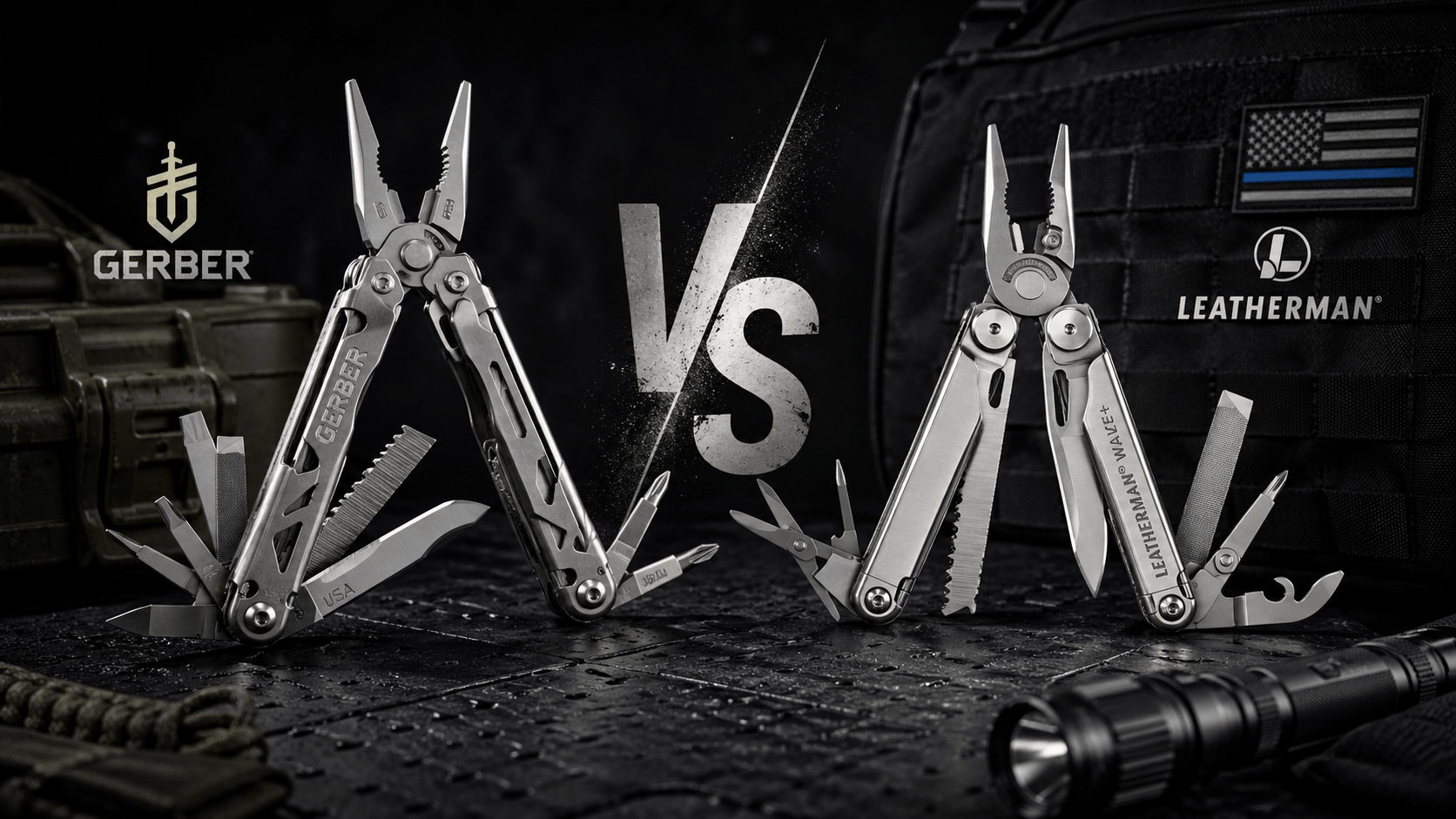
The magazine is empty, the vehicle has broken down on the side of a rural highway, and the nearest support is 40 minutes out. What comes off your belt matters — not in theory, but right now. That single moment is why the debate between gerber center-drive vs leatherman wave plus is not an internet argument. It is an operational question.
The 2026 multi-tool market has shifted hard toward what analysts are calling premiumization — manufacturers chasing higher price points, exotic materials, and flagship branding to capture a growing segment of gear-conscious buyers. The global multi-tool market is projected to exceed $2.8 billion, and with that scale comes a flood of premium positioning that does not always translate to field performance.
Here is the thesis, stated plainly: Leatherman's metallurgical advances are reshaping what "quality" means in 2026, while Gerber's mechanical design and duty-ready ergonomics continue to deliver tactical utility at a price point that respects a patrol officer's gear budget.
Neither brand wins on every metric. The real question is which one wins on your metrics — and that answer starts with understanding the steel revolution driving 2026's top flagships.
The 2026 Tech Shift: MagnaCut Steel and the 'Arc' of Innovation
Material science is reshaping what tactical multi-tools deliver at the blade level, and CPM MagnaCut steel is driving that change in 2026 flagship models.
Developed by metallurgist Larrin Thomas, MagnaCut was designed to address a long-standing compromise in blade steel: the trade-off between edge retention, corrosion resistance, and toughness. Traditional 420HC steel—a common standard in many legacy multi-tool blades—offered acceptable corrosion resistance and was easy to sharpen in the field, but it sacrificed meaningful toughness and long-term edge retention. For daily carry in controlled environments, 420HC was sufficient. For LEOs and military personnel operating in wet, high-stress conditions, its limitations showed quickly.
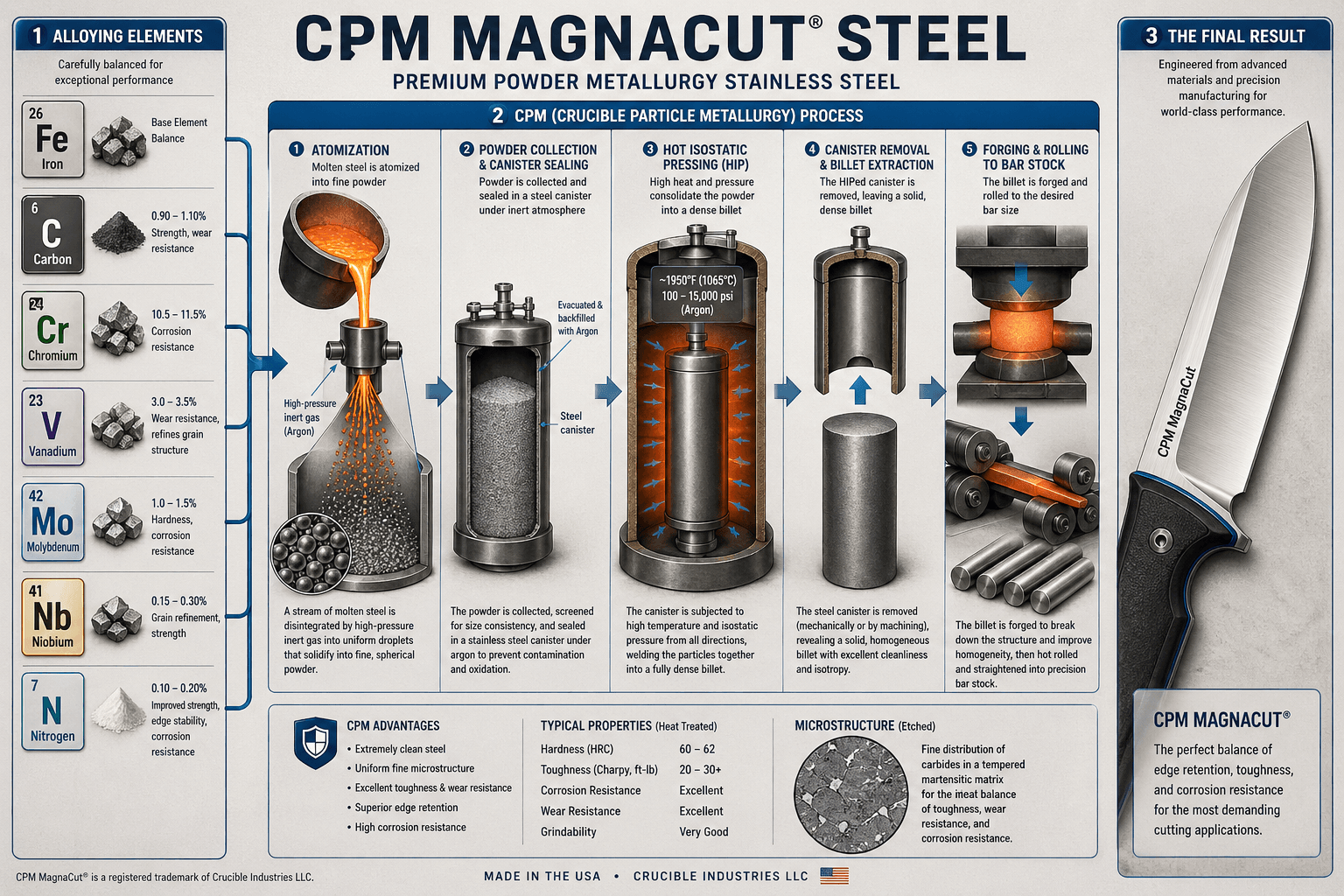
MagnaCut changes the equation. Its chromium-carbide-free microstructure delivers corrosion resistance comparable to H1 steel, while maintaining toughness that rivals tool steels traditionally reserved for fixed blades. In practical terms, that means a blade that holds an edge longer under hard use, resists chipping during prying tasks, and doesn't degrade in humid or marine environments.
Toughness is the new benchmark—not peak sharpness out of the box, but sustained performance under field conditions. That distinction matters for anyone evaluating the best multi tool for police officers 2026, where a blade that chips during a forced entry assist or corrodes after a patrol in the rain is a liability, not a tool.
The Leatherman Arc has been introduced as the clearest expression of this shift, incorporating MagnaCut into a purpose-built tactical platform and setting a new performance standard for premium multi-tools. Understanding how that steel advantage translates into real torque and mechanism performance—particularly at the driver—requires a closer look at how the Arc and its closest competitors handle the fundamentals.
Gerber Center-Drive vs. Leatherman Wave Plus: The Torque Battle
When the debate around leatherman vs gerber for military use gets specific, it usually lands here — on the driver. The Gerber Center-Drive and the Leatherman Wave Plus are direct competitors in the same price tier, but they approach fastener work from fundamentally different engineering philosophies. That difference has real consequences in the field.
Axis Alignment and Why It Changes Everything
The Center-Drive's defining feature is its center-axis screwdriver — the bit driver sits in line with the tool's handle axis, mimicking a full-size screwdriver. In practice, this geometry delivers significantly more torque with less wrist strain, because force transfers in a straight line rather than at an angle. The Wave Plus uses an offset driver positioned to the side of the handle centerline, which limits mechanical advantage on stubborn fasteners. For routine tasks, the offset is workable. For stripped screws on vehicle panels, weapons mounts, or optics — it's a meaningful disadvantage.
Torque transfer isn't an abstract preference. Police and military personnel performing field maintenance on firearms, body armor hardware, or vehicle components need reliable torque output without carrying a dedicated driver. A multi-tool that mimics the ergonomics of a real screwdriver reduces task time and minimizes the risk of fastener damage under time pressure.
Plier Access: Deployment and One-Handed Use
The Wave Plus uses a classic butterfly opening — both handles fold out symmetrically, requiring two hands. The Center-Drive uses a sliding jaw mechanism that extends the plier head outward with a single push, keeping deployment faster in confined spaces or when one hand is occupied.
That single-hand deployment isn't just convenient. In a rescue extraction or active maintenance scenario, keeping a hand free is a tactical consideration, not a comfort preference. The flick-of-the-wrist opening the Center-Drive allows functions as a genuine safety feature, reducing the seconds needed to transition from carry to working position.
Both tools carry strong reputations, and the Wave Plus remains a proven platform. However, when operational demands prioritize driver performance and rapid deployment, the engineering logic favors the Center-Drive — a point worth holding onto as we examine which tools have earned enduring trust at the institutional level.
Why the Gerber MP600 Remains the Military Standard
Innovation doesn't automatically displace proven performance. The Gerber MP600 has remained the most widely issued multi-tool in the U.S. military for years — not because procurement officers are slow to adapt, but because the tool continues to deliver where it counts. Understanding why tells you something important about what the best tactical multi-tool for law enforcement actually requires in the field.
One-Handed Operation: A Non-Negotiable Requirement
The MP600's defining feature is its one-handed opening system — a spring-assisted, ambidextrous mechanism that deploys the pliers with a single flick. In a combat situation, casualty response, or confined-space rescue, one hand is often occupied or unavailable. A tool that requires two hands to open is a tool that may not get used in time. This isn't a convenience feature; it's a tactical capability.
Simplicity as a Durability Strategy
Sand, grit, and debris are constant adversaries in field environments. The MP600's relatively straightforward internal geometry offers fewer points of failure compared to tools with more complex locking mechanisms or additional moving parts. In practice, simpler designs shed debris more effectively and maintain operability under sustained environmental stress. That durability track record is a core reason the platform remains in active service long after newer designs have entered the market.
Replaceable Tungsten Carbide Wire Cutters
The MP600's replaceable tungsten carbide wire cutters represent a feature that goes largely unmatched at the platform level. Carbide cutters handle hardened wire and cable that would damage standard steel jaws — and when they eventually wear, they're field-replaceable without sending the tool back to a depot. For EOD personnel, combat engineers, or any operator working with wire regularly, this capability is operationally significant, not a marketing footnote.
The MP600 shows that longevity in the military space is earned through consistent, verifiable performance. That said, operational reliability is only part of the evaluation — build quality and long-term value also factor into how these two brands ultimately compare.
Are Gerber Multitools Actually 'As Good' as Leatherman?
In the gerber vs leatherman 2026 conversation, this is the question that generates the most friction — and the most honest answer is: it depends on what "as good" means to you.
The Fit and Finish Gap
Handle both brands back-to-back and the difference is immediate. Leatherman tolerances are tighter. The action is smoother. Tools deploy and lock with a mechanical confidence that communicates precision manufacturing. Gerber tools, particularly in mid-tier models, can exhibit minor blade play and slightly rougher pivot action straight from the box. That's not a fatal flaw — it's a trade-off priced accordingly.
A tighter tolerance doesn't always mean a more useful tool in the field. The MP600's one-hand plier deployment has proven that functional innovation can outweigh refined finish in a tactical environment.
The Warranty War
This is where the gap widens significantly. Leatherman backs its products with a 25-year warranty — one of the strongest guarantees in the industry. Gerber offers a Limited Lifetime Warranty, which sounds comparable but includes more exclusions and carries a reputation for inconsistent service experiences. For professionals carrying tools under hard daily use, that distinction matters beyond the marketing language.
Manufacturing and Origin
Leatherman manufactures in Portland, Oregon — full stop. Gerber operates a USA/global hybrid model depending on the product line. For buyers where country of origin factors into procurement decisions, this is a real operational consideration, not brand preference.
The Honest Verdict
Gerber builds capable tools. Leatherman builds precision instruments. Both get the job done — but they serve slightly different operators. That distinction becomes clearer when evaluating specific models side by side, which is exactly where the next section picks up.
8 Multitools Still Worth Carrying in 2026
The multitools of 2026 aren't just incrementally better — they represent genuinely distinct operational philosophies. Whether you need one-handed blade access on a patrol belt or precision torque on a rifle armorer's bench, the right tool depends on your mission profile. Here's how the current field breaks down.
1. Leatherman Arc — The Premium King
The Arc sits at the top of the premium tier, built from 20CV steel with a locking blade rated for hard use. It's the benchmark for anyone who prioritizes metallurgy and long-term edge retention over every other variable.
2. Gerber Center-Drive — The Torque Master
The Center-Drive drives a full-size bit on-axis through the tool's centerline — the same geometry as a real screwdriver. For LEOs and technicians running fastener-heavy tasks under time pressure, this mechanical advantage is operationally significant.
3. Leatherman Wave+ — The Versatile Standard
The Wave+ remains one of the best-selling multitools ever produced, and for good reason. Its outside-accessible blades and proven 420HC construction make it a reliable, cross-environment workhorse suitable for patrol, field, or shop.
4. Gerber MP600 — The Tactical Workhorse
As covered earlier, the MP600's one-handed butterfly opening and Saf.T.Plus locking system earned it widespread military adoption. It remains the default issue tool across multiple branches for good reason.
5. Leatherman MUT — The AR-15 Specialist
The MUT is purpose-built for the AR platform — featuring a bolt override tool, carbon scraper, and punch. If your kit includes an AR-15 or M4-pattern rifle, this is a legitimate armorer's tool, not a novelty.
6. Gerber Dual-Force — The Heavy Duty Plier
The Dual-Force prioritizes grip strength and jaw durability for users who need a capable, no-frills plier platform. It's built for utility over elegance.
7. Leatherman Free P4 — The Magnetic Innovator
The Free P4's magnetic one-handed tool access is a legitimate design advancement. Every implement opens and closes smoothly without repositioning your grip — a practical advantage in cold-weather or gloved operations
8. Gerber Stakeout — The Outdoor/Camp Hybrid
The Stakeout is optimized for camp and trail use — lightweight, with a capable blade and tools oriented around outdoor tasks rather than tactical or mechanical priorities.
The right multitool isn't the one with the most features — it's the one that performs its core function without compromise in your specific operational context. With that framework in place, the final call between these platforms comes down to a few decisive factors worth examining directly.
The Verdict: Which Wins Your Belt Space in 2026?
The answer depends entirely on your operational context — and that is the point this entire comparison has been building toward.
Choose Leatherman when longevity and metallurgy are non-negotiable. The steel quality, fit tolerances, and tool-lock consistency across their premium lineup reflect decades of refinement. For EDC enthusiasts who want a multi-tool that performs reliably over years of daily carry, the Leatherman Arc remains the benchmark. Its construction simply holds up under sustained use in a way that cheaper alternatives do not.
Choose Gerber when speed, torque, and tactical reliability define your daily requirements. The Gerber Center-Drive is the clearest winner for LEO duty carry — its center-axis screwdriver delivers genuine torque, the one-handed blade deployment is field-practical, and the overall form factor integrates cleanly on a duty belt without excess bulk.
So, are Gerber multitools as good as Leatherman? In specific tactical applications, they are not just comparable — they are the better operational choice.
Key Takeaways:
Leatherman Arc → Best for EDC longevity and precision tool work
Gerber Center-Drive → Best for LEO and tactical deployment
Price does not determine mission fit — deployment context does
Choose the tool that matches your mission, not the one with the higher price tag.
FAQs
Which is better in 2026, Gerber multi tools or Leatherman?
Gerber and Leatherman are both top-tier multi-tool brands, but Leatherman generally wins in 2026 for precision, build quality, and warranty support. Leatherman tools are known for tighter tolerances, premium materials, and a 25-year warranty, making them ideal for heavy-duty and professional use. Gerber multi tools, however, often offer better affordability and one-handed operation features, which appeal to casual users and budget-conscious buyers. The “better” option depends on whether you prioritize durability or value.
What is the main difference between Gerber and Leatherman multi tools?
The main difference between Gerber and Leatherman multi tools is build philosophy and user experience. Leatherman focuses on precision engineering, long-term durability, and U.S.-made craftsmanship, while Gerber emphasizes accessibility, affordability, and ease of use. Gerber tools often feature sliding pliers and one-handed opening designs, whereas Leatherman tools prioritize tighter construction and premium steel. This makes Leatherman better for demanding tasks, while Gerber suits everyday carry and lighter use.
Are Leatherman tools worth the higher price compared to Gerber?
Yes, Leatherman tools are generally worth the higher price if you need long-term reliability and heavy-duty performance. Most Leatherman models use higher-grade stainless steel and come with a 25-year warranty, which adds significant long-term value. For professionals like first responders, tradespeople, or outdoor enthusiasts, that durability pays off over time. However, Gerber tools provide excellent value for casual users who don’t need premium materials or lifetime-level durability.
Which multi tool brand is more durable, Gerber or Leatherman?
Leatherman is widely considered more durable than Gerber in long-term use. Their tools are built with tighter tolerances and higher-quality steel, resulting in less blade play and stronger joints. Independent testing and user reviews consistently show Leatherman tools lasting longer under heavy stress. Gerber tools are still durable for everyday tasks, but they may show wear faster with intensive use.
Which brand offers better warranty and customer service?
Leatherman offers a stronger warranty and more consistent customer service than Gerber. Their 25-year warranty is one of the best in the multi-tool industry and is widely honored with minimal hassle. Gerber also provides a limited lifetime warranty, but user experiences can vary more. If warranty reliability is a key factor in your purchase decision, Leatherman has the edge.
Are Gerber multi tools good for everyday carry (EDC)?
Yes, Gerber multi tools are excellent for everyday carry, especially for users who want lightweight, easy-to-use tools at a lower price point. Many Gerber models feature one-handed opening pliers and accessible tool layouts, making them practical for quick tasks. They’re a solid choice for general use, light repairs, and daily convenience. You can explore options in the to find EDC-friendly models.
Which multi tool is better for tactical or outdoor use?
Leatherman is typically better for tactical and outdoor use due to its durability and precision. Tools like the Leatherman Wave+ or Surge are designed for rugged environments and heavy-duty applications. However, Gerber also produces tactical-focused tools, including military-issued models, that emphasize quick deployment and usability. For serious outdoor conditions, Leatherman is often the safer long-term investment.
Do Gerber or Leatherman tools use better steel?
Leatherman generally uses higher-quality steel than Gerber, especially in its premium models. This results in better edge retention, corrosion resistance, and overall tool longevity. Gerber tools still use reliable stainless steel, but they are typically designed to balance cost and performance. If steel quality is a top priority, Leatherman is the stronger choice.
Which multi tool brand is more affordable in 2026?
Gerber is usually more affordable than Leatherman across most product categories. Entry-level Gerber multi tools often cost significantly less while still offering solid functionality. This makes Gerber a great option for beginners or those who need a backup tool. Leatherman tools come at a premium but justify the price with durability and long-term performance.
What should I look for when choosing between Gerber and Leatherman?
When choosing between Gerber and Leatherman, focus on your intended use, budget, and durability needs. If you need a long-lasting tool for professional or outdoor use, Leatherman is the better investment. If you want an affordable, easy-to-use tool for everyday tasks, Gerber is a strong choice. Also consider features like one-handed operation, tool variety, and warranty coverage before deciding.