Listen to this article
Table of Contents
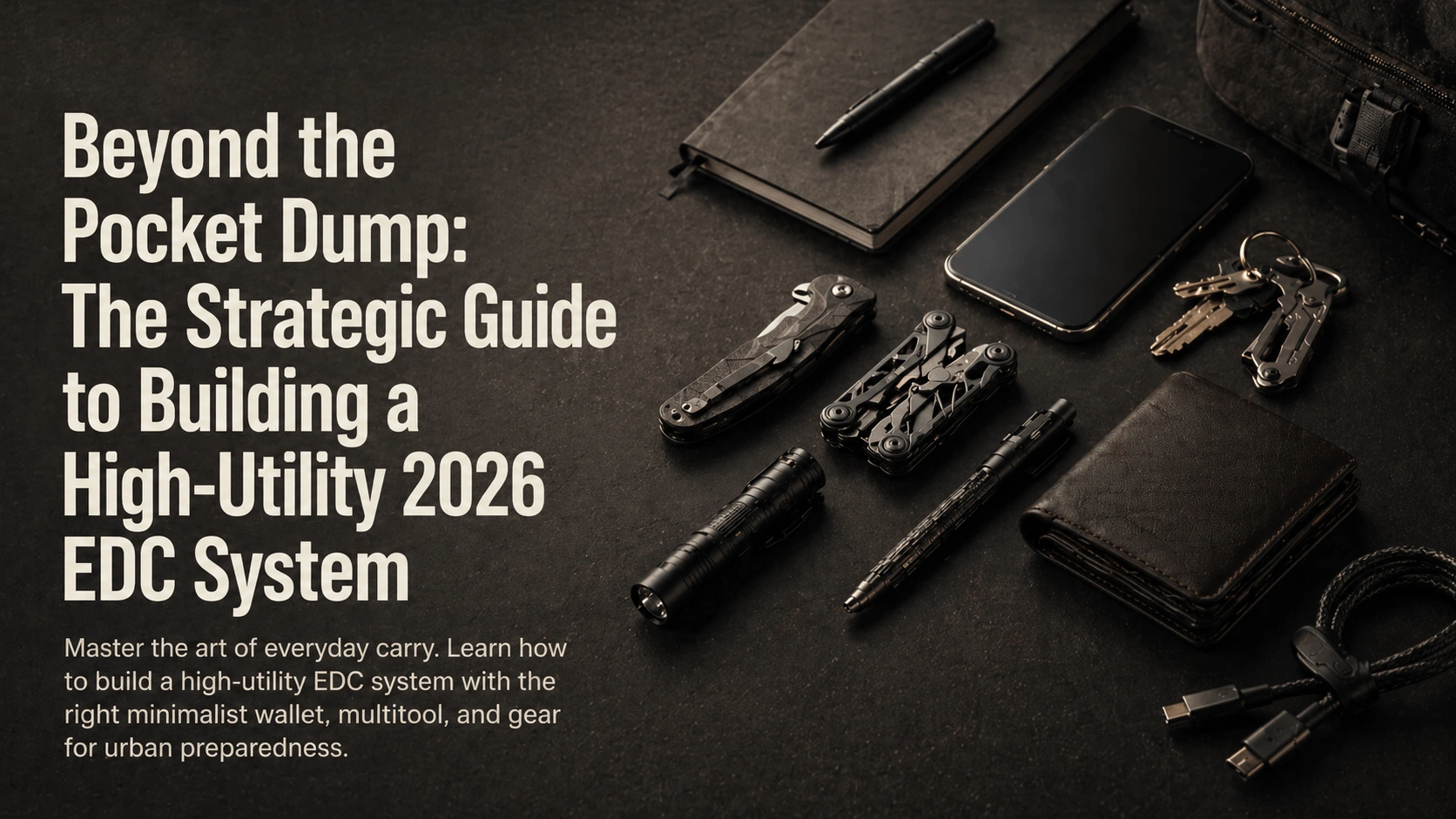
Master the art of everyday carry. Learn how to build a high-utility EDC system with the right minimalist wallet, multitool, and gear for urban preparedness.
The Psychology of Preparedness: Why We Carry
Everyday carry isn't about stuffing your pockets with gear. It's a deliberate philosophy—a commitment to self-reliance that shapes how you move through the world before a single tool ever leaves your waistband.
Think of it this way: the moment you clip a knife to your pocket or slip a flashlight into your bag, something shifts mentally. That shift is what psychologists and preparedness communities alike call the psychological safety net—the quiet confidence that comes from knowing you have the right tool when an unexpected situation demands it. It's not paranoia. It's practical awareness.
In high-pressure urban environments, that confidence carries measurable weight. Navigating a power outage, dealing with a package you can't open in a crowded office, or handling a roadside emergency—these aren't fringe scenarios. They're Tuesday. Carrying purpose-built tools reduces decision fatigue and lowers stress responses precisely because your brain has already solved the problem in advance.
A well-built EDC system is less about the gear itself and more about the mental framework that gear reinforces.
What's also notable is a meaningful cultural shift happening across carry communities in 2026. The old "tactical" aesthetic—all black, military-inspired, built for worst-case scenarios—has largely given way to something more grounded. Modern carriers want practical, discreet, and genuinely useful tools. This guide functions as a focused urban survival guide for that exact audience.
The foundation of any smart system starts with the essentials—and four specific tools anchor nearly every high-utility setup worth studying.
The 'Core Four' Essentials: Data-Backed Foundations
That mindset of deliberate preparedness explored in the previous section naturally leads to a practical question: what actually belongs in a well-built every day carry system? Across the enthusiast community, four items consistently surface as the non-negotiable foundation of a functional carry.
The Folding Knife: More Utility Tool Than Weapon
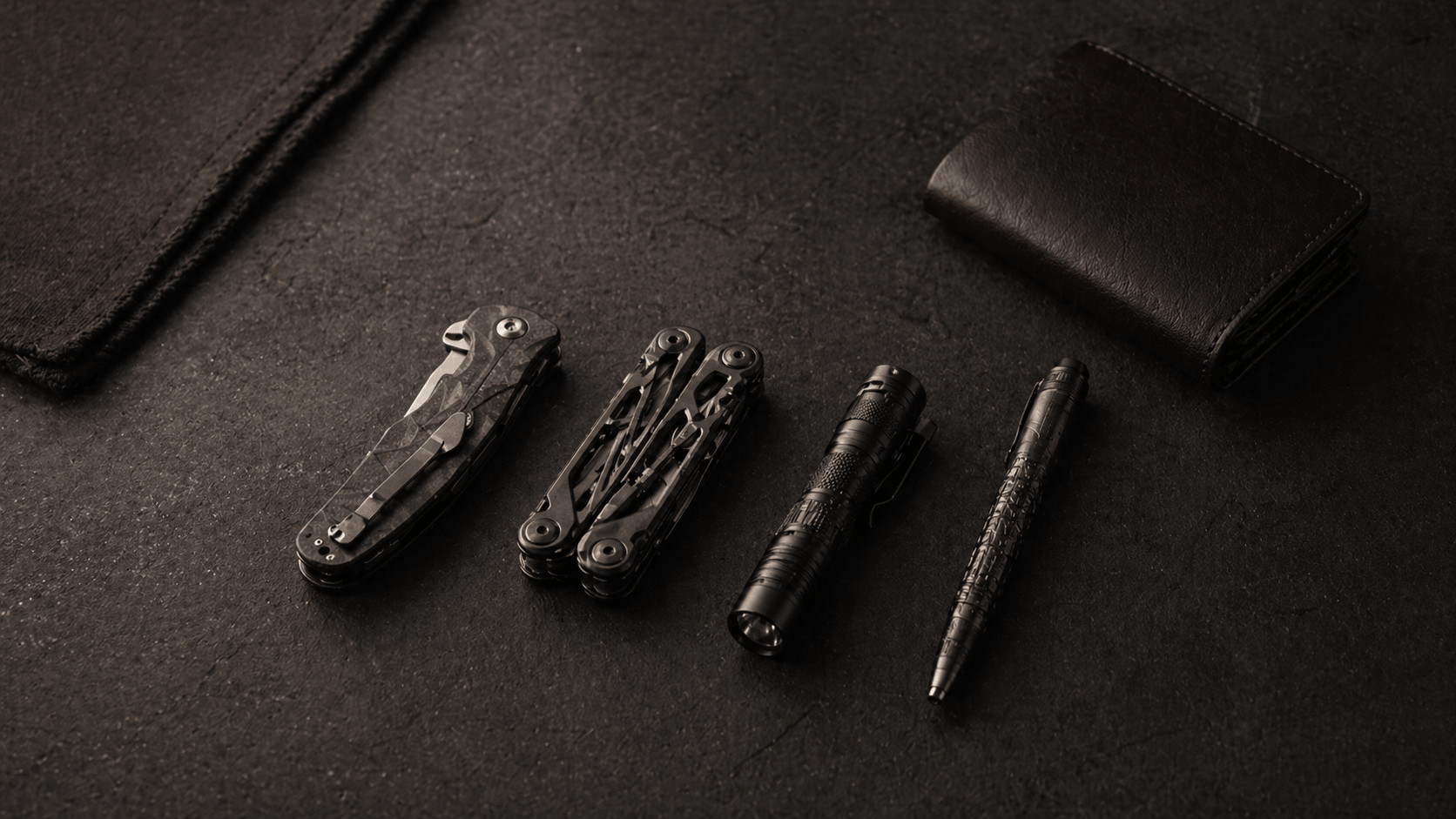
The folding knife remains the single most carried every day carry item for roughly 90% of enthusiasts—and for good reason. In practice, the blade handles far more mundane tasks than dramatic ones: breaking down cardboard, opening packaging, cutting cord, and slicing food on the go. A quality folding knife with a reliable locking mechanism and a 3–3.5 inch blade hits the sweet spot between legal carry limits in most U.S. states and genuine everyday utility.
The Multi-tool: Versatility Over Specialization
Single-use tools have a place in the workshop. On your person, they're dead weight. A compact multi-tool—combining pliers, screwdrivers, a file, and a small blade—consistently outperforms a drawer full of specialized gear when you're 30 minutes from home and something needs fixing. Urban carry, in particular, rewards versatility. Adaptability is the defining trait of a high-utility EDC system—one tool that does seven jobs is always worth more than seven tools left at home.
The EDC Flashlight: A Growing Market With Real Safety Logic
The tactical flashlight category isn't niche anymore. The global EDC flashlight market has experienced significant growth, reflecting how widely people have recognized the safety and practical value of reliable illumination. Power outages, parking garages, dropped items under seats—situations where even a small 500–1000 lumen pocket light delivers outsized value occur far more often than most people expect.
A pocket-sized flashlight or a Swiss Army knife isn't just a tool; it's a psychological safety net. People who carry 'comfort objects' report lower stress levels in high-pressure situations.
Source: AET GEAR (The Psychology of Everyday Carry)
The Specialized Pen: Analog Still Wins
In a digital world, a quality EDC pen remains irreplaceable. Signing documents, leaving notes, completing paper forms—there are dozens of daily moments where pulling out a reliable pen is simply faster than any digital alternative. Tactical variants add glass-breaking capability, raising the utility ceiling further.
Together, these four items form a compact, capable foundation. The question then becomes how to carry them efficiently—which is where the conversation around wallets, organization, and minimalist philosophy gets genuinely interesting.
Beyond the Basics: Minimalist Wallets and Modern Carry
With the Core Four locked in, the next layer of a refined everyday carry system is where most people either streamline brilliantly or quietly sabotage themselves—the wallet. The bulky bi-fold stuffed with expired loyalty cards and crumpled receipts is a relic. In 2026, minimalist slim wallets have taken over, and for good reason. A well-designed card carrier with RFID-blocking technology protects against contactless skimming while forcing a healthy audit of what you actually need on your person. In practice, most people carry three to five cards daily—everything else belongs at home or in a dedicated organizer. Pocket organization matters more than most EDC newcomers expect. Consistent item placement—phone always front-right, wallet always back-left—eliminates the fumbling that slows access speed in real situations. That gear jingle from loose keys and unsecured tools is not just annoying; it signals a system that has not been properly optimized. The trickier balance is weight vs. utility. Every addition must justify its gram count. One practical approach is the would I notice it is missing? test—if the answer is no, leave it behind. A minimalist setup is not about carrying less; it is about carrying exactly what earns its place. This philosophy of intentional curation connects naturally to a broader question emerging in 2026: not just what you carry, but how that gear was made—and how long it is built to last.
The 2026 Shift: Circularity and Sustainable Gear
With your wallet streamlined and your core carry dialed in, there's a larger question worth asking: where does all this gear end up? The EDC community in 2026 is increasingly grappling with that exact issue, and the answer is reshaping how serious carriers shop, maintain, and think about their tools.
What 'Circularity' Actually Means for EDC
Circularity is the deliberate move away from a "take-make-waste" product lifecycle. In practical terms, it means choosing gear designed to be repaired, repurposed, or responsibly recycled — rather than replaced. For EDC, this isn't just an ethical position; it's a smarter financial strategy. A $180 knife you sharpen and carry for a decade beats a $40 blade you replace three times.
Single-Material and Upcycled Designs
One of the clearest trends in 2026 EDC is the rise of single-material construction — tools and accessories built from one dominant material to simplify end-of-life recycling. Upcycled materials, particularly in wallets and pouches, are also gaining ground. A quality minimalist wallet crafted from reclaimed leather or recycled nylon isn't a compromise; in practice, it often outperforms its virgin-material counterpart in character and durability.
The ROI of Repairable Gear
Repairability is where heirloom gear separates itself from disposable gear. Brands building modular, repairable products — offering replacement parts, warranty programs, and detailed repair guides — are setting the standard. The distinction is straightforward: disposable gear has no upgrade path, glued construction, and proprietary components. Heirloom-quality tools have visible screw fasteners, available spare parts, and manufacturers who stand behind decades of use.
Understanding this framework naturally feeds into a bigger question — which carry system actually fits your daily context? That's exactly where we're headed next.
The Urban Survival Framework: What Makes Sense for You?
Sustainable materials and circular design are reshaping what everyday carry gear looks like. But knowing what to carry is only half the equation — the other half is knowing what you actually need based on how you spend your day. A well-built EDC system isn't universal. It's personal, contextual, and built around your specific routine.
Community trends show a significant move toward 'front-pocket' carry to improve ergonomics and security.
Source: r/EDC Community Insights
The Office Carry: Low-Profile and Tech-Integrated
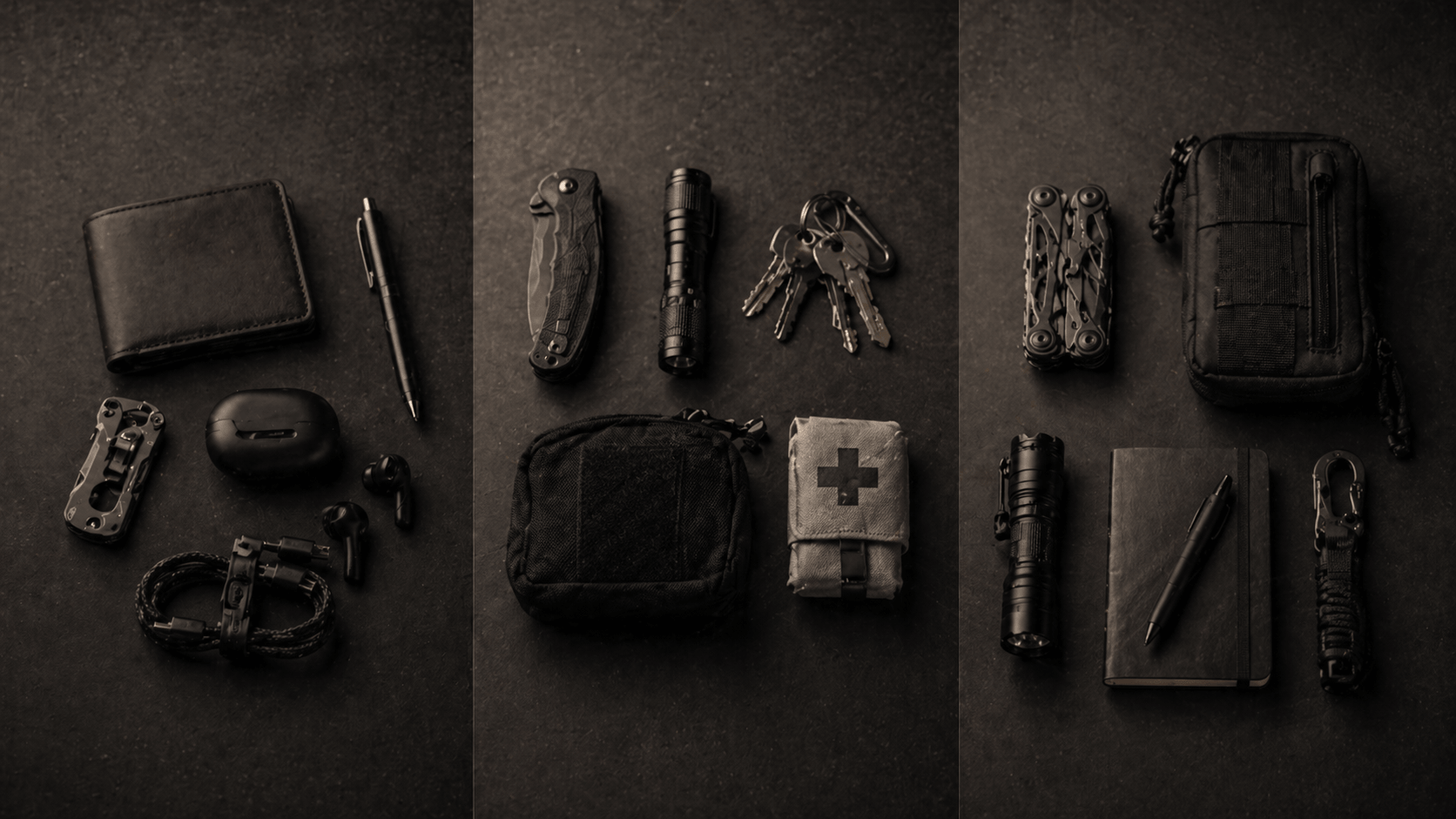
For the professional spending most of their day in a corporate or hybrid work environment, discretion is the priority. Office carry leans toward slim, polished tools that don't raise eyebrows in a conference room. Think a compact multitool with a low-key form factor, a quality pen, and a minimalist wallet with RFID blocking. Tech integration matters here too — a USB-C charging cable, a small portable battery pack, and wireless earbuds round out a setup built for productivity.
The Commuter Carry: Prepared for the In-Between
The daily commuter faces a different challenge: unpredictability. Long stretches on public transit, parking garages, and errand stops create genuine moments where emergency lighting and a versatile multitool earn their keep. A compact folding knife, a reliable flashlight rated for outdoor use, and a durable bag with easy-access pockets are practical non-negotiables. In practice, commuters also benefit from a small first-aid card or mini kit tucked into a side pocket.
The Remote/Field Carry: Durability First
Those who regularly work or recreate outdoors need gear built to take punishment. Field carry prioritizes rugged construction, self-sufficiency, and redundancy. A full-size multitool, a fixed-blade option where legal, and fire-starting capability all become relevant considerations.
Auditing Your Actual Needs
The most overlooked step in building a great every day carry system is an honest audit of your real daily routine — not an idealized version of it. Track what you reach for over one week. What problems did you encounter? What tools did you wish you had? What stayed in your pocket unused? That data shapes your kit far better than any influencer's pocket dump.
Once you've mapped your needs, the next logical step is knowing where to find quality gear from sources you can actually trust.
Strategic Sourcing: Where to Shop Everyday Carry Online
Building a thoughtful Everyday Carry system means nothing if the gear you buy falls apart or ships without warranty coverage. Authorized dealers are the single most important factor to consider before checkout — they guarantee manufacturer support, authentic products, and legitimate return policies that mass-market discount sites simply can't match.
Staying current with EDC gear news and community content is one of the smartest pre-purchase research moves available. YouTube pocket dump videos — like those catalogued across 2026 EDC communities — show real carry setups in action, revealing how specific tools actually perform daily rather than how spec sheets describe them. That real-world context is invaluable.
Watch for these red flags on mass-market platforms:
Suspiciously low prices on "tactical" knives or multitools from unknown brands
Vague country-of-origin listings and no listed certifications
Clone designs mimicking premium products with near-identical branding
A well-sourced EDC system outlasts a cheaply assembled one by years — and the warranty support alone justifies paying authorized-dealer prices.
The strategic EDC approach covered throughout this guide — from circularity to urban frameworks to sourcing — ultimately serves one goal: carry less, carry smarter, and carry gear you can genuinely trust. Start with one intentional upgrade, then build outward.
Key Takeaways
Suspiciously low prices on "tactical" knives or multitools from unknown brands
Vague country-of-origin listings and no listed certifications
Clone designs mimicking premium products with near-identical branding
A well-built EDC system is less about the gear itself and more about the mental framework that gear reinforces.
Adaptability is the defining trait of a high-utility EDC system
FAQs
What is an EDC system?
An EDC system is a deliberately chosen set of everyday carry tools designed to improve preparedness, reduce stress, and help you handle common urban problems with confidence.
What are the “Core Four” essentials in a high-utility EDC setup?
The post identifies four foundational items: a folding knife, a compact multi-tool, an EDC flashlight, and a specialized pen. Together, they cover cutting, fixing, illumination, and analog utility.
Why is a folding knife considered essential everyday carry gear?
A folding knife is useful for ordinary tasks like opening packages, cutting cord, breaking down cardboard, and food prep on the go. The post recommends a reliable locking knife with a practical 3–3.5 inch blade.
Why carry a multi-tool instead of several separate tools?
A compact multi-tool offers versatility without bulk. In an urban EDC system, one tool that combines pliers, screwdrivers, a file, and a small blade is often more useful than specialized tools left at home.
How bright should an EDC flashlight be?
The post points to pocket-sized lights in the 500–1,000 lumen range as highly practical for power outages, parking garages, roadside issues, and finding dropped items in low light.
Does an EDC pen still matter in a digital world?
Yes. A dependable pen is still faster and more practical for signing documents, filling out paper forms, leaving notes, and handling everyday analog tasks. Tactical versions may add extra emergency utility.
Why are minimalist wallets important in modern EDC?
Minimalist wallets reduce bulk, encourage you to carry only essential cards, and often include RFID-blocking technology. The post suggests most people only need three to five cards daily.
How should I decide what belongs in my everyday carry?
Use the post’s “would I notice it is missing?” test. If an item does not solve a real problem in your daily routine, it probably does not earn a place in your carry.
What is contextual carry?
Contextual carry means building your EDC around your actual environment and routine rather than copying someone else’s pocket dump. Office workers, commuters, and field users need different gear priorities.
What should be in an office EDC setup?
An office carry should be discreet and practical: a slim RFID-blocking wallet, compact multi-tool, quality pen, USB-C charging cable, small power bank, and wireless earbuds.
What should commuters prioritize in their EDC?
Commuters should prioritize unpredictability: a compact folding knife, reliable flashlight, durable bag with easy-access pockets, versatile multi-tool, and a small first-aid card or mini kit.
What makes field or remote carry different?
Field carry prioritizes durability, redundancy, and self-sufficiency. The post highlights rugged tools, a full-size multi-tool, legal fixed-blade options, and fire-starting capability where appropriate.
What does circularity mean in EDC gear?
Circularity means choosing gear designed to be repaired, reused, repurposed, or responsibly recycled instead of quickly discarded. It favors long-term value over disposable products.
What sustainable EDC trends are growing in 2026?
The post highlights single-material construction, upcycled wallets and pouches, reclaimed leather, recycled nylon, modular gear, repairable tools, replacement parts, and stronger warranty support.
How can I tell if EDC gear is built to last?
Look for visible screw fasteners, available spare parts, repair guides, modular construction, and manufacturers that support long-term use. Avoid glued construction and proprietary parts with no upgrade path.
Where should I buy EDC gear online?
The post recommends buying from authorized dealers because they offer authentic products, manufacturer warranty support, and legitimate return policies.
What are red flags when shopping for everyday carry gear?
Avoid suspiciously low prices, vague country-of-origin listings, missing certifications, unknown “tactical” brands, and clone designs that imitate premium products with near-identical branding.