Listen to this article
Table of Contents
- Introduction: Illuminating Preparedness and Purpose
- Beyond the Everyday Flashlight: A Tool for Intentional Readiness
- What This Guide Will Cover: Features, Practical Uses, and Responsible Application
- Understanding the "Tactical": What Sets These Flashlights Apart?
- Defining a Tactical Flashlight: Engineered for Demanding Situations
- Key Distinctions from Standard Flashlights
- The Philosophy Behind Tactical Design: Reliability, Performance, and User Control
- Essential Features of a True Tactical Flashlight (and Why They Matter)
- High-Intensity Output (Lumens): More Than Just Brightness
- Robust Durability: Built to Withstand the Extremes
- Versatile Lighting Modes: Control for Every Scenario
- Reliable Power Source and Extended Battery Life
- Ergonomics and Design: Optimized for Handling and Carry
- The Tactical Mindset: Beyond Just the Tool
- Situational Awareness: The Foundation of Personal Safety
- Preparedness and Readiness: Ensuring Your Flashlight is Always Functional
- Understanding the Escalation of Force: When and How to Respond
- How to Use a Tactical Flashlight: A Multifaceted Tool for Utility and Defense
- Everyday Utility and Emergency Preparedness
- Enhancing Personal Security and Vigilance
- Defensive Application: A Layered Approach to Self-Preservation
- Mastering Tactical Grip Techniques for Effectiveness
- Integrating Your Tactical Flashlight with Other Self-Defense Tools
- Complementing Non-Lethal Options (e.g., Pepper Spray)
- As a Companion to a Firearm (for target identification and threat assessment)
- Choosing the Right Tactical Flashlight for Your Needs
- Assessing Your Primary Use Case: EDC, Home Defense, Outdoor Adventure, Professional
- Key Specifications to Prioritize: Lumens, Runtime, Size, Weight
- Budget Considerations: Balancing Performance with Affordability
- The Strike Bezel: A Tool of Last Resort
- Conclusion: Illuminating Your Preparedness and Potential
- FAQs
Introduction: Illuminating Preparedness and Purpose
In an era where preparedness is not just a virtue but a necessity, understanding the tools that enhance our safety and efficiency is paramount. Among these tools, the humble flashlight has evolved significantly, transforming from a simple source of light into a sophisticated instrument designed for demanding situations. The "tactical flashlight" represents the pinnacle of this evolution, engineered with specific features and robust construction to serve purposes far beyond ordinary illumination. Whether for personal defense, emergency preparedness, professional duty, or everyday challenges, a tactical flashlight offers a distinct advantage. This guide delves into what defines a tactical flashlight, its essential features, practical applications, and how to wield this powerful tool effectively, ensuring you're illuminated and ready for whatever comes your way.
Beyond the Everyday Flashlight: A Tool for Intentional Readiness
The distinction between a standard flashlight and a tactical one is more than a matter of marketing; it lies in design philosophy, material science, and intended application. While a common flashlight is designed for convenience and occasional use, a tactical flashlight is built for reliability, performance, and rapid deployment under stress. It is a tool engineered to provide not just light, but also a tactical advantage. The global flashlight market, valued at USD 2.03 Billion in 2024 and projected to reach USD 3.76 Billion by 2033, growing at a CAGR of 7.1% [Statista, 2024], highlights the widespread demand for lighting solutions. Within this vast market, the niche of the tactical flashlight is characterized by its focus on durability, exceptional illumination, and specific functionalities geared towards professionals and prepared civilians alike.
What This Guide Will Cover: Features, Practical Uses, and Responsible Application
This comprehensive guide will dissect the core elements that define a tactical flashlight, differentiating it from its everyday counterparts. We will explore the critical features that contribute to its superior performance and durability, such as high-intensity light output, robust construction, versatile lighting modes, reliable power sources, and ergonomic design. Furthermore, we will examine the multifaceted ways a tactical flashlight can be employed, from everyday utility and emergency preparedness to enhancing personal security and its potential defensive applications. Finally, we will address the crucial aspects of integrating this tool with other defensive measures, provide guidance on selecting the most suitable flashlight for individual needs, and emphasize the importance of responsible application and proper training.
Understanding the "Tactical": What Sets These Flashlights Apart?
The term "tactical" implies a tool designed for specific, often demanding, operational environments where reliability, performance, and rapid response are critical. This descriptor extends to flashlights, transforming them from simple illumination devices into essential instruments for those who operate in high-stakes situations. A tactical flashlight is fundamentally a high-performance, rugged, and reliable tool engineered to excel where standard lights would falter.
Defining a Tactical Flashlight: Engineered for Demanding Situations
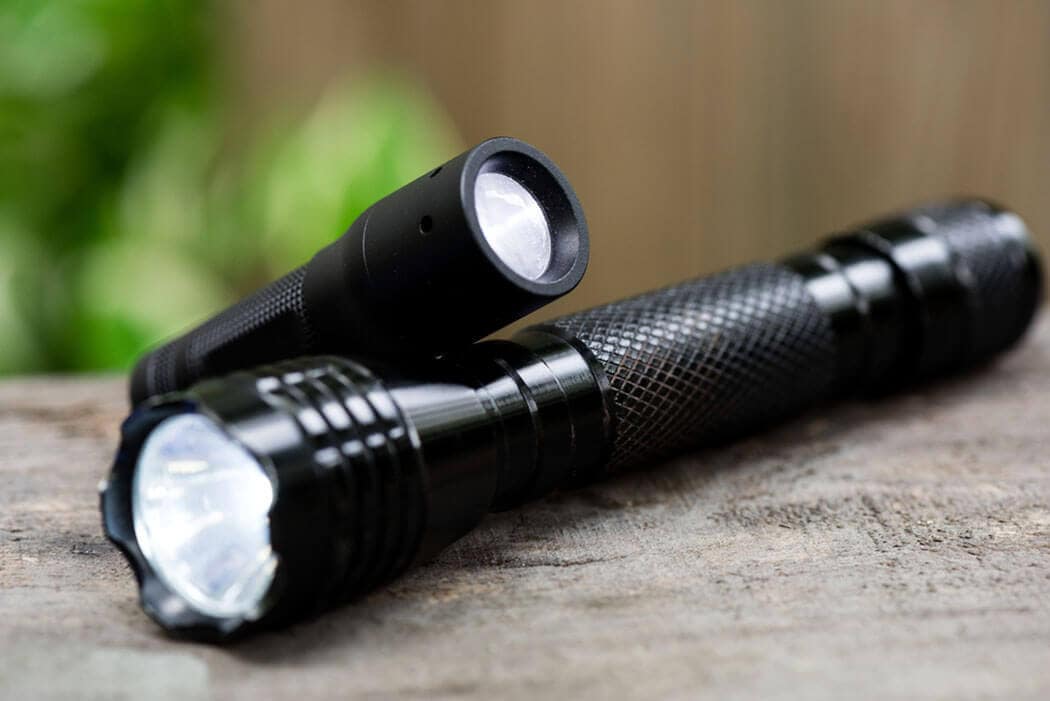
A tactical flashlight is fundamentally a high-performance lighting tool engineered with specific characteristics to meet the rigorous demands of professional users, such as law enforcement, military personnel, and security professionals, as well as civilians who prioritize preparedness and self-reliance. These flashlights are built to withstand harsh conditions, provide superior illumination, and offer user control that standard flashlights simply cannot match. Unlike the vast global flashlight market, projected to expand from $3.2 billion in 2021 to over $6.4 billion by 2033, driven by a steady CAGR of 5.95% [Grand View Research, 2023], the niche of tactical flashlights is characterized by its focus on durability and tactical functionality.
Key Distinctions from Standard Flashlights
The primary divergence lies in their construction and intended purpose. Standard flashlights are typically made from plastic or less durable metals, designed for casual use like finding items in a dark room or navigating a power outage. Their illumination is often less intense, and they lack the robust features needed for rigorous application. Tactical flashlights, on the other hand, are constructed from materials like aircraft-grade aluminum, feature impact-resistant lenses, and are designed for superior output and durability. As noted in industry insights, "Tactical flashlights are purpose-built lighting tools designed for professional and emergency use. Unlike standard flashlights, tactical LED flashlights feature specific design elements that set them apart" [Source: Various Industry Reports]. This emphasis on durable materials ensures they can endure significant abuse.
The Philosophy Behind Tactical Design: Reliability, Performance, and User Control
The design philosophy behind tactical flashlights centers on three core tenets: reliability, performance, and user control. Reliability ensures the light will function when needed most, regardless of environmental challenges. Performance is measured by its potent illumination capabilities, allowing users to see clearly, identify potential threats, or signal for help over significant distances. User control emphasizes intuitive operation, enabling rapid activation and mode switching, often with a single hand, which is crucial in dynamic situations. This focus on user control is why "More than 98% of law enforcement respondents said they use a flashlight or weapon light on duty," a testament to their indispensable role in professional fields [National Tactical Officers Association].
Essential Features of a True Tactical Flashlight (and Why They Matter)
The excellence of a tactical flashlight arises from an amalgamation of distinct features, each carefully crafted to boost its functionality and efficiency in challenging situations. Gaining insight into these elements is crucial for fully recognizing their worth.
High-Intensity Output (Lumens): More Than Just Brightness
Lumens are the standard measure of a flashlight's brightness, and tactical models typically boast significantly higher lumen outputs than standard ones. While a typical household flashlight might produce 50-100 lumens, tactical versions can range from several hundred to several thousand lumens. This intense bright light is not just for seeing further; it can be used tactically. For instance, rapid advancements in LED technology have led to "dual-beam technology to enhance peripheral vision and depth perception by approximately 40.2%" [Fenix Flashlights, 2024], with advanced multipurpose professional-grade LED torches capturing significant market demand since 2024. This powerful beam serves to illuminate large areas, identify targets at a distance, and, when used with specific patterns like strobe, can create disorientation. The varying brightness levels and brightness settings offer crucial adaptability for different situations.
Robust Durability: Built to Withstand the Extremes
Tactical flashlights are built to endure. They are typically constructed from anodized aluminum alloys, often specified as aircraft-grade aluminum or weapon-grade, making them exceptionally strong and resistant to corrosion. They are engineered to withstand significant impact from drops, often rated for falls from several meters onto concrete. Furthermore, many tactical flashlights feature high IP (Ingress Protection) ratings, indicating their resistance to dust and water, making them reliable even in adverse weather or when submerged. This robust construction ensures they remain functional even in harsh conditions when other tools might fail, making them a truly high-performance, rugged, and reliable tool.
Versatile Lighting Modes: Control for Every Scenario
Beyond a simple on/off function, tactical flashlights usually offer multiple output modes. These commonly include a high-output setting for maximum illumination, a medium setting for general use to conserve battery, and a low setting for discreet illumination or reading. Crucially, most tactical lights feature a strobe mode. This rapid flashing can be highly disorienting, used to deter an attacker, signal for help, or momentarily incapacitate a threat. Some may also include an SOS mode for emergency signaling. The ability to cycle through these modes quickly and intuitively is a hallmark of tactical design, providing essential control over the illumination.
Reliable Power Source and Extended Battery Life
Reliability in power is non-negotiable for a tactical flashlight. While some use standard disposable batteries like CR123A (known for their long shelf life and performance in extreme temperatures), many modern tactical flashlights utilize high-capacity rechargeable lithium-ion batteries. These batteries often offer excellent runtimes and can be conveniently recharged. The design ensures efficient power management, allowing the flashlight to maintain its high output for a usable duration, even in its brightest settings. Extended battery life is critical for prolonged use during emergencies or extended operations, ensuring your tool is ready when you need it most.
Ergonomics and Design: Optimized for Handling and Carry
The physical design of a tactical flashlight is as important as its internal components. They are often designed with a specific grip diameter that facilitates secure handling, even with gloves or when wet. Many feature a tail-cap switch, allowing for instantaneous activation and operation with a single hand, which is essential for those who may also be operating a firearm or other equipment. Some models incorporate a crenelated or "strike bezel," a serrated edge around the lens that can be used for self-defense as a last resort, or to break glass in emergencies. Their size and weight are typically balanced for portability, making them suitable for everyday carry (EDC) in a pocket or on a belt.
The Tactical Mindset: Beyond Just the Tool
Owning a tactical flashlight is only part of preparedness; cultivating a tactical mindset – one that emphasizes awareness, readiness, and strategic thinking – is equally crucial. The flashlight is a tool that amplifies these qualities.
Situational Awareness: The Foundation of Personal Safety
A core component of a tactical mindset is heightened situational awareness. This means being observant of your surroundings, recognizing potential threats, and understanding your environment. A tactical flashlight significantly enhances this by allowing you to clearly see your surroundings in low-light or no-light conditions, identify potential hazards, and recognize individuals or activities that may be out of place. By enabling a comprehensive view of your environment, it directly contributes to your ability to assess situations accurately and make informed decisions, gaining a crucial tactical advantage.
Preparedness and Readiness: Ensuring Your Flashlight is Always Functional
Readiness means having the right tools and ensuring they are operational. For a tactical flashlight, this translates to maintaining charged batteries, knowing its location, and being familiar with its operation. It involves establishing habits like checking battery levels regularly, performing function tests, and ensuring it’s accessible during daily routines or when preparing for specific events. This proactive approach ensures that when a situation demands its use, the flashlight is ready to perform without hesitation, a critical aspect of preparedness, especially in survival situations.
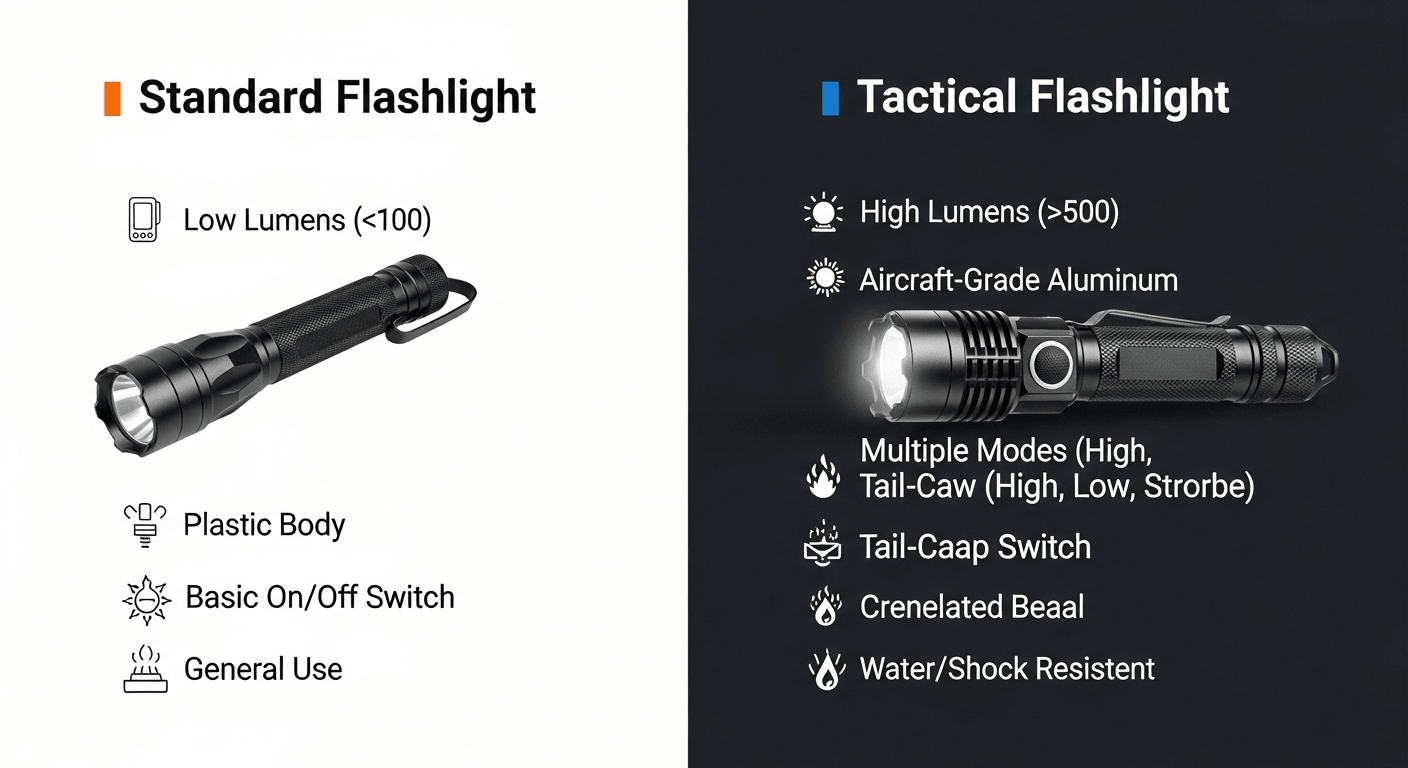 Key differences between a standard flashlight and a tactical flashlight, from construction and light output to specialized features.
Understanding the Escalation of Force: When and How to Respond
In situations where personal safety is threatened, understanding the concept of escalation of force is vital. This involves a tiered response, starting with de-escalation and non-lethal measures. A tactical flashlight can be an initial step in this escalation. Its disorienting light can deter an aggressor, providing an opportunity to escape or avoid further conflict. If necessary, its physical attributes can be employed, but always with an understanding of the legal and ethical implications of using force. The flashlight is a tool to de-escalate or escape, not a primary offensive weapon unless absolutely necessary during a physical confrontation.
How to Use a Tactical Flashlight: A Multifaceted Tool for Utility and Defense
The practical applications of a tactical flashlight extend far beyond simple illumination, encompassing everyday tasks, emergency responses, and personal security measures.
Everyday Utility and Emergency Preparedness
In daily life, a tactical flashlight is invaluable. It can whelp locate dropped items in dark vehicles or under furniture, inspect hard-to-reach areas for maintenance, navigate during power outages, or provide light for minor repairs. For emergency preparedness, its role is magnified. During natural disasters like hurricanes or earthquakes, when power grids fail, a reliable light source is essential for navigation, finding supplies, and signaling for help. Approximately 25% of households in North America engage in camping annually, making it the region with the highest participation rate worldwide [Outdoor Industry Association]. This popular outdoor activity underscores the demand for durable and reliable lighting for campers and hikers, where a tactical flashlight can serve as both an illumination tool and a safety device, proving itself a high-performance, rugged, and reliable tool in harsh conditions.
Enhancing Personal Security and Vigilance
Beyond general utility, a tactical flashlight significantly enhances personal security. Its bright light can illuminate dark pathways, parking lots, or alleys, deterring potential threats by making the user visible and aware. The ability to quickly direct a powerful beam of light can reveal hidden dangers or the presence of individuals lurking in shadows, allowing for early detection and avoidance. This proactive use of light serves as a non-confrontational method of increasing personal safety and vigilance in potentially risky environments, providing a crucial tactical advantage.
Defensive Application: A Layered Approach to Self-Preservation
When faced with an immediate threat, a tactical flashlight can serve as a critical component of a self-defense strategy. The intense light, especially when used in a sweeping motion, can overwhelm an attacker's vision (temporary blindness, flash blindness), causing temporary disorientation. This effect can last for several seconds, providing a window of opportunity to escape or create distance, seizing an opportunity for escape. The strobe mode can further exacerbate this disorientation. As one expert notes, "Tactical flashlights can be used in several ways as a self-defense tool. You can use it to stun and identify your attacker with its bright light if you are being threatened, or temporarily blind them so you can make a quick getaway" [Stunner Safety, 2025]. While effective even in broad daylight for disorienting an opponent, its primary utility lies in low-light scenarios. The crenelated bezel, while a last resort, can be used for striking in extreme physical confrontation scenarios, though its primary function is not combat.
Mastering Tactical Grip Techniques for Effectiveness
The effectiveness of a tactical flashlight in a defensive situation often hinges on proper grip and handling. The "tactical grip" involves holding the flashlight in the non-dominant hand, with the thumb positioned on the tail-cap switch for immediate activation. The flashlight body is typically held firmly between the index and middle fingers, extending forward past the fist. This allows for both illumination and the potential use of the bezel for striking without compromising grip stability. This method also keeps the dominant hand free for other actions, such as deploying a firearm or pepper spray. This mastery of grip ensures the flashlight can be used efficiently to gain a tactical advantage or secure a tactical position from a safe distance.
Integrating Your Tactical Flashlight with Other Self-Defense Tools
A tactical flashlight is most effective when viewed as part of a broader self-defense and preparedness toolkit, capable of working in conjunction with other tools to provide layered security.
Complementing Non-Lethal Options (e.g., Pepper Spray)
When combined with non-lethal options like pepper spray, a tactical flashlight offers enhanced defensive capabilities. The flashlight can be used to identify a threat and confirm its identity before deploying pepper spray, ensuring the spray is used appropriately. Furthermore, the disorienting effect of the light can momentarily incapacitate an attacker, making them more susceptible to the effects of pepper spray and increasing the likelihood of a successful deterrent. This combined approach allows for a graduated response, starting with less-lethal methods before escalating if necessary, maximizing the opportunity for escape.
As a Companion to a Firearm (for target identification and threat assessment)
For those legally permitted and trained to carry firearms, a tactical flashlight is an indispensable companion. More than 98% of law enforcement officers report using a flashlight or weapon light on duty, highlighting their professional necessity for target identification and threat assessment in low-light conditions [National Tactical Officers Association]. A handheld tactical flashlight can illuminate a scene, allowing the user to positively identify targets and assess threats before engaging with a firearm, providing a critical tactical advantage. Alternatively, weapon-mounted lights (WMLs) offer integrated illumination and aiming solutions. For handheld lights, mastering the technique to transition seamlessly from the flashlight to the firearm is a critical skill for effective tactical deployment in high-stakes situations.
Choosing the Right Tactical Flashlight for Your Needs
With a wide array of tactical flashlights available, selecting the appropriate model requires careful consideration of individual needs, intended uses, and performance specifications.
Assessing Your Primary Use Case: EDC, Home Defense, Outdoor Adventure, Professional
The first step in choosing a tactical flashlight is to identify your primary use case. If it's for Everyday Carry (EDC), a compact, lightweight, and durable model with a good balance of brightness and battery life is ideal. For home defense, a powerful light with a high lumen count and a tactical strobe feature is beneficial for dealing with potential threats. Outdoor enthusiasts might prioritize extreme durability, long runtime, and potentially features like red-light modes for preserving night vision, essential in survival situations. Professionals in law enforcement or security will likely seek ruggedness, reliability, and specific operational features like tail-cap momentary-on functionality. The U.S. flashlights market size, valued at USD 546.83 million in 2024, with expectations to reach USD 777.65 million by 2032 at a CAGR of 4.50% [Fortune Business Insights, 2024], shows the significance of this market.
Key Specifications to Prioritize: Lumens, Runtime, Size, Weight
When comparing models, pay close attention to key specifications. Lumens indicate brightness; while more is often better for a powerful beam and creating temporary blindness, consider the practical application. High lumens are great for distance and disorientation, but lower brightness levels are useful for conserving battery and nuanced tasks. Runtime is crucial – how long will the flashlight operate on its various brightness settings? Ensure it meets your expected usage duration. Size and weight are critical for comfort and portability, especially for EDC or prolonged outdoor use. A flashlight that is too large or heavy may be left behind, negating its utility, even if made from durable materials like aircraft-grade aluminum.
Budget Considerations: Balancing Performance with Affordability
Tactical flashlights span a wide price range. While high-end models offer premium materials, advanced features, and superior durability, more affordable options can still provide excellent performance for many users. The key is to find a balance. Invest in reputable brands known for quality and reliability. Remember that a tactical flashlight is an investment in safety and preparedness. While the overall flashlight market continues its steady growth, understanding your budget allows you to prioritize features that are most important for your specific needs without overspending on a high-performance, rugged, and reliable tool.
The Strike Bezel: A Tool of Last Resort
The "strike bezel," often referred to as a "crenelated bezel," is a distinctive feature on many tactical flashlights. While its serrated design might suggest offensive capabilities, its primary function is not as a primary weapon. Instead, it serves as a secondary tool, primarily for breaking glass in emergency egress situations or as a desperate measure in a physical confrontation when all other options have failed. Using the bezel for focused strikes means the user is in extremely close quarters, a situation the flashlight's powerful beam and disorientation capabilities are designed to help the user avoid. Relying on the bezel for defense is often a sign that the situation has escalated beyond what the flashlight's illumination and disorienting features can manage. It's crucial to understand that its use for striking can cause significant damage, and its application should be reserved for dire circumstances with full awareness of potential legal ramifications.
Conclusion: Illuminating Your Preparedness and Potential
The tactical flashlight has transcended its role as a mere illumination device to become an indispensable tool for preparedness, personal security, and professional efficacy. Its robust construction, often featuring aircraft-grade aluminum, its bright light output, versatile brightness levels, and ergonomic design combine to offer a tangible tactical advantage in a wide spectrum of situations, from everyday challenges to critical emergencies and survival situations. By understanding what defines a tactical flashlight and mastering its myriad uses – from utility and signaling to defensive applications against potential threats – individuals can significantly enhance their situational awareness, personal safety, and overall readiness.
Choosing the right tactical flashlight requires a clear understanding of one's intended applications, prioritizing key specifications like lumens, runtime, and durability. Whether for EDC, home defense, outdoor adventures, or professional duty, a high-performance, rugged, and reliable tool like a tactical flashlight can empower you. Remember, while its features like temporary blindness and a powerful beam offer defense, proper training and a sound tactical mindset are essential for its effective and responsible use, ensuring you can navigate darkness and uncertainty with confidence.
FAQs
What exactly makes a flashlight “tactical”?
A tactical flashlight is built for reliability, durability, and defensive use, not just illumination. It typically features high lumen output, rugged construction, and easy one‑handed operation. Many also include strike bezels or strobe modes designed for emergency or self‑defense situations.
How is a tactical flashlight different from a regular flashlight?
Regular flashlights focus on general household use, while tactical models prioritize performance under stress. They’re brighter, tougher, and designed for fast activation with features like tail‑switch controls and weapon‑mount compatibility. In short, they’re built to work when conditions are bad and time matters.
Do I need a tactical flashlight for everyday carry (EDC)?
You don’t need one, but many people prefer them because they’re compact, extremely bright, and reliable. A tactical light can help with daily tasks while also giving you a tool for emergencies, power outages, or unexpected threats. It’s one of the most practical EDC upgrades you can make.
How many lumens should a tactical flashlight have?
For general use, 300–500 lumens is plenty. For defensive or outdoor applications, 1,000+ lumens provides better blinding capability and long‑range visibility. More lumens isn’t always better though — battery life, beam pattern, and runtime matter just as much.
What’s the best way to hold a tactical flashlight for self‑defense?
Most people use either the Harries, FBI, or neck‑index technique depending on their training and whether they’re pairing the light with a firearm. The key is maintaining control, keeping the beam directed away from your body, and using momentary‑on to avoid giving away your position. Practice is more important than the specific technique.
Can I mount a tactical flashlight on a firearm?
Yes, many tactical flashlights are designed to attach to rifles or handguns using Picatinny or M‑LOK mounts. Just make sure the light is rated for weapon use — recoil can destroy lights not built for it. Always check your local laws before adding weapon accessories.
Are tactical flashlights legal to carry?
In most places, yes. Tactical flashlights are considered tools, not weapons. However, some regions restrict aggressive strike bezels or certain self‑defense uses. If you plan to travel with one, check local regulations to avoid issues.
What materials should I look for in a tactical flashlight?
Aircraft‑grade aluminum is the gold standard because it’s lightweight, durable, and impact‑resistant. Look for IPX water‑resistance ratings, tempered glass lenses, and quality switches. Cheaper plastics tend to crack or fail under stress.
What’s the difference between spot and flood beams?
A spot beam focuses light into a tight, long‑distance beam — ideal for searching or identifying threats. A flood beam spreads light over a wider area, which is better for close‑range tasks or room clearing. Many tactical lights offer hybrid or adjustable beams for versatility.
How do I use the strobe mode on a tactical flashlight?
Strobe mode is designed to disorient an attacker or signal for help. It’s usually activated with a double‑tap or secondary switch. Use it sparingly — it drains the battery quickly and can be overwhelming in confined spaces.
How long do tactical flashlight batteries last?
Runtime varies widely based on brightness settings and battery type. Rechargeable lithium‑ion cells (like 18650 or 21700) offer the best balance of power and longevity. Always carry a backup battery if you rely on your light for duty or outdoor use.
Are rechargeable tactical flashlights better than battery‑powered ones?
Rechargeables are more cost‑effective and eco‑friendly, and they usually deliver higher output. Disposable batteries are better for long‑term storage or emergency kits because they don’t self‑discharge as quickly. Many users keep both options depending on the mission.
How do I maintain a tactical flashlight?
Keep the lens clean, check O‑rings for wear, and recharge or replace batteries regularly. If your light is waterproof, rinse it after exposure to saltwater or mud. A little maintenance ensures your flashlight works when you actually need it.
What size tactical flashlight should I buy?
Compact (EDC) lights are great for pocket carry, while mid‑size lights offer better grip and runtime. Larger duty lights provide maximum brightness and durability but are less convenient to carry. Choose based on how you plan to use it — not just the specs.