Listen to this article
Table of Contents
- Quick Answer: What Are the Main Types of Pistols?
- Pistol Types at a Glance
- What Is a Pistol?
- Semi-Automatic Pistols
- Striker-Fired Pistols
- Hammer-Fired Pistols
- Single-Action Pistols
- Double-Action and DA/SA Pistols
- Revolvers vs. Pistols
- Full-Size Pistols
- Compact Pistols
- Subcompact and Micro-Compact Pistols
- Duty Pistols
- Concealed Carry Pistols
- Competition Pistols
- Training Pistols and Rimfire Pistols
- How to Choose the Right Type of Pistol
- Recommended Gear to Pair With a Pistol
- References and Further Reading
- Bottom Line
- FAQs
Types of Pistols Explained: A Practical Guide to Handgun Styles, Actions, and Sizes
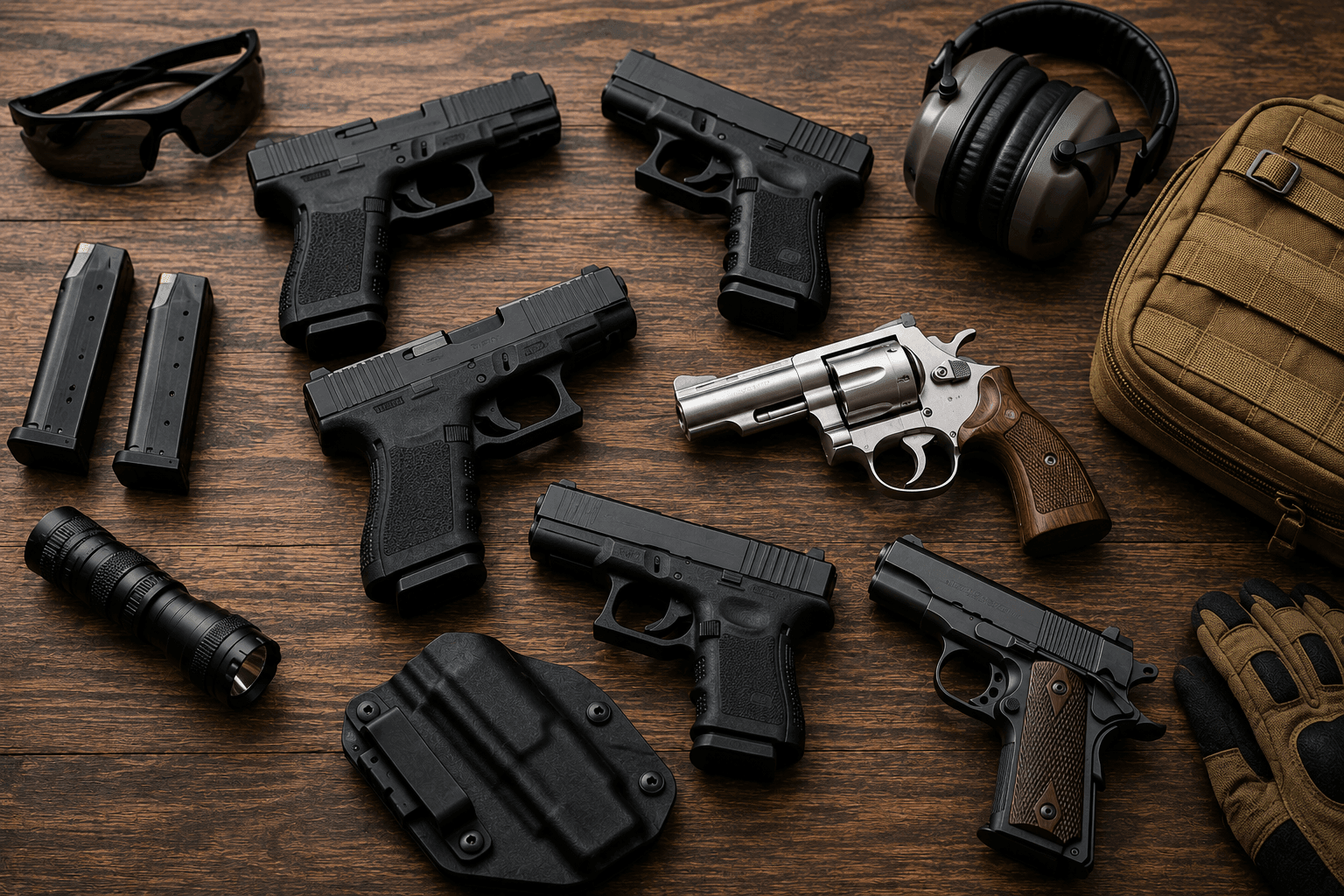
Types of pistols can be grouped three main ways: by how they operate, by their size, and by their intended use. The most common pistol categories include semi-automatic pistols, striker-fired pistols, hammer-fired pistols, single-action pistols, double-action pistols, full-size pistols, compact pistols, subcompact pistols, micro-compact pistols, duty pistols, concealed carry pistols, competition pistols, and training pistols. Revolvers are technically a separate type of handgun, but they are often included in broader handgun comparisons because many buyers compare them against pistols.
For law enforcement, security, first responders, and responsible civilian shooters, the best pistol is not just the one with the best spec sheet. It is the handgun that fits the mission, fits the shooter, works with the right holster, and can be trained with consistently.
Quick Answer: What Are the Main Types of Pistols?
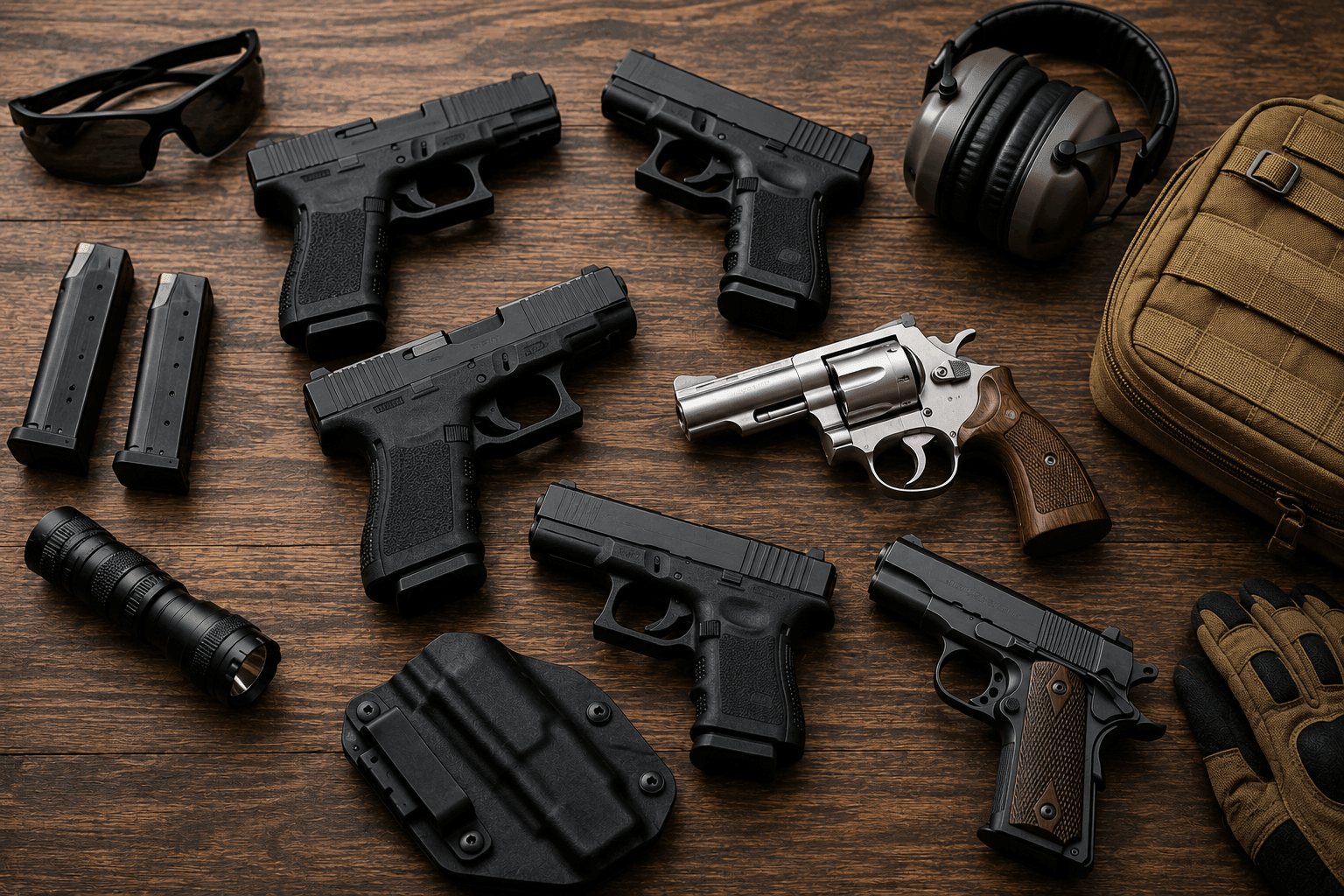
The main types of pistols are semi-automatic pistols, striker-fired pistols, hammer-fired pistols, single-action pistols, double-action pistols, full-size pistols, compact pistols, subcompact pistols, micro-compact pistols, duty pistols, concealed carry pistols, and competition pistols. These categories often overlap. For example, a concealed carry handgun can also be a striker-fired semi-automatic compact pistol.
Pistol Types at a Glance
| Pistol Type | What It Means | Best Fit | Main Tradeoff |
|---|---|---|---|
| Semi-Automatic Pistol | Uses a magazine and cycles the next round after each shot | Duty, carry, home defense, range | Depends on reliable magazines and regular maintenance |
| Striker-Fired Pistol | Uses an internal striker instead of an exposed hammer | Modern duty and concealed carry | Trigger feel varies by model and requires safe handling discipline |
| Hammer-Fired Pistol | Uses a hammer to strike the firing pin | Traditional duty, tactical, competition, range | Controls and trigger systems can be more complex |
| Full-Size Pistol | Larger frame, longer grip, longer slide | Duty, home defense, range training | Harder to conceal |
| Compact Pistol | Balanced size for carry and control | Plainclothes, off-duty, everyday carry | Less grip and weight than full-size models |
| Subcompact or Micro-Compact | Small pistol designed for concealment | Deep concealment, backup carry, warm-weather carry | More felt recoil and less grip surface |
| Competition Pistol | Optimized for speed, accuracy, and control | Matches and range performance | May not be ideal for duty or daily carry |
| Training Pistol | Often rimfire or lower-recoil platform for fundamentals | Marksmanship practice and new-shooter development | May not mirror duty recoil or defensive performance |
What Is a Pistol?
A pistol is a handgun designed to be fired with one or both hands. In modern use, the word usually refers to a semi-automatic handgun that feeds ammunition from a detachable magazine. Revolvers are also handguns, but they use a rotating cylinder instead of a magazine.
In everyday conversation, many people use “pistol” and “handgun” interchangeably. For a buyer’s guide, it is more helpful to think of a pistol by three questions:
- How does it operate? Striker-fired, hammer-fired, single-action, double-action, or another system.
- How large is it? Full-size, compact, subcompact, or micro-compact.
- What is it for? Duty, concealed carry, home defense, range training, competition, or backup carry.
Semi-Automatic Pistols
A semi-automatic pistol uses the energy from a fired round to cycle the slide, eject the spent casing, chamber the next round, and reset the firing system. It normally feeds from a detachable magazine inserted into the grip.
Semi-automatic pistols are the dominant choice for modern duty, concealed carry, home-defense, and range use because they usually offer more capacity than revolvers, faster reloads, thinner profiles, and broad holster and accessory support.
Why shooters choose semi-automatic pistols
- Higher magazine capacity than most revolvers
- Faster reloads with spare magazines
- Wide selection of sizes and calibers
- Strong support for holsters, pistol lights, optics, and magazine carriers
- Common choice for law enforcement and security duty use
What to watch for
- Magazine quality matters for reliability
- Slides, recoil springs, sights, and magazines require inspection
- Smaller semi-automatic pistols can be harder to shoot well
- Holster fit must match the exact pistol and accessory setup
Striker-Fired Pistols
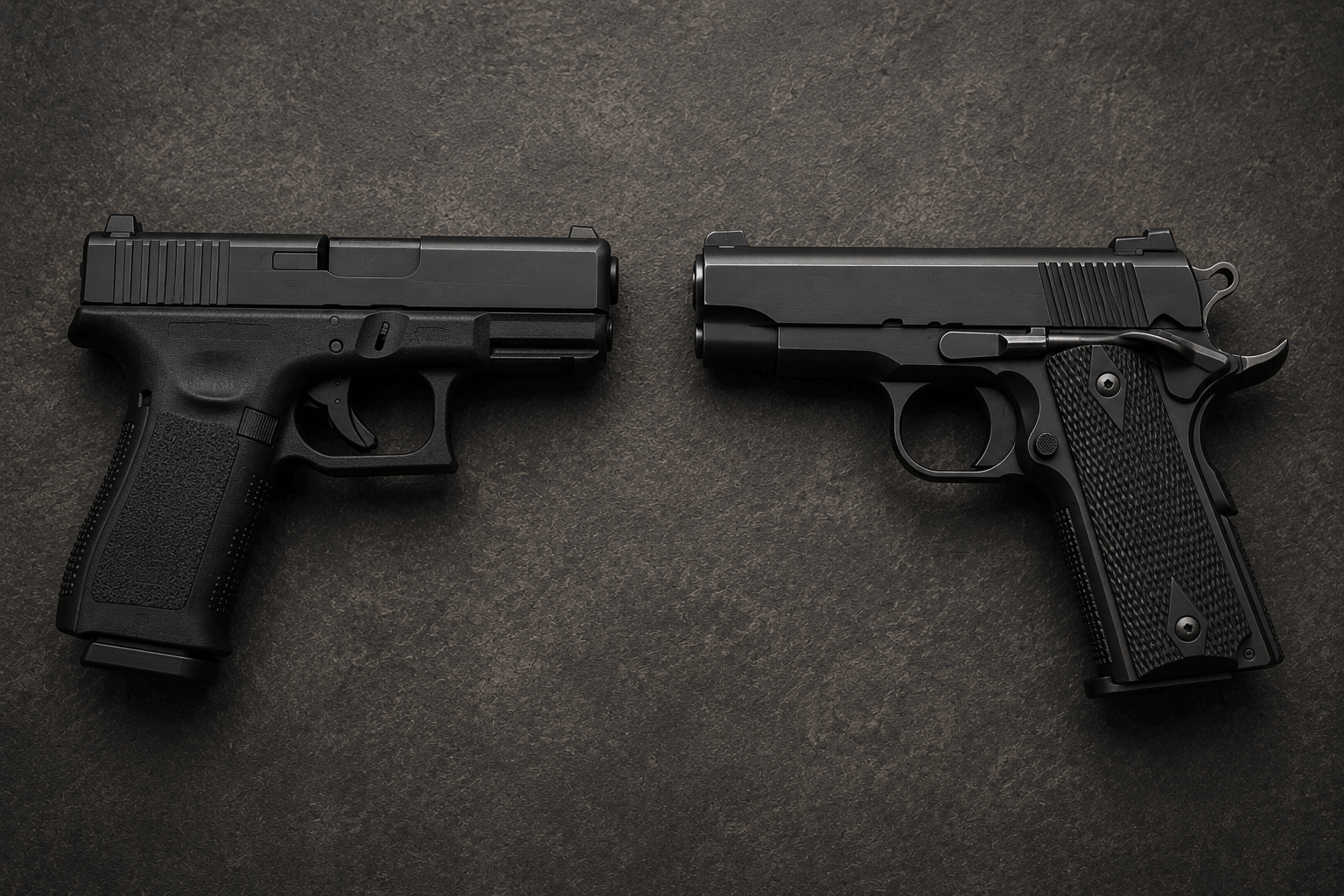
A striker-fired pistol uses an internal striker rather than an exposed hammer. Many modern polymer-frame duty pistols and concealed carry pistols use striker-fired systems because they are simple to operate and provide a consistent trigger press from shot to shot.
Striker-fired pistols are popular with agencies and individual users because the controls are usually streamlined. For many shooters, the appeal is consistency: the trigger press typically feels the same on the first shot and follow-up shots.
Best for
- Modern duty pistols
- Concealed carry pistols
- Off-duty and plainclothes carry
- Users who want a consistent trigger system
- Departments standardizing one platform across many shooters
Common characteristics
- Internal striker-fired mechanism
- Consistent trigger feel
- Often built on polymer frames
- Available in full-size, compact, subcompact, and micro-compact models
- Commonly supported by duty holsters, IWB holsters, magazine pouches, optics plates, and weapon lights
Hammer-Fired Pistols
A hammer-fired pistol uses a hammer to strike the firing pin. Some hammer-fired pistols have visible external hammers, while others use internal or partially enclosed designs. Depending on the model, a hammer-fired pistol may be single-action, double-action, or double-action/single-action.
Hammer-fired pistols remain popular among shooters who like a traditional trigger feel, visible hammer position, manual safeties, decockers, or metal-frame construction. They are common in range, competition, tactical, and some duty applications.
Best for
- Experienced handgun users
- Shooters who prefer traditional controls
- Range and competition use
- Duty users trained on DA/SA or single-action platforms
Key tradeoffs
- Controls vary significantly by model
- Manual safeties and decockers require training
- DA/SA pistols have different first-shot and follow-up trigger pulls
- Metal-frame models may be heavier to carry but softer shooting at the range
Single-Action Pistols
A single-action pistol releases an already-cocked hammer or striker when the trigger is pressed. The trigger performs one primary action: releasing the firing mechanism. Classic 1911-style pistols are the best-known example of a single-action semi-automatic pistol.
Single-action pistols are often praised for crisp triggers and excellent precision. The tradeoff is that they typically require more attention to manual safeties, carry condition, and user training.
Best for
- Range accuracy
- Competition shooting
- Experienced users who train with manual safeties
- Shooters who prioritize trigger feel
Double-Action and DA/SA Pistols
A double-action pistol can cock and release the hammer with a single trigger press. In a traditional double-action/single-action pistol, the first trigger press is usually longer and heavier. After the slide cycles, follow-up shots are typically shorter and lighter in single-action mode.
This system can be very effective, but it requires practice. Shooters need to train through the transition between the longer first trigger pull and the shorter follow-up trigger pull.
Best for
- Trained duty users
- Shooters who prefer a longer first trigger press
- Users comfortable with decockers or manual safeties
- Range shooters who like traditional hammer-fired systems
Revolvers vs. Pistols
A revolver is a handgun that stores ammunition in a rotating cylinder. A modern pistol usually stores ammunition in a detachable magazine. While revolvers are not pistols in the strict technical sense, they are often compared with pistols because both are handguns.
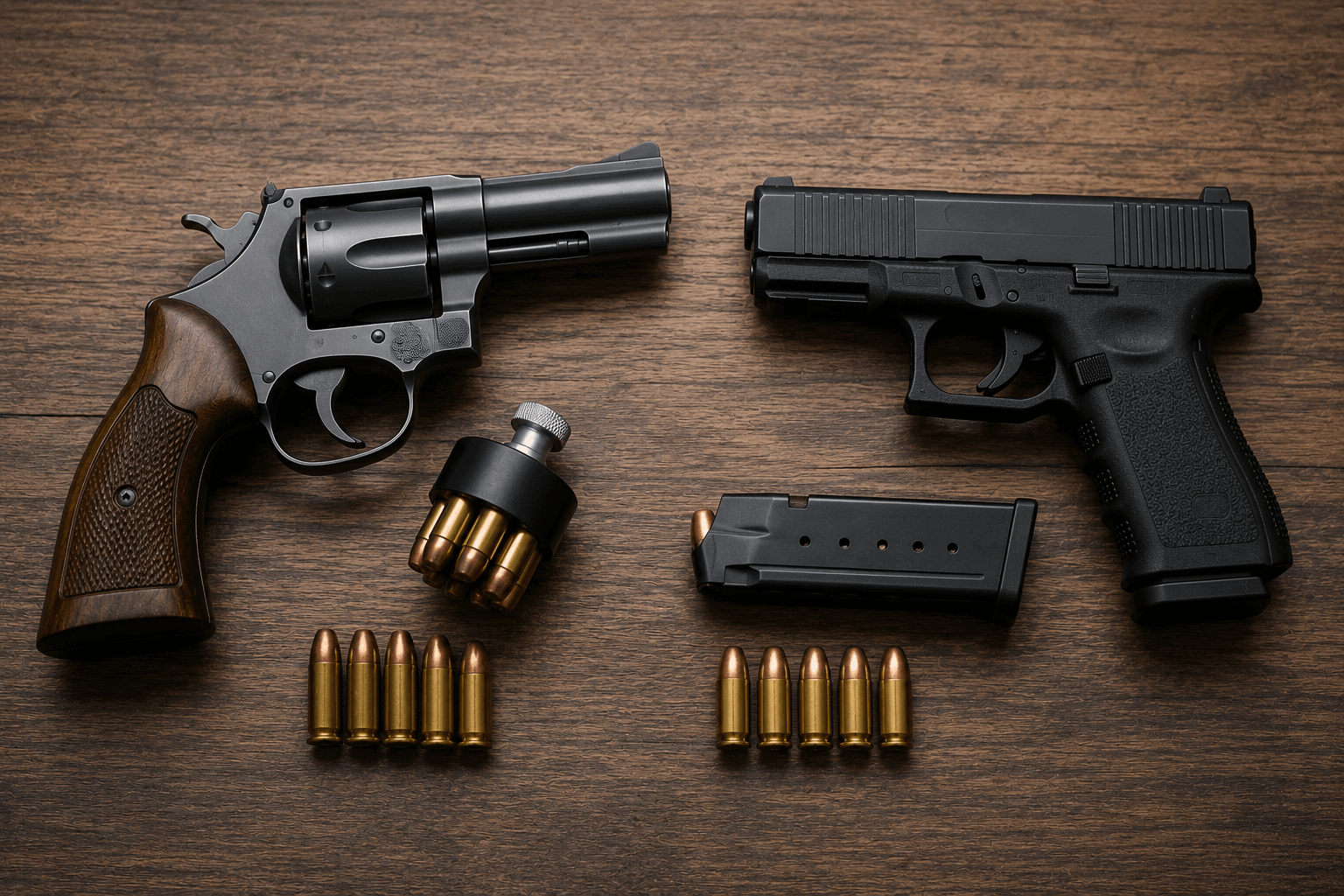
| Feature | Semi-Automatic Pistol | Revolver |
|---|---|---|
| Ammunition storage | Detachable magazine | Rotating cylinder |
| Typical capacity | Usually higher | Usually lower |
| Reload speed | Fast with spare magazines | Slower without dedicated practice |
| Carry profile | Often flatter | Cylinder adds width |
| Common roles | Duty, carry, home defense, range | Backup carry, trail use, range, simple defensive setups |
Revolvers can be reliable and straightforward, but they usually have lower capacity and slower reloads. Small revolvers can also be surprisingly difficult to shoot well because they are light, have short sight radius, and often have heavier double-action triggers.
Full-Size Pistols
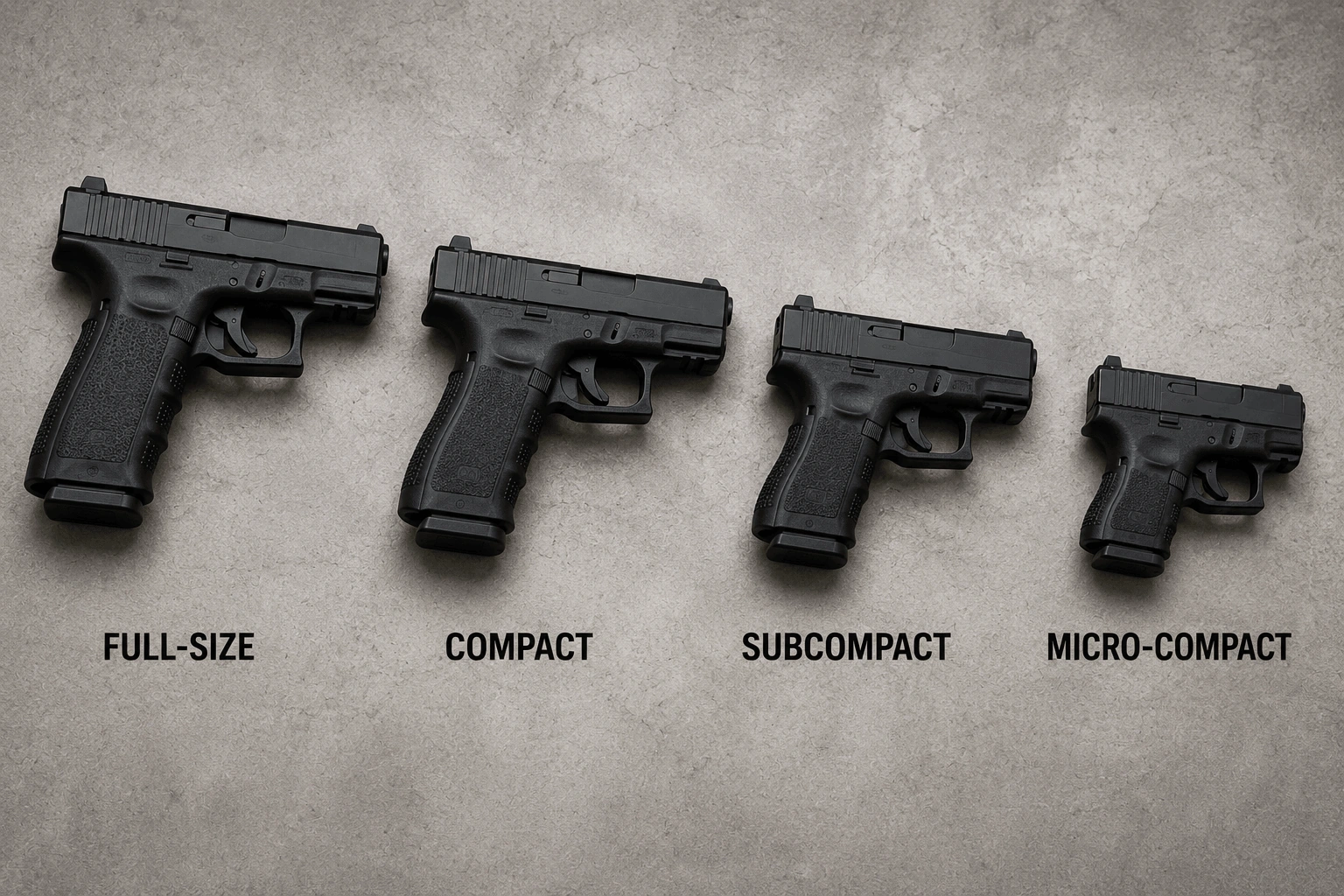
A full-size pistol has a larger frame, longer grip, longer slide, and greater weight than compact and subcompact pistols. These features usually make the handgun easier to control, easier to shoot accurately, and more comfortable during extended range sessions.
Full-size pistols are common for uniformed duty, home defense, and range training. Their main downside is concealment. A larger grip is easier to shoot but harder to hide under normal clothing.
Best for
- Uniformed duty carry
- Home defense
- Range training
- Competition
- Shooters who prioritize control and capacity
Compact Pistols
A compact pistol is smaller than a full-size handgun but usually large enough for many shooters to establish a strong two-hand grip. Compact pistols are one of the most versatile categories because they can work for concealed carry, plainclothes duty, off-duty carry, and home defense.
For many users, a compact pistol is the middle ground: easier to conceal than a duty-size handgun, but easier to shoot than a micro-compact pistol. A compact carry setup should still include a stable rigger or shooting belt and a secure holster designed for that exact firearm.
Best for
- Everyday carry
- Plainclothes professionals
- Off-duty law enforcement
- Security personnel who need a lower-profile setup
- General-purpose handgun owners
Subcompact and Micro-Compact Pistols
Subcompact pistols and micro-compact pistols are designed around concealment. They are smaller, lighter, and easier to carry discreetly than full-size and compact pistols.
The tradeoff is shootability. Smaller handguns often produce more felt recoil, offer less grip surface, and require more discipline in grip and trigger control. They can be excellent everyday carry tools, but they are not automatically easier to shoot just because they are easier to carry.
Best for
- Deep concealment
- Backup carry
- Warm-weather carry
- Low-profile everyday carry
Duty Pistols
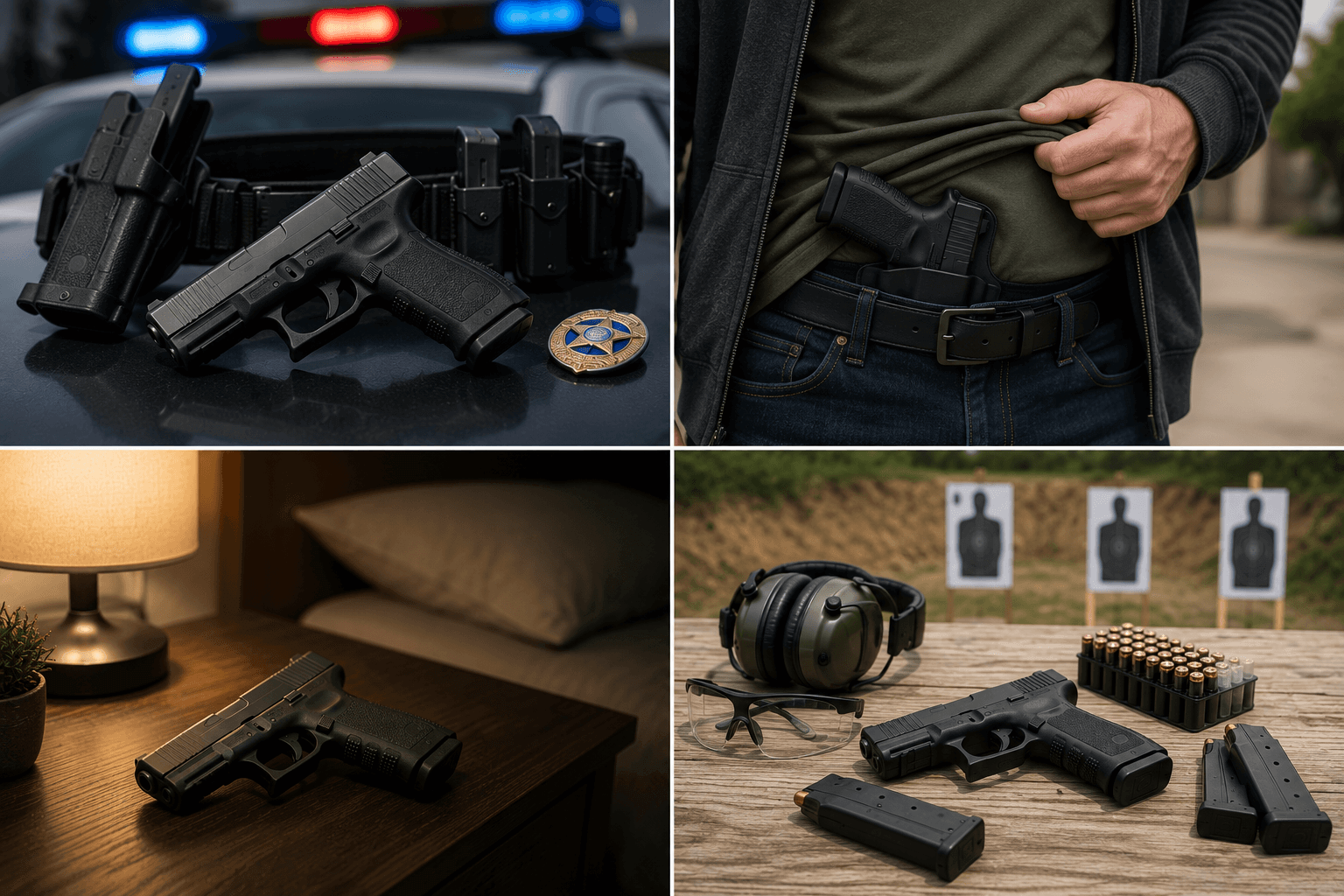
A duty pistol is a handgun selected for professional use by law enforcement officers, armed security, corrections, military personnel, or other public safety roles. Duty pistols are usually full-size or compact semi-automatic handguns chambered in a common service caliber.
For duty use, the pistol is only one part of the system. The holster, retention level, duty belt, duty pouches, weapon light, training program, and agency policy all matter.
What makes a good duty pistol?
- Reliable function with approved duty ammunition
- Compatibility with retention holsters
- Manageable recoil for fast, accurate follow-up shots
- Durable sights or optic compatibility
- Support for weapon lights if required
- Readily available magazines and replacement parts
- Easy maintenance for armorers or individual users
Professionals building a complete duty setup can also compare tactical duty gear such as belts, pouches, gloves, lights, and other loadout accessories.
Concealed Carry Pistols
A concealed carry pistol is selected around concealment, comfort, reliability, and practical accuracy. The best concealed carry pistol is not always the smallest one. A pistol that is too small may be harder to control, while a pistol that is too large may be uncomfortable enough that it gets left at home.
A good concealed carry setup includes the handgun, a secure holster that covers the trigger guard, a sturdy belt, spare magazines where appropriate, and clothing that supports safe concealment.
Concealed carry pistol priorities
- Safe holster fit
- Comfort during normal movement
- Reliable magazines
- Manageable recoil
- Practical accuracy at realistic distances
- Concealment with normal clothing
- Compliance with state and local laws
Competition Pistols
A competition pistol is optimized for speed, accuracy, and control in a match environment. Depending on the shooting sport and division, competition pistols may include extended controls, enlarged magazine wells, enhanced sights, red dot optics, longer barrels, compensators, or tuned triggers.
Competition features can make a pistol faster and easier to shoot on the range, but they do not automatically make it better for duty or concealed carry. Match pistols should be evaluated carefully before being used outside their intended role.
Training Pistols and Rimfire Pistols
Training pistols are used to build fundamentals such as grip, sight alignment, trigger control, follow-through, reloads, and safe handling. Rimfire pistols, commonly chambered in .22 LR, are popular for training because they offer lower recoil and lower ammunition cost.
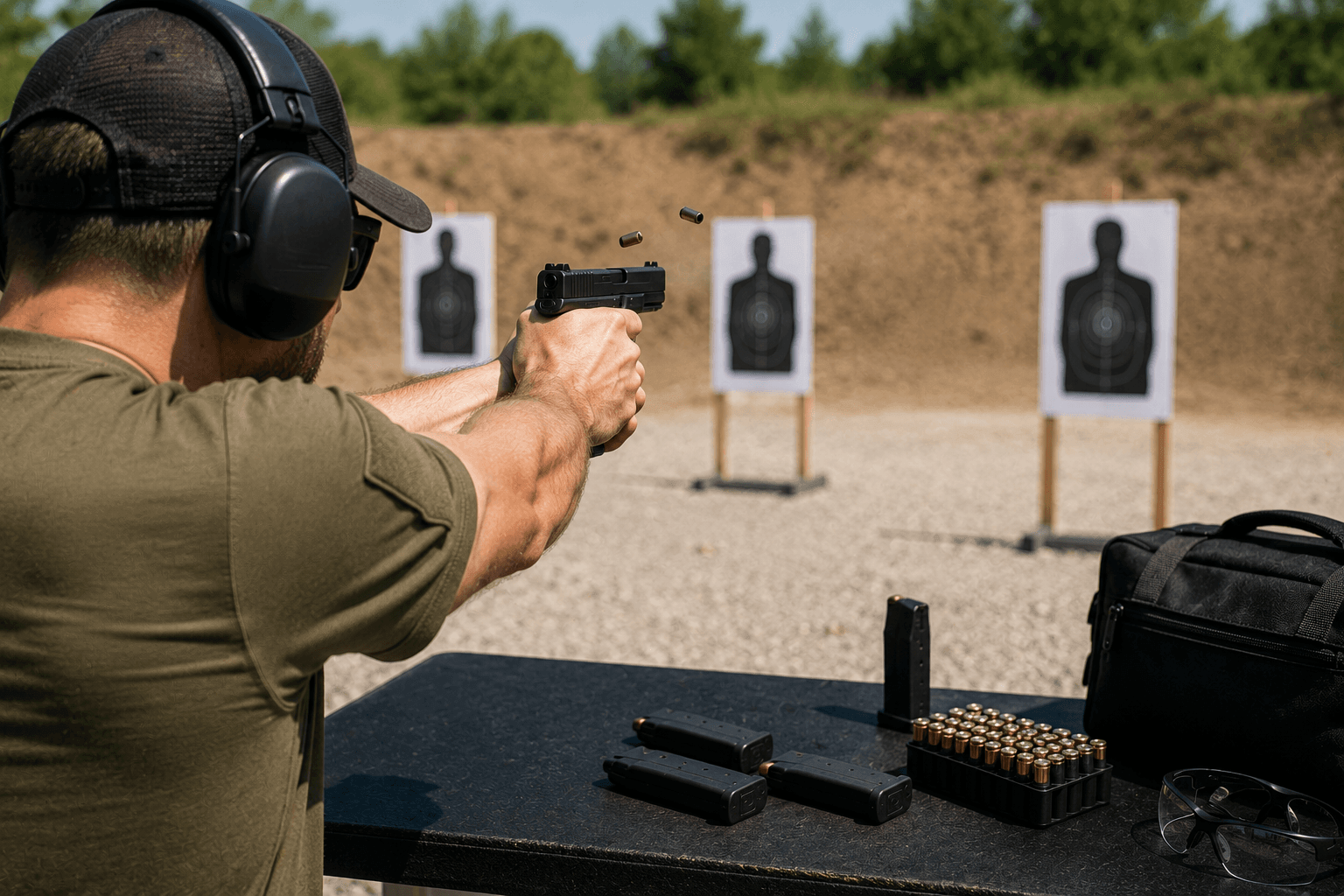
A rimfire pistol is usually not the same as a duty or defensive handgun, but it can help shooters develop confidence and mechanics before moving to a centerfire pistol.
How to Choose the Right Type of Pistol
To choose the right pistol, start with the role. A uniformed officer may prioritize retention holster compatibility, capacity, and weapon-light support. A plainclothes professional may need a compact pistol that conceals well but still shoots like a duty-capable handgun. A recreational range shooter may care more about trigger feel, sight radius, and recoil control.
Use this checklist before buying or setting up a pistol:
- Purpose: Duty, concealed carry, home defense, range, competition, or training.
- Fit: Grip size, trigger reach, sight picture, and control placement.
- Action type: Striker-fired, hammer-fired, single-action, double-action, or DA/SA.
- Size: Full-size, compact, subcompact, or micro-compact.
- Reliability: Function with intended magazines and ammunition.
- Holster support: Exact fit for the pistol, light, optic, and carry method.
- Accessory support: Magazines, sights, lights, optics plates, and maintenance parts.
- Training plan: The smaller or more complex the pistol, the more training matters.
- Legal and policy requirements: Follow all local laws, agency rules, and range requirements.
Recommended Gear to Pair With a Pistol
The handgun is only part of the setup. A practical pistol system also needs support gear that fits the job.
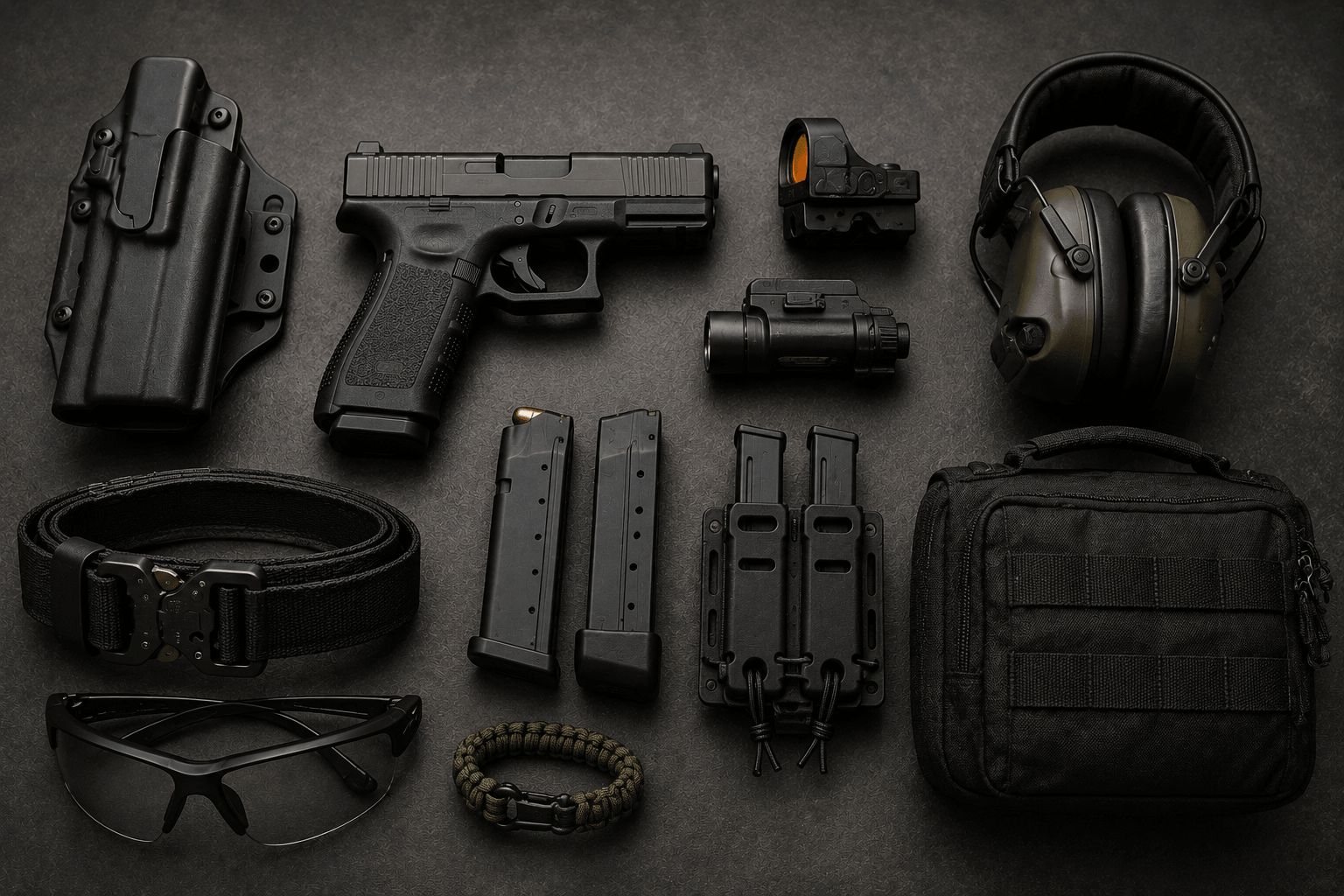
- Holster: Choose a holster made for the exact pistol and accessory configuration.
- Gun belt or duty belt: A stable duty belt or shooting belt supports the handgun, magazines, and related equipment.
- Magazine pouches: Duty pouches help keep spare magazines secure and accessible.
- Eye protection: Quality tactical eyewear is a range essential.
- Gloves: Tactical gloves can support duty work, range training, and gear handling.
- Range bag: A range bag organizes magazines, ammunition, hearing protection, tools, cleaning supplies, and targets.
- Weapon light: Pistol lights are common on duty and home-defense pistols, but they require a compatible holster and training.
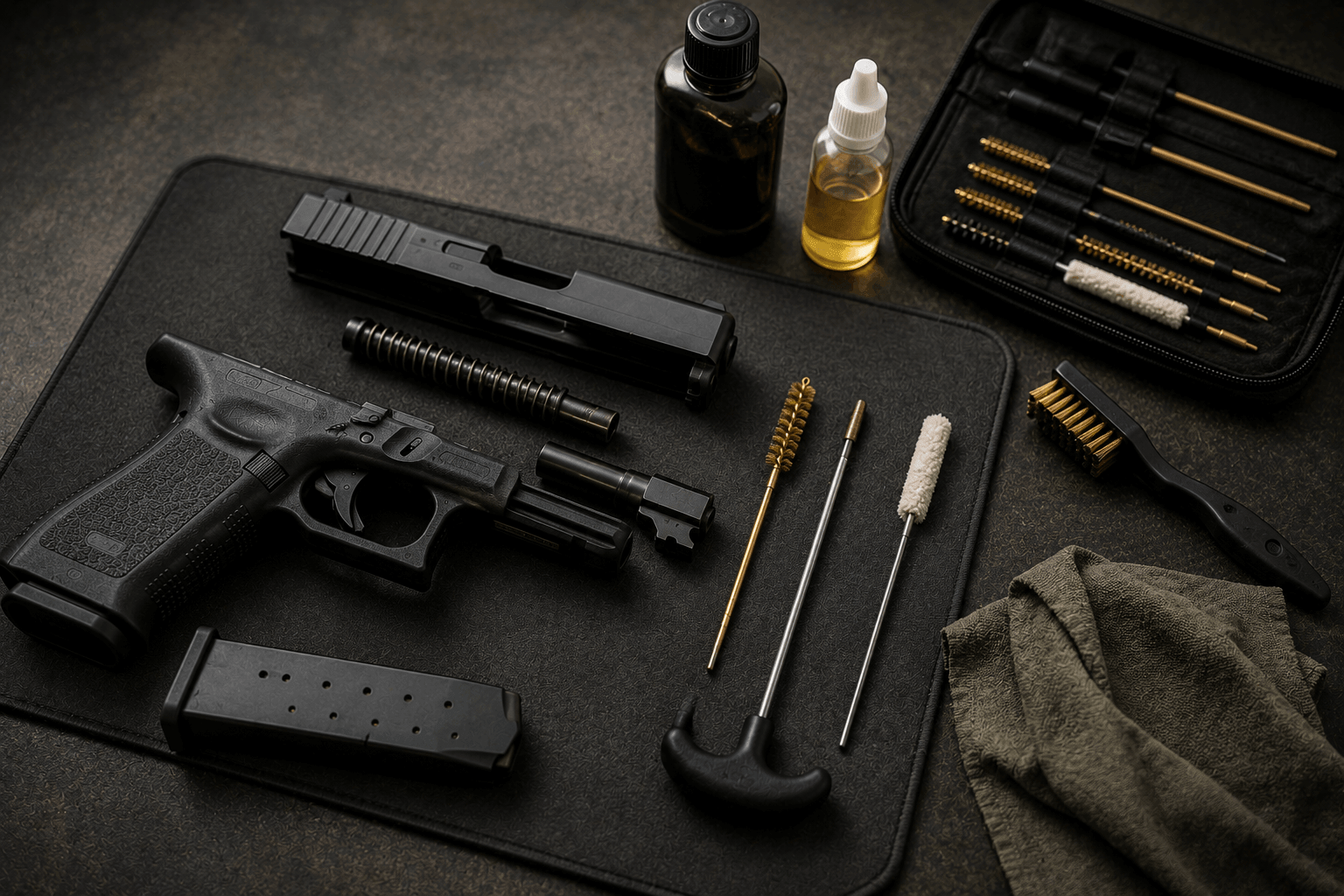
- Cleaning kit: Helps keep the pistol, magazines, and related parts maintained.
References and Further Reading
For legal definitions and technical standards, consult neutral primary or industry sources rather than relying only on informal terminology.
- 27 CFR § 478.11: Meaning of terms — federal definitions used in firearms regulations.
- SAAMI Standards — voluntary industry standards covering safety, reliability, and interchangeability for commercial firearms, ammunition, and components.
Bottom Line
The most important types of pistols are best understood by action, size, and purpose. Striker-fired semi-automatic pistols dominate modern duty and carry use. Hammer-fired pistols remain popular with shooters who prefer traditional controls and trigger systems. Full-size pistols are easier to shoot but harder to conceal. Compact pistols offer a strong balance of carry comfort and control. Subcompact and micro-compact pistols are easier to conceal but require more practice.
For professional, defensive, or serious range use, choose the pistol as part of a complete system: handgun, holster, belt, magazines, eye and ear protection, maintenance gear, and a consistent training plan.
FAQs
What are the main types of pistols?
The main types of pistols include semi-automatic pistols, striker-fired pistols, hammer-fired pistols, single-action pistols, double-action pistols, full-size pistols, compact pistols, subcompact pistols, micro-compact pistols, duty pistols, concealed carry pistols, competition pistols, and training pistols.
What is the difference between a pistol and a handgun?
A handgun is the broader category for firearms designed to be held and fired by hand. A pistol usually refers to a semi-automatic handgun that feeds from a magazine. Revolvers are also handguns, but they use a rotating cylinder instead of a detachable magazine.
What type of pistol is best for concealed carry?
Compact, subcompact, and micro-compact pistols are commonly used for concealed carry. Compact pistols are usually easier to shoot, while subcompact and micro-compact pistols are easier to conceal. The best choice depends on holster setup, clothing, body type, training level, and local laws.
What type of pistol is best for duty use?
Full-size and compact semi-automatic pistols are the most common choices for duty use. A good duty pistol should be reliable, compatible with a retention holster, manageable under recoil, easy to maintain, and supported by magazines, sights, lights, and approved accessories.
Are striker-fired pistols better than hammer-fired pistols?
Neither system is automatically better. Striker-fired pistols are popular because they are consistent and simple to operate. Hammer-fired pistols appeal to shooters who prefer traditional controls, visible hammer position, manual safeties, decockers, or specific trigger systems. Training and intended use matter more than the mechanism alone.
What is easier to shoot, a full-size pistol or a compact pistol?
A full-size pistol is usually easier to shoot because it has more grip surface, more weight, and a longer sight radius. A compact pistol is easier to conceal and carry, but it may have slightly more felt recoil and less grip area.
Are micro-compact pistols good for beginners?
Micro-compact pistols are easy to carry but are often harder to shoot well because they are small and light. Many beginners learn fundamentals more easily with a compact or full-size pistol before moving to a smaller concealed carry handgun.
What gear should I buy with a pistol?
Useful support gear includes a properly fitted holster, sturdy gun belt or duty belt, spare magazines, magazine pouches, eye protection, ear protection, range bag, cleaning kit, and a safe storage solution. Weapon lights and optics may also be useful depending on the pistol’s role.