Listen to this article
Table of Contents
- Introduction: Beyond the "Best Of" List – Your Lifestyle, Your Choice
- Understanding the Fundamentals: What Concealed Carry Means for You
- Deconstructing Your Lifestyle: Key Factors for Choosing a Concealed Carry Gun
- Your Daily Attire and Body Type: The Foundation of Concealment
- Comfort and Ergonomics: If It's Not Comfortable, You Won't Carry It
- Caliber and Recoil Management: Balancing Stopping Power and Control for Your Proficiency
- Magazine Capacity and State Restrictions: Maximizing Protection Within Legal Limits
- Safety Features: Manual Safeties vs. Passive Systems
- Reliability and Aftermarket Support: Long-Term Ownership Considerations
- Your Budget: Finding the Right Value for Your Investment
- The Holistic Concealed Carry System: Gun + Holster + Clothing
- Lifestyle Archetypes: Matching the Concealed Carry Gun to Your Life
- Key Features to Evaluate on Any Concealed Carry Gun
- Choosing the Best Concealed Carry Gun for 2026
- FAQs
The best concealed-carry guns for 2026 include the SIG Sauer P365/P365X, Springfield Hellcat, Glock 43X/48, and Smith & Wesson M&P Shield Plus. Your best choice depends on concealability, comfort, capacity, reliability, and how consistently you can carry and control it.
Introduction: Beyond the "Best Of" List – Your Lifestyle, Your Choice
Choosing a concealed carry handgun is a profoundly personal decision, one that extends far beyond a simple "best of" list. There are many good options on the market. The best pistol for a retired law officer in rural Montana is probably not the best for a software engineer in a big city. The true "best" concealed carry gun is the one that seamlessly integrates into your unique life, clothing, and daily routines. It's a tool that must be comfortable enough to carry consistently, reliable enough to trust implicitly, and effective enough to be a genuine asset in a self-defense scenario.
Why "Your Lifestyle" is the Ultimate Deciding Factor for a Concealed Carry Gun
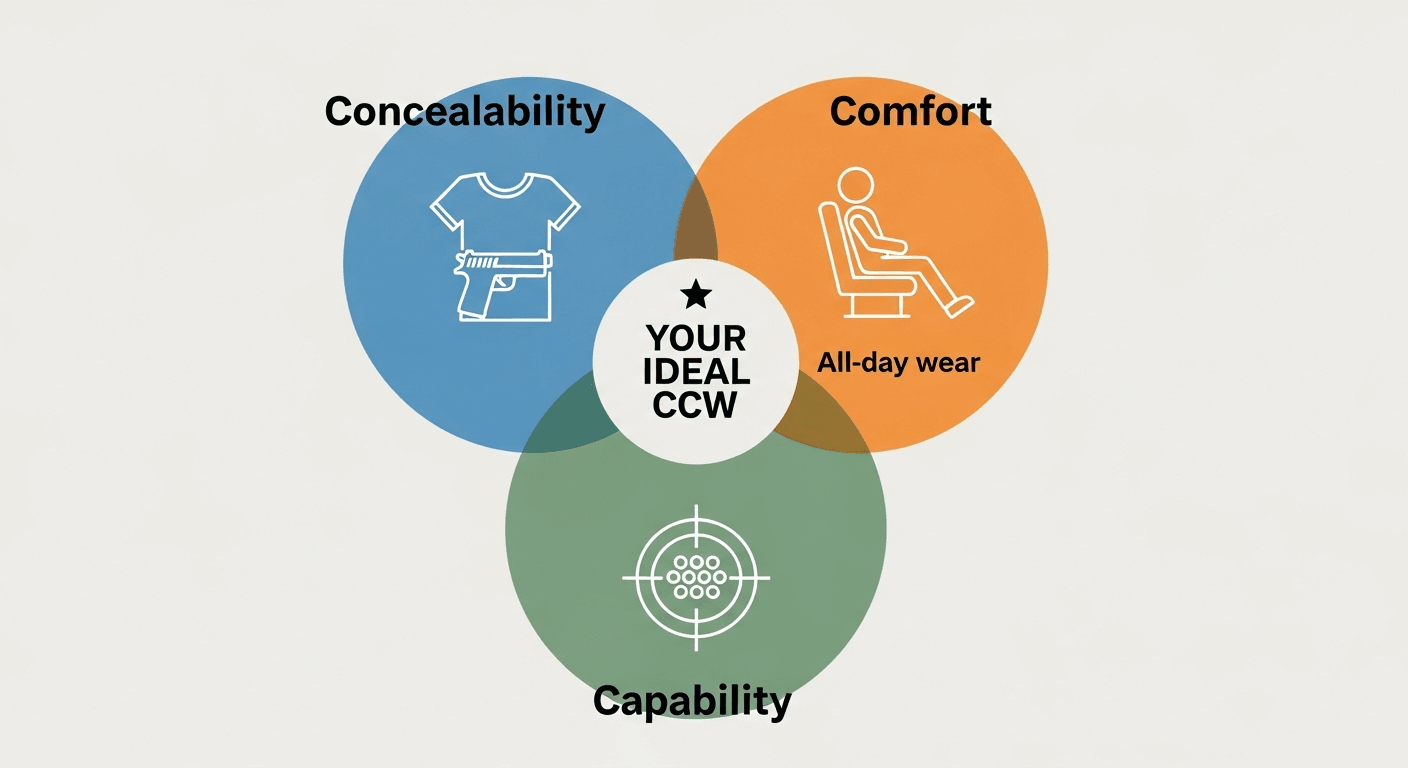
The firearm you choose must be an extension of your daily life, not an anchor that complicates it. Your profession, commute, body type, typical attire, and local climate all play critical roles. A handgun that is too large will be left at home, rendering it useless. A pistol with too much recoil for you to manage effectively is a liability. The goal is to find the perfect intersection of concealability, comfort, and capability that you can commit to carrying every single day. This philosophy transforms the search from "what's the best gun?" to "what's the best gun for me?"
What This Guide Will Cover: A Holistic Approach to CCW for 2026
This guide abandons the one-size-fits-all approach. Instead of just listing popular models, we will deconstruct the decision-making process, empowering you to make an informed choice. We will look at the basic rules of concealed carry. We will study important lifestyle factors that should help you choose. We will also check the best handguns by looking at different types of users. We will treat concealed carry not just as a gun, but as a complete system: the firearm, the holster, and your method of dress, all working in harmony.
Understanding the Fundamentals: What Concealed Carry Means for You
Before diving into hardware, it's crucial to understand the responsibilities and realities that come with the decision to carry a concealed firearm. This is a commitment that goes far beyond the initial purchase.
The Purpose of Concealed Carry: Self-Defense and Personal Responsibility
The primary purpose of carrying a concealed handgun is for personal protection. It is a last-resort tool for defending your life or the lives of others against a credible threat of grievous bodily harm or death. This is a significant responsibility, underscored by the fact that 72% of gun owners say they keep a firearm for protection. It's a commitment to being your own first responder, a decision supported by data showing an estimated 69,000 defensive gun use incidents happen each year in the United States. This responsibility demands a sober mindset, continuous training, and a deep understanding of conflict avoidance and de-escalation.
Navigating the Legal Landscape: Your Concealed Carry Permit and State Regulations
The right to carry a concealed firearm is governed by a complex patchwork of federal, state, and local laws. It is your absolute responsibility to understand and comply with the regulations in your jurisdiction. You need to know where you can and cannot carry legally. You should understand your state's laws about deadly force, like Castle Doctrine and Stand Your Ground. You must follow rules about magazine size and ammo types. Obtaining a concealed carry permit (where required) is just the first step; ongoing legal awareness is paramount.
Initial Considerations: The Commitment to Training, Practice, and Responsible Ownership
Owning a concealed carry pistol is not a passive activity. It demands a proactive commitment to safety, proficiency, and education. This means seeking professional training from qualified instructors, practicing regularly at the range to build and maintain skills, and storing your firearm securely when not in use. Your ability to safely handle, draw, and accurately fire your handgun under stress is a perishable skill that requires constant reinforcement.
Deconstructing Your Lifestyle: Key Factors for Choosing a Concealed Carry Gun
With the foundational responsibilities understood, we can now analyze the personal factors that will narrow down your handgun options.
Your Daily Attire and Body Type: The Foundation of Concealment
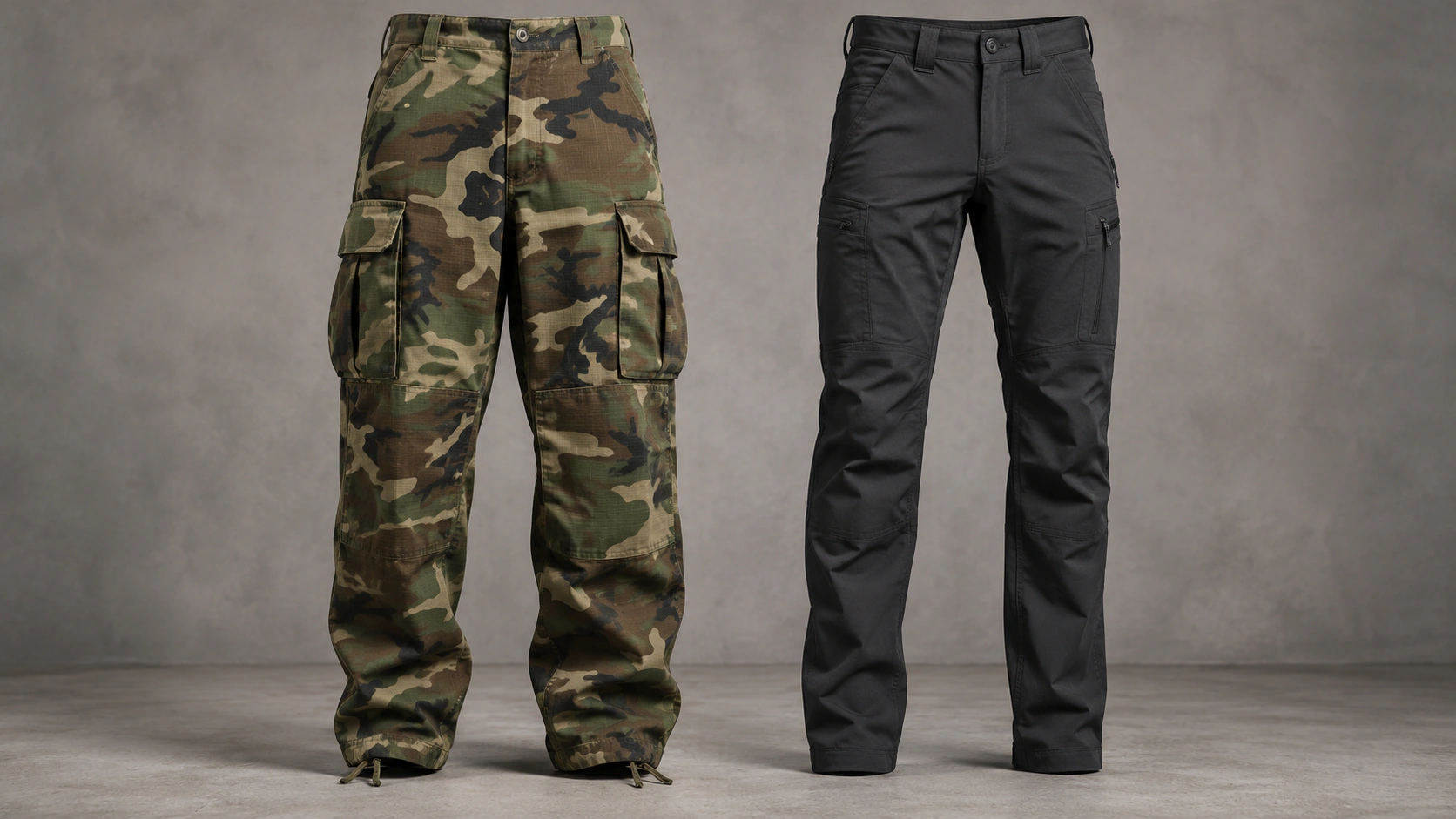
How you dress is the single most significant factor in concealment. A construction worker wearing loose-fitting shirts has far more options than an office professional in tailored clothing. Your body type also matters. A slimmer individual may find it harder to hide a thicker pistol, while a larger person might conceal a compact handgun like a Glock 19 with ease. More people are carrying concealed weapons now. Women make up 28.5% of permit holders in states with data. Makers are making more comfortable guns for different body types and hand sizes.
Comfort and Ergonomics: If It's Not Comfortable, You Won't Carry It
A handgun's ergonomics—how it feels in your hand—is critical. If the grip is too large, too small, or poorly textured, you won't be able to control the pistol effectively. More importantly, if the gun and holster system is uncomfortable to wear for extended periods, you'll be tempted to leave it behind. You must be able to sit, stand, bend, and drive without constant pinching or adjusting. The best way to assess this is to handle as many different pistols as possible.
Caliber and Recoil Management: Balancing Stopping Power and Control for Your Proficiency
People argue a lot about the best self-defense caliber. For modern semi-automatic pistols, 9mm Luger has the best mix of easy recoil, good stopping power, and large magazine size. While other calibers exist, 9mm allows for faster and more accurate follow-up shots, which is crucial in a high-stress encounter. Your ability to manage recoil is key; you must be able to control the handgun, not just fire it.
Magazine Capacity and State Restrictions: Maximizing Protection Within Legal Limits
Magazine capacity is a trade-off. Higher capacity generally means a larger, harder-to-conceal grip. Micro-compact pistols like the SIG Sauer P365 and Springfield Hellcat have revolutionized this by offering 10+ rounds in a remarkably small package. However, you must be aware of your state's laws, as some jurisdictions restrict magazine capacity. Your goal is to carry the most rounds you can comfortably conceal and legally own.
Safety Features: Manual Safeties vs. Passive Systems
Modern handguns feature various safety mechanisms. Many striker-fired pistols, like Glocks, rely on passive safety systems integrated into the trigger and internal mechanisms. Others, like some 1911 models or the M&P Shield Plus, offer an external manual safety lever. The choice is personal. Passive systems are easier to use when stressed. A manual safety gives extra protection. Some users like it if they practice turning it off quickly when drawing.
Reliability and Aftermarket Support: Long-Term Ownership Considerations
A defensive handgun must be reliable. The pistol must function flawlessly with self-defense ammunition. Stick with reputable manufacturers known for quality control. Also, think about how easy it is to get support after buying the product. A robust market for holsters, sights, and magazines for your chosen model ensures you can customize and maintain your concealed carry system for years to come.
Your Budget: Finding the Right Value for Your Investment
While you shouldn't cut corners on a life-saving tool, the handgun market is highly competitive, with excellent options available at various price points. A reliable concealed carry pistol can be found for $400 to $700. Remember to plan money for a good holster, training ammo, and professional lessons. These are important parts of your safety investment. The handgun market size is anticipated to exceed USD 6.42 billion by 2033, ensuring continued innovation and competitive pricing.
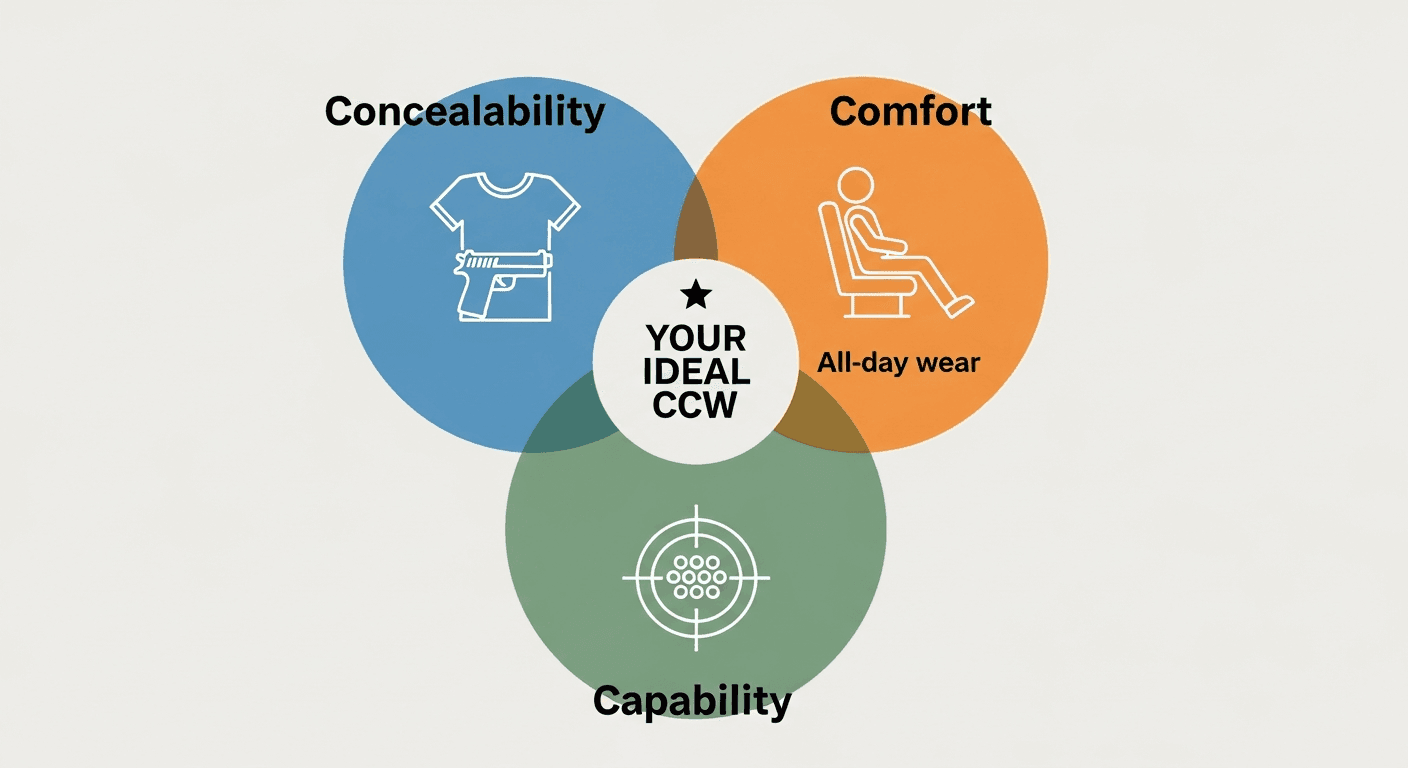
The best concealed carry gun is a balance of three key factors: how well it hides (Concealability), how easy it is to carry all day (Comfort), and how effective it is for self-defense (Capability).
The Holistic Concealed Carry System: Gun + Holster + Clothing
A concealed carry handgun is not a standalone item. It is the centerpiece of a system where every component must work together seamlessly.
The Holster is King: Choosing the Right Carry Method for Your Lifestyle
A quality holster is as important as the gun itself. It must do three things perfectly: securely retain the pistol, completely cover the trigger guard to prevent accidental discharge, and allow for a consistent and unimpeded draw. The most common carry methods are Inside-the-Waistband (IWB) and Appendix Inside-the-Waistband (AIWB). The right holster, made from materials like Kydex or quality leather, will make a world of difference in comfort and concealment.
Clothing Integration: Dressing Around Your Firearm for Optimal Concealment
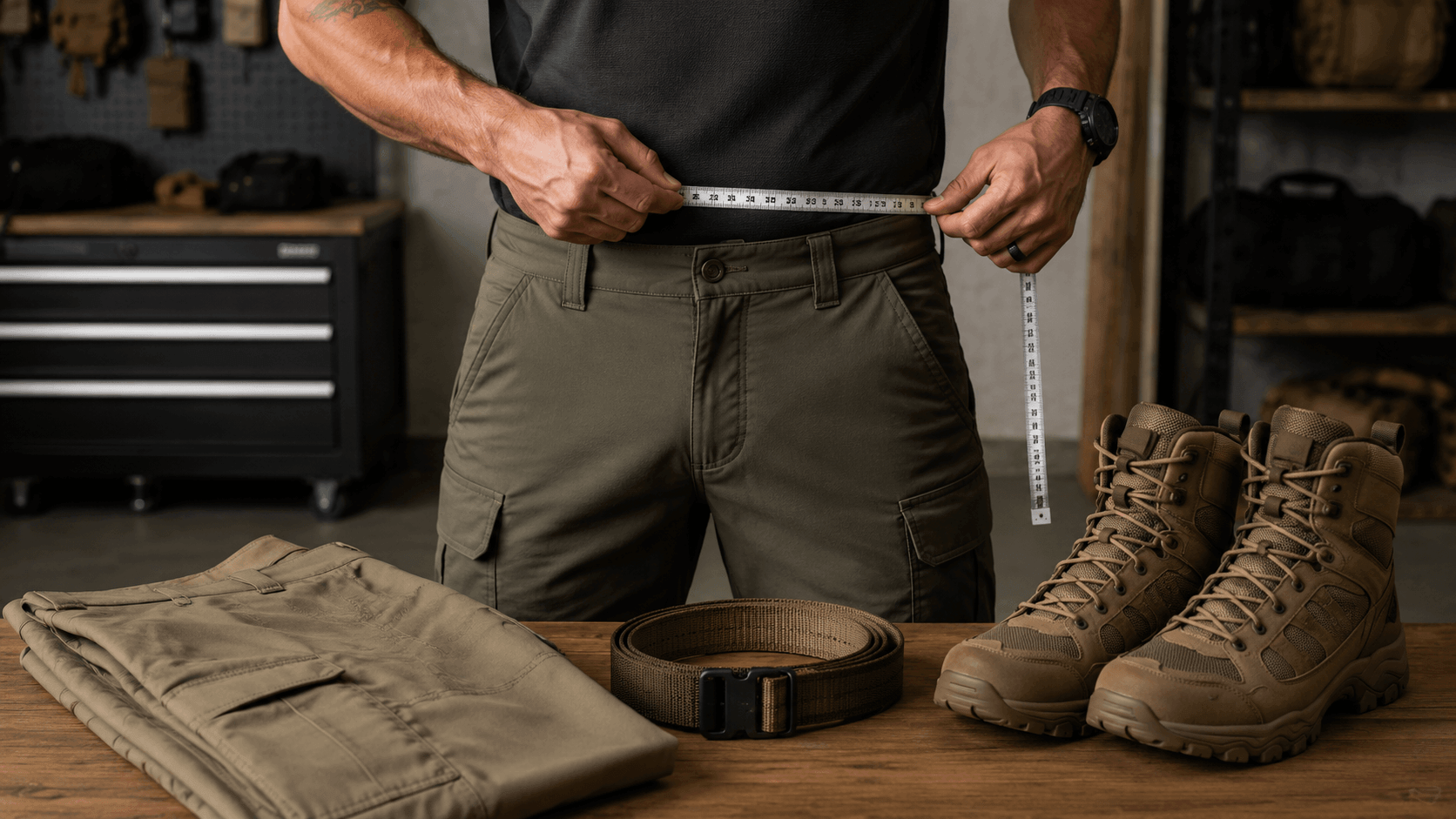
Effective concealment requires minor adjustments to your wardrobe. This doesn't mean a complete overhaul, but you may need to choose shirts that are slightly looser or longer. Darker colors and patterns help break up the outline of the firearm. A sturdy gun belt is essential to support the weight of the pistol and holster, preventing sagging and ensuring a stable platform for your draw.
Lifestyle Archetypes: Matching the Concealed Carry Gun to Your Life
Here, we'll recommend specific handgun models tailored to common lifestyle needs.
The Urban Professional / Deep Concealment Priority
This individual requires a pistol that disappears under business or casual attire. Comfort and minimal printing are paramount.
- Top Pick: SIG Sauer P365/P365X. The P365 family redefined the micro-compact category. It offers a 10 or 12-round magazine in a slim, lightweight package that is exceptionally easy to conceal. The P365X model adds an optics-ready slide and a slightly longer grip module for better ergonomics. It is also modular. See below diagram:
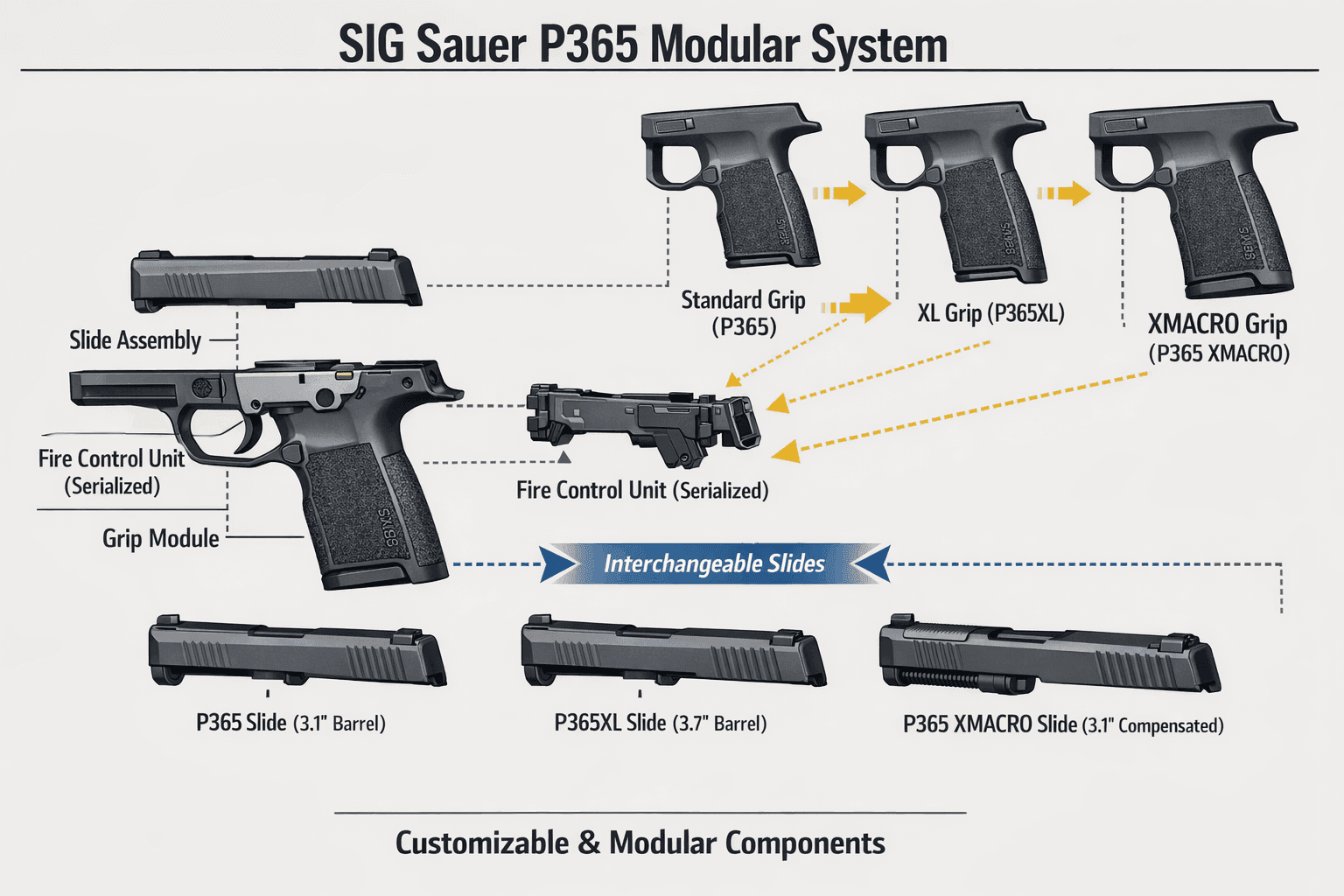 The Sig P365 makes a great concealed carry gun due to it's modularity.
- Alternate: Springfield Armory Hellcat. A direct competitor to the P365, the Hellcat boasts an impressive 11-round flush-fit magazine capacity and excellent U-Dot sights. Its aggressive grip texture provides a secure hold.
The Active Individual / Outdoorsman Priority
This person needs a firearm that can withstand the elements and offers a bit more size for a confident grip during strenuous activity, while still being concealable.
- Top Pick: Glock 43X/48. The Glock 43X and 48 use a slim frame with a 10-round magazine, but offer a longer grip than their micro-compact rivals, making them very comfortable to shoot. Their legendary reliability is a major asset for outdoor use.
- Alternate: Smith & Wesson M&P Shield Plus. The Shield Plus builds on the legacy of the original Shield with an improved trigger and a 10 or 13-round capacity. It's a proven design known for its excellent ergonomics and reliability.
The Balanced Everyday Carrier / All-Around Versatility
This user wants one pistol that can do it all—concealed carry, home defense, and range practice. It needs to strike a balance between concealability and shootability.
- Top Pick: Glock 19. The Glock 19 is arguably the benchmark for a compact, do-it-all handgun. Its 15-round magazine, legendary reliability, and vast aftermarket support make it an incredibly versatile choice. While larger than micro-compacts, it is still concealable for most body types with the right holster and clothing.
- Alternate: SIG Sauer P320 Compact/XCompact. The P320's modular design, with a serialized fire control unit, allows users to swap frames and slides, making it highly adaptable. It features an excellent trigger and great ergonomics.
The Budget-Conscious Defender
This individual seeks maximum reliability and performance without breaking the bank, proving that effective self-defense doesn't require a premium price tag.
- Top Pick: Palmetto State Armory Dagger. Based on the Gen3 Glock 19 patent, the Dagger offers similar functionality, reliability, and parts compatibility at a significantly lower cost. It is often optics-ready from the factory, providing incredible value.
- Alternate: Taurus G3c. Taurus has dramatically improved its quality in recent years. The G3c is a compact, striker-fired pistol with a 12-round magazine and a unique restrike-capable trigger, offering a feature-rich package at an entry-level price.
The Classic Carry / Revolver Enthusiast
For those who appreciate simplicity, unwavering reliability, and the classic design of a revolver or a traditional hammer-fired pistol.
- Top Pick: Smith & Wesson J-Frame (Model 642/442). The quintessential snub-nosed revolver. Its simple operation, lack of external safeties, and snag-free design make it a dependable choice for deep concealment.
- Alternate: Kimber Micro 9. For fans of the 1911 platform, the Micro 9 offers the familiar ergonomics and single-action trigger in a compact 9mm package. It's an elegant and highly concealable option for those committed to the 1911-style of actions and safety.
Honorable Mentions for a CCW Gun
When selecting a firearm for concealed carry, there are numerous exceptional options tailored to meet various preferences and needs. While some guns often steal the limelight, a few lesser-acknowledged models still offer impressive performance, reliability, and features that make them worthy of consideration. Here are some honorable mentions that you should contemplate when searching for a CCW gun.
1. Walther PPS M2
The Walther PPS M2 is a slim, single-stack 9mm pistol that boasts exceptional ergonomics and a sleek design, making it ideal for concealed carry. Its smooth trigger pull, intuitive grip, and push-button magazine release provide a seamless shooting experience. Coupled with its respectable price point and a robust safety system, the PPS M2 is a reliable choice for daily carry.
2. Springfield XD-S Mod.2
Springfield Armory's XD-S Mod.2 is another solid contender in the realm of CCW handguns. Offering a choice between 9mm, .40 S&W, and .45 ACP calibers, the XD-S Mod.2 grants versatility without compromising its compact form. The enhanced grip texturing and improved trigger system over the original model make it more comfortable and accurate, thus worthy of an honorable mention in concealed carry discussions.
3. Ruger LC9s
The Ruger LC9s has carved out its place as a compact, striker-fired 9mm option valued for its simplicity and ease of use. The pistol is lightweight, user-friendly, and offers an excellent balance of concealability and firepower. Its crisp trigger pull and integrated safety features ensure reliability and peace of mind, making it a popular choice among many concealed carry proponents.
4. Smith & Wesson M&P Shield Plus
Smith & Wesson expanded their popular Shield line with the M&P Shield Plus, which offers a higher capacity and an enhanced grip texture. Available in 9mm and .40 S&W, the Shield Plus maintains a slim profile while improving on potential drawbacks of earlier models. The flat-face trigger and revamped ergonomics contribute to a better shooting experience, earning it a noteworthy spot among concealed carry options.
5. CZ P-10 S
CZ's entry into the concealed carry market is the P-10 S, a subcompact version of their highly regarded P-10 series. Known for its outstanding ergonomics and build quality, the P-10 S offers a robust construction with a comfortable grip and quick, consistent firing. Although it may not be as widely recognized as some competitors, its reliability and performance make it a compelling choice for those seeking a dependable CCW firearm.
While the market is flooded with numerous choices, these honorable mentions stand out due to their distinct qualities, adept craftsmanship, and practicality for concealed carry. Each offers unique features that cater to different preferences, reassuring responsible gun owners that they can find the right fit for their everyday protective needs.
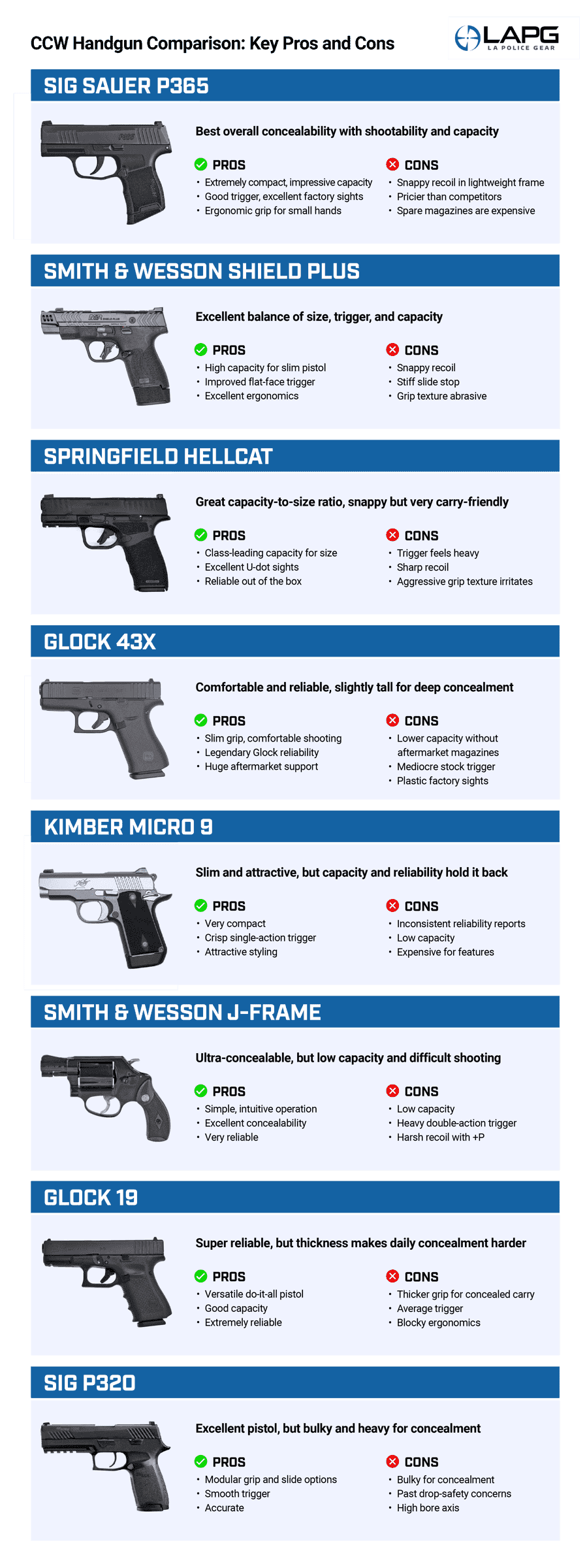 Pros and Cons of the various options for the best concealed carry gun.
Key Features to Evaluate on Any Concealed Carry Gun
When you handle a prospective handgun, pay close attention to these critical details.
Trigger Quality: Understanding Pull Weight, Reset, and Break
The trigger is your primary interface with the pistol. A good trigger should have a smooth pull, a crisp "break" (when the shot fires), and a short, positive "reset" for faster follow-up shots. A trigger that is excessively heavy, gritty, or has a long, mushy pull will make accurate shooting more difficult, especially under stress.
Sights and Optics: Ensuring You Can Aim Effectively in Various Conditions
Factory sights should be durable and easy to see. Three-dot sights are common, but many modern pistols now come with superior options like high-visibility front sights or blackout rear sights to draw your focus. The trend is moving towards optics-ready slides, which allow for the mounting of a miniature red dot sight. An optic can dramatically increase speed and accuracy, and adding tritium night sights ensures visibility in low-light conditions.
Ergonomics and External Controls: Safety Levers, Magazine Release, Slide Stop
Can you comfortably reach all the controls without breaking your grip? The magazine release, slide stop, and any manual safety should be easy for you to operate. Grip texture is also important; it should be aggressive enough for a secure hold but not so abrasive that it irritates your skin when carried against your body.
Build Quality and Finish: Polymer Frames, Stainless Slides, Armornite Finish
A modern concealed carry handgun should be built to last. Look for durable materials like polymer for the frame (to save weight) and stainless steel for the slide and barrel. A tough, corrosion-resistant finish (like Glock's nDLC or Smith & Wesson's Armornite) is essential for a pistol that will be carried daily, exposed to sweat and humidity.
Choosing the Best Concealed Carry Gun for 2026
Selecting the best concealed carry gun for 2026 is a journey of self-assessment. The market, with estimated 16.1 million firearms sold in the U.S. in 2024, is filled with outstanding choices like the versatile Glock 19, the deeply concealable SIG P365, and the high-capacity Springfield Hellcat. However, the ultimate decision rests on which reliable handgun fits your hand, your wardrobe, your budget, and your lifestyle.
Your next steps are clear. Visit a local gun store to handle the models that interest you. If possible, rent them at a range to experience their recoil and trigger for yourself. Invest in a high-quality holster and a sturdy gun belt from the outset. Finally, commit to professional training. Your firearm is just one part of a comprehensive personal protection plan. The best gun is the one you have with you and are proficient with when you need it most. Make your choice a deliberate one, and carry with confidence and responsibility.
FAQs
What caliber is best for concealed carry in 2026?
Most concealed carriers still choose 9mm because it balances recoil, capacity, and modern defensive ammo performance. Advances in bullet design have made 9mm even more effective in compact pistols. Some shooters prefer .380 ACP for ultra‑small guns or .45 ACP for heavier recoil and larger frames, but 9mm remains the most practical choice for most people.
Is a micro‑compact or subcompact better for everyday concealed carry?
Micro‑compacts offer excellent concealability with surprisingly high capacity, making them ideal for most daily carry situations. Subcompacts are slightly larger and often easier to shoot accurately, especially for beginners. Your hand size, clothing style, and comfort level with recoil should guide the decision.
How much should I expect to spend on a reliable concealed carry gun?
Most dependable concealed carry pistols fall between $350 and $800. Premium models with optics‑ready slides, upgraded triggers, or brand prestige can reach $1,000+. The key is reliability — a budget gun that runs flawlessly is better than an expensive one that doesn’t.
Do I need a red dot on my concealed carry pistol?
Red dots are becoming increasingly common on carry guns because they speed up target acquisition and improve accuracy under stress. However, they require training and battery maintenance. If you’re new to concealed carry, iron sights are perfectly fine until you’re ready to commit to learning a dot.
What’s the most important feature to look for in a concealed carry gun?
Reliability is the top priority — the gun must function consistently with your chosen defensive ammo. After that, focus on ergonomics, trigger quality, capacity, and ease of concealment. A gun that fits your hand and shooting style will always perform better under pressure.
How do I know if a gun is the right size for concealed carry?
A good concealed carry gun should be small enough to hide under your normal clothing but large enough for you to shoot confidently. If you struggle to get a full grip or control recoil, the gun may be too small. Try drawing from your holster and practicing dry‑fire to see how natural it feels.
Is it better to carry with a manual safety or without one?
This comes down to training and personal preference. Guns without manual safeties are faster to deploy but require strict trigger discipline and a quality holster. Manual safeties add a layer of security but must be practiced until disengaging them becomes automatic.
What holster should I use for concealed carry?
Most carriers choose inside‑the‑waistband (IWB) holsters for comfort and concealment. Look for a holster with good retention, adjustable cant/ride height, and full trigger‑guard coverage. Avoid cheap, soft holsters that collapse or fail to protect the trigger.
How often should I train with my concealed carry gun?
A realistic goal is monthly live‑fire practice and weekly dry‑fire sessions. Concealed carry is a skill — drawing, reholstering, and shooting under stress all require repetition. Even 10 minutes of dry‑fire at home can dramatically improve your proficiency.
Can I carry a gun with a high capacity magazine in my state?
Magazine capacity laws vary widely across the U.S. Some states restrict magazines to 10 rounds, while others have no limits. Always check your state and local laws before purchasing or carrying a high‑capacity pistol.
Is it safe to carry a round in the chamber?
Carrying with a chambered round is standard practice among trained carriers because it allows immediate response in a defensive situation. The key is using a rigid holster that fully covers the trigger and practicing safe handling at all times.