Listen to this article
Ever think about partnering up with a four-legged officer? Thanks to their quickness, high-detection noses, and irresistible personalities, police dogs are some of the most beloved and useful officers on the force. Unlike human officers, K9s have as many as 300 million olfactory receptors in their noses that allow them to protect, indicate, apprehend, and search like few other animals can.
These high-drive canines were bred to work, but, at the end of the day, they're also extremely social and playful family pets who need plenty of love, attention, and care. Let's dive into the world of K9 officer life to see if this kind of trooper would make a good partner for you.
What Do Police Dogs Do?
Police departments have been honing the best ways to put these brilliant animals to good use for centuries, with the first record of police dog use dating back to St. Malo, France in the early 14th century. The St. Malo department used attack dogs to guard naval dock installations. In 1888, the London Metropolitan Police famously used bloodhounds in their attempt to apprehend the infamous, still-unidentified serial killer known as Jack the Ripper. Throughout the 20th century, police dogs became common throughout Europe.
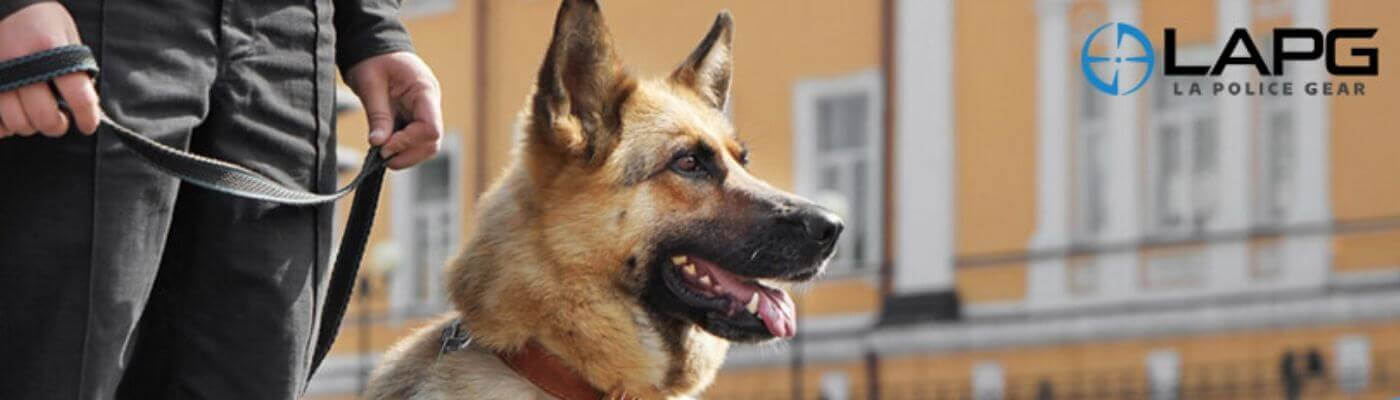
K9 units didn't start to gain real popularity in the United States until the 1970s, with American departments importing police dogs from Germany and Holland. Though hundreds of dog breeds serve as police dogs throughout the world, the most common still come from Europe- the German shepherd, Belgian malinois, and Dutch shepherd are some of the most common K9 breeds used in the world today. German shepherds are the most popular police working dogs in the U.S., which is why you tend to see them on duty more than any other breed.
Today, these working pups use their highly evolved sniffers to detect drugs, accelerants, explosives, and criminals. Additionally, K9s are often sent to crime scenes and search and rescue operations to help find dropped items, such as weapons and crime scene evidence. They're also skilled in apprehension, using their speed and senses to chase down and bite criminals before they can be apprehended by police. For these reasons, these incredible canines have been employed by both police and military, and there are around 1,600 Military War Dogs (MWDs) in the armed services today.
Training: The K9 Training Process
Indeed, much of the skill of a police dog comes from centuries of breeding, making certain breeds naturally more apt to this kind of work than others. With that being said, no shepherd or malinois is born with all the skills required to take down criminals and go to war. In fact, training K9 dogs takes serious time, effort, and commitment, first by professionals and then by the dog's handler, who generally works with the dog for the rest of its life.
Police departments or K9 specialists tend to pair dogs with officers based on personality and experience, knowing that the dog will most likely be with the same handler for many years. In the vast majority of cases, though they were funded by the force, a grant, or a nonprofit organization, police dogs live at home with their handlers and effectively become a part of their families until their end of watch. Most departments even allow officers to take their K9 partners on vacation because these hard-workers need a break, too.
Usually, K9s are already trained in apprehension before they're assigned to their two-legged partner. They may have also been taught some basic manners - such as sit, stay, heel, etc. before they meet their officer. From there, the handler takes the future force member to an intensive, multi-week training program, often out of town. Upon graduation, dogs complete on-the-dog training and ongoing, periodic training to maintain their skills.
Note that, at the moment, there is not one national police dog organization, governing body, or certification standard, so training requirements will vary by police department. Here are some more details on the K9 training process:
-
Step 1: Graduate from K9 Academy - K9 academies usually require dogs to spend 4 to 12 weeks in intensive training programs with their designated handlers, beginning when the animal is between 7 and 14 months old. During this rigorous portion of the program, dogs first learn defense of their handlers, with the immediate goal of any K9 being to protect his or her partner. During the program, pups learn to guard criminal suspects, assist officers with daily duties, and to detect items. The program also serves as training for handlers, who learn how to keep their dogs' skills sharp for the rest of their careers.
-
Step 2: On-the-Job Training - Some departments allow K9 units to do some real-world training before certification. Usually lasting five or more weeks, this is the portion of the training process where handlers take their K9s out into the world to mimic real-life applications and get dogs comfortable with daily tasks. The on-the-job portion of the process allows animals and humans a bit of a learning curve to work out any weaknesses. During this part of training, K9 teams won't be responding to any official calls, only practicing and observing.
-
Step 3: Certification - Upon graduation from the K9 academy, police dogs and their handlers are generally required to obtain a certification after passing a test. Usually, this is the United States Police Canine Association (USPCA) certification, but different or additional certifications may be required, especially if the K9 will work in specialized fields and need additional skills. Some departments may have their own evaluations and certification standards. Dogs may be tested in obedience, searches, apprehension, call off, suspect hold, handler protection, agility, and other areas. They may also be required to pass a physical and veterinary examination.
-
Step 4: Swearing In - In most departments, K9 officers are honorarily sworn into the department, sometimes along with other officers and K9s, during an official ceremony. Usually, the dog's handler will affirm the oath on the K9's behalf, though the occasional bark in affirmation does occur. After that point, the pups are considered honorary members of the force and can begin protecting the people.
-
Step 5: Ongoing Training - Just because a K9 unit is officially certified doesn't mean the training stops. In fact, many K9 teams have weekly or bi-weekly training sessions to keep their skills sharp. Most departments require K9 units to be certified yearly, which makes these ongoing training sessions vital. Training may include everything from running certain apprehension drills to boning up on basic commands.
 Photo by Rulo Mora
Training: Special Tools and Methods for Training K9s
Naturally, because these incredible creatures have a very special cache of skills, they need a bit more training than the average pup. So, how do these animals learn to apprehend, search, and indicate? Using a whole lot of positive reinforcement- including lots of treats, pets, and vocal praise coupled with some special K9 officer training tools and tricks - police dogs are able to master all of these amazing tasks.
-
Bite Suits - One situation where K9s are encouraged to be aggressive is in apprehension. Wearing heavily padded bite suits for protection, handlers and trainers teach budding K9s to detect the fear scent - which is really just adrenaline- and to apprehend suspects with a bite, usually to the arm. Though serious protection is used, this training is not for the faint of heart, and bruising does occur.
-
Muzzles - Another very important tool for teaching dogs how to apprehend is the muzzle. These allow handlers to teach bite training without risk. Muzzles are also used to help pups learn apprehension commands, so they know the best time to attack.
-
Association - In detection training, trainers use psychology to help K9s associate their targets - whether those are drugs, explosives, or humans- with something they desire, such as a toy or a treat. Trainers may play with their dogs using a white towel and then later hide drugs or pseudo-narcotics which look and smell like drugs in the towel as part of their search and detection exercises.
-
Positive Reinforcement - At its core, training police dogs in this very important line of work is not that much different than training regular family pets. Handlers get the correct result by putting dogs to the test and then rewarding them when they do something right. Chiding or punishing the animal is not recommended in any training environment and will not yield positive results.
Retiring K9 Officers
When a four-legged officer has put in his or her tenure, it's time to retire. One of the obvious reasons why a pup may hang up the badge is, of course, age. Typically, police dogs leave the force with plenty of life to go, usually around the age of 7 or 8. Animals who are no longer able to pass the physical evaluation or who may be rusty in their skills may also be required to retire. Most often, a dog's handler will adopt him or her after his final patrol, but there are some scenarios where this is not possible.
Can You Adopt a K9 Dog?
Contrary to popular belief, K9 dogs aren't naturally mean. In fact, K9s are trained to be aggressive only in certain scenarios and may only attack you with slobbery kisses in others. Because of this, retired K9 dogs can make excellent pets for patient, active dog-lovers. Additionally, most police dog breeds have an average lifespan of between 11 and 14 years, so adoption may be necessary when the animal stops working.
Until 2000, police dogs - seen as surplus equipment- were routinely euthanized. That year, President Clinton signed Robby's Law into effect, which permits handlers to adopt their police or military dogs. Thankfully, handlers now always get first preference, and, if for some reason they are unable to adopt their partner, the dog will be put up for adoption. However, the vast majority of police dogs stay with their handlers into retirement and remain in the homes they're used to.
Occasionally, working dogs do need to be put up for adoption. In these cases, various organizations may step in to help care for, foster, or place the dog, including:
-
Mission K9 Rescue This organization's fundamental goal is to rescue, rehome, and rehabilitate any retired working dog. Based in Houston, the national non-profit ensures that adopters meet a strict set of criteria and are able to provide the dog with plenty of love, care, and attention.
-
K9 Hero Haven This adoption organization specializes in rehoming and rehabilitating working dogs, including those who served in the police force and military, and reuniting dogs with their handlers. Anyone who wishes to adopt from this entity must go through a rigorous application process.
-
Saveavet - Specializing in rescuing military and K9 dogs, Saveavet can help connect people with the resources needed for adoption. They can help facilitate the adoption of Military War Dogs (MWDs) through the Air Force's official MWD program at Lakeland Air Force Base.
What You Can Do to Support Retired K9s
In addition to adoption, those who want to help may consider making a donation to one of the above organizations or the Retired Police Canine Foundation. This organization works to protect retired K9s and to keep them in the hands of their handlers by raising money for their veterinary bills and care in retirement. The organization also advocates for landlords to allow working dogs as tenants, as many handlers are unable to keep their dogs due to housing restrictions.
One of the best things we can do to thank these heroic animals for giving their lives to the force is to ensure that they are allowed to live out their retirement years happy, healthy, and surrounded by people who love them. LA Police Gear salutes all of our nation's courageous K9s and heroic handlers and thanks them for their service!