Listen to this article
Table of Contents
- Core Ballistics: Understanding Centerfire and Rimfire Systems
- Glossary: Key Terms Explained
- Side-by-Side Comparison: Performance and Reliability
- The Professional's Dilemma: Duty vs. Training
- Why Rimfire Wins for Training
- Why Centerfire Is Mandatory for Duty
- The Bottom Line: Choosing Your Configuration
- FAQs
Centerfire vs Rimfire: Which Ammo System Is Right for Duty or Training?
Whether you're preparing for qualification day, building marksmanship fundamentals, or selecting ammunition for duty use, understanding the difference between centerfire vs rimfire ammunition is essential. While both systems fire a cartridge using a primer and powder charge, their designs differ in ways that affect reliability, performance, cost, and intended use.
For law enforcement officers, security professionals, military personnel, and serious shooters, choosing the right ammunition system can impact both training efficiency and operational readiness. This guide breaks down the key differences between centerfire and rimfire ammo, explains when each excels, and helps you make informed decisions for duty and range applications.
- Centerfire ammunition is the standard for duty carry, defensive use, hunting, and patrol rifles because it offers superior reliability and supports higher-pressure cartridges.
- Rimfire ammunition, especially .22 LR, is significantly less expensive and ideal for high-volume training and marksmanship practice.
- All common duty calibers, including 9mm, .40 S&W, .45 ACP, 5.56 NATO, and .308 Winchester, use centerfire ignition systems.
- Most professionals benefit from using rimfire for fundamentals and centerfire for qualification and duty-specific training.
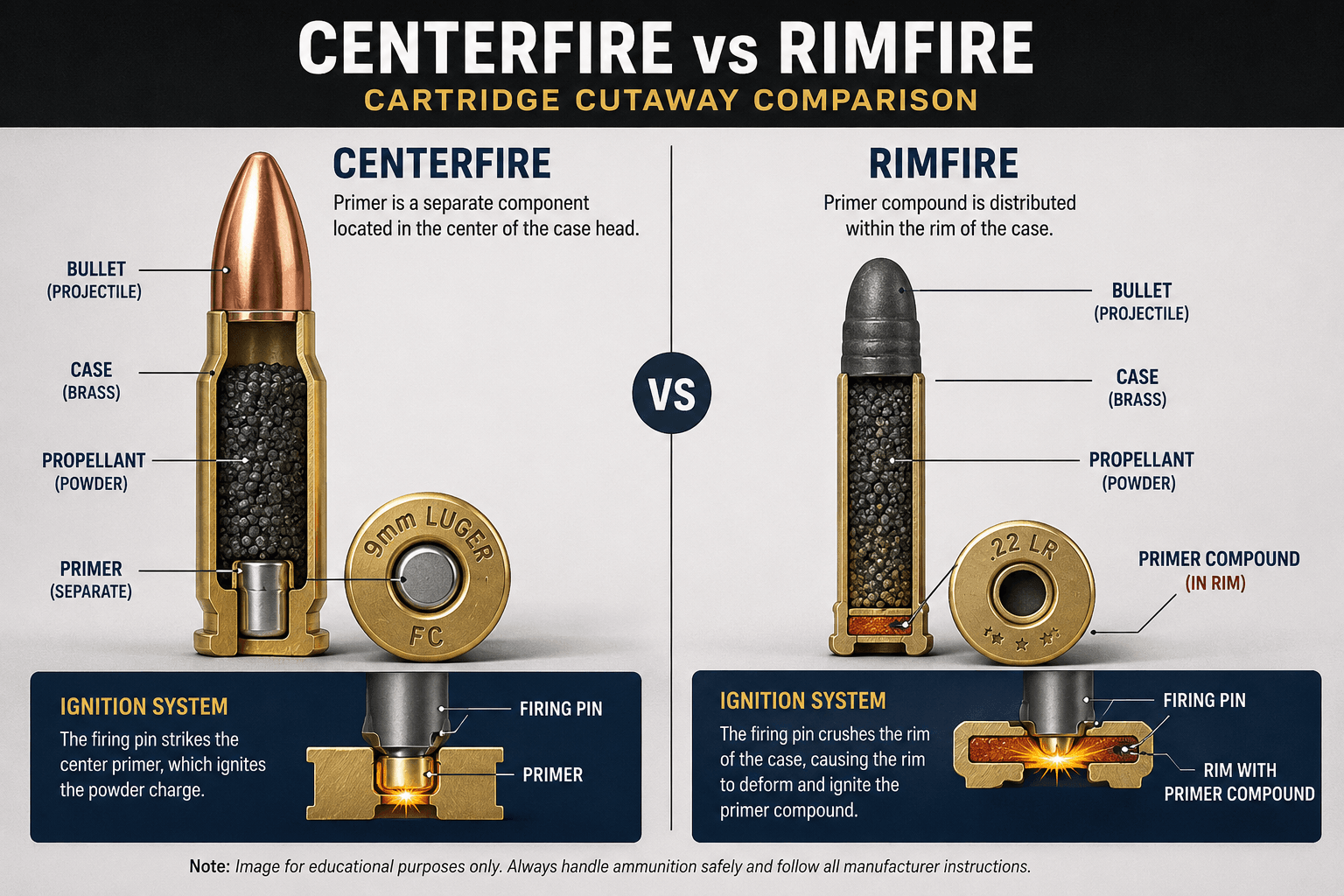 Centerfire and rimfire cartridge cutaway comparison showing primer placement and ignition systems
Core Ballistics: Understanding Centerfire and Rimfire Systems
The primary difference between centerfire and rimfire ammunition is the location of the primer. That design choice influences cartridge strength, pressure tolerance, reliability, and reloadability.
What Is Rimfire Ammunition?
Rimfire ammunition contains priming compound distributed inside the hollow rim of the cartridge case. When the firing pin strikes the rim, the brass deforms and ignites the primer compound.
Because the case must remain thin enough to deform under impact, rimfire cartridges cannot safely withstand the same chamber pressures as centerfire cartridges. As a result, rimfire ammunition is typically limited to lower-pressure cartridges such as .22 Long Rifle (.22 LR).
What Is Centerfire Ammunition?
Centerfire ammunition uses a separate primer seated in the center of the cartridge base. The firing pin strikes this primer directly, igniting the powder charge.
The thicker brass construction of centerfire cases allows them to withstand substantially higher pressures. SAAMI-spec centerfire cartridges commonly operate at pressures exceeding 35,000 PSI, while some rifle cartridges approach or exceed 60,000 PSI. Source: Sporting Arms and Ammunition Manufacturers' Institute (SAAMI).
Is 9mm Centerfire or Rimfire?
9mm ammunition is centerfire. Every major duty handgun caliber, including 9mm, .40 S&W, .45 ACP, and 10mm Auto, uses centerfire primers.
Likewise, common patrol rifle cartridges such as 5.56 NATO and .308 Winchester are centerfire rounds.
Can Rimfire Ammunition Be Reloaded?
Generally, rimfire ammunition is not considered reloadable. The firing process permanently deforms the rim where the primer compound is located.
Centerfire brass, by contrast, is designed to accept replacement primers and can often be reloaded multiple times when properly maintained.
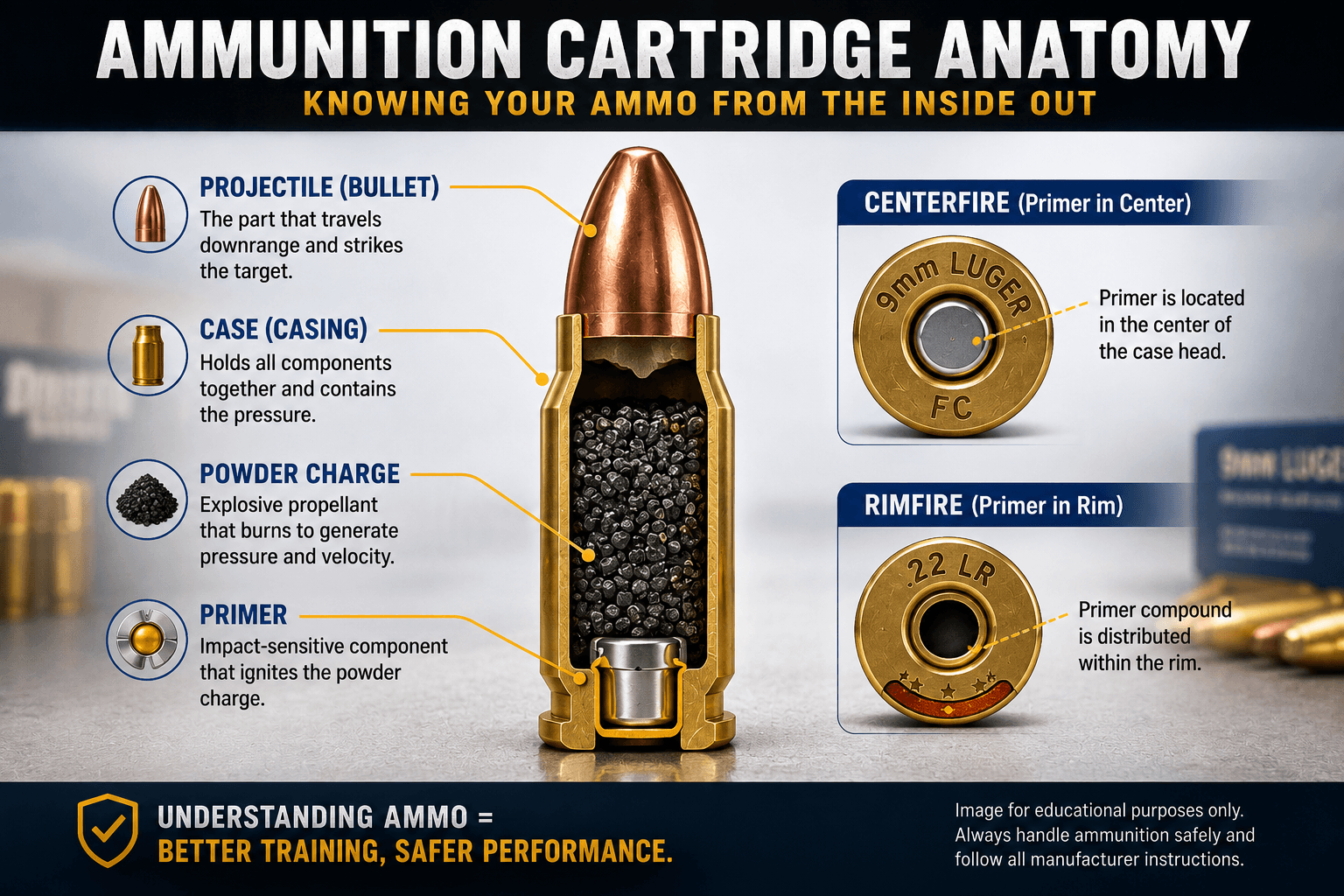 Ammunition cartridge anatomy with primer, casing, powder charge, and projectile labeled
Glossary: Key Terms Explained
Centerfire: A cartridge design that uses a removable primer located in the center of the cartridge base.
Rimfire: A cartridge design that stores primer compound inside the rim of the cartridge case.
Primer: The impact-sensitive component that ignites the powder charge when struck by the firing pin.
Reloading: The process of reusing a fired cartridge case by installing a new primer, powder charge, and projectile.
Chamber Pressure: The internal pressure generated when a cartridge fires, usually measured in PSI.
Duty Ammunition: Ammunition selected for law enforcement, military, security, or defensive applications where reliability is critical.
Side-by-Side Comparison: Performance and Reliability
Understanding the practical differences between centerfire and rimfire ammunition requires looking at four key factors: reliability, cost, reloadability, and intended use.
| Category | Centerfire | Rimfire |
|---|---|---|
| Reliability | Generally higher ignition reliability | More susceptible to occasional misfires |
| Cost Per Round | Typically higher | Typically lower |
| Reloadable | Yes | No |
| Pressure Capacity | High-pressure capable | Limited by case design |
| Primary Use | Duty, defense, hunting, competition | Training, plinking, small game hunting |
Centerfire ammunition has become the standard for professional applications because its primer design offers more consistent ignition and supports modern defensive and duty calibers.
Rimfire ammunition remains valuable because of its affordability. Shooters can often complete significantly more repetitions for the same budget when training with .22 LR.
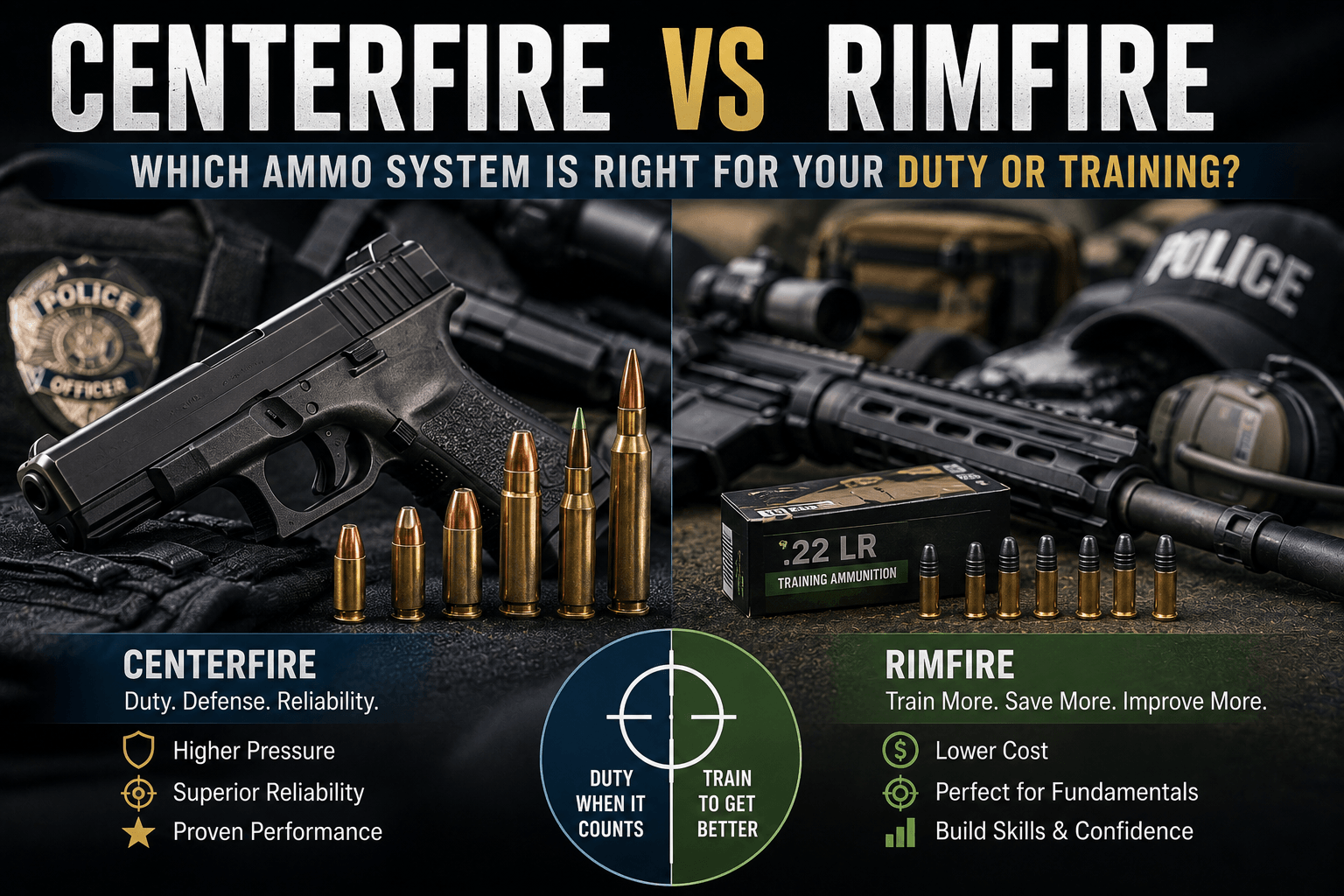
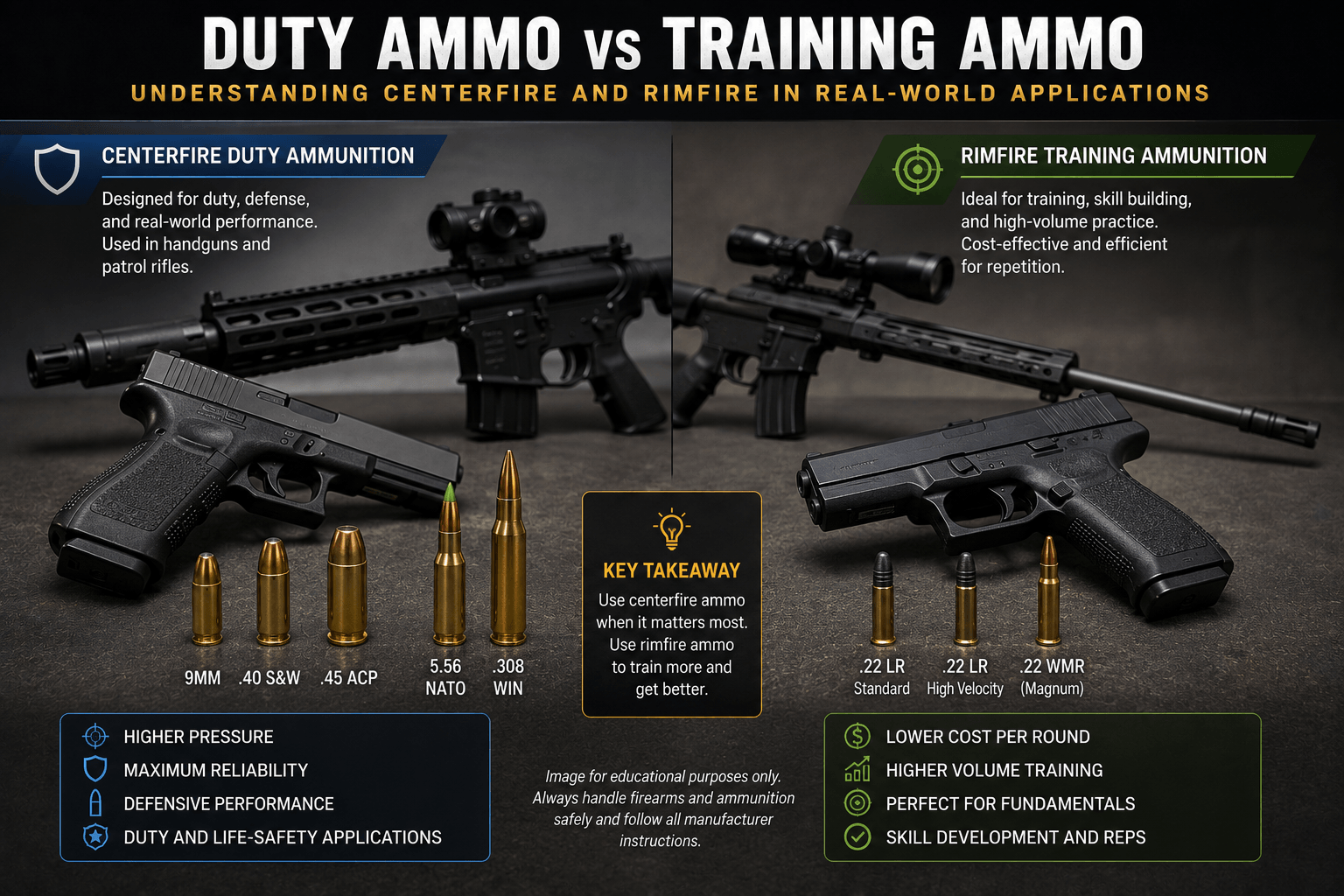 Duty handgun and patrol rifle with centerfire duty ammunition and rimfire training ammunition
The Professional's Dilemma: Duty vs. Training
Most professionals do not choose between centerfire and rimfire. They use both for different purposes.
Why Rimfire Wins for Training
Rimfire ammunition offers one major advantage: affordability.
Because .22 LR costs substantially less than most centerfire duty calibers, shooters can increase repetitions without dramatically increasing training expenses.
High-volume rimfire practice helps reinforce:
- Trigger control
- Sight alignment and sight picture
- Draw-to-first-shot consistency
- Target transitions
- Basic malfunction-clearing procedures
Many shooters also use .22 LR conversion kits or dedicated training pistols that replicate the controls of their duty firearm.
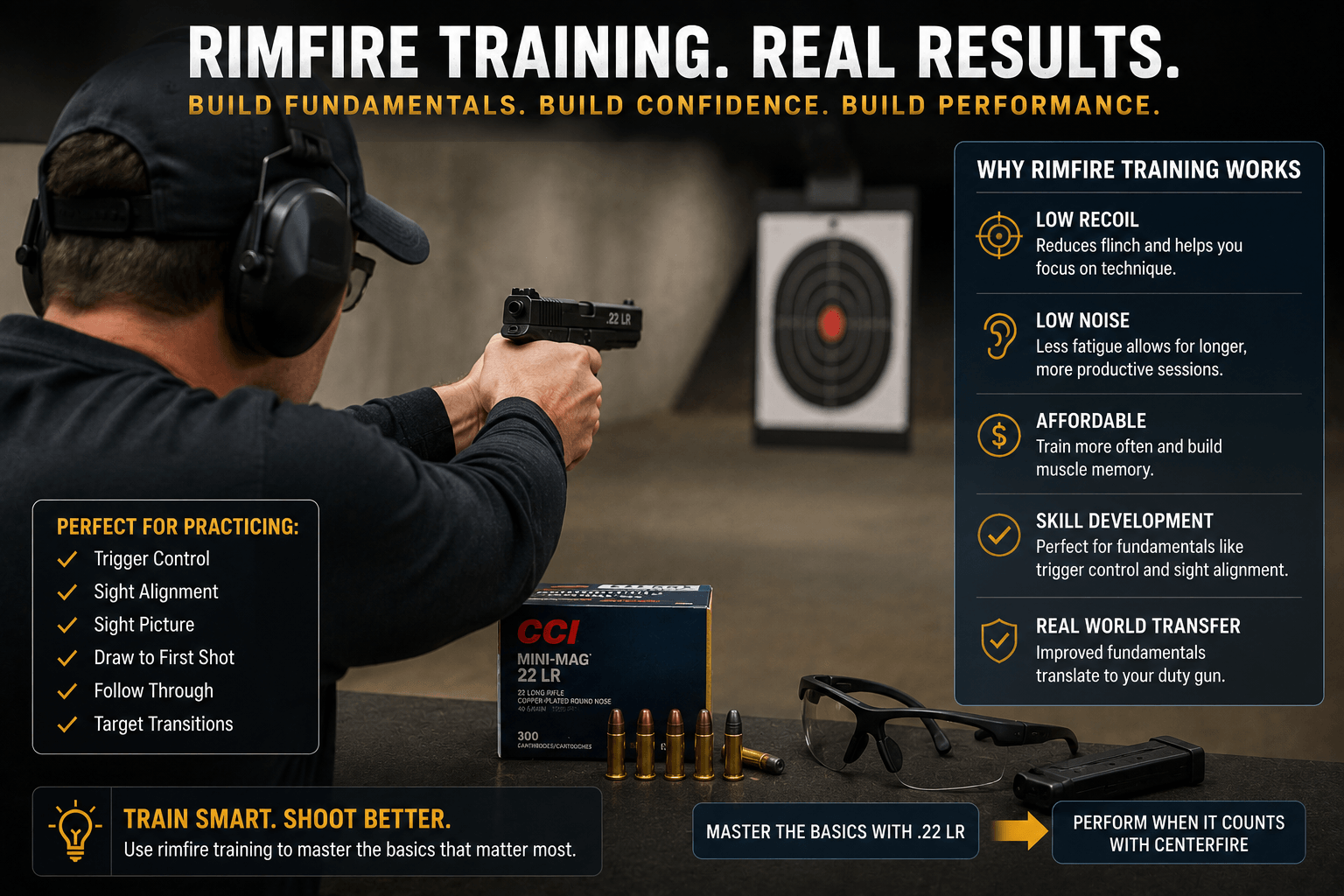 Shooter using a rimfire training pistol to improve marksmanship fundamentals
Why Centerfire Is Mandatory for Duty
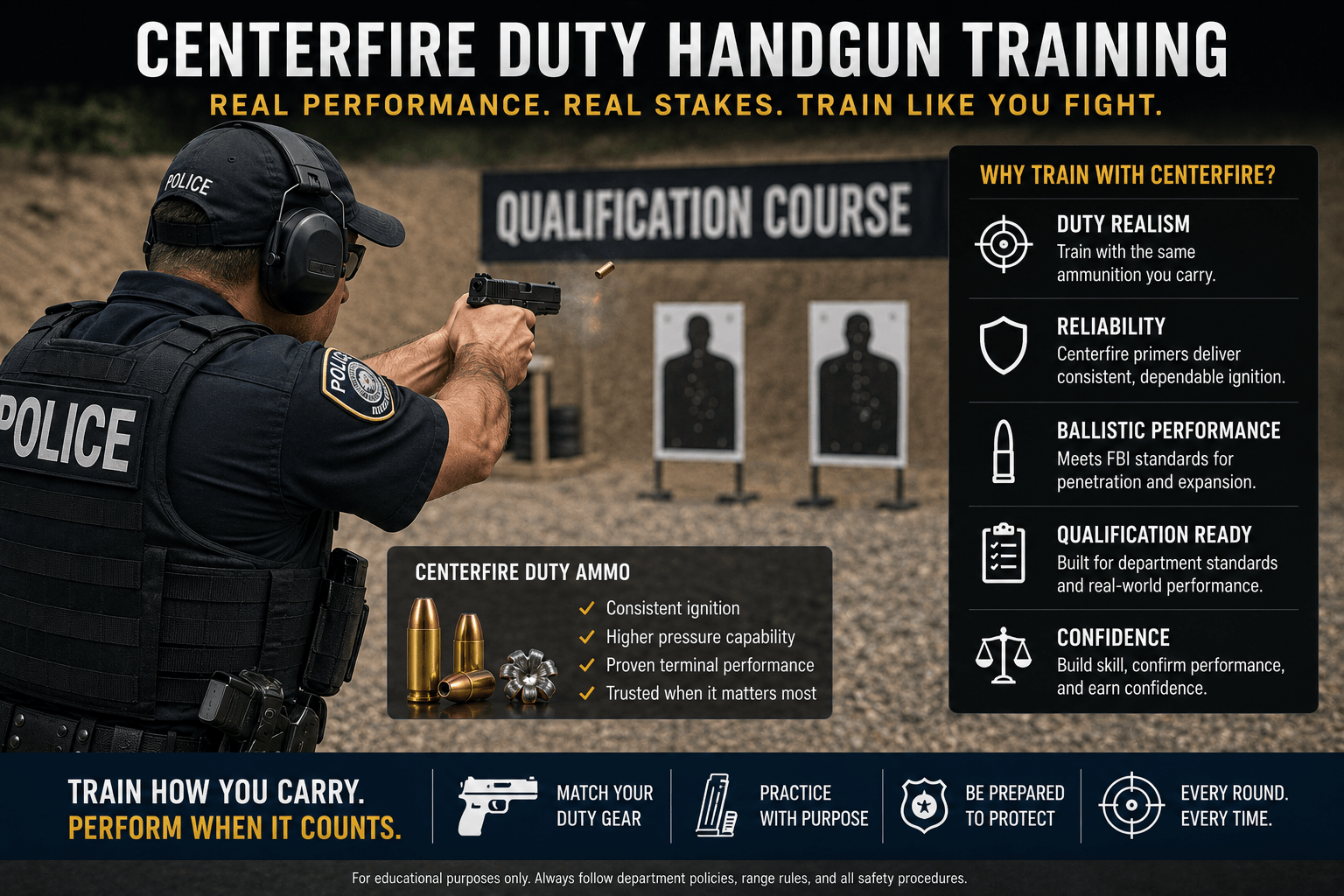
Every major law enforcement and military organization relies on centerfire ammunition for duty applications.
Centerfire cartridges support modern defensive bullet designs, higher velocities, and the reliability standards required for life-safety situations.
The FBI's ballistic testing protocols evaluate duty ammunition for penetration, expansion, and barrier performance. Centerfire duty ammunition is specifically engineered to meet these standards. Source: FBI Handgun Wounding Factors and Effectiveness.
If you're carrying a Glock 17, Glock 19, SIG P320, Smith & Wesson M&P, or patrol rifle chambered in 5.56 NATO, you're using centerfire ammunition.
The Bottom Line: Choosing Your Configuration
The centerfire vs rimfire decision becomes straightforward once your mission is defined.
- Choose centerfire ammunition for duty carry, personal defense, patrol rifles, hunting, and qualification standards.
- Choose rimfire ammunition for affordable practice, fundamentals development, and high-volume training.
- Use both when possible. Rimfire builds repetition. Centerfire confirms performance with your actual duty platform.
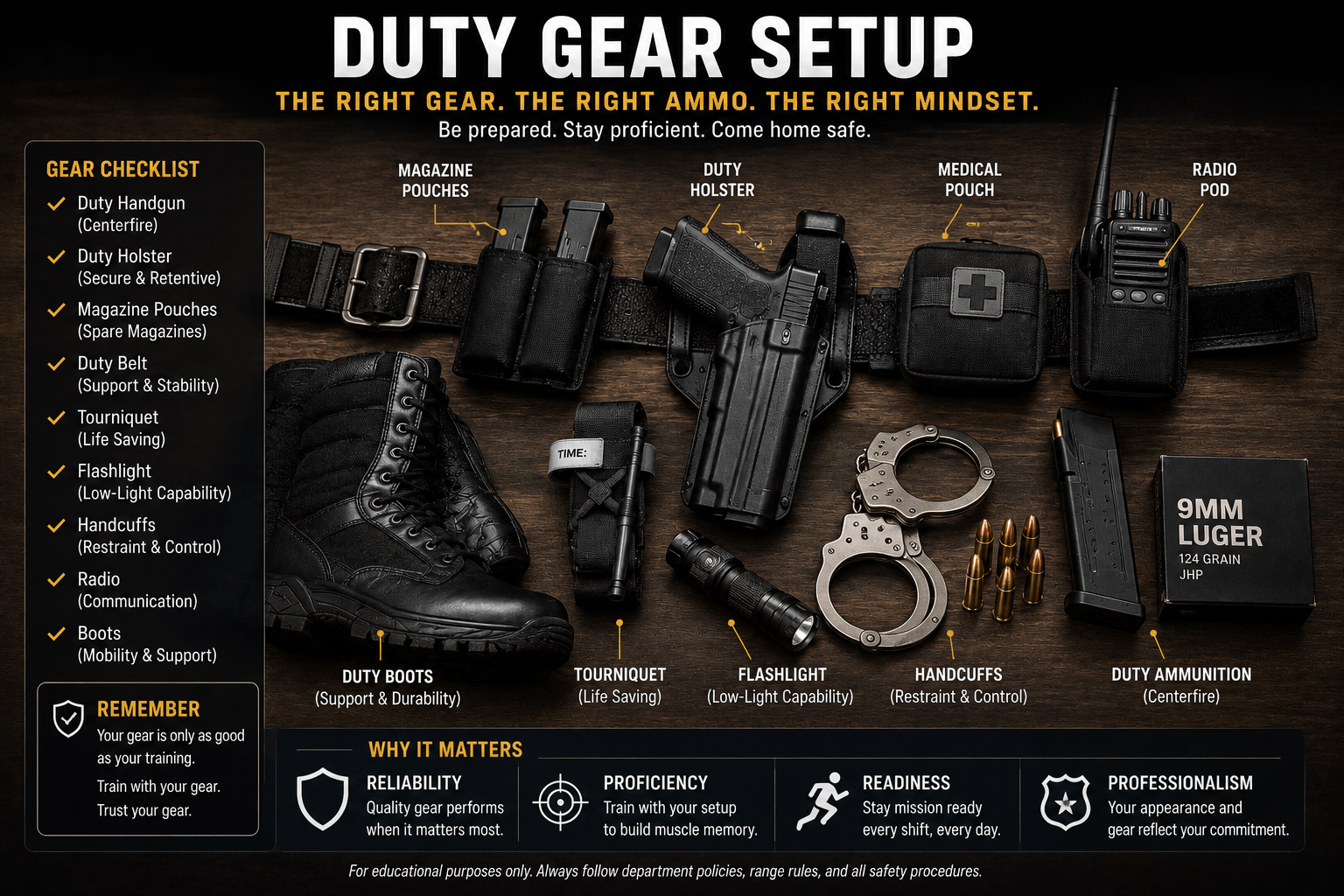
Equipment matters too. Quality holsters, belts, magazine carriers, uniforms, and range gear help ensure your training transfers effectively to operational environments.
FAQs
What is the main difference between centerfire and rimfire ammunition?
The primary difference is primer location. Centerfire cartridges have a primer in the center of the case head, while rimfire cartridges contain primer compound inside the rim.
Is 9mm centerfire or rimfire?
9mm is a centerfire cartridge and is one of the most common duty and defensive handgun calibers in the United States.
Why is rimfire ammunition cheaper than centerfire?
Rimfire cartridges use simpler manufacturing processes and contain less material, making them less expensive to produce than most centerfire cartridges.
Can you use rimfire ammunition for self-defense?
While rimfire firearms can be used defensively, centerfire ammunition is generally preferred because of its superior reliability and broader selection of defensive loads.
Why do law enforcement agencies use centerfire ammunition?
Centerfire ammunition offers the reliability, ballistic performance, and pressure capability required for duty applications.
Can a Glock shoot rimfire ammunition?
Standard Glock pistols are centerfire firearms. Some aftermarket conversion kits allow certain Glock models to fire .22 LR for training purposes.