Listen to this article
Table of Contents
- What Is a Military Surplus Store?
- Common Gear at Military Surplus Stores
- Searching "Military Surplus Near Me": What You'll Actually Find
- Are Any Military Surplus Stores Near Me Open Right Now?
- Military Surplus Within 20 Miles: It Depends Where You Live
- Military Surplus in California and Texas: What's Out There
- Why Local Surplus Stores Often Fall Short
- Hit-or-Miss Inventory: You Can't Always Find What You Need
- Outdated and Used Gear: A Risk for Professionals
- Why Buying Tactical Gear Online Beats the Surplus Store Run
- LAPG vs. Your Local Surplus Store: Side-by-Side
- LAPG In-House Brand: Military-Grade Quality, Without the Markup
- What to Buy at LAPG Instead of Your Local Surplus Store
- Prefer to Shop In Person? LAPG Has Two Retail Stores in Southern California
- Skip the Drive — Shop LAPG Online
- Frequently Asked Questions
What Is a Military Surplus Store?
A military surplus store is a retail source for genuine government-issue and military-spec equipment — gear that was built to perform in the field, not on a shelf.
These stores stock items that have cycled out of active service contracts or were overproduced beyond procurement needs. The result is a supply chain that puts real-issue gear — plate carriers, BDUs, boots, IFAKs, entrenching tools, and load-bearing equipment — into the hands of LEOs, veterans, preppers, and anyone who needs equipment built to a higher standard than the commercial market typically delivers.
The defining characteristic of a surplus store is provenance. The gear traces back to actual military contracts and government specifications, which means tolerances, materials, and construction have already been vetted by people whose lives depended on them passing inspection. That is a different starting point than most commercial tactical gear.
In practice, military surplus retail breaks into two categories:
- Brick-and-mortar surplus stores — Physical locations where you can inspect, fit, and assess condition before purchasing. Inventory is unpredictable but often includes rare or discontinued items.
- Online surplus retailers — Digital storefronts carrying military surplus alongside milspec-equivalent gear, with wider selection but no hands-on evaluation.
Understanding that distinction matters before you decide where to spend your budget. The type of gear you need — and whether condition, fit, or availability is your priority — should drive that decision.
Common Gear at Military Surplus Stores
Every well-stocked military surplus shop carries a core inventory that reflects the breadth of government-issue procurement — from individual kit to large-format field equipment.
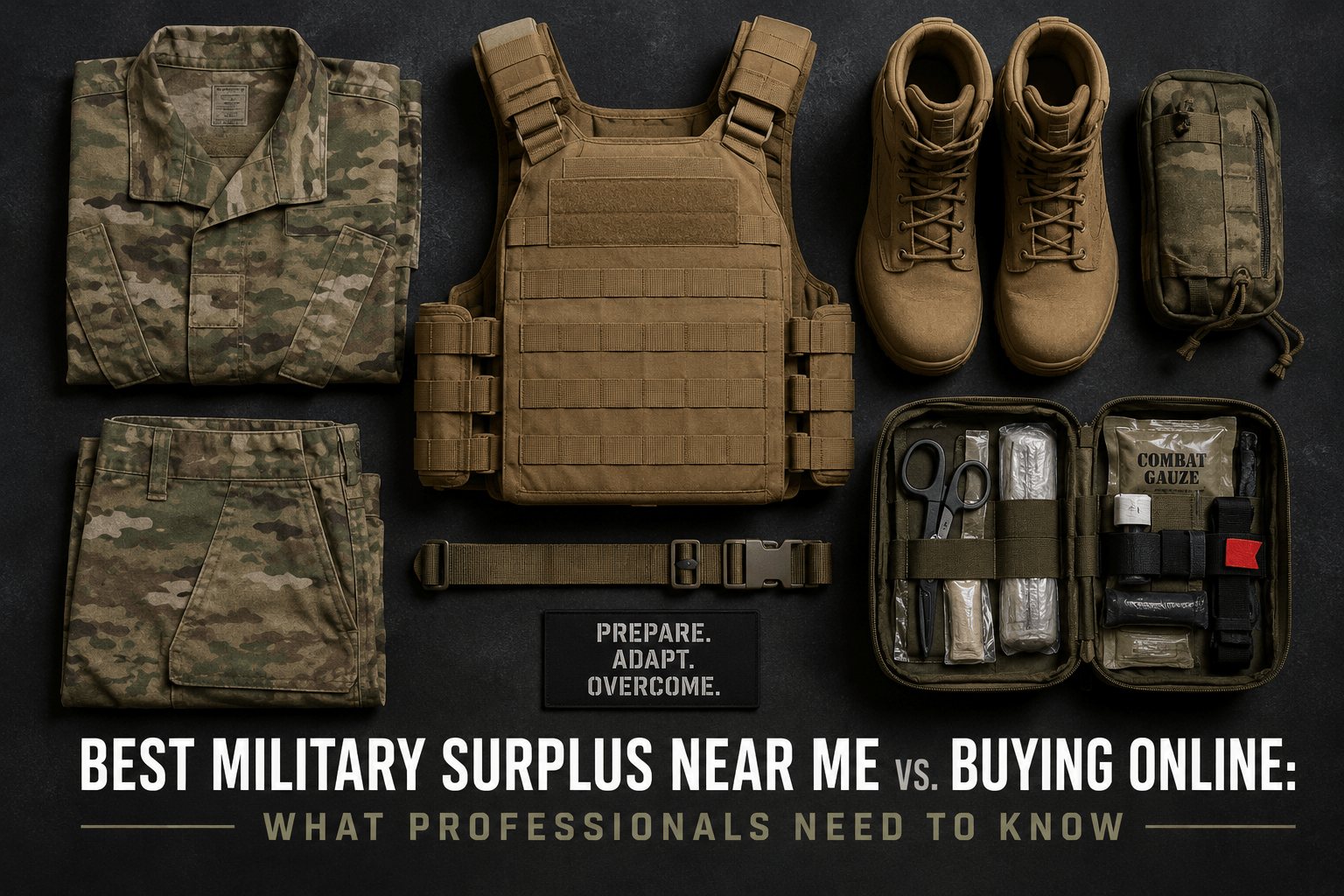
The inventory at a legitimate surplus store spans personal protective gear, load-bearing equipment, and field-ready clothing that meets or exceeds mil-spec standards. What you'll typically find breaks down across a few consistent categories:
- Clothing and uniforms — BDUs, ACUs, flight suits, cold-weather base layers, and wool blankets sourced directly from government contracts.
- Load-bearing equipment — MOLLE vests, chest rigs, ALICE packs, and modular pouches with genuine field provenance.
- Footwear — Jungle boots, combat boots, and intermediate cold/wet boots. Government-contract footwear is built to ASTM and mil-spec testing standards that consumer-grade alternatives often don't match.
- Field and shelter gear — Entrenching tools, ponchos, sleeping bags rated for extreme temperatures, and general-purpose tents.
- Medical and IFAK components — Surplus medical pouches, bandages, and litter equipment. Condition and expiration dates require close inspection on any consumable items.
In practice, inventory varies considerably by store size, region, and supplier relationships. Knowing what's typically available at a physical location — and what's more reliably sourced online — shapes the smarter buying decision.
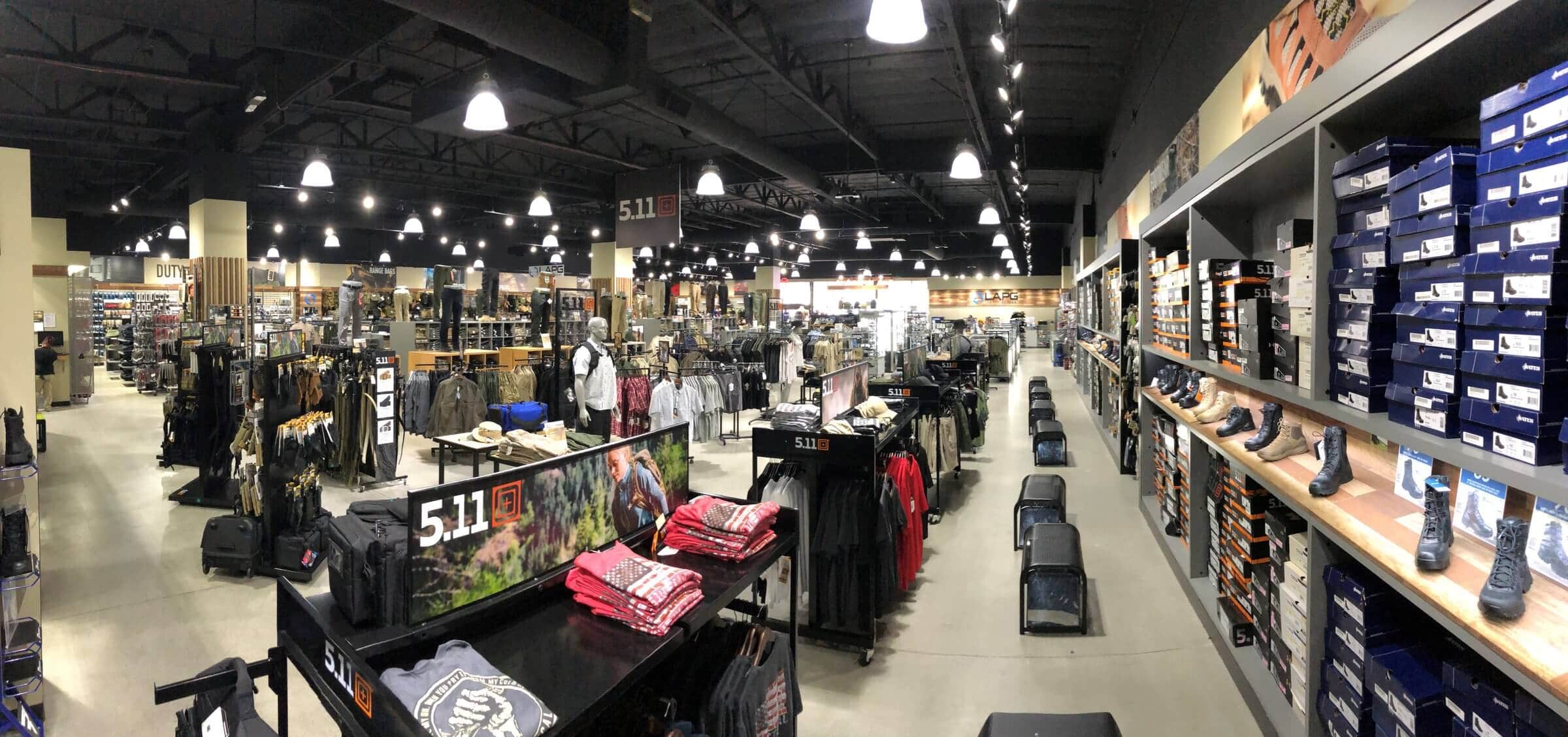 Well stocked Tactical Store
Searching "Military Surplus Near Me": What You'll Actually Find
Typing "military surplus near me" into a search engine returns results that vary widely in quality, inventory depth, and operational relevance — knowing what to expect saves time.
Not every result is a true surplus source. Local search results typically sort into three distinct categories:
- Genuine surplus dealers — carry authentic government-issue and military-spec gear, often with verifiable NSN markings and condition grades
- Army-Navy general stores — stock a mix of surplus, reproduction, and commercial gear under the same roof; useful but requires closer inspection
- Tactical retail chains — branded as surplus-adjacent but primarily stocking commercial-off-the-shelf (COTS) product at retail margins
Inventory depth is the real differentiator. A shop that sources directly from DoD liquidation contracts will carry a fundamentally different inventory than one restocking from domestic distributors. In practice, the best local military surplus stores maintain rotating stock — meaning the same shop that had nothing useful last month may have a pallet of genuine MOLLE field gear this week.
Geographic density matters too. Markets near active military installations — Fort Bragg, Camp Pendleton, or similar — tend to support higher-quality surplus dealers. Smaller markets may offer fewer options but occasionally surface rare finds that online platforms haven't absorbed yet.
Pro Tip: Before driving to any local surplus store, call ahead to confirm current hours and whether they carry what you specifically need. Many store listings on Google Maps have outdated hours or inventory info.
Are Any Military Surplus Stores Near Me Open Right Now?
Store hours are one of the most overlooked friction points when searching for an army navy surplus near me — and they can turn a productive afternoon into a wasted trip.
Most brick-and-mortar surplus stores operate on limited schedules that differ significantly from standard retail hours. A common pattern is Tuesday through Saturday, 10:00 AM to 6:00 PM, with Sunday and Monday closures that catch unprepared buyers off guard. Independently owned shops — which make up the majority of the surplus market — set their own hours based on staffing, foot traffic, and seasonal demand. There is no industry standard.
Before driving across town, confirm hours through multiple channels:
- Google Business Profile — often the most current source, as owners update it directly
- The store's Facebook page — many smaller shops post holiday closures and schedule changes here before updating their website
- A direct phone call — still the most reliable confirmation, particularly for stores with outdated web presences
Holiday schedules and seasonal inventory events add another variable. Some stores close entirely around federal holidays; others extend hours during hunting season or around Veterans Day when foot traffic spikes. Calling ahead takes 90 seconds and eliminates the risk entirely.
The online alternative: LA Police Gear's website is available 24/7, ships Monday through Friday, and maintains real-time inventory — no phone call required.
Military Surplus Within 20 Miles: It Depends Where You Live
Finding an army surplus near me is not a consistent experience — your zip code determines almost everything about what's available, how far you'll drive, and what condition the inventory is in.
Geographic density is the single biggest variable in local surplus access. In practice, proximity to active military installations tends to correlate directly with the number of physical surplus stores in a given area. Communities near Fort Bragg, Fort Hood, or Naval Station Norfolk have historically supported multiple storefronts within a short radius. Move 30 miles from any installation, and that number often drops to one — or zero.
Population density matters too. Urban metro areas generate enough foot traffic to support general surplus shops. Suburban and rural buyers often deal with thinner inventory and stores that lean toward hunting and outdoor retail rather than true tactical or military-spec equipment.
A common pattern is that regional store quality is uneven even when stores exist. One shop might carry a strong selection of current-issue MOLLE gear and surplus uniforms. Another in the same metro might stock mostly novelty items and surplus from conflicts several decades old.
There are also practical access gaps worth acknowledging. Store hours tend to be limited, and specialty items like plate carriers, night vision equipment, or issued communications gear rarely sit on local shelves.
Military Surplus in California and Texas: What's Out There
California and Texas represent two of the most active military surplus markets in the country — and the experience of finding a military store near me looks very different depending on which state you're operating in.
In California, the density of surplus options tracks closely with proximity to major installations. The areas surrounding Camp Pendleton, Fort Irwin, and the various Air Force bases in the Inland Empire tend to support brick-and-mortar stores that carry genuine issue gear. Urban centers like Los Angeles and San Diego add civilian demand to that mix, which can drive up prices on desirable items and reduce availability of true mil-spec pieces.
In Texas, the picture shifts considerably. Fort Hood (now Fort Cavazos), Fort Bliss, Joint Base San Antonio, and a string of smaller installations create a surplus pipeline that's broader and, in many areas, more accessible. Texas surplus stores near major bases frequently stock higher volumes of authentic gear, and competition among stores tends to keep pricing more grounded. Rural stretches between cities, however, can mean long drives with few options.
A common pattern in both states is that store inventory changes fast. Surplus moves quickly when it's priced right, and there's no guarantee that what's listed online or in a directory today reflects what's on the shelf tomorrow.
California shoppers: LA Police Gear is headquartered in Valencia, CA with a second retail store in Ontario — meaning fast shipping to most California addresses, often within 1–2 business days. Browse the full catalog →
Why Local Surplus Stores Often Fall Short
Searching "military surplus near me" often returns results that look promising on the map but disappoint in person. The core problem is structural: most local surplus stores operate on unpredictable acquisition cycles, limited floor space, and no obligation to stock what you actually need.
Inconsistent stock is the defining limitation. A store that had surplus plate carriers last month may be running nothing but vintage field jackets this week. Acquisition depends on what government auctions, estate sales, and private liquidators happen to offload — not on customer demand.
There are a few specific ways local stores consistently fall short for tactical and professional buyers:
- Size and condition gaps. High-demand sizes — particularly large and XL — move fast and rarely get restocked on a reliable schedule.
- Authenticity uncertainty. Without documentation or provenance, distinguishing genuine-issue gear from commercial replicas can require hands-on expertise most store staff do not have.
- Limited category depth. Many stores stock broad categories at low depth — a few holsters, a few packs — rather than offering the range a professional needs to make a meaningful comparison.
- Geography-dependent quality. Proximity to an active military installation improves odds considerably, but most buyers do not have that advantage.
On the other hand, local stores do offer one thing online cannot replicate: the ability to physically inspect and fit gear before committing. That tactile advantage matters. The question is whether the inventory available on any given visit justifies the trip.
Hit-or-Miss Inventory: You Can't Always Find What You Need
Searching "army surplus shop near me" often leads to stores that carry plenty of vintage field jackets but fall short on the mission-critical gear professionals actually need.
The core inventory problem is unpredictability. Local surplus stores operate on whatever stock comes through the door — government liquidations, estate sales, bulk lots from base closures. That supply chain is inherently inconsistent. A store might have a full rack of MOLLE plate carriers one week and nothing but Cold War-era canteen covers the next.
For tactical professionals, that inconsistency carries real operational weight. Consider these common inventory gaps at physical surplus locations:
- Sized gear — Body armor, plate carriers, and chest rigs in specific sizes disappear fast and restock on no predictable schedule.
- Current-generation items — Most brick-and-mortar surplus skews toward older kit. Finding genuine USGI issue from the last decade is rare.
- Matching sets — Sourcing compatible MOLLE components, pouches, and carriers in the same pattern and generation often requires multiple trips or multiple stores.
- Specialty items — IFAKs, tourniquets, and communications accessories are stocked inconsistently, if at all.
In practice, professionals who depend on specific specifications cannot afford to leave procurement to chance. Online platforms address this directly through cataloged inventory, searchable filters, and consistent restocking.
Outdated and Used Gear: A Risk for Professionals
Condition grading at surplus stores is inconsistent, and for professionals who depend on their gear, that inconsistency carries real operational risk.
The core issue is provenance: surplus stores rarely know the full service history of the equipment on their shelves. A plate carrier might look serviceable under fluorescent lighting but carry stress damage from prior use that isn't visible on inspection. MOLLE webbing frays at the stitching. Buckles fatigue. Retention systems wear out of spec. In a training environment, that's an inconvenience. On a call, it's a liability.
Age compounds the problem. Surplus inventory often reflects procurement cycles from a decade or more ago — meaning the gear predates current NIJ standards, updated retention classifications, or revised load-bearing designs. A tactical vest purchased surplus may not integrate cleanly with current-issue accessories, magazines, or holster platforms your department or unit already runs.
In practice, condition grading varies widely across surplus retailers. Terms like "good used" or "serviceable" are applied inconsistently and rarely come with documentation of prior use, storage conditions, or inspection history. There's no standardized grading framework comparable to what reputable online tactical retailers apply to their inventory.
For duty-critical gear — IFAKs, plate carriers, retention holsters — the risk introduced by unknown gear history outweighs any cost advantage. New, spec-verified gear is the only defensible choice.
Why Buying Tactical Gear Online Beats the Surplus Store Run
Buying tactical gear online eliminates the core frustrations that surplus stores consistently fail to solve: unpredictable inventory, inconsistent condition grading, and limited selection of mission-current equipment.
The fundamental advantage is access — online tactical retailers carry purpose-built, new-condition gear across every category, from MOLLE-compatible plate carriers to IFAK components rated to current military standards. No digging through bins hoping someone traded in what you need.
The practical differences break down this way:
- Selection depth: Online catalogs carry full size runs, color options, and spec variations that no physical surplus location can stock simultaneously.
- Condition transparency: New-condition gear ships with manufacturer specs and warranties attached. There is no ambiguity about wear history or previous service use.
- Availability: If a duty holster, body armor panel, or tactical boot is in stock, it ships — no wasted drive time to find empty shelves.
- Spec verification: Product pages list exact materials, certifications, and compatibility data. LEOs and first responders can confirm compliance with department mandates before purchase.
| Factor | Local Surplus Store | LA Police Gear Online |
|---|---|---|
| Inventory Consistency | ✗ Unpredictable, rotates by chance | ✓ Cataloged, replenishable SKUs |
| Gear Condition | ✗ Used/unknown history | ✓ New with manufacturer warranty |
| Full Size Runs | ✗ Hit or miss | ✓ XS–4XL in most categories |
| Hours / Availability | ✗ Limited, often Tue–Sat only | ✓ 24/7 online ordering |
| Spec Documentation | ✗ Rarely available | ✓ Full specs on every product page |
| Returns / Accountability | ✗ Often final sale | ✓ Structured return policy |
| Pricing Transparency | ✗ Variable, no benchmarks | ✓ Competitive, clearly listed |
LAPG vs. Your Local Surplus Store: Side-by-Side
When it comes to sourcing tactical gear, the comparison between a local surplus store and a dedicated online retailer like LA Police Gear comes down to one thing: operational reliability.
The surplus store model cannot consistently deliver what professionals actually need. Inventory is unpredictable, condition grading is unreliable, and sizing availability is a gamble on any given visit. For a hobbyist or a casual buyer, that uncertainty is manageable. For an LEO outfitting a duty loadout or a first responder building an IFAK, it is not.
The gap widens further when the gear in question carries genuine protective or retention responsibility. That's where LA Police Gear's own product line becomes especially relevant — and where purpose-built, in-house gear offers a distinct advantage over repurposed military castoffs.
Beyond the product catalog, LAPG brings additional advantages that no local surplus store can match:
- 300,000+ verified customer reviews across the catalog — real feedback from LEOs, military personnel, and tactical professionals
- Authorized dealer status for major brands including 5.11 Tactical, Propper, Bates, Condor, and more
- Agency purchase program — structured procurement support for law enforcement departments and government agencies
- Founded by LAPD officers — product selection is informed by people who've worked the job
LAPG In-House Brand: Military-Grade Quality, Without the Markup
LA Police Gear's in-house line delivers purpose-built, spec-driven gear at a price point that reflects what the product actually costs to produce — not what a name brand charges for the label.
In-house design means direct control. Unlike surplus inventory sourced from decommissioned stockpiles or secondary markets, LAPG's proprietary gear is engineered from the ground up for operational use. Fabric weight, stitching patterns, hardware tolerances — every detail is set by people who understand what LEOs, military personnel, and security professionals actually put gear through.
Spec integrity holds across the catalog. LAPG maintains consistent material and construction standards whether you're looking at duty pants, plate carriers, or range bags. That consistency matters when you're building out a kit and need components that perform at the same level.
Price reflects production cost, not brand premium. Cutting out the intermediate distributor and retail markup means the savings land with the buyer — up to 50% less than comparable name-brand alternatives. That's not a promotional framing; it's the structural reality of a vertical model where design, sourcing, and sales sit under one roof.
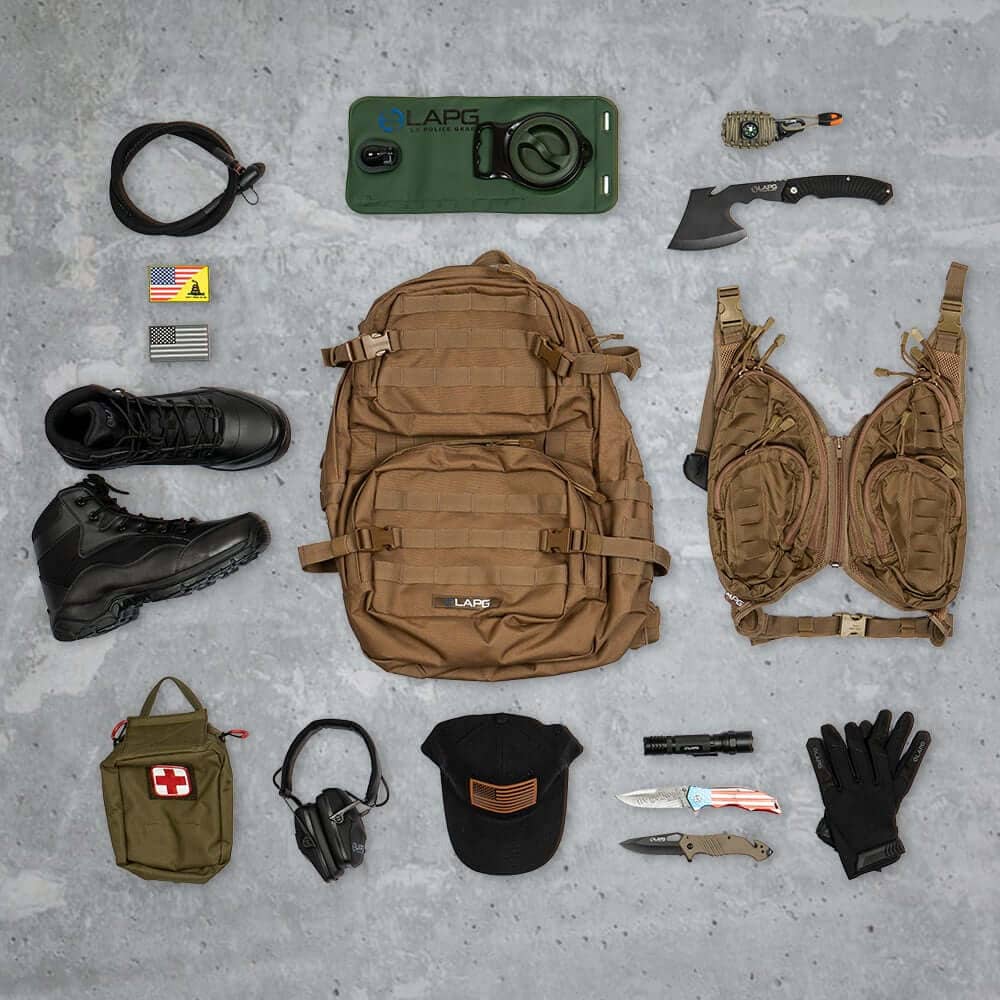 LAPG Branded Gear Layout
What to Buy at LAPG Instead of Your Local Surplus Store
New, spec-consistent gear from LA Police Gear outperforms used surplus for any item where fit, condition, and reliability are non-negotiable. Here's where the online advantage is clearest:
Tactical Pants & Uniforms
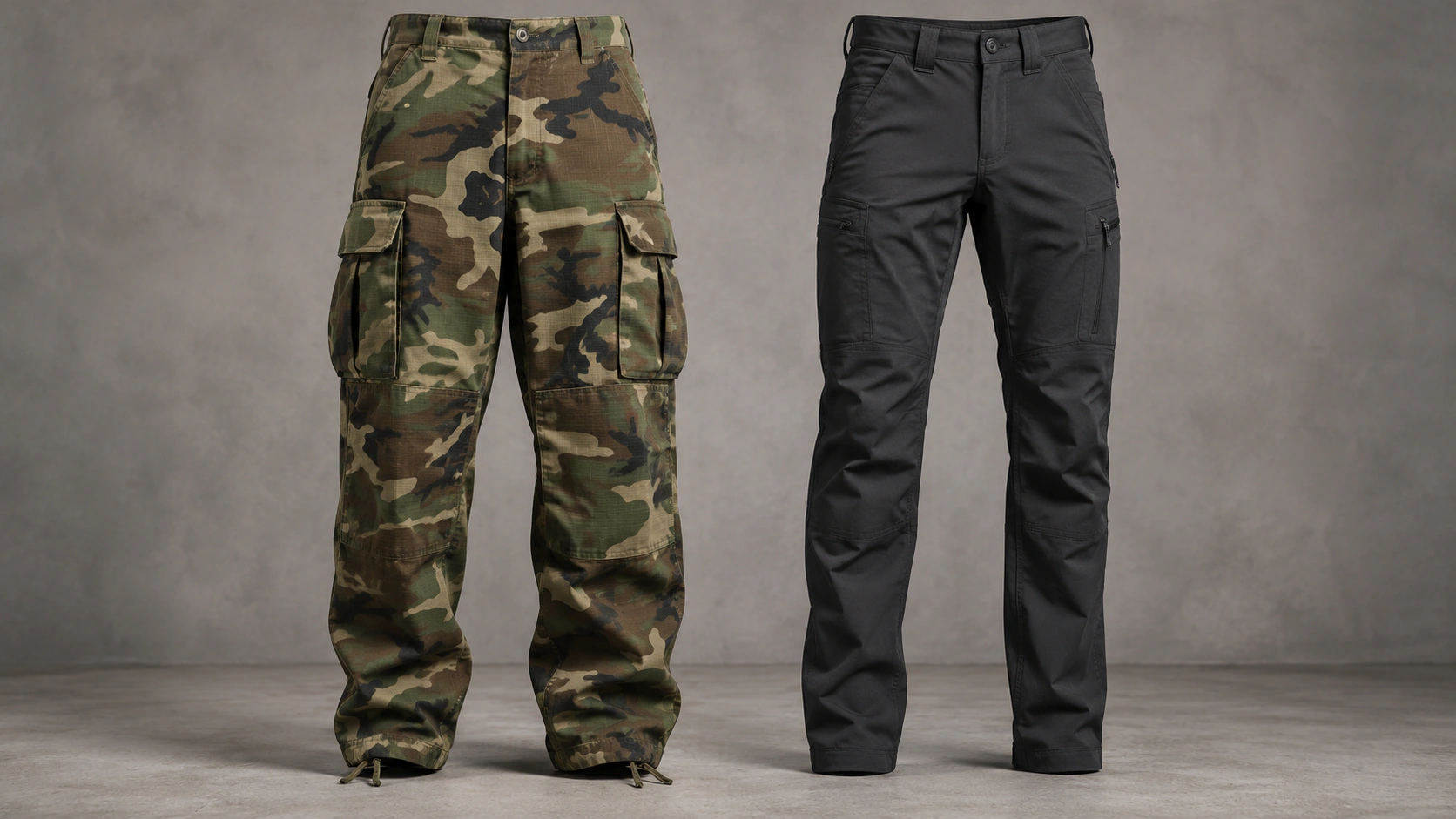
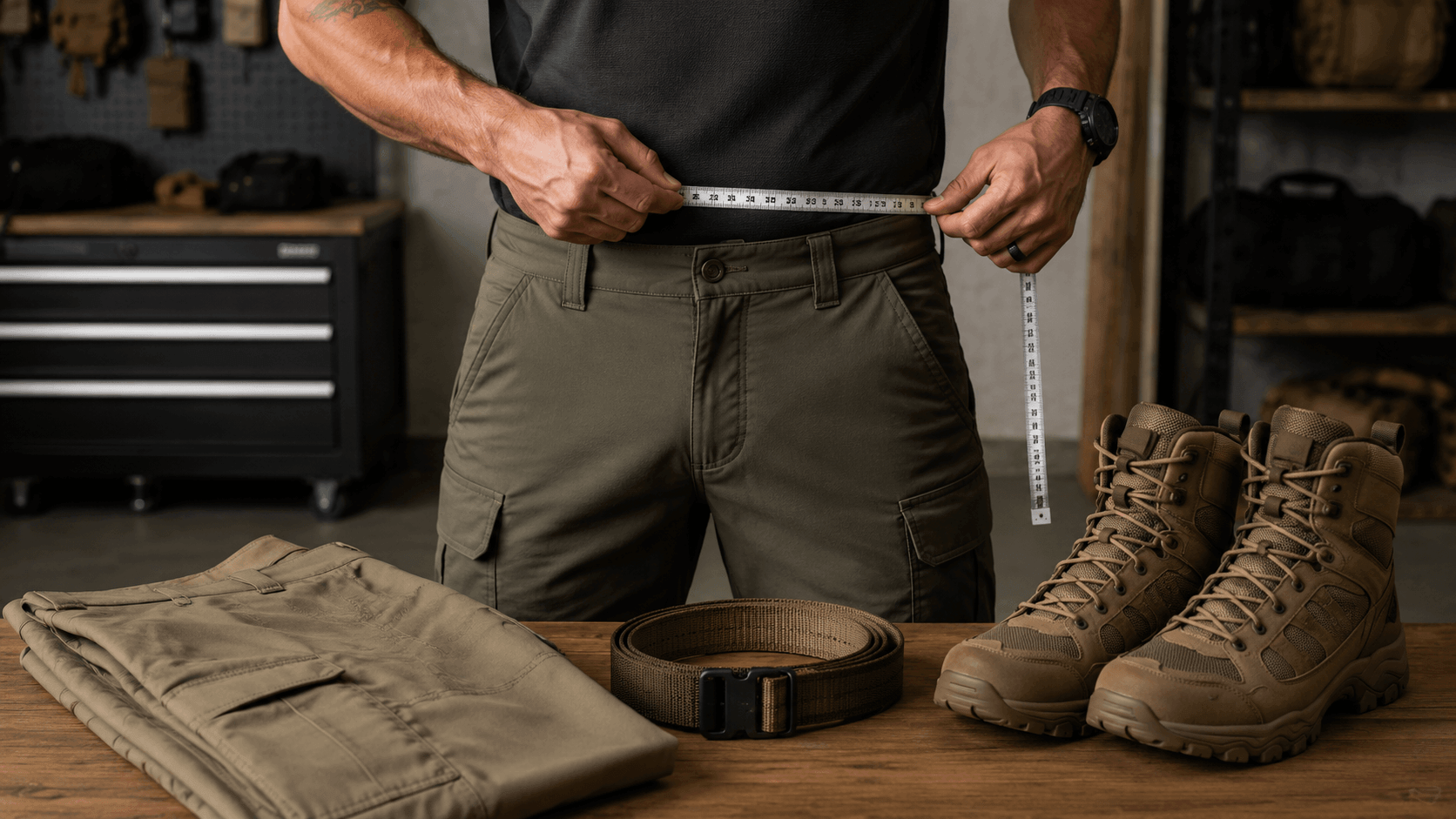
LAPG's tactical pants ship new, sized consistently, and are purpose-built for range of motion under a duty belt — not retrofitted from a decommissioned lot. No size uncertainty, no condition variables.
Duty & Tactical Boots
Used boots carry unknown mileage on the midsole, compromised ankle support, and hygiene concerns that no conditioning resolves. Buying new from LAPG's boot catalog means a full manufacturer warranty and a known break-in baseline.
Body Armor & Plate Carriers
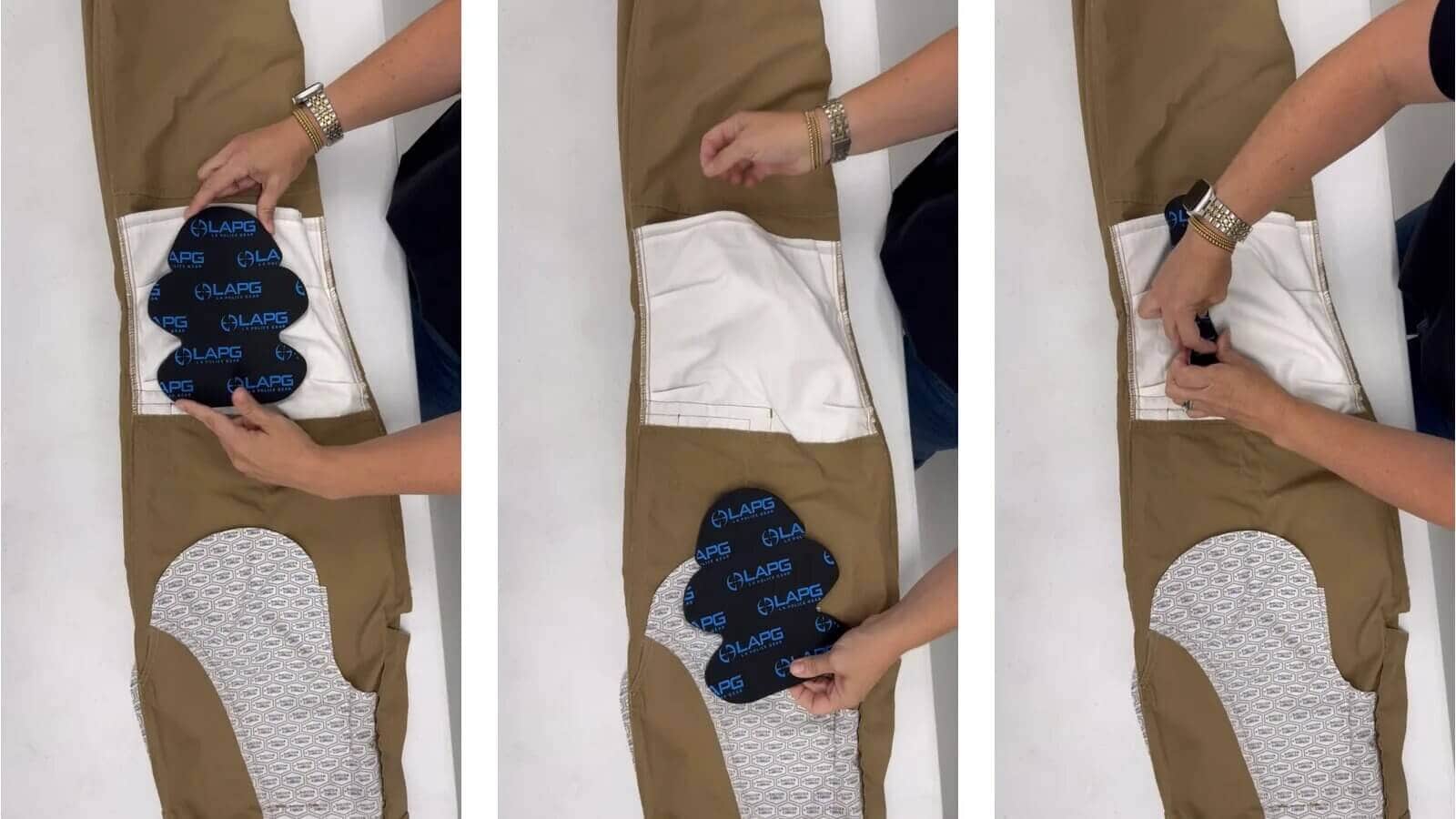
MOLLE webbing that's been stressed, cut, or heat-damaged may show no visible failure until it fails under load. New carriers from LAPG ship with intact stitching, rated hardware, and known load specs.
IFAK & First Aid Kits
Consumables purchased from surplus channels carry expiration risk and unknown storage histories. LAPG's IFAK and first aid section stocks current-production kits with full component documentation.
Tactical Bags & Packs
For any item that carries load — bags, range packs, and duty bags — structural integrity matters from day one. New gear, built to current MOLLE standards, ships ready to configure.
Optics, Lights & Electronics
Any item that powers on deserves a new battery cycle history, current firmware, and an active warranty path. Surplus channels offer none of those. LAPG carries lights, optics accessories, and electronic duty gear from authorized dealers.
Prefer to Shop In Person? LAPG Has Two Retail Stores in Southern California
If you'd rather see and handle gear before you buy it, you don't have to settle for an unpredictable surplus store — LA Police Gear operates two full-service retail locations in Southern California, both stocked with the same catalog you'd find online.
Unlike surplus stores with rotating, unpredictable inventory, both LAPG retail locations carry the full in-house product line alongside authorized name brands — so you can try on tactical pants, fit duty boots, and assess plate carriers in person before committing. The Valencia store also features an on-site tailor for uniform alterations and quick-turn service — a capability no surplus store can match.
📍 Valencia — HQ Store
📍 Ontario Store
Both locations offer the predictable inventory, professional staff, and consistent selection that local surplus stores simply can't. Whether you're in Los Angeles, the Inland Empire, or anywhere across Southern California — there's an LAPG store within driving distance that won't waste your trip.
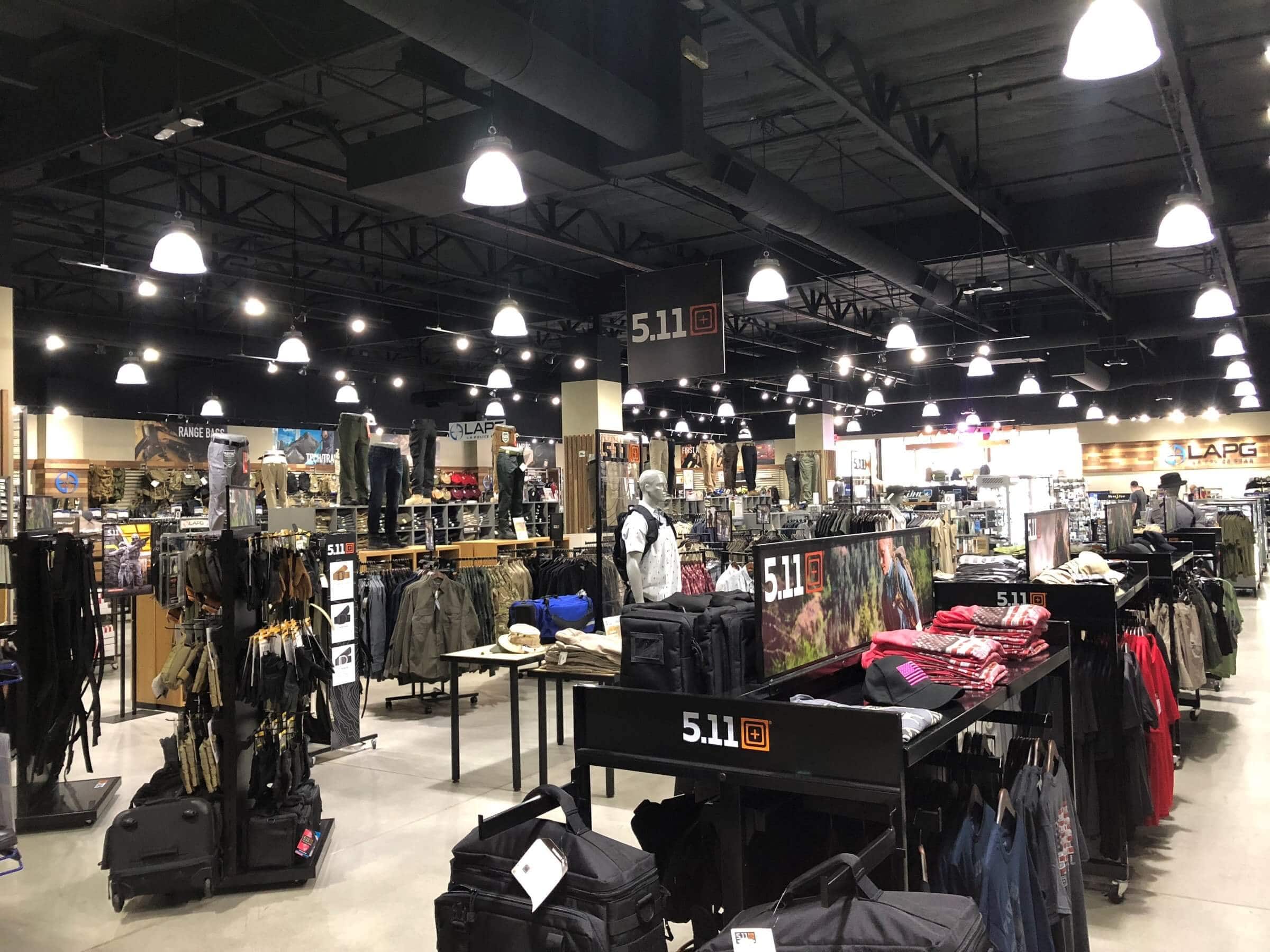 The Beautiful Ontario Retail Store
Skip the Drive — Shop LAPG Online
The case for buying duty gear online comes down to one factor: consistency. When you need a holster, plate carrier, or IFAK to perform on day one, verified specs and a reliable return policy matter more than the convenience of a local browse.
Local surplus stores serve a real purpose — they're solid sources for field-expedient items, vintage collectibles, and incidental gear where condition variables are acceptable. But for anything load-bearing, retention-critical, or body-armor adjacent, those condition variables become operational liabilities.
- Selection depth: Current-production duty gear, patrol boots, MOLLE-compatible pouches, and CCW-ready holsters — not a rotating inventory of whatever came in last week.
- Specification accuracy: Every product listing includes manufacturer specs, material grades, and compatibility details.
- Condition certainty: New gear ships new. No "good used condition" ambiguity on items where fit and structural integrity are non-negotiable.
- Pricing transparency: Competitive pricing, clearly listed — no markup theater.
Whether you are an LEO outfitting a new duty rig, a first responder building out an IFAK, or a service member sourcing personal gear — the drive to a surplus store should be optional, not the default.
Shop LA Police Gear — New Gear, Real Specs, Fast Shipping
Trusted by law enforcement, military, and tactical professionals since 2001.