Table of Contents
- TL;DR: What Is the Best Handgun for Professionals?
- Why 9mm Became the Professional Standard
- What Makes a Handgun Professional Grade?
- Glock 19 vs. Sig Sauer P320: Two Different Duty Philosophies
- Choosing a "One and Done" Handgun for Concealed Carry and Home Defense
- The Best Handgun Depends on the Complete Loadout
- Glossary: Key Handgun Terms
- Bottom Line: The Best Handgun Is Mission-Specific
- FAQs
Best Handgun Guide: Why Professionals Choose 9mm
The search for the best handgun often starts with a model name. For law enforcement officers, military personnel, armed professionals, and serious concealed carriers, the better question is different: which handgun fits the mission, the shooter, and the complete gear system?
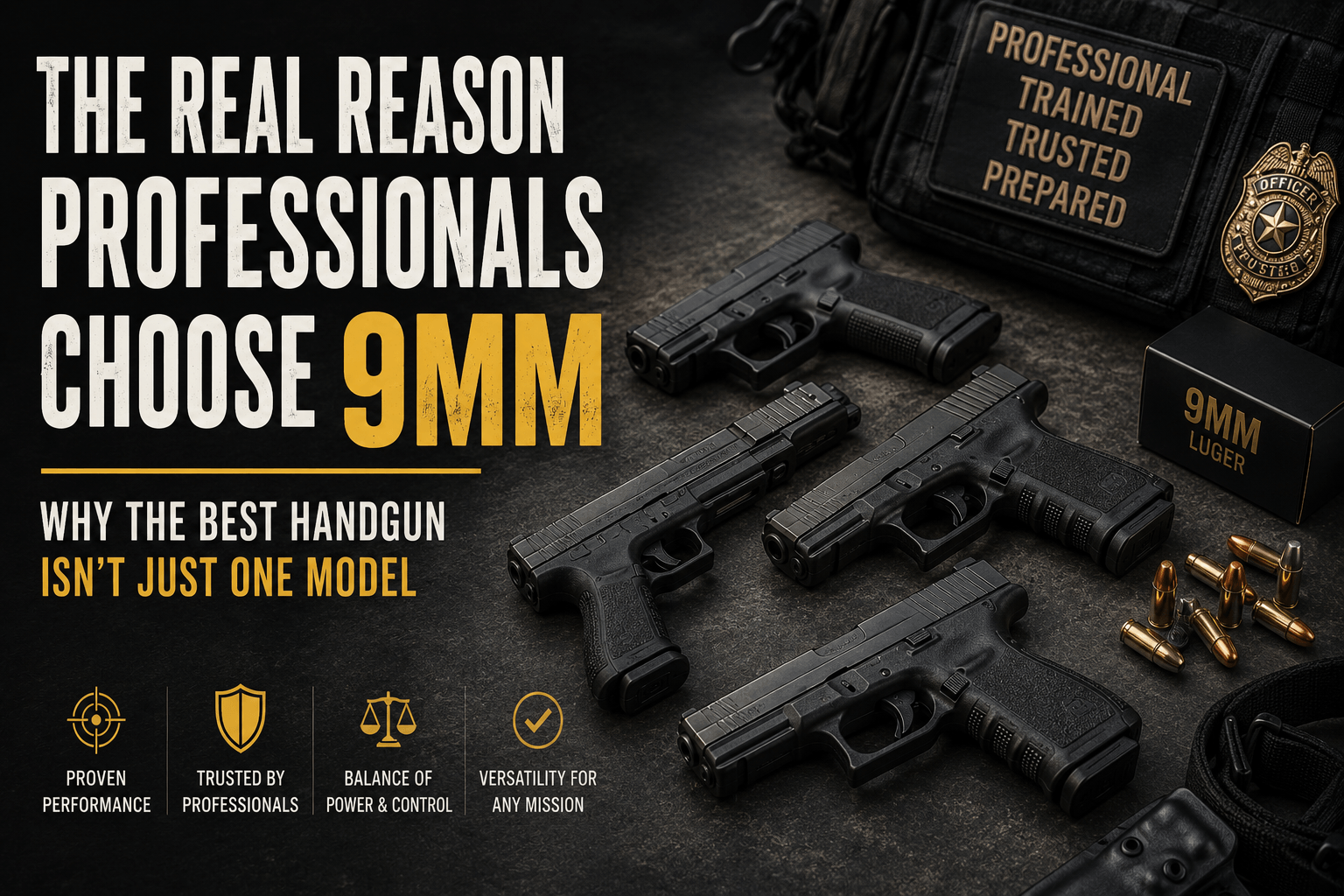
For many professional users, that answer increasingly centers on the 9mm. The reason is not hype. It is a combination of controllability, magazine capacity, ammunition performance, training efficiency, reliability, and compatibility with duty gear.
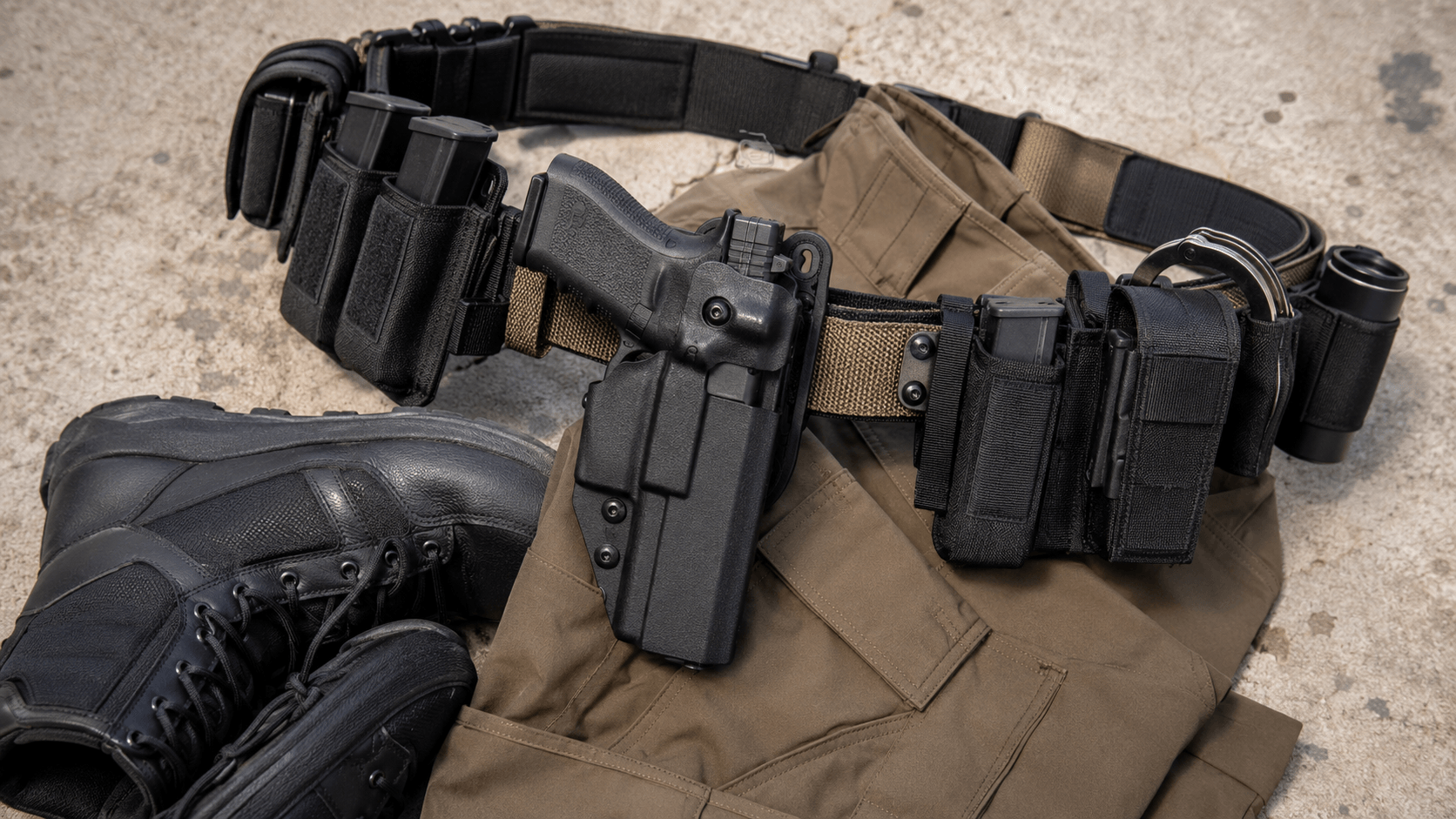 Professional duty belt setup with 9mm handgun, retention holster, tactical pants, belt, and boots
TL;DR: What Is the Best Handgun for Professionals?
The best handgun is not one universal model. For most professional and defensive users, a high-quality 9mm pistol is the practical standard because it balances recoil control, capacity, reliability, training cost, and gear compatibility. Popular duty-size and compact 9mm platforms such as the Glock 19 and Sig Sauer P320 remain common choices because they support serious training, holster options, weapon lights, optics, and long-term parts availability.
Why 9mm Became the Professional Standard
The professional shift toward 9mm happened because performance is about more than caliber size. In 2014, the FBI Training Division summarized its position for law enforcement partners, noting that modern 9mm loads offered higher capacity, less recoil, lower cost, and strong terminal performance compared with larger common duty calibers. The same FBI summary also stated that the majority of FBI shooters were faster and more accurate with 9mm than with .40 S&W when using similar-size pistols. Read the FBI Training Division summary.
That does not mean 9mm is magic. It means 9mm gives many shooters a practical advantage where it matters most: accurate follow-up shots under stress. Less recoil can help the sights return faster, reduce fatigue in high-round-count training, and improve consistency for officers, recruits, and armed professionals who train across different experience levels.
The FBI’s standard handgun ammunition testing protocol also emphasizes penetration, expansion, and barrier performance instead of relying on vague "stopping power" claims. In practical terms, modern duty ammunition must perform through common barriers while still allowing the shooter to place rounds accurately.
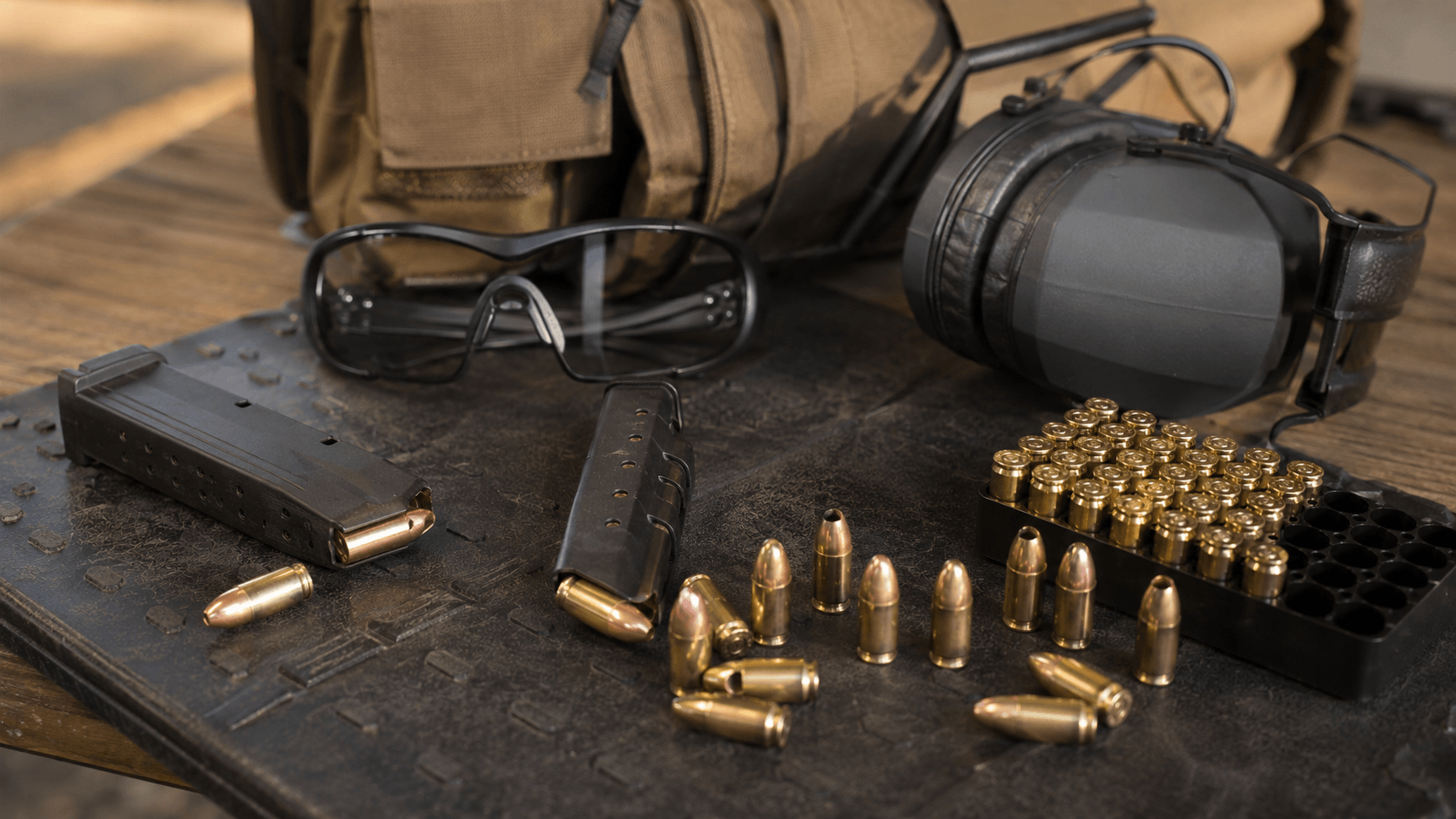 Close-up of 9mm training ammunition, magazines, and range gear on a bench
What Makes a Handgun Professional Grade?
A professional-grade handgun should be judged by measurable performance, not marketing language. For duty use, the firearm has to survive hard training, environmental exposure, repeated holster work, and long service cycles.
The U.S. Army’s Modular Handgun System program is a useful reference point because it evaluated pistols as complete systems, including reliability, ergonomics, ammunition, accessories, and long-term sustainment. The Army’s current M17 and M18 Modular Handgun System page describes the issued pistol as a 9mm, striker-fired system with ambidextrous controls, interchangeable grip modules, and multiple safety mechanisms. See the U.S. Army M17/M18 Modular Handgun System overview.
Professional Handgun Standards to Consider
- Reliability: The pistol should function consistently across training cycles, defensive drills, and duty conditions.
- Controllability: Recoil, grip shape, trigger reach, and sight tracking should support accurate repeat shots.
- Holster compatibility: The platform should work with quality OWB, IWB, and duty retention holsters.
- Accessory support: A professional handgun should support common weapon lights, optics, sights, magazines, and replacement parts.
- Armorer support: Departments and serious users benefit from platforms with widely available maintenance parts and training resources.
- Gear integration: The pistol must work with the belt, holster, apparel, footwear, and load-bearing equipment around it.
A handgun that shoots well on a clean range but lacks holster support, parts availability, or duty-ready accessories is not a complete professional solution.
Glock 19 vs. Sig Sauer P320: Two Different Duty Philosophies
When people compare the best 9mm handguns for duty or concealed carry, two names come up often: Glock 19 and Sig Sauer P320. Both are striker-fired 9mm platforms with strong professional followings. The difference is not simply which one is "better." The difference is what each platform prioritizes.
Glock 19: Simplicity and Track Record
The Glock 19 is often treated as the benchmark compact 9mm because it balances size, capacity, weight, and simplicity. Its fixed-frame design, consistent trigger system, broad aftermarket support, and widespread holster availability make it a practical choice for duty, off-duty, and concealed carry roles.
Sig Sauer P320: Modularity and Fit
The Sig Sauer P320 is known for modularity. Its serialized fire control unit can be paired with different grip modules, slide lengths, and configurations. That flexibility is one reason the P320-based M17 and M18 became the U.S. Army’s Modular Handgun System. The Government Accountability Office decision on Glock’s protest confirms the Army evaluated the Modular Handgun System proposals across factors including reliability, ergonomics, ammunition, accessories, price, production, and past performance. Read the GAO decision on the MHS procurement.
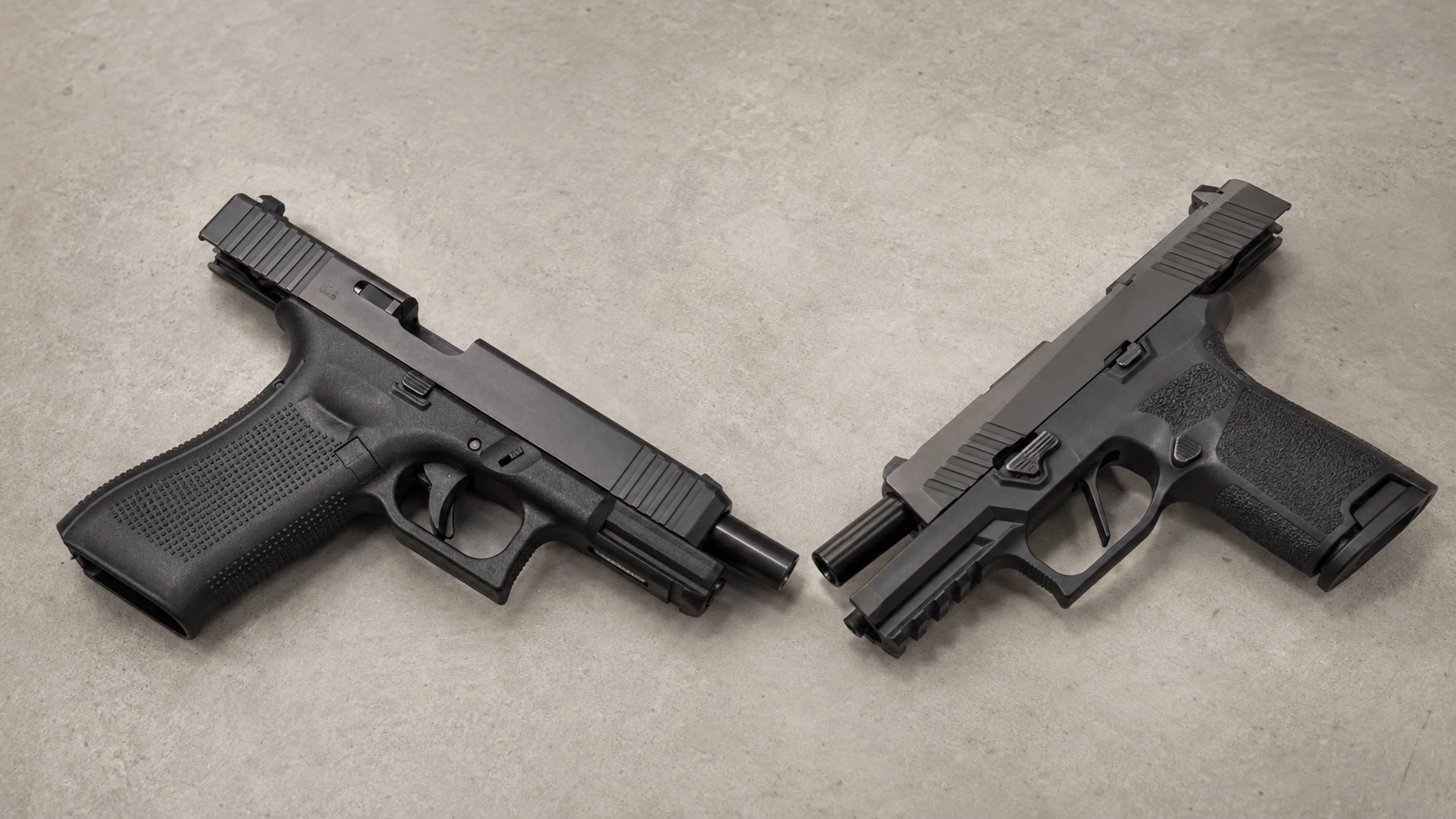 Side-by-side comparison image of two unloaded compact 9mm duty pistols on a neutral workbench
Glock 19 vs. Sig Sauer P320 Comparison
| Feature | Glock 19 | Sig Sauer P320 |
|---|---|---|
| Caliber | 9mm | 9mm in common duty configurations |
| Action | Striker-fired | Striker-fired |
| Core advantage | Simplicity, consistency, broad support | Modularity, grip fit, configuration flexibility |
| Frame system | Fixed polymer frame | Serialized fire control unit with interchangeable grip modules |
| Typical use case | Duty carry, concealed carry, off-duty carry, training | Duty carry, agency standardization, adaptable fit, training |
| Gear considerations | Extensive holster and aftermarket ecosystem | Strong support, but configuration must match holster choice |
The better choice depends on the shooter and the role. A user who values maximum simplicity may prefer the Glock 19. A department or shooter who needs grip-size flexibility may prefer the P320. In either case, the handgun should be tested with the actual holster, belt, magazines, lights, and apparel the user plans to carry.
Choosing a "One and Done" Handgun for Concealed Carry and Home Defense
A "one and done" handgun is a pistol that can serve multiple roles without forcing major compromises. For many users, that means a compact 9mm with enough capacity for defensive use, enough size for controllable shooting, and enough concealability for daily carry.
Concealed Carry Handgun Checklist
- Capacity: Choose a capacity that fits your legal environment, carry method, and training standard.
- Grip fit: The handgun should let you establish a repeatable firing grip during the draw.
- Holster support: Confirm that quality IWB, OWB, and retention holsters exist before committing to the platform.
- Training comfort: The gun should be controllable enough that you will train with it regularly.
- Accessory compatibility: Consider night sights, optics-ready slides, and weapon light support where appropriate.
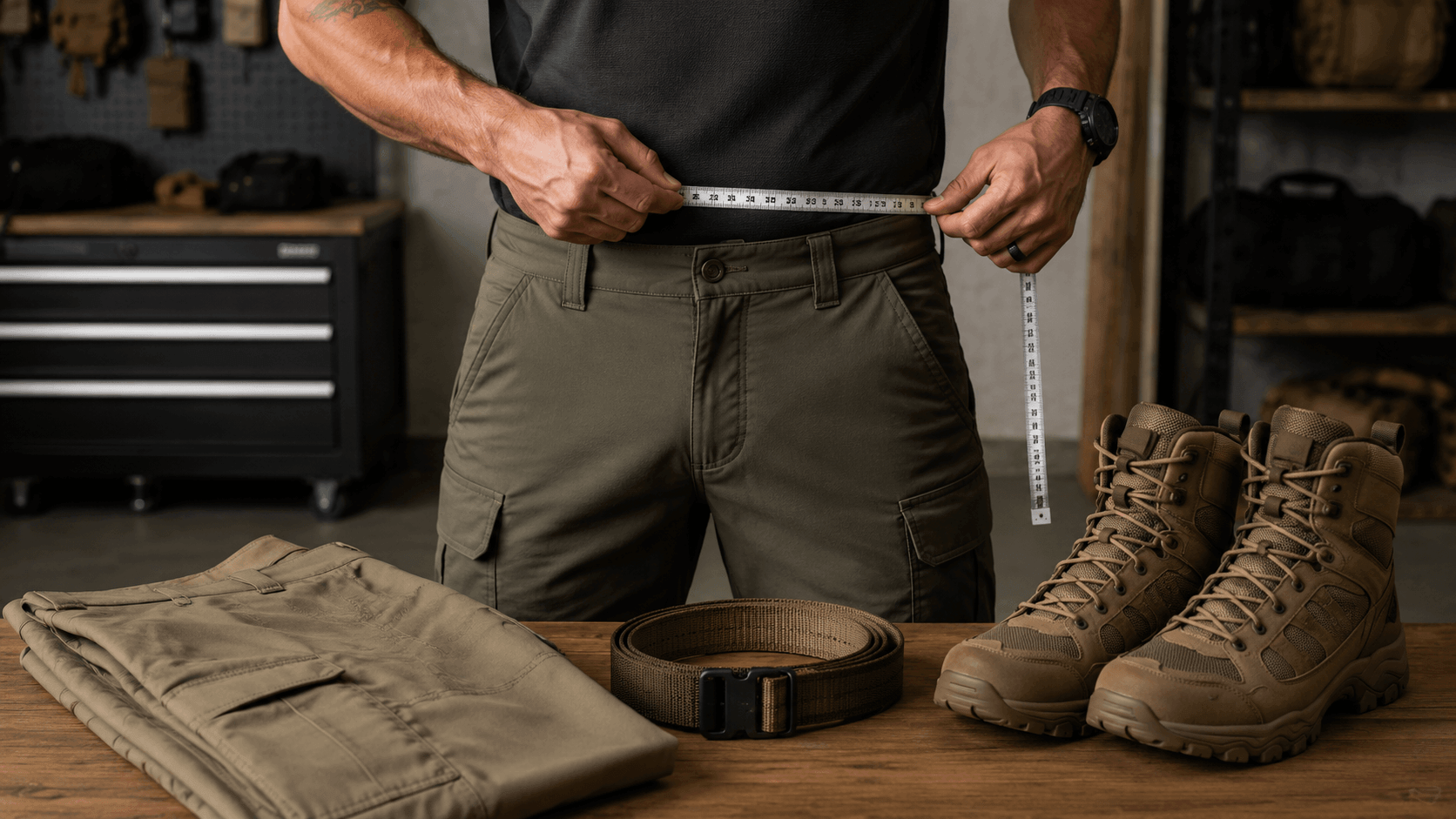
- Apparel compatibility: Belts, pants, shirts, and outerwear affect concealment and access.
Concealed carry is not just about handgun size. It is also about how the gun works with your belt, pants, shirt, holster, and daily movement. A reliable compact handgun can still fail as a carry system if the holster shifts, the belt collapses, or clothing blocks access.
The Best Handgun Depends on the Complete Loadout
The best handgun is only one part of a professional setup. A duty pistol, concealed carry pistol, or training pistol must work inside a complete system.
For law enforcement and security professionals, that system includes the holster, duty belt, magazine pouches, pants, boots, gloves, flashlight, radio, and outer carrier. For tactical fitness and prepared civilians, it may include a range bag, training belt, weighted vest, plate carrier, hydration, and durable footwear.
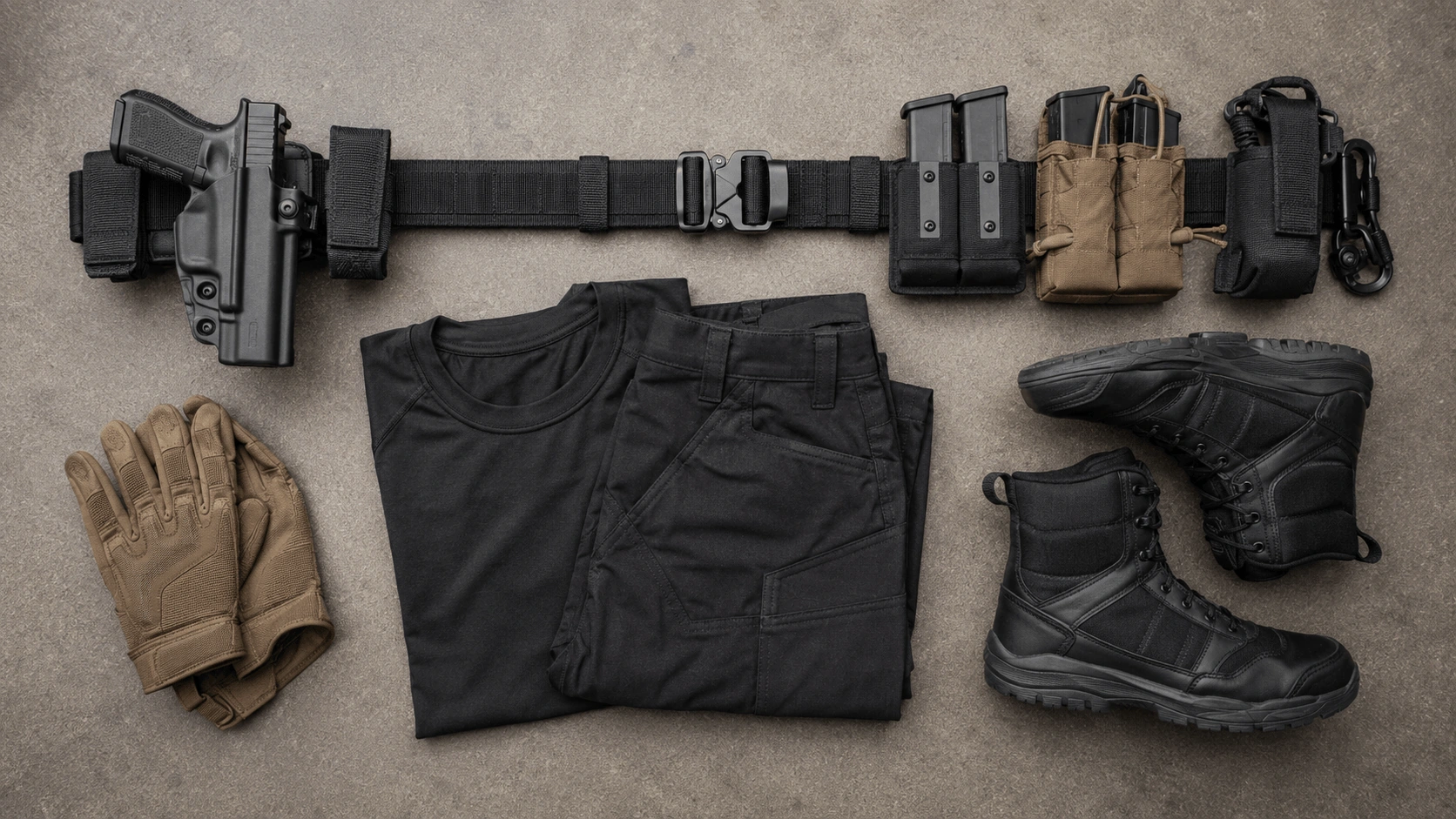
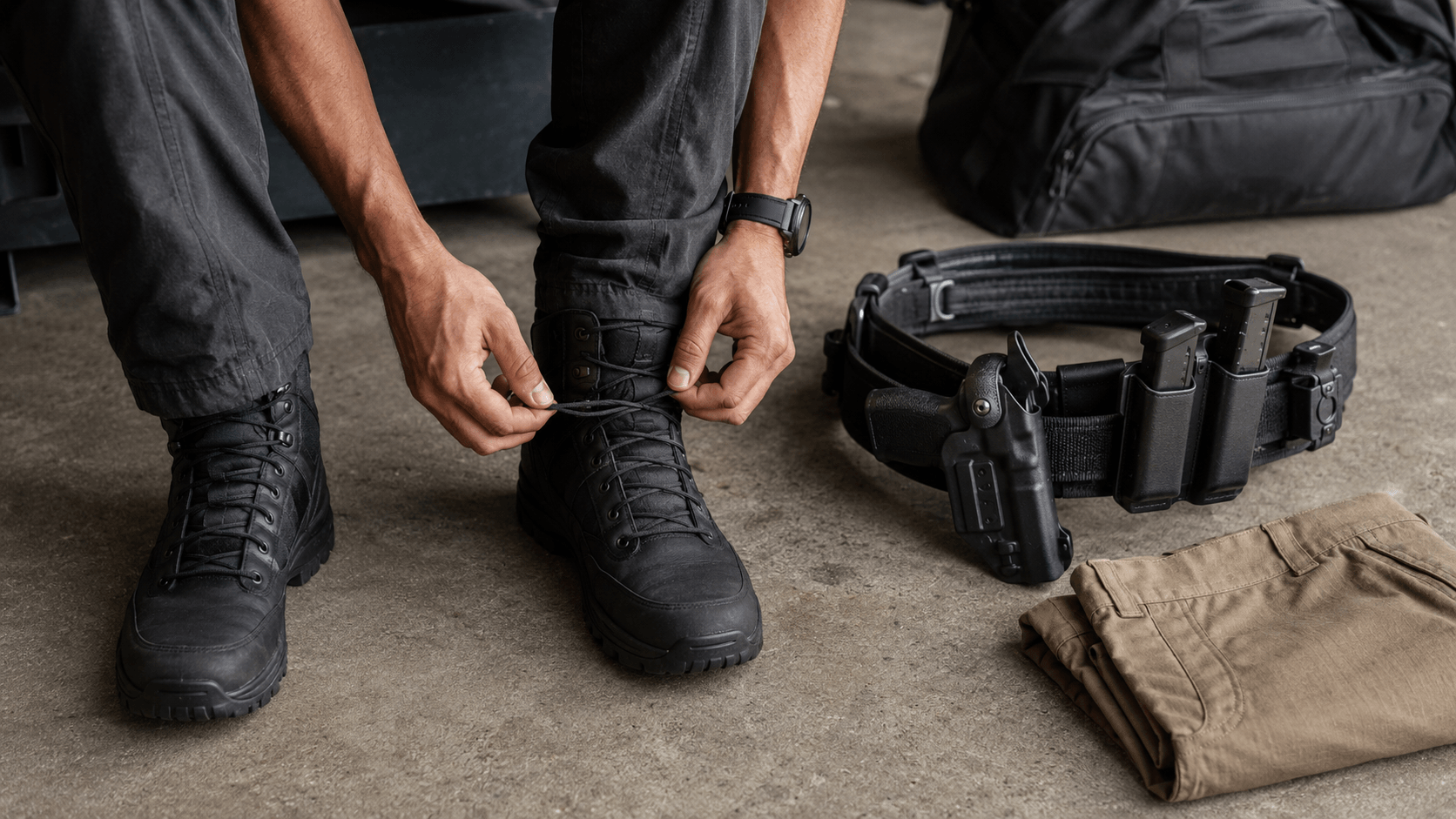 Tactical user tying duty boots beside tactical pants, range bag, and belt setup
Gear That Affects Handgun Performance
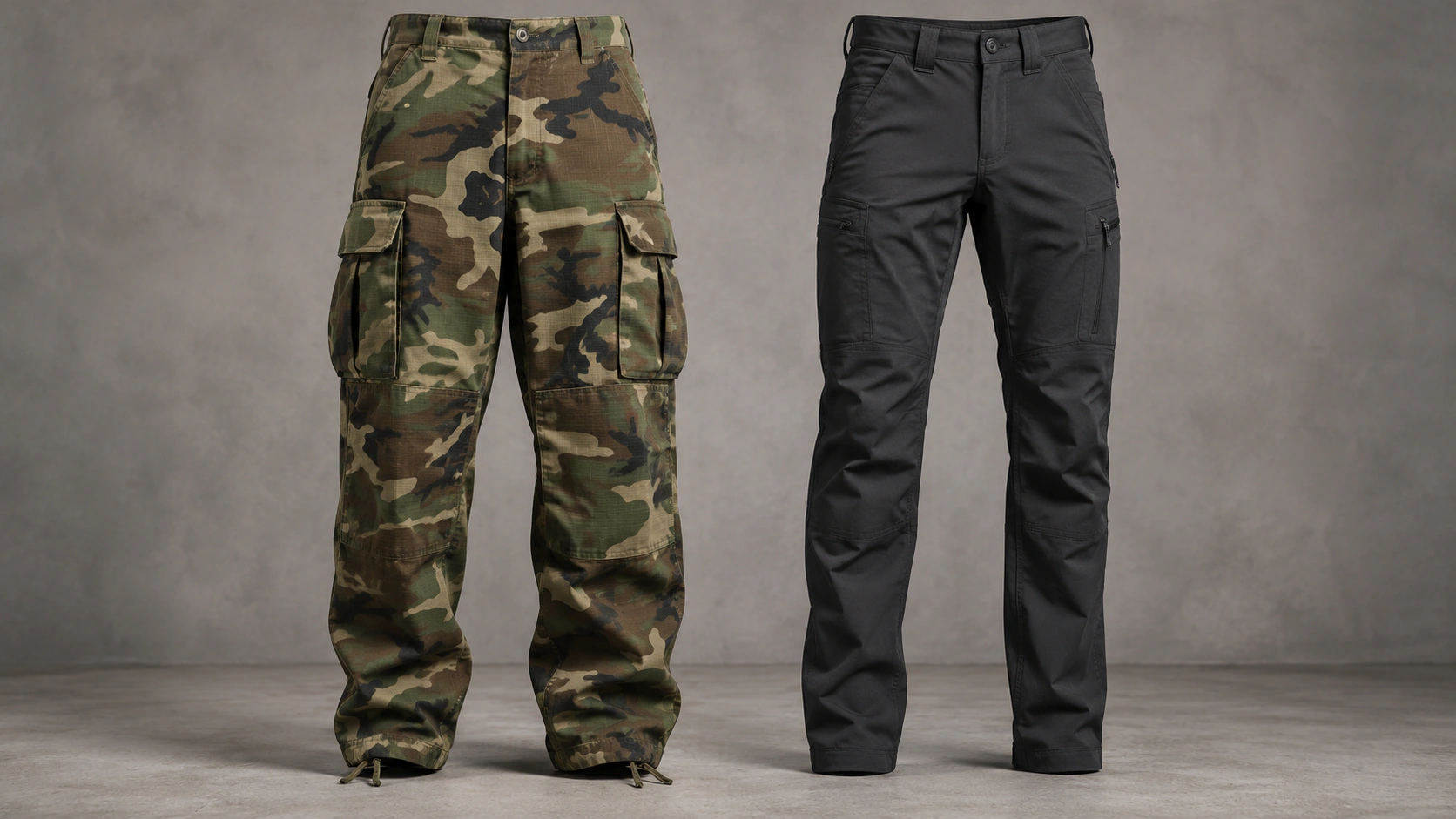
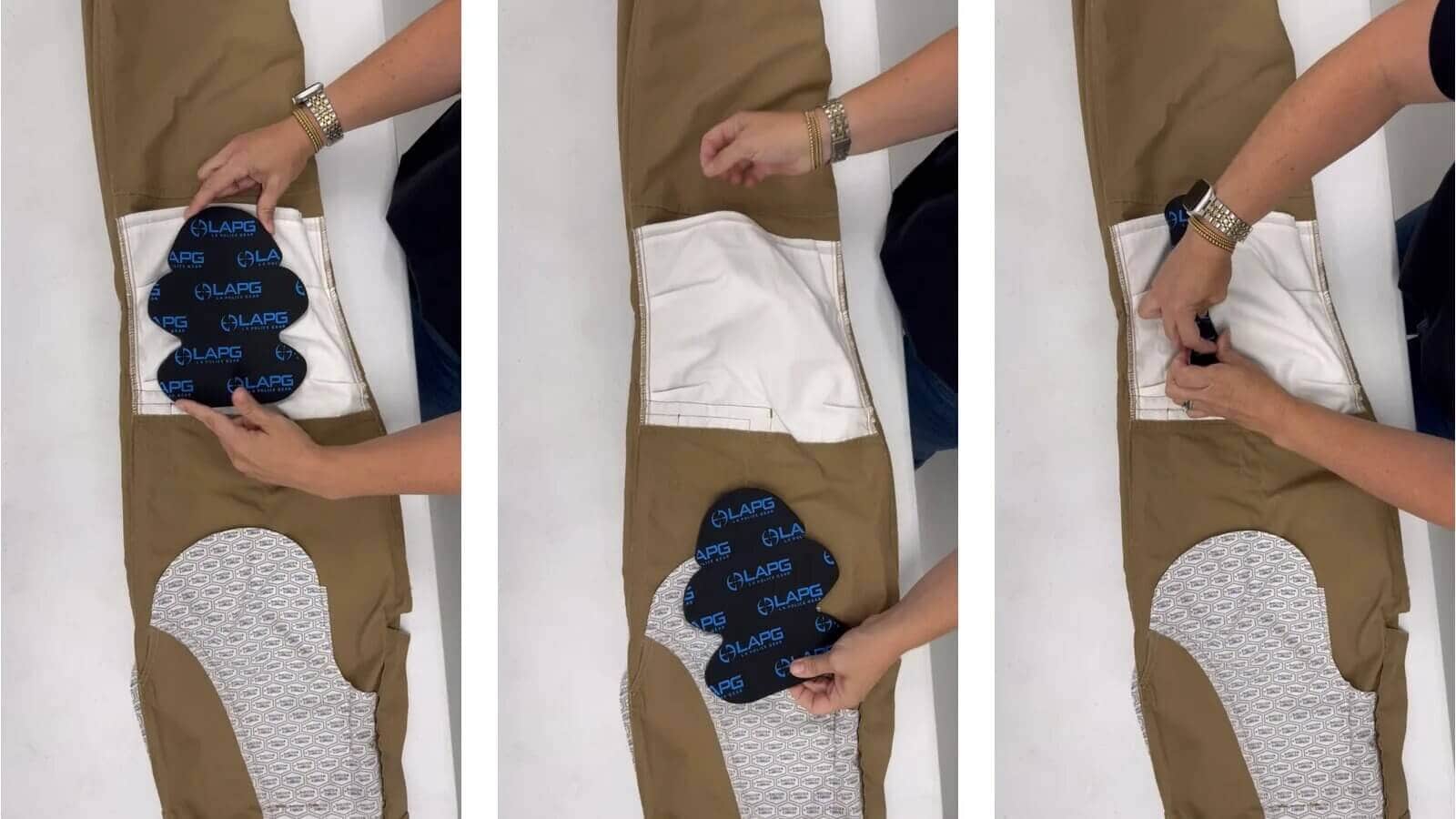
- Tactical apparel: Reinforced pants, stable waistbands, and movement-friendly cuts help support a clean draw stroke.
- Duty boots: Footwear affects balance, footwork, kneeling, standing, and long-shift comfort.
- Holsters: A quality holster controls retention, draw angle, concealment, and safety.
- Bags and packs: Range bags and duty packs organize magazines, medical gear, eye protection, gloves, and training tools.
- Plate carriers and weighted vests: Load-bearing gear changes movement, draw mechanics, and training fatigue.
- Fitness gear: Conditioning supports better performance during defensive training, range days, and physically demanding shifts.
Glossary: Key Handgun Terms
9mm
9mm is a common handgun cartridge used by law enforcement, military, security, and civilian shooters. It is valued for manageable recoil, broad ammunition availability, and high magazine capacity in duty-size and compact pistols.
Duty Handgun
A duty handgun is a sidearm selected for professional use by law enforcement, military, or security personnel. It should meet high standards for reliability, holster compatibility, serviceability, and safe operation under stress.
Striker-Fired Pistol
A striker-fired pistol uses an internal striker rather than an exposed hammer to ignite the cartridge primer. Many modern duty pistols use striker-fired systems because they offer a consistent trigger pull and simplified controls.
Modular Handgun
A modular handgun is designed so major components such as grip modules, slides, or fire control units can be changed to fit different users or roles. The Sig Sauer P320 and the Army’s M17/M18 system are common examples of modular handgun design.
Holster Compatibility
Holster compatibility means a handgun works with safe, secure, purpose-built holsters for the user’s carry method. This matters for concealed carry, duty retention, vehicle work, range training, and daily wear.
Recoil Management
Recoil management is the shooter’s ability to control muzzle movement and return the sights to target after firing. Better recoil management can support faster, more accurate follow-up shots.
Bottom Line: The Best Handgun Is Mission-Specific
The best handgun is not defined by one brand or model. For many professional users, the best handgun is a reliable 9mm platform that fits the shooter, supports repeatable accuracy, integrates with a quality holster, and works with the rest of the duty or training loadout.
If you are building a complete setup, do not stop at the pistol. Match the handgun to your holster, belt, apparel, footwear, training gear, and carry role. That is how a sidearm becomes part of a dependable system instead of just another piece of equipment.
LA Police Gear supports that complete system with tactical apparel, duty gear, footwear, training equipment, bags, packs, and load-bearing gear built for law enforcement, first responders, military personnel, security professionals, and serious tactical users.
FAQs
What is the best handgun for professionals?
The best handgun for professionals is usually a reliable 9mm pistol that fits the shooter, supports accurate follow-up shots, works with a quality holster, and has strong parts, magazine, and accessory support. The best choice depends on the mission, policy, training level, and carry method.
Why do many professionals choose 9mm handguns?
Many professionals choose 9mm because it offers manageable recoil, strong magazine capacity, broad ammunition availability, lower training cost compared with some larger calibers, and proven performance with modern defensive ammunition.
Is the Glock 19 the best handgun?
The Glock 19 is one of the most common compact 9mm benchmarks because it balances size, capacity, reliability, and holster support. It may be the best handgun for some users, but not for everyone. Fit, policy, training, and gear compatibility should guide the final choice.
Is the Sig Sauer P320 better than the Glock 19?
The Sig Sauer P320 is not automatically better than the Glock 19. It offers more modularity, while the Glock 19 emphasizes simplicity and a long track record. The better platform depends on whether the user values interchangeable grip modules and configuration flexibility or a simpler fixed-frame system.
What gear should I pair with a duty handgun?
A duty handgun should be paired with a quality holster, sturdy belt, magazine pouches, tactical apparel, dependable footwear, and mission-specific support gear. The surrounding equipment affects draw speed, retention, comfort, and reliability during long shifts or training days.
Can one handgun work for concealed carry and home defense?
Yes, one compact 9mm handgun can often serve both concealed carry and home defense roles if it is reliable, controllable, and supported by the right holster, magazines, sights, and training plan. Users should follow all applicable laws and seek qualified instruction.